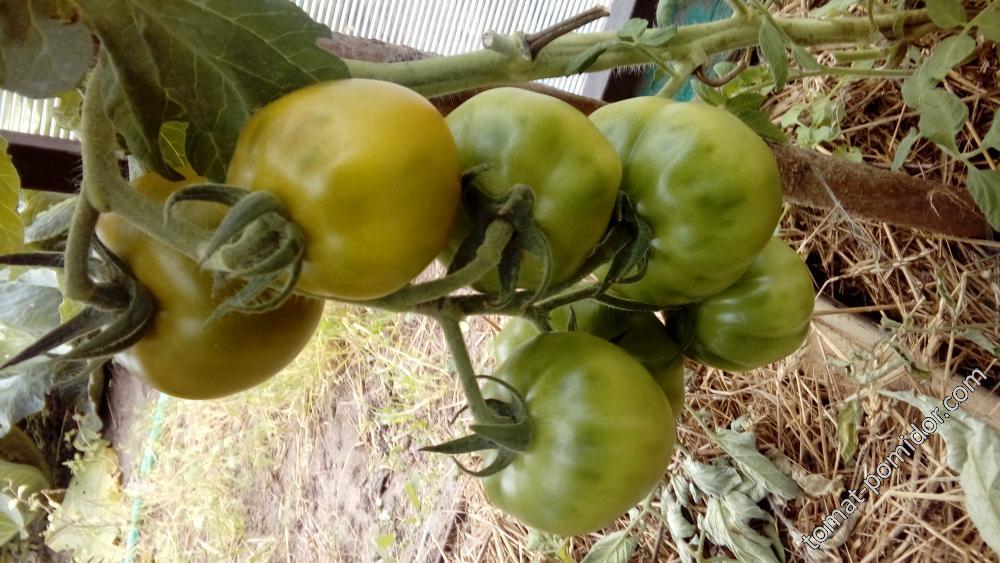
🍅 Quick take: Marz Green is an indeterminate, mid-to-late season heirloom beefsteak hailing from the United States (USA). The vines produce 7-12 oz (200-350 g) oblate green-when-ripe (GWR) fruits that blush with warm amber-gold tones upon full maturity, opening to reveal vivid emerald-green, juicy-meaty flesh. Growers note that while it can be finicky in variable greenhouse conditions, true GWR lovers find its rich, tangy-sweet dessert flavor exceptional. Full summary ↓
Growers’ Notes and Photos (USDA Zone 4 Experience)
Got my seeds for this one from Olesya. Every single variety from Olesya that I grew this past season turned out exceptional, and this one was no exception.
Indeterminate vine, though it stayed relatively short for me: this season quite a few greenhouse plants thinned out at their growing tips and stalled.
Maturity leans mid-to-late season. Delicious eating quality! Then again, I am a huge fan of all green-when-ripe varieties. Juicy, meaty, and very attractive fruit.
Edited November 9, 2018 by Drosera
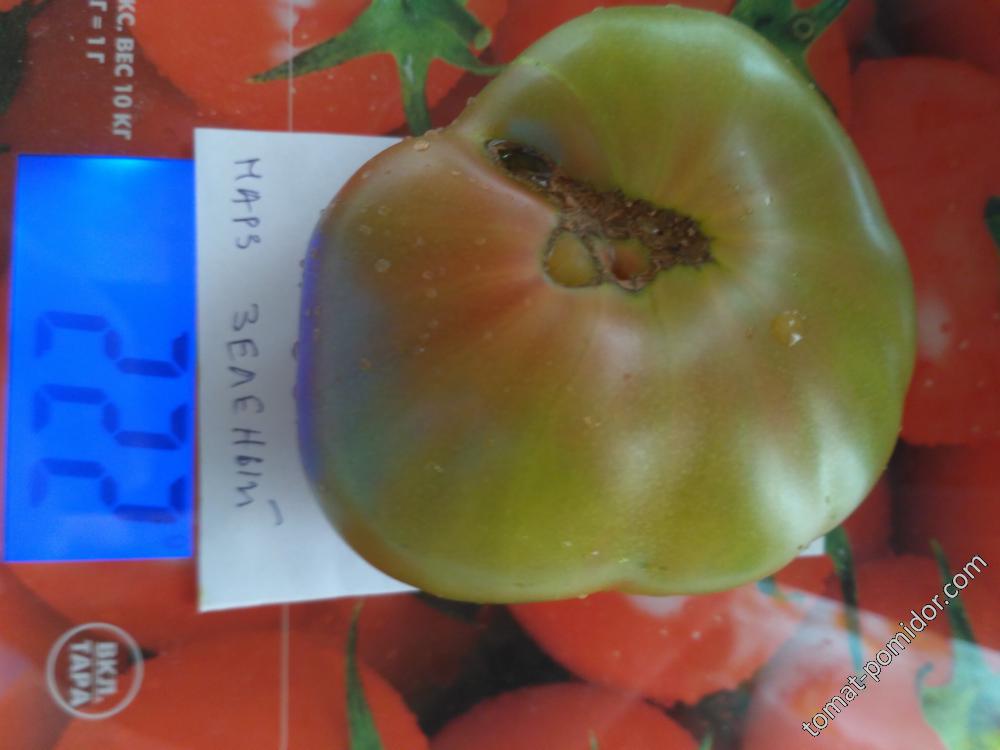
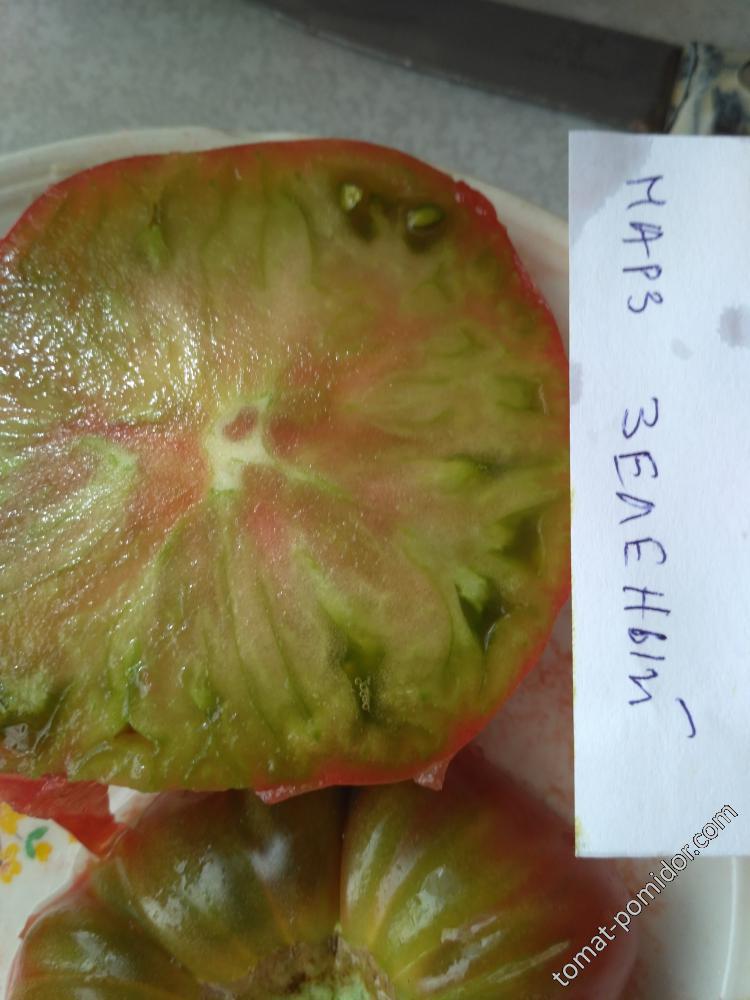
Ran it last year. Everything matched Svetlana’s notes, except for the flavor: it really didn’t impress me much. 🤷♂️ Might give it another trial run down the road just out of curiosity. Seeds came from Kulik.
Full Summary: Growth Habit, Ripening Indicators, and Flavor Notes
- 🇺🇸 Origin: Historic heirloom green-when-ripe (GWR) beefsteak hailing from the United States (USA).
- 🌿 Plant & Vigor: Indeterminate vine. Can be sensitive to midsummer microclimate fluctuations, with northern growers noting that leaders can thin and stall under early-season heat or nutrient stress.
- 🍏 Fruit & Ripening: Sets medium-to-large, flattened green slicers averaging 7-12 oz (200-350 g). Knowing when to pick requires watching for an amber or golden flush on the skin and a slight give when gently squeezed at the blossom end.
- 👅 Taste Profile: Divisive among growers. For green-tomato enthusiasts, it delivers a deeply rewarding, aromatic, sweet-tart bite with dense, juicy green walls. In cooler soils or less sunny conditions, flavor can fall flat.
- 🌎 Who Reviewed It: Trialed in USDA Zone 4 conditions (Moscow Suburbs and Kaluga regions).
🍅 Grown Marz Green? How did its flavor compare to Aunt Ruby’s German Green or Cherokee Green in your garden? Let us know below!
👨🌾 Editor’s Note: Harvesting GWR Varieties & Leader Stalling
Green-When-Ripe (GWR) heirlooms like Marz Green frequently trip up gardeners during harvest. Unlike red or pink beefsteaks, they retain chlorophyll inside their flesh even when fully ripe. The key visual cue is an “amber halo” that slowly washes over the green skin, accompanied by a softened blossom end.Additionally, SvetaR noted her greenhouse plants “thinned their tops and stopped growing.” In cool-spring greenhouse culture, rapid daytime temperature spikes combined with cold root systems often disrupt calcium and boron uptake to the apical meristem, leading to blind or stalled central leaders. If this occurs, train a vigorous lateral sucker into a new main leader.
Green-When-Ripe (GWR) heirlooms like Marz Green frequently trip up gardeners during harvest. Unlike red or pink beefsteaks, they retain chlorophyll inside their flesh even when fully ripe. The key visual cue is an “amber halo” that slowly washes over the green skin, accompanied by a softened blossom end.Additionally, SvetaR noted her greenhouse plants “thinned their tops and stopped growing.” In cool-spring greenhouse culture, rapid daytime temperature spikes combined with cold root systems often disrupt calcium and boron uptake to the apical meristem, leading to blind or stalled central leaders. If this occurs, train a vigorous lateral sucker into a new main leader.