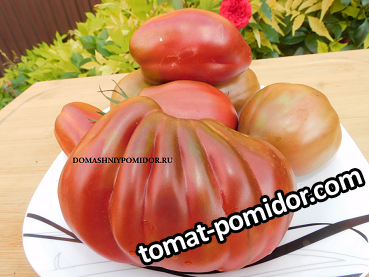
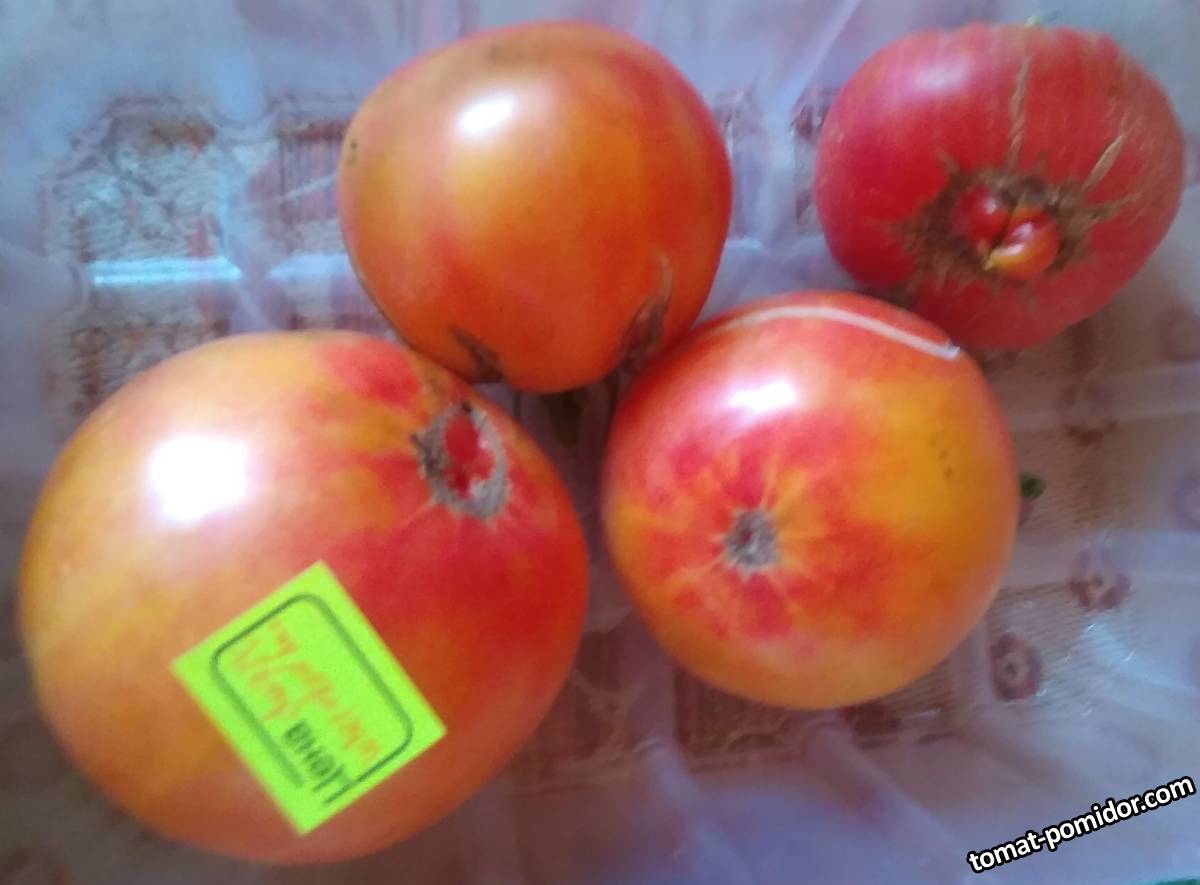
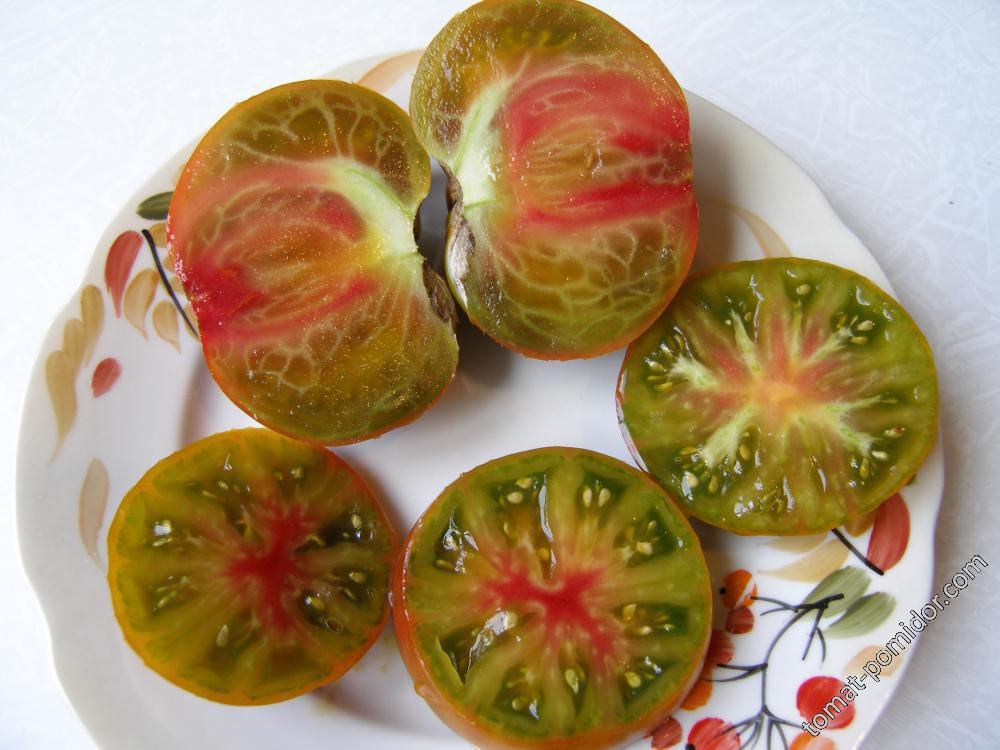
🍅 Quick take: Old German is a classic 19th-century indeterminate heirloom bicolor beefsteak preserved by Mennonite growers in Virginia’s Shenandoah Valley. It yields massive, oblate yellow-gold fruits marbled with ruby red that grow increasingly crimson as they dead-ripen. Northern cool-climate growers find it sweeter than Pineapple (Ananas), but caution that it is a decidedly late-season vine that demands the absolute hottest, sunniest microclimate to finish before autumn frosts shut the garden down. Full summary ↓
Growers’ Notes and Photos (USDA Zone 4 & Cool-Climate Trials)
Old German
Edited September 21, 2015 by Drosera
Edited September 21, 2015 by Drosera
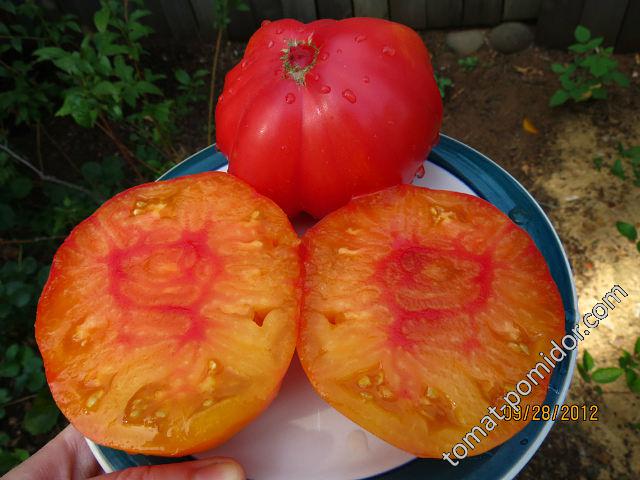
An heirloom variety preserved by German Mennonites from the state of Virginia.
Indeterminate vine, late-season maturity. The fruits are large, flat-round beefsteaks. Even stacked against other bicolors, this one really stuck in my memory for its exceptionally sweet flavor.
Indeterminate vine, late-season maturity. The fruits are large, flat-round beefsteaks. Even stacked against other bicolors, this one really stuck in my memory for its exceptionally sweet flavor.
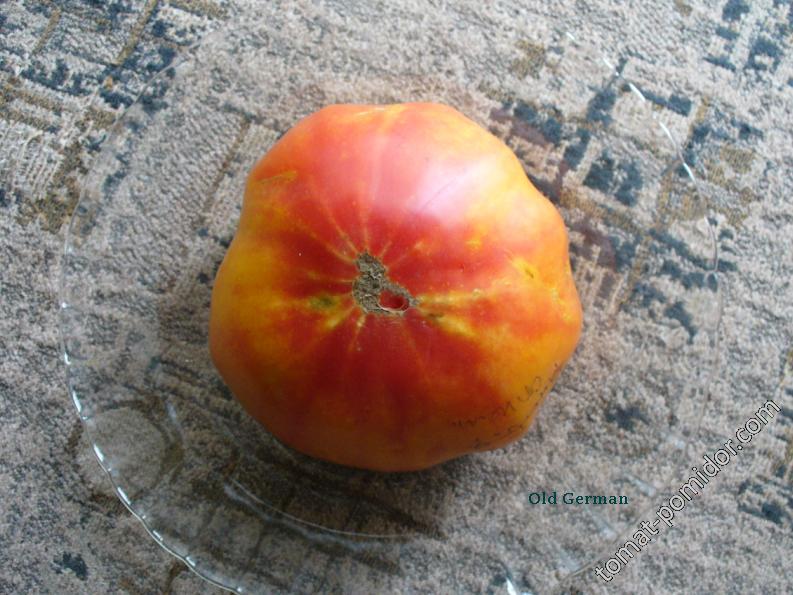
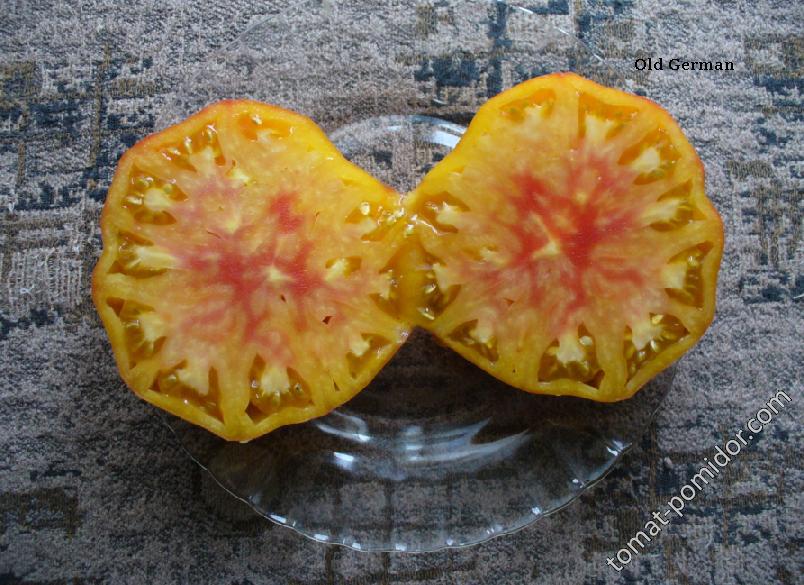
Grew Old German (Stary Nemetskiy) this year from V. Popenko seeds. Really loved it.
It was a bit of a slow starter dragging its feet early in the summer, but once it got going, it cranked out a solid crop! Bicolor beefsteaks that turn redder the riper they get. Outstanding flavor!
Edited October 15, 2016 by Olga Gor
It was a bit of a slow starter dragging its feet early in the summer, but once it got going, it cranked out a solid crop! Bicolor beefsteaks that turn redder the riper they get. Outstanding flavor!
Edited October 15, 2016 by Olga Gor
And how was the overall yield on it?
Grew it back-to-back in 2015 and 2016. Both seasons, it was strictly late. Because of that sluggish timing, I would rate the actual harvested yield as low, even though the vines were still loaded with green fruit when frost shut the season down.
Delightful flavor, I would say noticeably sweeter than Pineapple (Ananas). But it is a real hassle to babysit, since it stays stubbornly late even when started from an extra-early seed sowing indoors. Might just need the absolute warmest, most sun-drenched microclimate in the patch to truly deliver.
Delightful flavor, I would say noticeably sweeter than Pineapple (Ananas). But it is a real hassle to babysit, since it stays stubbornly late even when started from an extra-early seed sowing indoors. Might just need the absolute warmest, most sun-drenched microclimate in the patch to truly deliver.
Full Summary: Plant, Ripening Window, Flavor and Climate Demands
- 🌿 Plant & Growth: Vigorous indeterminate vine. Starts slowly in cool spring weather before picking up steam in mid-summer. Requires sturdy trellising to support massive beefsteak trusses.
- ⏱️ Maturity & Effective Yield: Strictly late season. In northern short-season zones (USDA Zone 4), frost frequently cuts production short, leaving heavy clusters of green fruit on the vines unless grown inside a heated greenhouse or high tunnel.
- 👅 Taste & Appearance: Flat-round, ribbed bicolor beefsteaks painted in gold with ruby-red starbursts that spread inward as the fruit matures. Growers rate the flavor as top-tier, exceptionally sweet, and richer than popular standards like Pineapple (Ananas).
- ☀️ Cultivation Tip: Demands the hottest, most sun-exposed real estate in the garden. Starting seeds early indoors does not bypass its genetic heat unit requirements.
- 🌎 Who Reviewed It: Four growers testing it in challenging continental Russian conditions (including Smolensk, USDA Zone 4).
🍅 Grown Old German in your garden? Did it finish before your first frost, and how does its sweetness stack up against Pineapple or Striped German? Share your days-to-maturity, setup, and zone in the comments below!
👨🌾 Editor’s Note: Shenandoah Mennonite Heritage & Heat Units
Old German originated in the Shenandoah Valley of Virginia, grown since the mid-1800s by local Mennonite communities before being introduced to commercial preservationists in 1975. Because it evolved in long, warm Mid-Atlantic summers, it has a high growing-degree-day (GDD) requirement. As Diana experienced in northern Europe, attempting to rush this variety simply by sowing seeds weeks earlier indoors rarely succeeds: the plant will bide its time until summer heat arrives. For northern growers (USDA Zone 4 and colder), this heirloom truly belongs under greenhouse cover or against a heat-reflective south-facing brick wall.
Old German originated in the Shenandoah Valley of Virginia, grown since the mid-1800s by local Mennonite communities before being introduced to commercial preservationists in 1975. Because it evolved in long, warm Mid-Atlantic summers, it has a high growing-degree-day (GDD) requirement. As Diana experienced in northern Europe, attempting to rush this variety simply by sowing seeds weeks earlier indoors rarely succeeds: the plant will bide its time until summer heat arrives. For northern growers (USDA Zone 4 and colder), this heirloom truly belongs under greenhouse cover or against a heat-reflective south-facing brick wall.