Growers’ Notes, Field Logs and Photos (USDA Zones 3-5 & Baltic Coast)
Purple Russian.
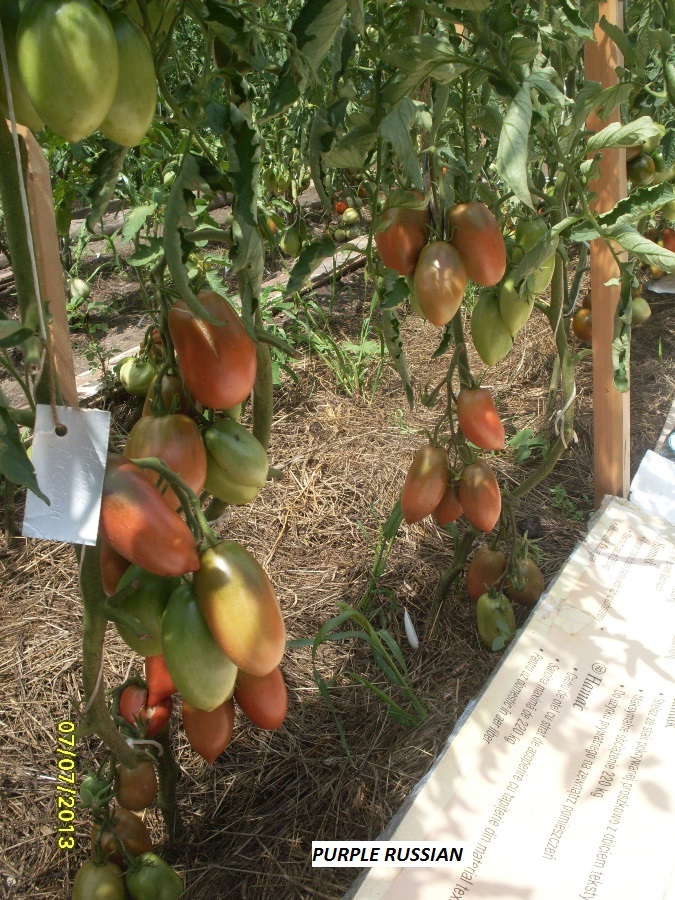
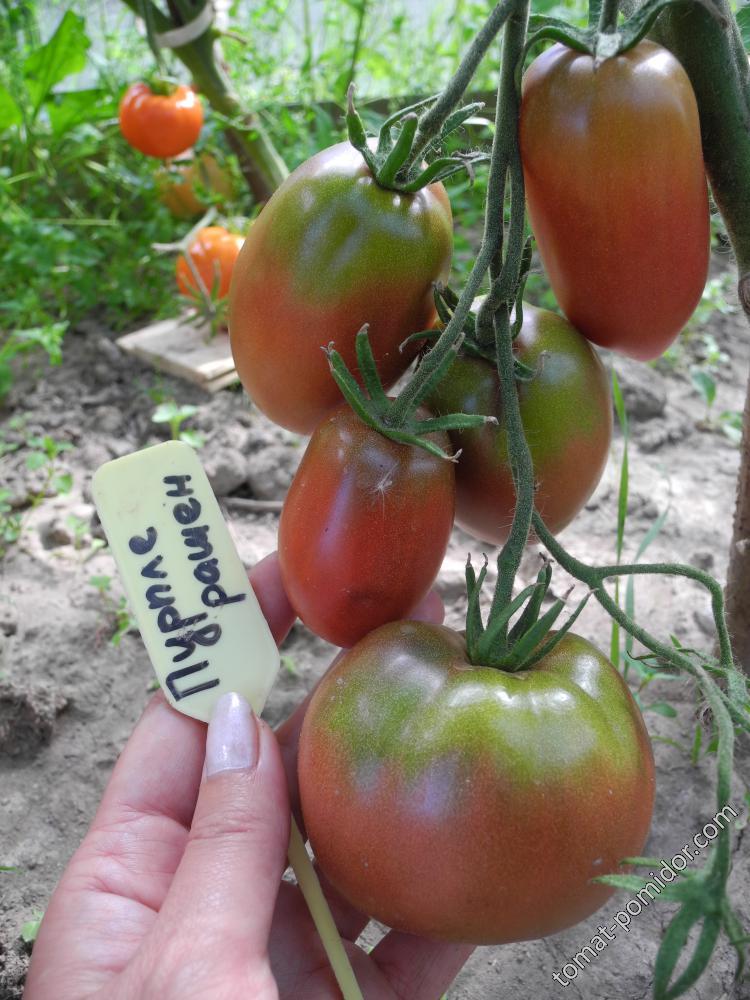
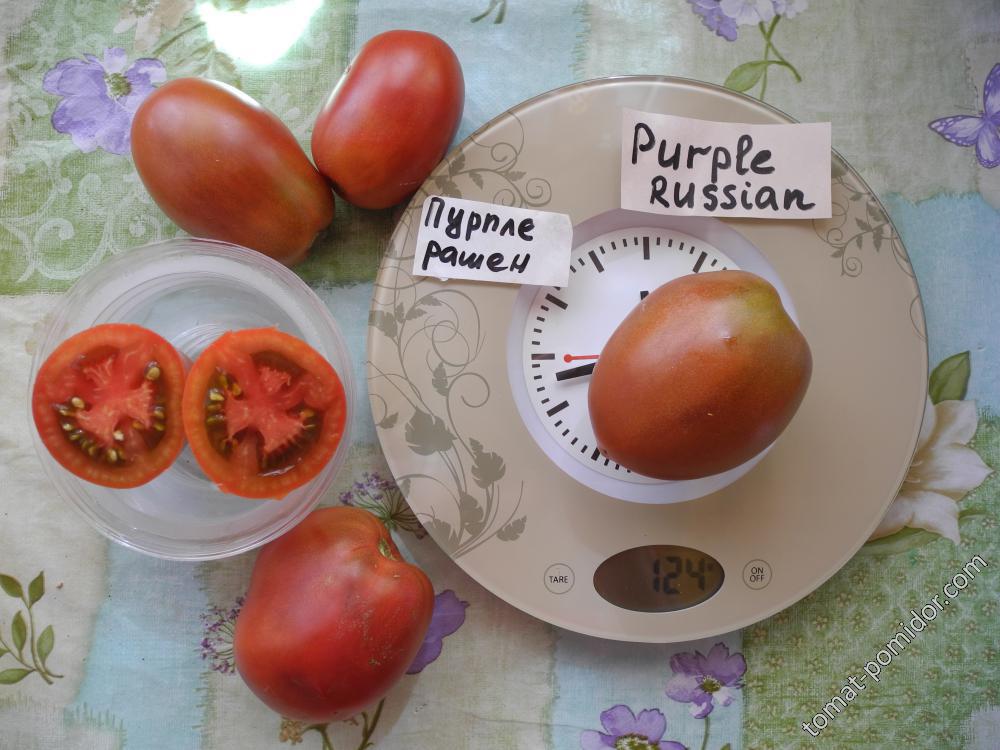
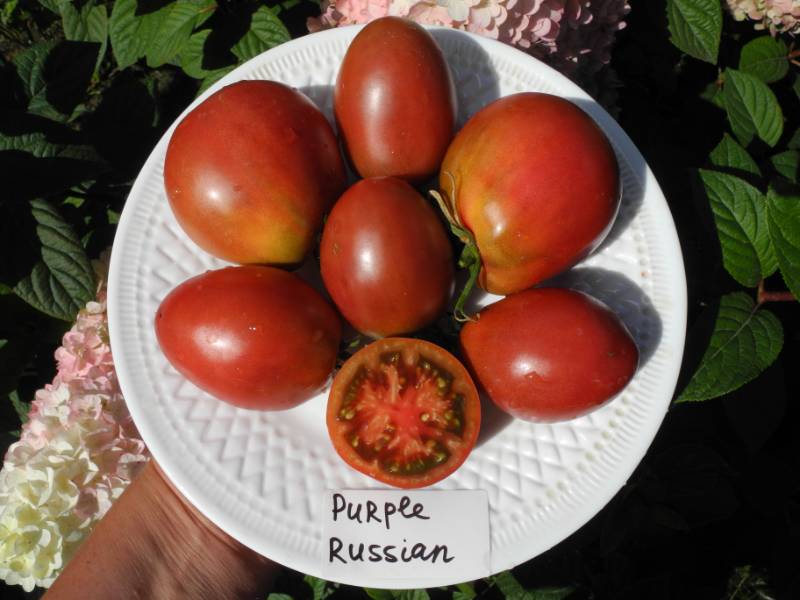
Mid-early, high-yielding variety. Vine reaches up to 6.5 ft (2 m), heavily loaded with delicious, elongated oval plums. The tomatoes are deep dusky purple, with outstanding flavor, weighing 4.2 to 6.3 oz (120-180 g).
Edited June 17, 2015 by Drosera
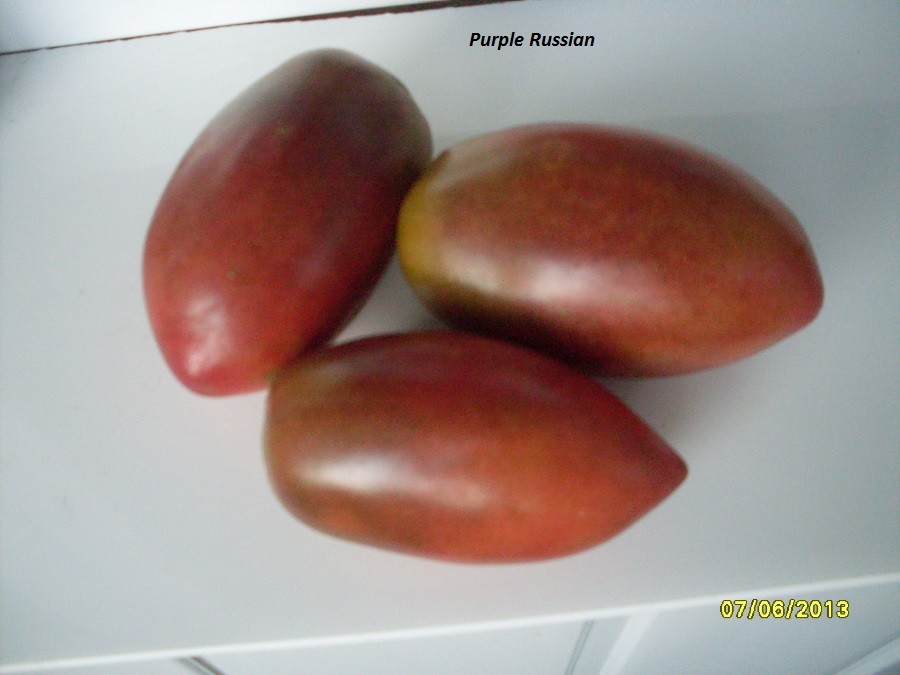
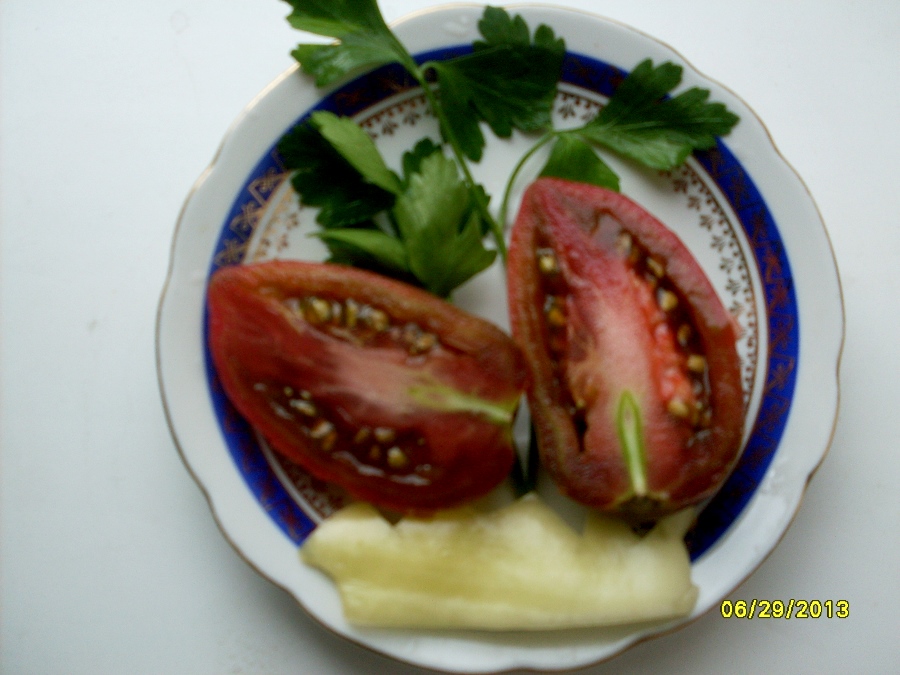
Grew it about three years ago. The fruits split badly for me, though the flavor was very good.
Grew it this season, turned out just like Elena’s. A true workhorse: carried 3 main stems and cranked out tomatoes non-stop, right up until the very end.
Looking at the photo of Purple Russian, to me it looks just like Black Icicle.
Lidia, I don’t have anything to compare it against directly.
Alyona, Black Icicle is in our catalog. Not sure about 6.5 ft (2 m) tall; mine definitely didn’t hit that, since I ran it outdoors in the garden where it stayed around 4 ft (1.2 m).
I have seeds for both varieties this season! Definitely planting them side-by-side to compare.
Alyona Andreeva said:
A true workhorse: carried 3 main stems and cranked out tomatoes non-stop, right up until the very end.
I will add that the variety is remarkably high-yielding! 👍 High genetic potential. First year growing it: trained each plant to 3 leaders, and the trusses were loaded down with dark purple-plum fruits. Delicious flavor! Earning a permanent spot for next season.
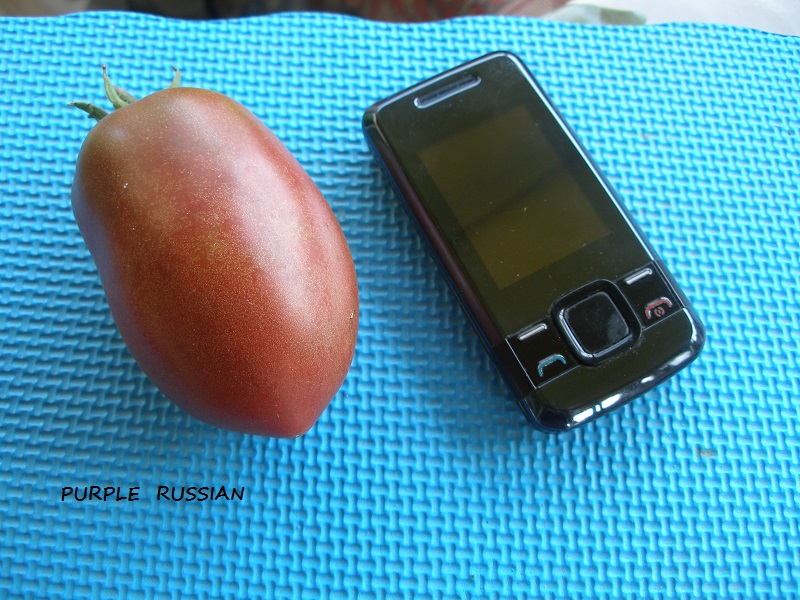
Time for my drop of sour feedback…
Yes, the vine grew tall and produced steadily, but dark tomatoes need maximum sunshine. Mine was unfortunately tucked onto the east side of a large greenhouse, and the flavor was, to put it mildly, downright awful. Clearly demanding when it comes to direct sun. When everyone else has delicious fruit, it means theirs soaked up plenty of sun and heat.
And Lidia, no, this is not Black Icicle; it is noticeably larger, shaped more like a plump Konigsberg.
Marina, I wouldn’t say Kirov Oblast lacks summer sun! If you are saying it lacked enough sun there, what on earth will happen in my garden? Sometimes around here I forget what the sun even looks like!
Marina said:
No, this is not Black Icicle; it is noticeably larger, shaped more like a plump Konigsberg.
Marina, thank you, that makes total sense.
Svetlana, like I noted, it sat along the east wall of a massive hoop structure. Placed along the south side, it probably would have turned out far sweeter.
I built a new dedicated greenhouse positioned perfectly for all-day sun, and planted all my dark heirlooms there. Nearly all of them turned out fantastic. Just sharing my honest garden results.
Esme said:
The fruits split badly for me, though the flavor was very good.
Exact same experience here: cracked easily, and the vine was quite thin and spindly.
Yes, Elena, that matches mine completely.
Elena described this as mid-early. Growing it this season, it set its first flower cluster after the 12th leaf, which behaves more like a late-season variety. Does anyone recall when their first cluster initiated? Could just be poor supplemental lighting on my seedlings indoors this spring.
Delicious tomato. Yield was average, first ripe fruits around August 10. Might have been stunted early by poor seedling mix; went into the greenhouse looking like a runt, lost time catching up, and set the first cluster quite high up.
In my garden, it was exceptionally productive and delicious, with the first ripe fruit picked in mid-July. Definite keeper.
Lidiya said:
Looking at the photo of Purple Russian, to me it looks just like Black Icicle…
Lidia, I grew Purple Russian and Black Icicle right next to each other in my large greenhouse. Could barely tell them apart on the vine!
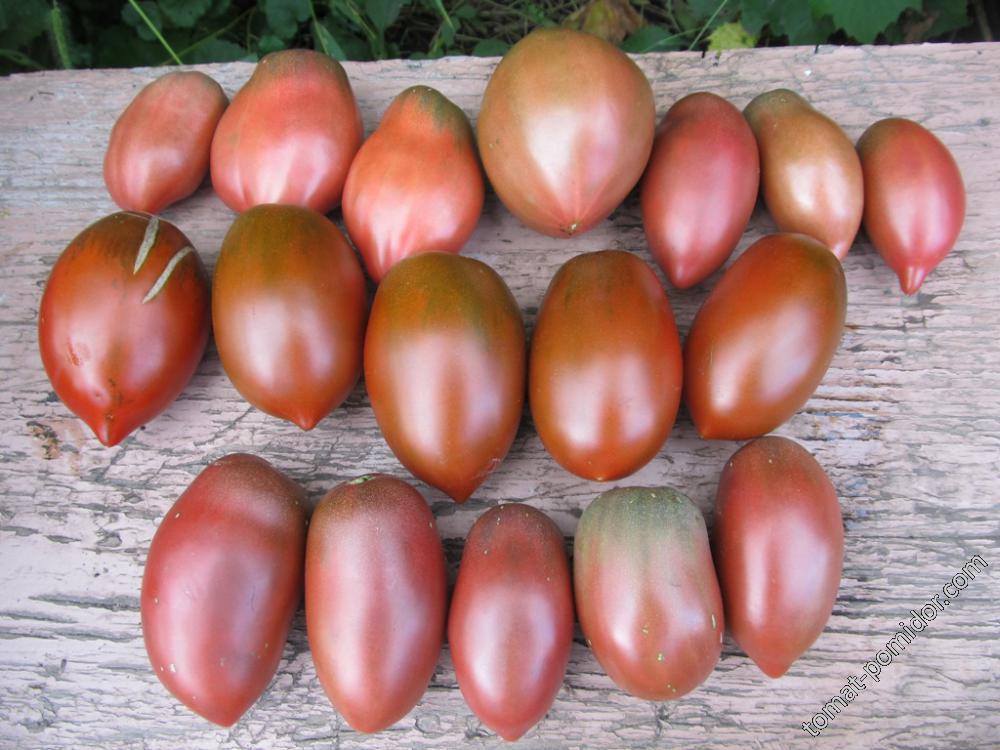
I had to lay out the harvested fruits in a side-by-side lineup to distinguish them. In my photo: top row is Purple Russian; bottom row is Black Icicle from Elena Danko; middle row is yours. Elena’s strain matches Purple Russian closely, deep dark with a violet-purple cast. Yours leaned more brownish-red.
Ninulia said:
I grew Purple Russian and Black Icicle right next to each other… Could barely tell them apart…
I had both varieties from Elena Danko growing side by side too, and they are definitely different!
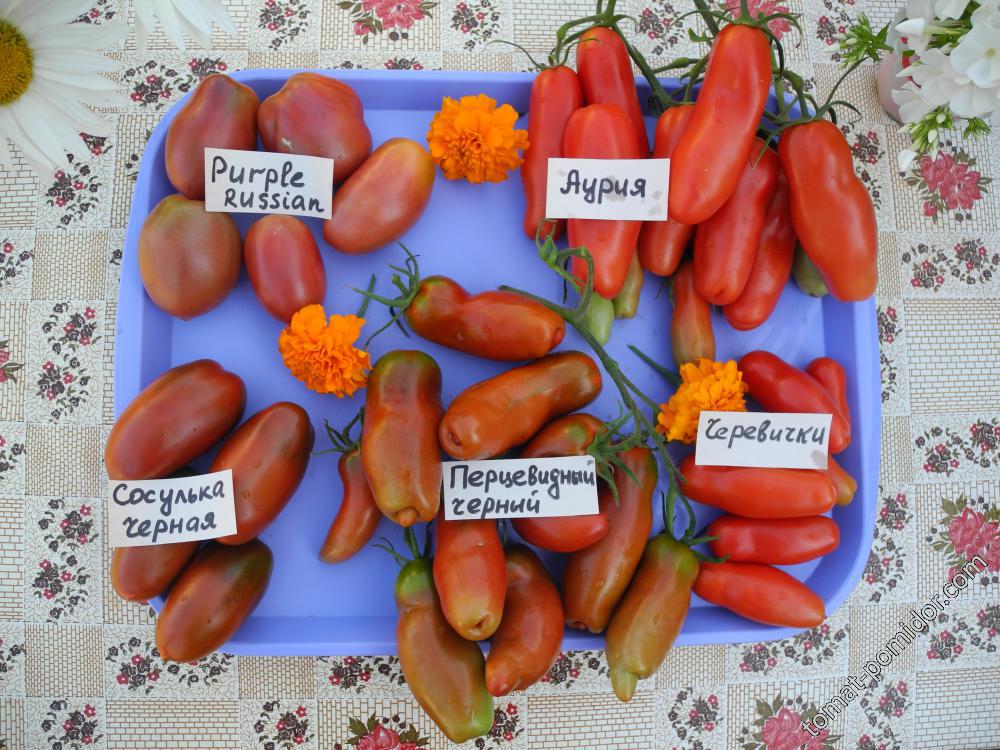
Different color hues, different taste, different shapes, and different internal density. Purple Russian is noticeably sweeter and has softer, juicier flesh, probably not great for whole-can pickling, but fresh off the vine it was an absolute delight! 😋
Black Icicle fruits are completely uniform, identical elongated peppers with pointed tips. Purple Russian produces variable, barrel-shaped plums ranging from roundish to elongated. Laid them all out on a tray so the physical differences are clear.
Transplanted two different seed sources of this variety today: Nina’s (Ninulia) and Raisa’s (Amira). Sowed on the same date, potted up simultaneously. Plant stature is identical, but traits differ:
Nina’s strain has a massive, highly developed root system, regular leaves with slightly curled, pointed tips, and heavy stem fuzz.
Raisa’s strain has a more modest root mass, classic flat regular leaves, and much smoother stems. Planted 3 of each to see how they turn out.
First harvest update. Despite seedling differences, the mature vines look very similar now.
First: the plant is struggling in our Baltic chill. Barely 3.3 ft (1 m) tall in the greenhouse. Plants look stressed, so I harvested the earliest turning fruit to encourage vine growth.
Second: the first two fruits harvested were massive, almost the size of a large Bull’s Heart! The rest on the cluster are normal plums, but these early ones were gigantic. Wondering if I should save seed from these monsters or stick to standard fruit shapes. Plants are yellowing their lower leaves under night temps of 43°F (6°C) and day temps barely hitting 64°F (18°C).
Alyona Latvia said:
Wondering if I should save seed from these monsters or stick to standard fruit shapes…
Definitely save seeds, just label the packet as #1 (from abnormal fruit) and #2 (from standard plums). Sometimes seed from oversized fruit produces standard crops, but other times you lock in a heavier-weight line, which is a great bonus!
Here are those giant fruits. Hard to believe the rest of the cluster looks like standard modest plums.
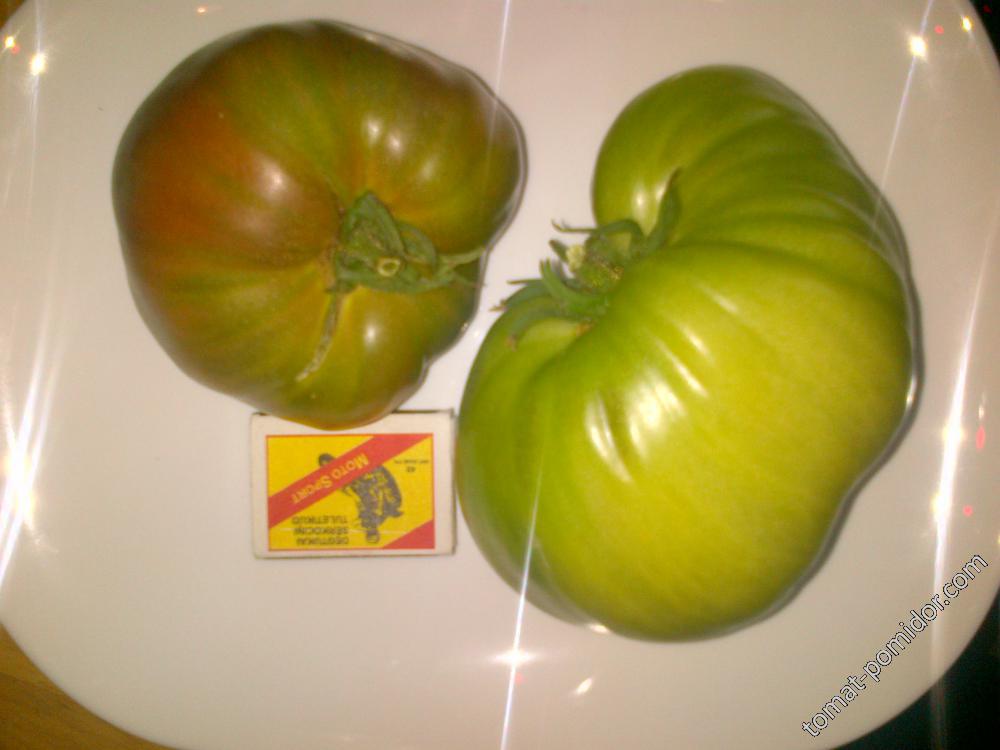
Those look like an accidental cross-pollination. Wonder what it crossed with? Curious to see the final color and flavor when dead ripe.
The remaining fruit on the plant are true plums, so the seed stock is definitely true to type. Any cross-pollination this year wouldn’t show up in this season’s fruit anyway. It was bitterly cold during flower set, which creates crazy fused megablooms, like I saw on Hawaiian Pineapple this year. Found a photo on the vine showing the giant fruit alongside standard clusters.
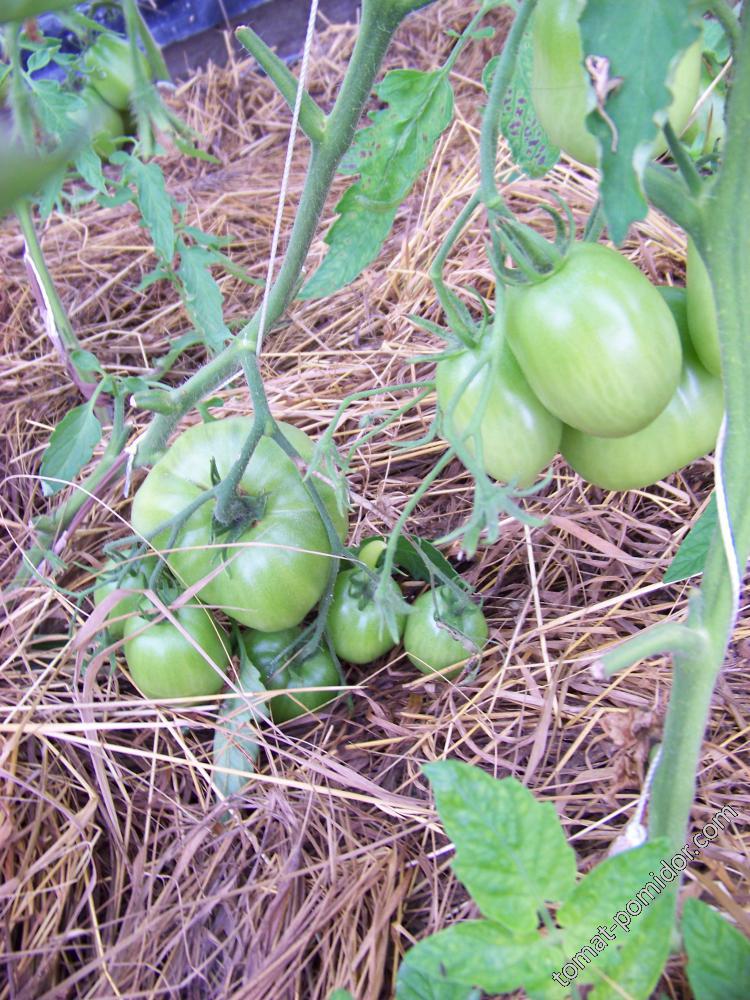
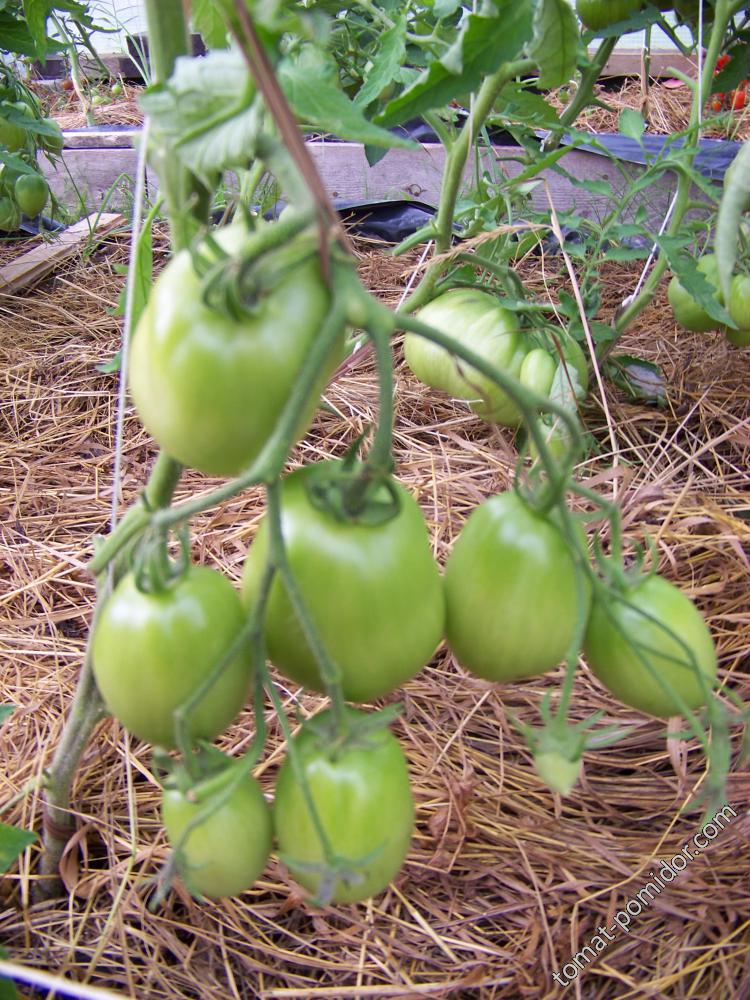
Alyona, some varieties regularly produce round, oversized fruit from their terminal megablooms; it isn’t an accidental cross. Weather extremes just exaggerate the fasciation.
I wouldn’t be surprised if seeds from that fruit produce standard Purple Russian plums next year. My very first fruit was round too, and check out this 14 oz (400 g) heart that developed from a megabloom on Cuban Black Pepper:
If not for the freezing cold, they could have finished on the vine. I harvested them to save the vines and have zero regrets. Sliced open that monster: barely ten seeds inside a giant 15.2 oz (430 g) tomato! Extremely meaty. Tasted side-by-side with Emerald Apple: we preferred Purple Russian.
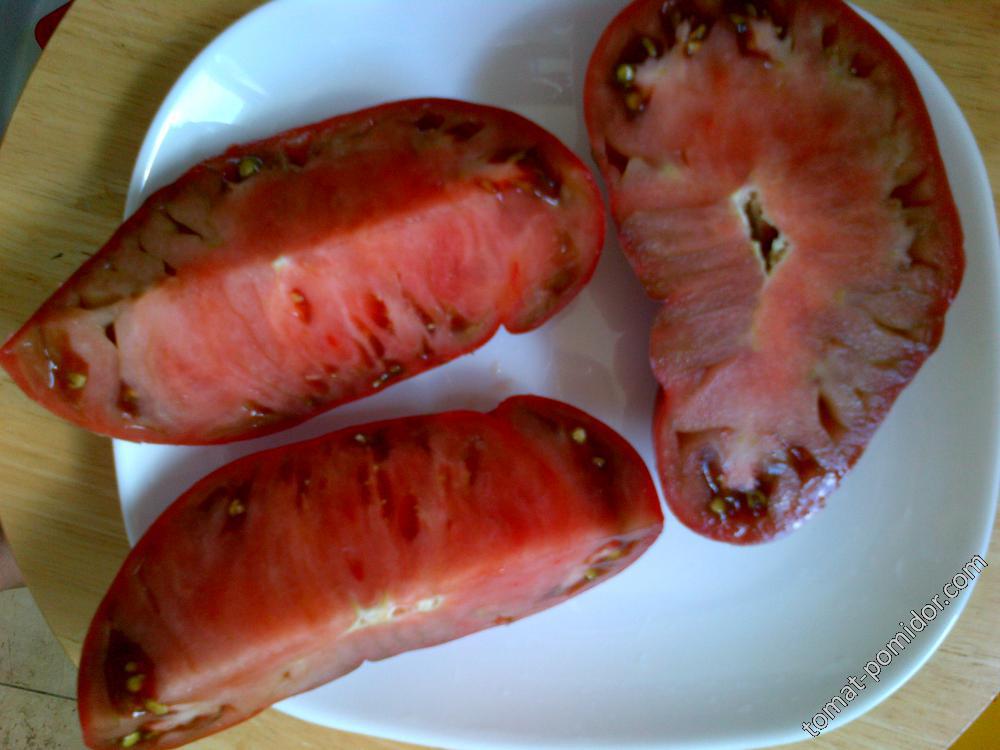
Plump plum with dusky purple coloring. Very solid, balanced flavor. In my opinion, it is too tender and soft for whole-pack canning jars, much better suited for salads and fresh eating.
The vine has a fragile habit with weeping foliage, though it climbs tall (grew mine outdoors in the garden). Leaves curled inward both under lights and out in the dirt. Pruned to two stems. Yield was cut short by seedling sickness, but I am definitely giving it another run for that memorable flavor.
First year growing it, seeds from Redko. Loved this variety! Taste rated a 5+, first fruit was a large round one, and all subsequent ones were smooth, uniform plums. Very productive on two stems; picked ripe with plenty of late fruit sizing up.
Loved it! In the greenhouse, two stems were completely loaded with beautiful, large plums. One of the earliest to ripen, sets continuously without skipping. Outstanding taste!
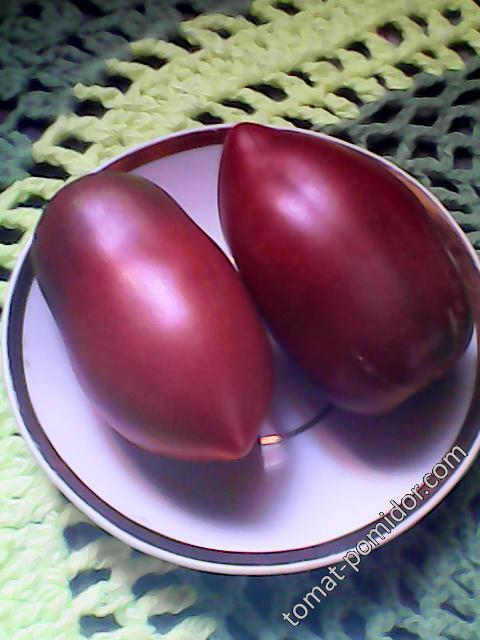
Grew it in the greenhouse. Super delicious and heavy producer! Both vines set heavy trusses without skipping, even when other varieties dropped flowers mid-summer.
Skin is paper-thin; fruits do not store well and shrivel quickly. Cracked severely for me, with the final fruits practically splitting inside out! Eventually caught grey mold late in the autumn.
The plant itself is very narrow and compact with slender stems and weeping leaves, looking just like a delicate birch tree. Yet despite the thin stems, I only tied it twice and not a single truss snapped under the weight. Reached around 6.5 ft (2 m) tall.
Loved this variety! Grew in the greenhouse, delicious flavor 😋, saving seeds to keep in regular rotation. Seeds from Natalya Dryzhakova.

Opened a jar of whole tomatoes canned in tomato juice that had a few Purple Russians inside. Confirmed: this is not a whole-pack canning tomato. It shriveled, split, and emptied out, pulling out of the jar as ragged shreds. Still delicious! But strictly for fresh eating and sauces.
Grew it both in the greenhouse and outdoors in open ground. Outdoors it set fruit better and had more seeds inside.
Distinct from Black Icicle: ripe Purple Russian carries a pinkish-purple hue (Black Icicle leans reddish-brown), and the flesh is far softer, meaning it completely disintegrates in hot pickling brine.
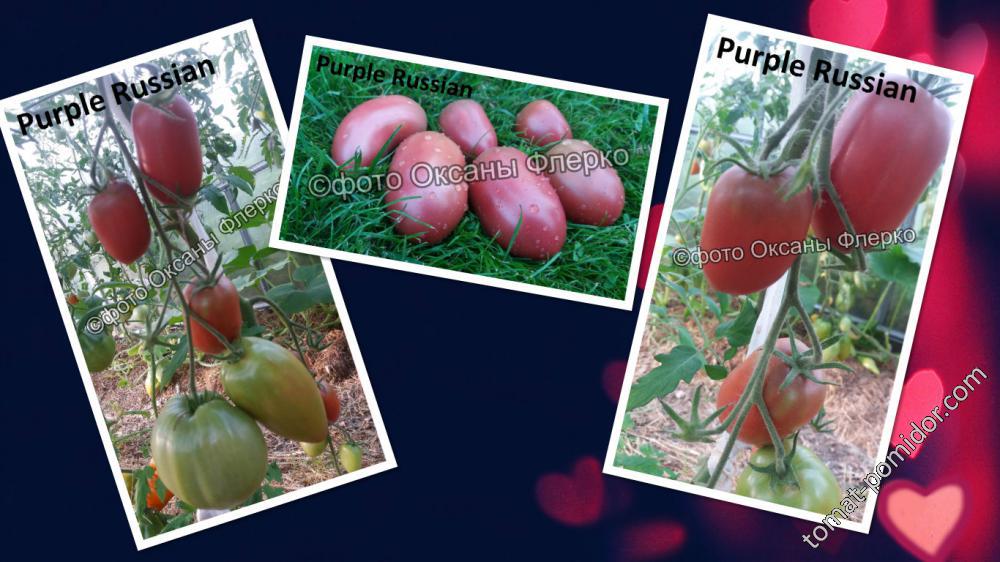
Second year growing this variety. Every season it delivers delicious, sweet, juicy plum-shaped tomatoes. Reaches nearly 6.5 ft (2 m) tall in the greenhouse.
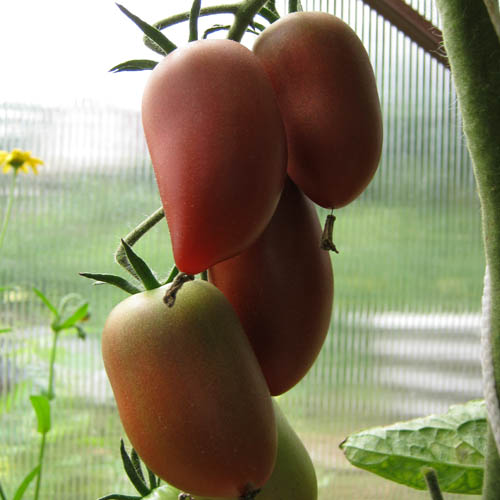
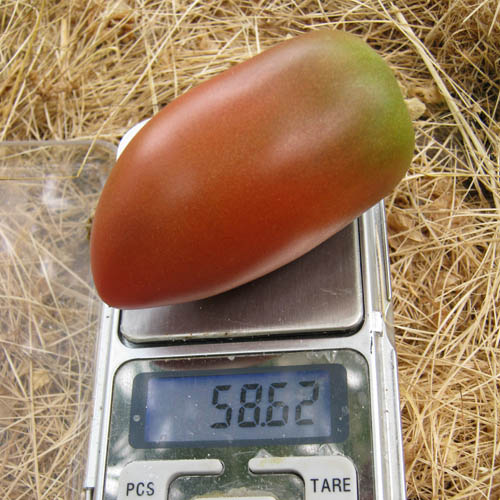
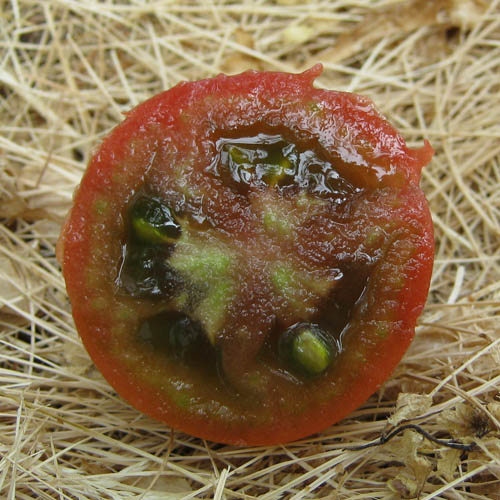
Terrific variety! High yields, sweet taste. Ran one vine, seeds from Masha Murka. Set fruit all the way to the ceiling and was among the first to start coloring up.
Brought back this great variety again. Productive indeterminate, easily carries 2 to 3 stems, crops until the season ends. Dusky purple-brown plums with wonderful flavor, turning intensely sweet in summer heat. Up to 4.6 oz (130 g), averaging 2.1 to 3.5 oz (60-100 g).

A well-known classic: there was massive hype around it ten years ago. Great cropper, though gardeners tend to overlook it chasing the latest novelties. Mine crack early; should I dial back the watering?
Tatunya said:
Mine crack early; should I dial back the watering?
Tanya, mine cracked from soil moisture swings and from cold temperature drops alike, which is why I eventually dropped it from my garden.
Full Summary: Plant Architecture, Black Icicle Comparison, Yield and Skin Tenderness
- 🌿 Plant Architecture & Foliage: Indeterminate vine climbing to 6.5 ft (2 m). Characterized by a narrow, compact habit with slender stems and weeping, droopy foliage (reminiscent of a weeping birch). Naturally curls leaves indoors and outdoors. Carries 2 to 3 stems comfortably.
- 🔀 Purple Russian vs. Black Icicle (Key Distinctions):
- Fruit Shape & Color: Purple Russian bears variable, blunt oval/egg plums (2.1-6.3 oz / 60-180 g) with dusky pinkish-purple tones. Black Icicle produces perfectly uniform, sharp-pointed pepper-like fruit leaning reddish-brown.
- Texture & Uses: Purple Russian is softer, juicier, and far sweeter fresh off the vine, but its paper-thin skin cracks easily and completely disintegrates in hot pickling brine. Black Icicle is firmer, hollow-free, and ideal for whole-fruit canning.
- 📈 Yield Performance: Outstanding, uninterrupted producer. Sets heavy clusters right up to the greenhouse roof, continuing through mid-summer heatwaves where beefsteaks stall. Early terminal flowers can develop into 14-15 oz (400-430 g) mega-fruits.
- 👅 Flavor Profile & Heat Requirements: Demands full sunshine and potassium to build sugars; in shade or chilly maritime conditions, it can turn bland or sour. In hot sunny conditions, it becomes intensely sweet, rich, and complex.
- ⚠️ Vulnerabilities: Paper-thin skin makes it vulnerable to radial splitting during soil moisture swings and sudden autumn temperature drops. Low shelf life once fully ripe.
- 🌎 Who Reviewed It: Extensively grown and documented across USDA Zones 3, 4, and 5, spanning Western Siberia, the Baltic Coast of Latvia, Belarus, and Central Russia.
Introduced to North America through Seed Savers Exchange in 1980 by Irma Henkel (who received it from Ukraine), Purple Russian remains a benchmark among heirloom dark paste/plum cultivars. A vital piece of advice for home canners: do not confuse it with Black Icicle (Chernaya Sosulka). While Black Icicle has thick, dense walls engineered for whole-pack canning in vinegar brines, Purple Russian has tender, high-gel flesh and paper-thin skin. If canned in boiling water baths, Purple Russian will split open and dissolve into ragged shreds. Enjoy Purple Russian fresh in salads or cook it down into dark, smoky gourmet paste, leaving whole-can pickling to firmer icicle types.