Growers’ Notes, Field Logs and Photos (USDA Zones 3-5 Experience)
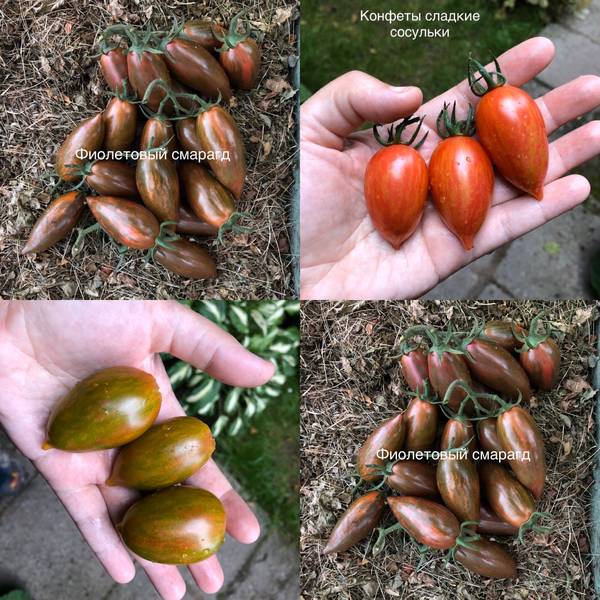
Purple Smaragd (Austria).
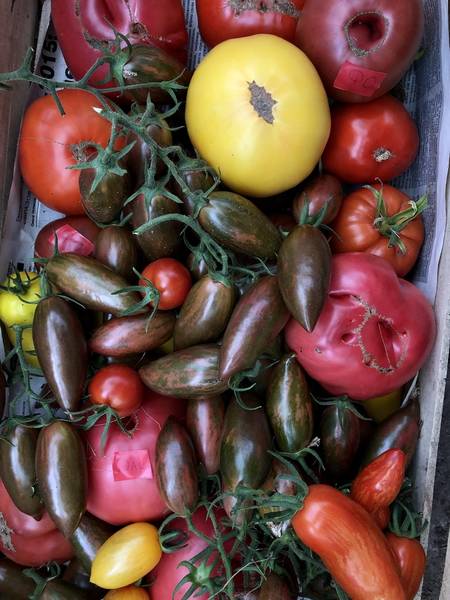
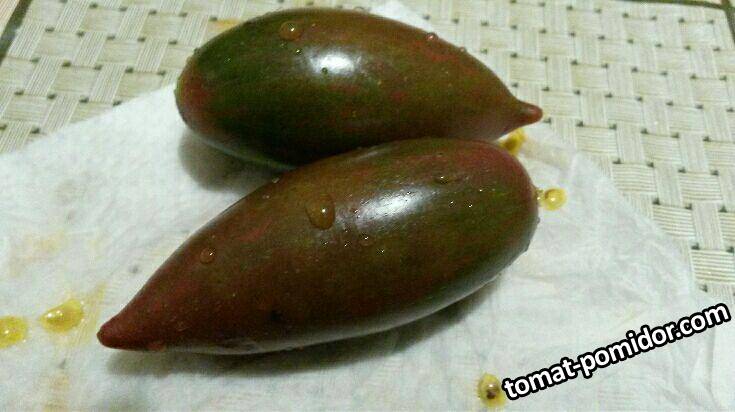
Seeds were from V. Popenko. His catalog notes describe it as: “Fruits are purple icicles with green striping, sweet, weighing up to 2.5 oz (70 g).”
Very handsome fruit! Planted three vines: two in the greenhouse, one outdoors in open dirt. Production was quite good. Inside the greenhouse, the fruits developed far more dramatic, decorative coloration. In the greenhouse, one plant reached about 5 ft (1.5 m), while the second climbed higher, around 5.6 to 6 ft (1.7-1.8 m). Outdoors, the vine stayed right around 4.3 ft (1.3 m). The plant itself has a delicate, slender habit.
Flavor was average this season, definitely didn’t build much sweetness. But where it completely blew me away was in whole-fruit canning: inside the jar, the pickled tomatoes look like they were smoked! If I grow it again, it will be strictly for how spectacular it looks preserved in jars.
Edited January 19, 2020 by Drosera


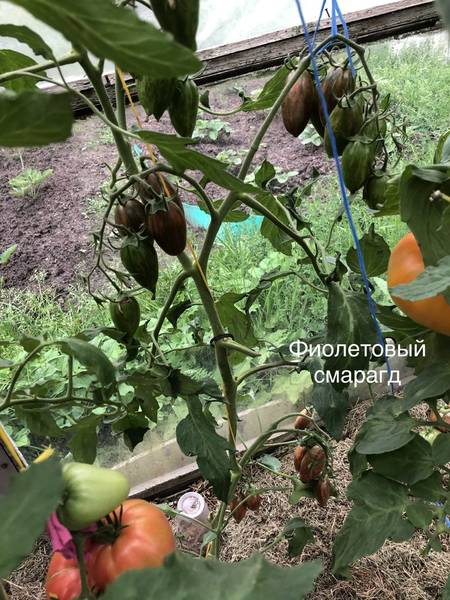

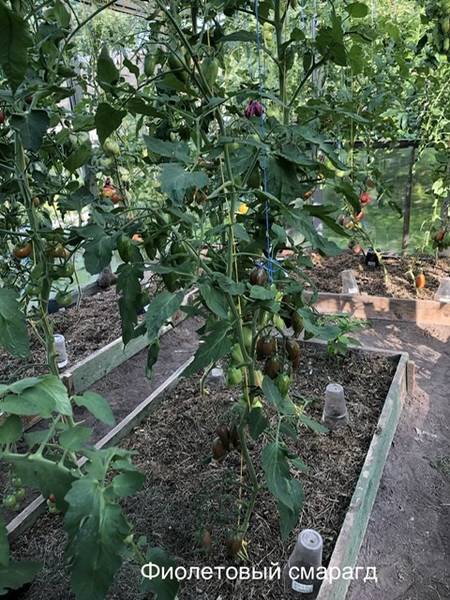
I grew it a few years back as well. Mixed impressions. Ran it outdoors in open dirt with hot days and cold nights. Fruit set was very dependable, but it was hyped to me as a super-sweet variety; in my climate, the flavor was just standard tomato, maybe a 3+ on my picky scale.
The skin was quite thick: perfect for jars, but too tough for fresh salads. Outdoors the vine stayed compact, topping out around 4.3 to 4.6 ft (130-140 cm), slender and graceful, trained to multiple leaders. The coloration is unreal, pure eye candy. I would classify this as primarily ornamental, though I suspect in warmer southern regions with balmy nights, it would build more sugar and stretch taller.
Edited January 20, 2020 by Alisa
This looks remarkably similar to Candy Sweet Icicle. Looking at the first photo, I thought I was looking at mine!
Ninulia said:
This looks remarkably similar to Candy Sweet Icicle…
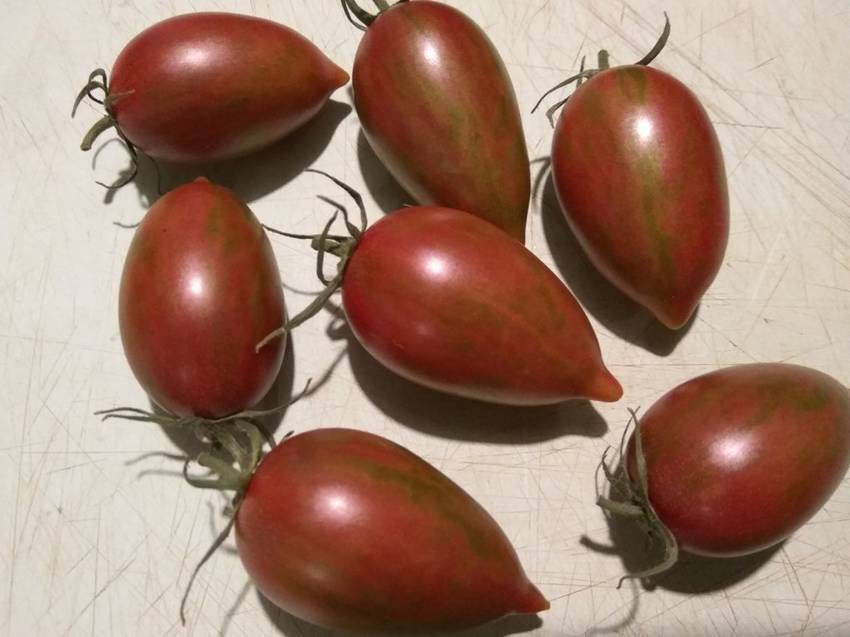
I grew Candy Sweet Icicle in that exact same season. To my eye, they are distinctly different: Candy Sweet Icicle is rounder and plumper, while Purple Smaragd is a true skinny, elongated icicle.
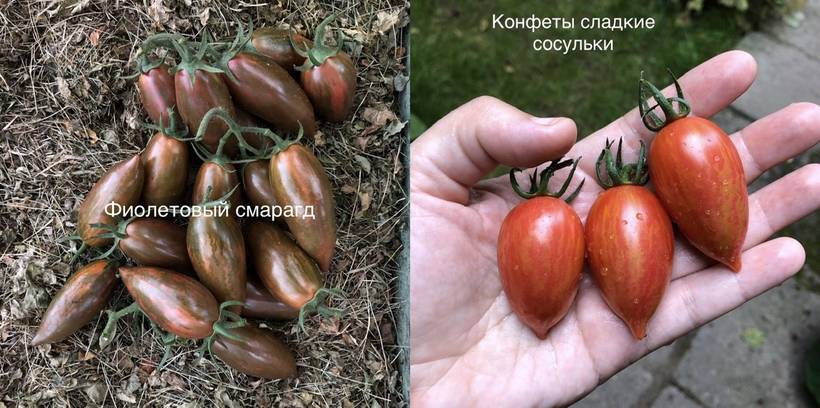
The colors differ as well: Candy Sweet Icicle is red with yellow stripes, whereas Purple Smaragd is dusky brown-purple with soft pink tones and dark green striping. Here is a side-by-side comparison:
Alisa said:
In my climate, the flavor was just standard tomato… The skin was quite thick: perfect for jars, but too tough for fresh salads.
Completely agree on flavor: I expected real sweetness from the variety descriptions, but the taste ended up rather ordinary. The skin is very thick. When I took my first fresh bite off the vine, I was disappointed.
However, by season end it won me over: prolific set, and in my opinion, it is the absolute ultimate whole-pack canning tomato. Full marks for appearance! Definitely planting a vine again this season.
TsvetochnitsaAnyuta said:
Candy Sweet Icicle is red with yellow stripes…
Interesting, because my Candy Sweet Icicles were raspberry-brown with green stripes! I have seen the red-and-yellow versions posted here on the forum too and was surprised by the difference.
My Candy Sweet Icicles were variable this year, throwing three distinct colorations! But all of them were plumper compared to the skinny profile of Purple Smaragd.
In this hand photo, you can see Candy in both its red and green-striped variations. The green variation was lighter than Smaragd. And Smaragd has real armor for skin, practically leather!
In European seed catalogs, Candy Sweet Icicle is often listed as #1 and #2. The variety is still segregating and throws both expressions.
TsvetochnitsaAnyuta said:
…Purple Smaragd is a true skinny, elongated icicle.
My Smaragd was skinny as well! “Skinny icicle” is the perfect description.
“Smaragd” is the German word for Emerald. So it translates directly as Purple Emerald.
Same in Latin roots, it translates to emerald across European languages.
Did some reading on the etymology: turns out “smaragd” is archaic, though it traces straight back to ancient Greek, then entered Latin and German. Fascinating how plant names travel!
Stunning fruits, makes a great visual companion to Blush, Candy Sweet Icicle, and Maglia Rosa.
Can’t recall specific flavor notes; the plant finished its fruiting run quite early for me and didn’t leave a big flavor impression.
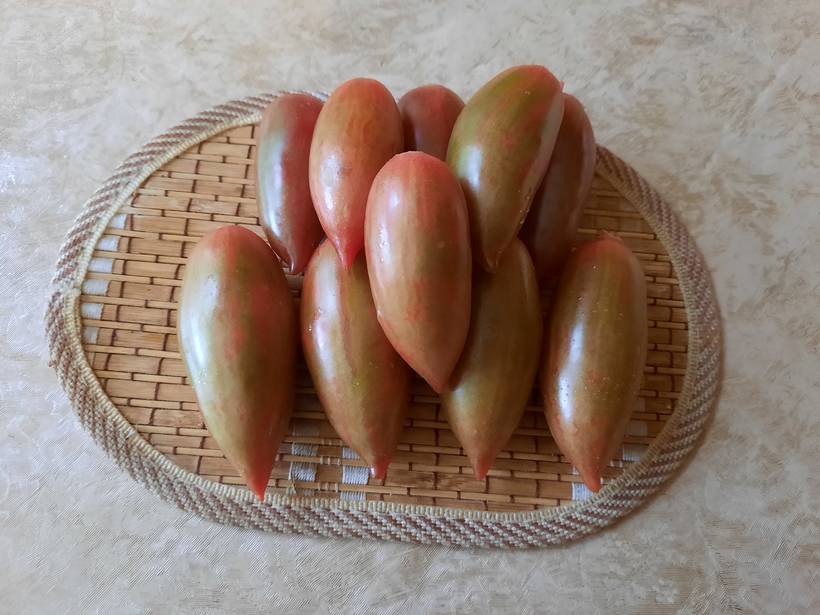
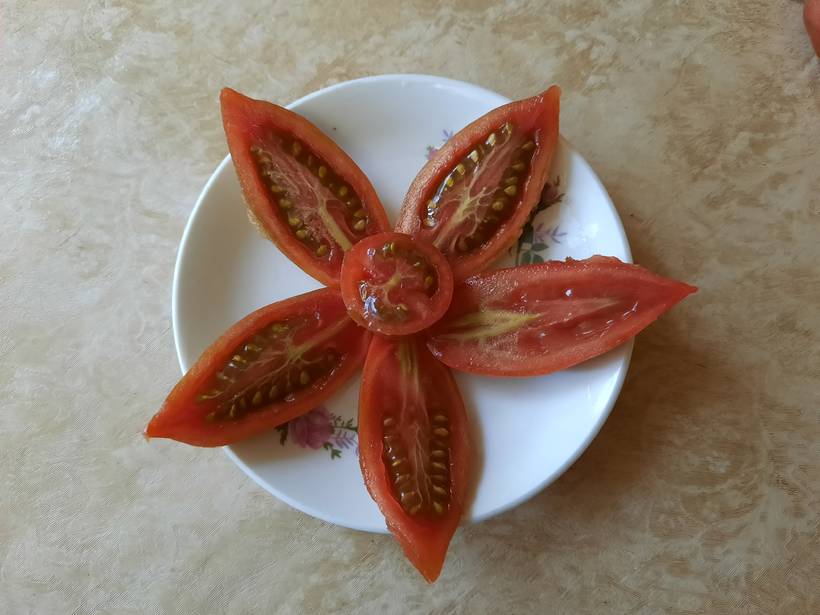
How does this variety differ from Purple Fairy? Wondering if anyone has grown both.
In 2021 it turned out remarkably sweet for me! Grew it outdoors in open dirt during a scorching, dry summer with zero irrigation.
Even so, quite a few fruits cracked on the vines at peak ripeness, so I had to harvest them slightly early. The skin is thick as leather. Want to test it in the greenhouse with consistent watering to see if the skin softens up. Vines stayed compact outdoors, under 3.3 ft (1 m), gorgeous and high yielding.
Seedlings indoors were among the absolute prettiest in the trays.
Edited May 9, 2022 by Malanka
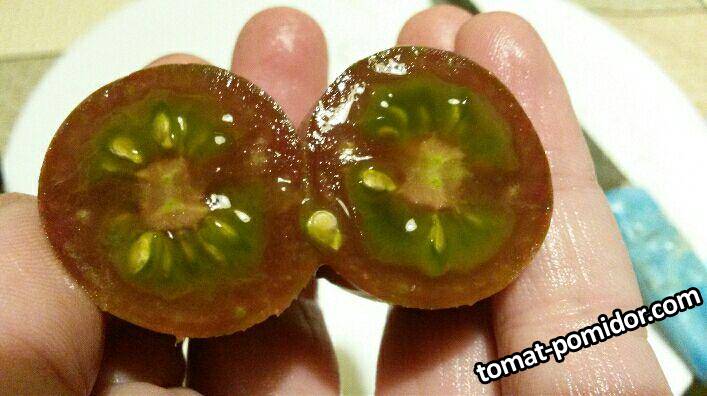
Follow-up note: the Purple Fairy I mentioned turned out to be an off-type, so please disregard that leaf comparison.
Full Summary: Plant Stature, The Candy Comparison, Canning and Flavor
- 🌿 Growth Habit & Stature: Indeterminate vine with a slender, delicate, airy habit. Stays compact outdoors at 3.3 to 4.3 ft (1-1.3 m), while climbing to 5.6 to 6 ft (1.7-1.8 m) in greenhouses. Seedlings indoors are remarkably ornamental and sturdy.
- 🔀 Purple Smaragd vs. Candy Sweet Icicle:
- Form: Candy Sweet Icicle is noticeably plumper and heartier. Purple Smaragd is distinctly skinny and elongated (“skinny icicle”).
- Pigmentation: Smaragd features a dusky brown-purple body with dark olive-green stripes, whereas Candy Sweet Icicle leans towards red/raspberry with yellow or light green striping.
- 👅 Flavor Profile & Heat Requirements: Demands intense sunshine and warmth. In cool, overcast northern summers, it produces standard, mild flavor with little sugar. However, under hot, dry conditions with warm nights, it builds rich, sweet sugars.
- 🥫 Canning Performance: Premier whole-fruit pickling variety. The tough, thick skin that makes it chewy fresh serves as a protective armor in hot vinegar brines; fruits do not split or disintegrate, taking on an eye-catching “smoked” appearance inside glass jars.
- 🌎 Who Reviewed It: Trialed across USDA Zones 3, 4, 5, and 7, including Western Siberia (Novosibirsk), Belarus, Smolensk, and the Lower Volga.