Quick Summary of Paul Robeson (Pol Robson)
- 🌍 Origin: A legendary Soviet-era heirloom named in honor of the American singer, actor, and civil rights activist Paul Robeson. Some sources claim it was bred in the 1930s, while others point to breeder M. Danilenko in the 1960s.
- 🌿 Plant Habit: Generally behaves as a vigorous semi-determinate or a short indeterminate, reaching around 1.2m (4 ft) tall, though it can grow taller depending on conditions. It performs well both in greenhouses and outdoors (open ground).
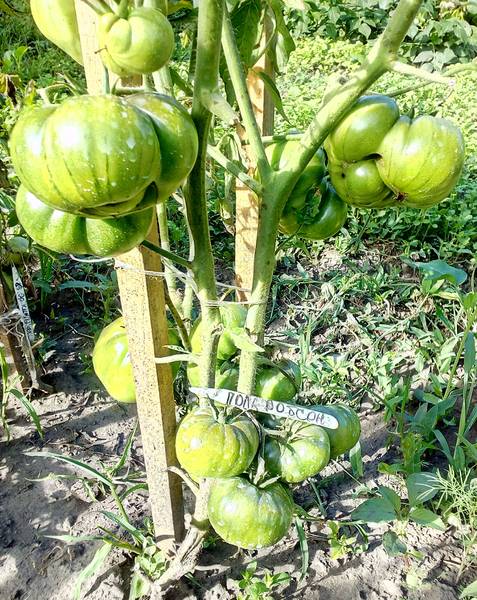
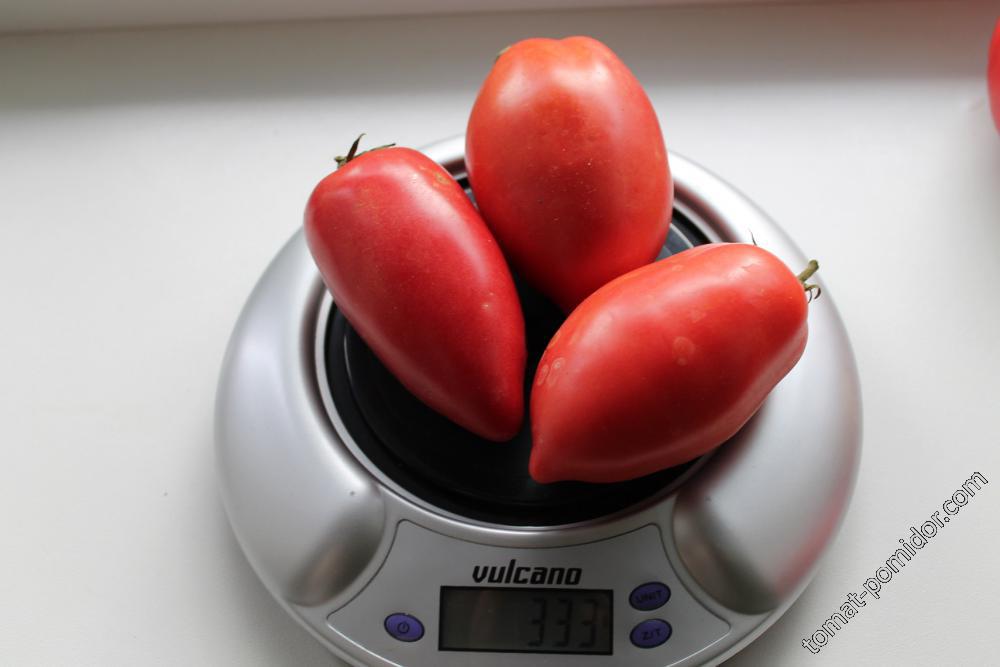
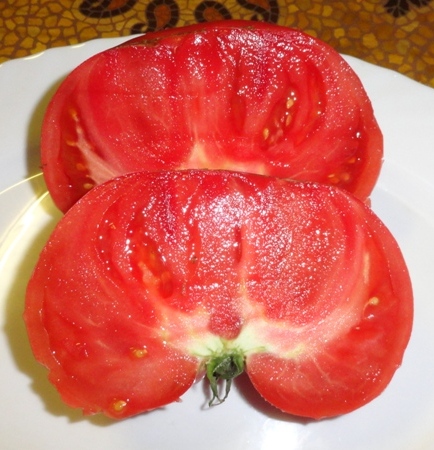
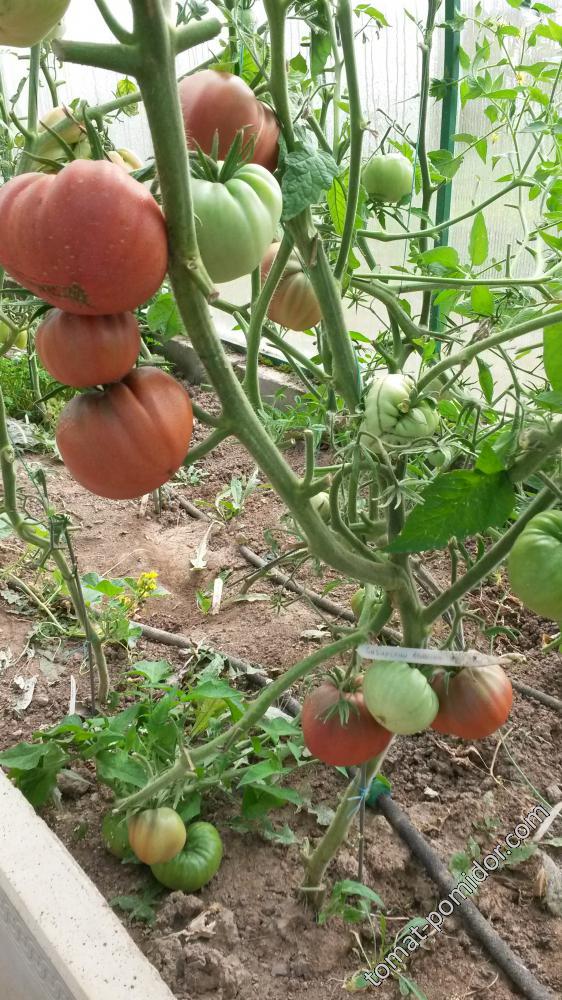
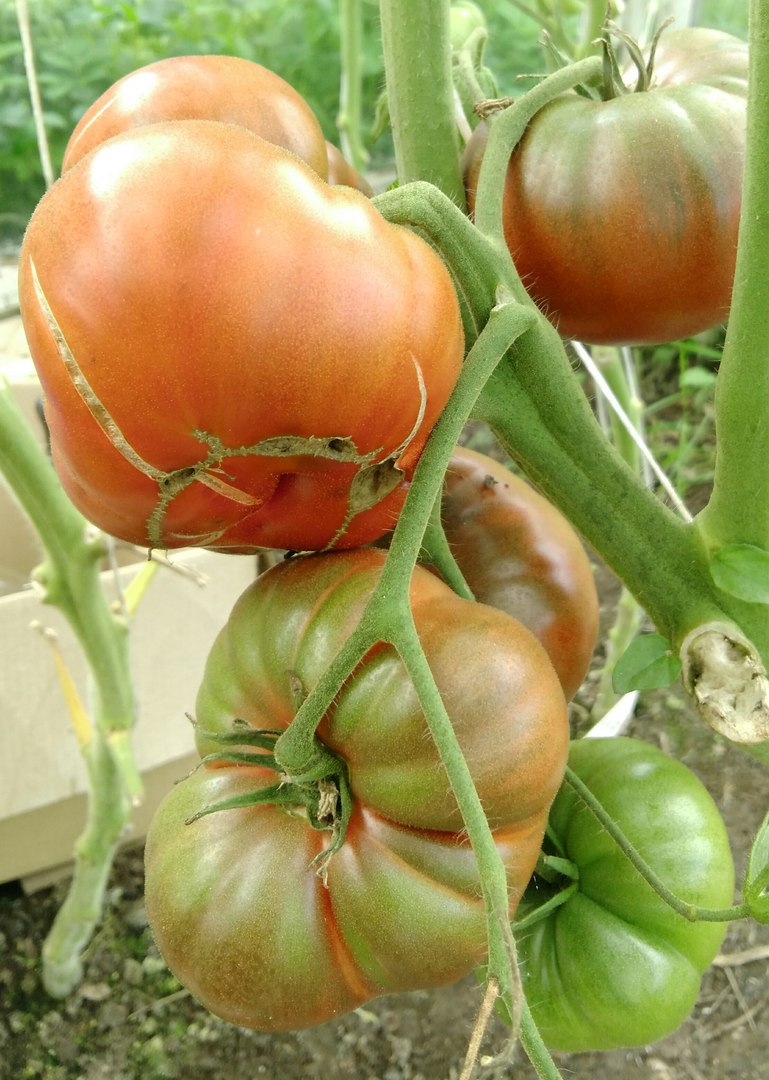
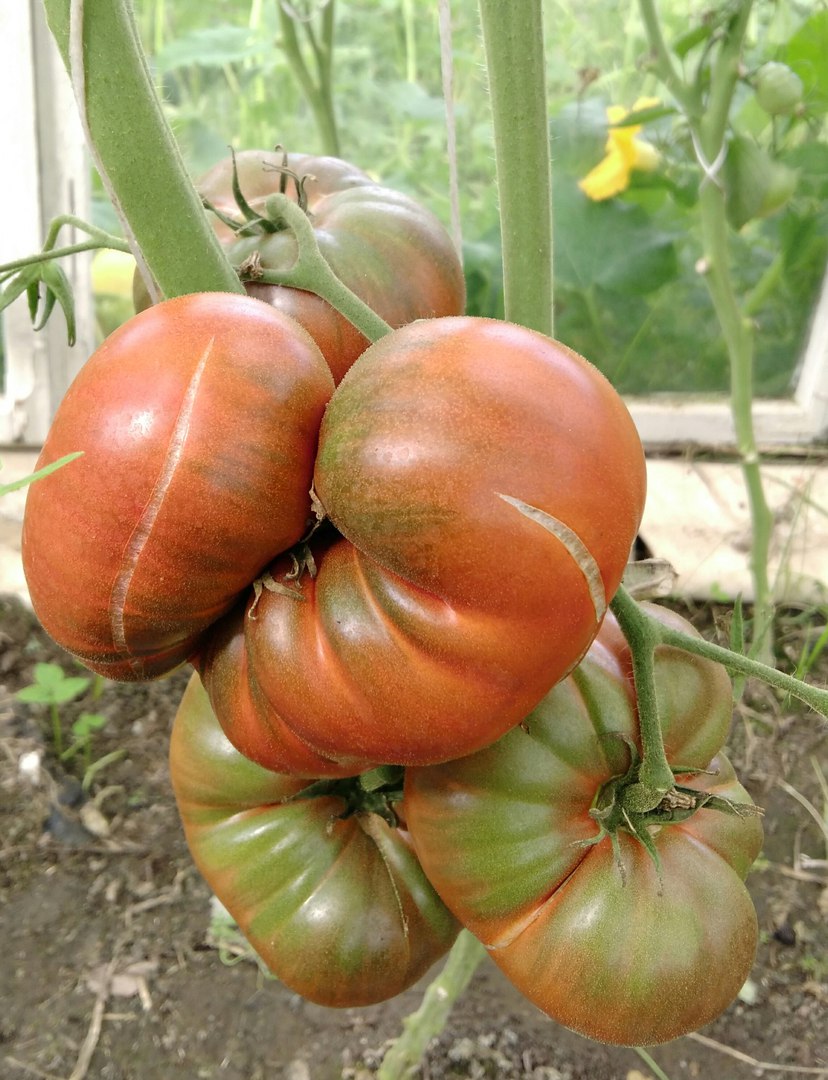
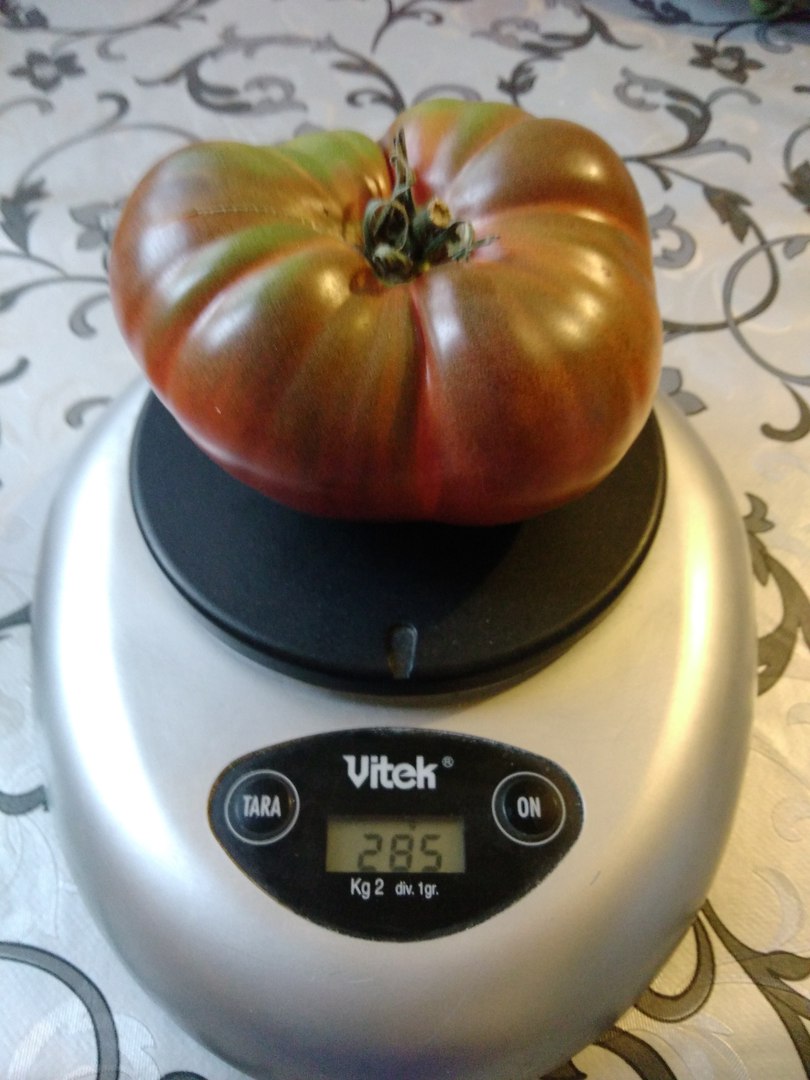
- 🍅 Fruit Characteristics: Medium to large beefsteaks, weighing from 150g up to 500g (5–17 oz). They ripen to a beautiful deep chocolate/dark red color. Note: they often retain green shoulders and have very thin skin.
- 👅 Flavor & Texture: Famous for its rich, sweet, and complex “black tomato” flavor profile, complete with smoky and spicy undertones. Very juicy.
- ⚠️ Growing Challenges: The thin skin makes it prone to cracking (especially after heavy rain). It has a very short shelf life and does not transport well, making it strictly a home-garden variety meant to be eaten fresh.
A veteran of my collection… a legendary, mid-season variety with chocolate-colored fruits.
The variety was bred back in the Soviet Union in the thirties, and named after the American opera singer and actor…
The plant is mid-tall, vigorous, and resilient. I grew it this season outdoors in open ground with a temporary cover in the spring. Timely prevention against fungal and viral diseases allowed the plant to fully form its harvest outdoors, and the fruits ripened on the vine. They are quite large, up to 250–300g (8.8–10.5 oz), dark chocolate color, with a pleasant taste.
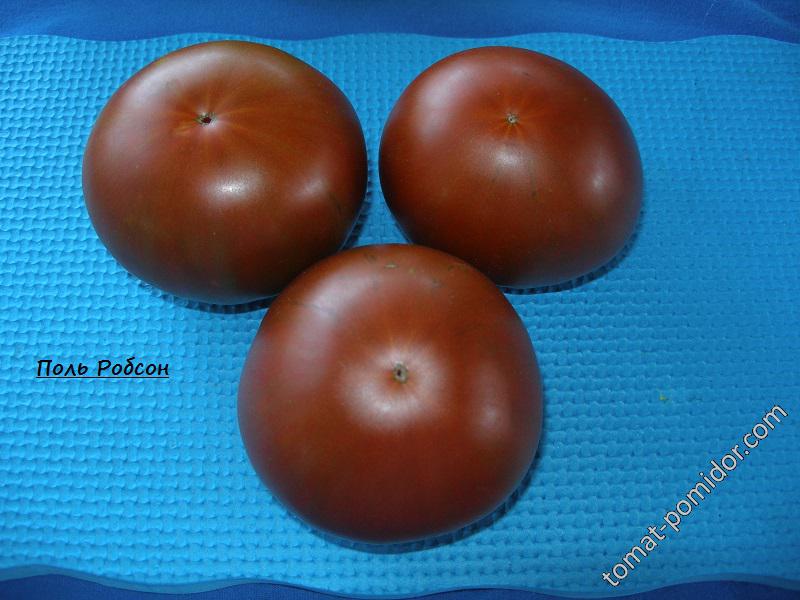
Grew it in the greenhouse last season. Yield was average. It had green shoulders. But I really loved the taste. I will definitely plant it again.
I grew it in the greenhouse; the yield was average because it turned out to be late for us. I’m not much of an expert on black tomatoes—they all taste practically the same to me—so in a word, it’s delicious in a “black-tomato” kind of way 😄
The fruits were up to 200g (7 oz). Once the rains started, they began to crack, but otherwise, it’s an undemanding variety. If it were an earlier producer, it would take a permanent spot in my top-10 list.
A gorgeous variety. For me in the greenhouse, it behaved more like a short indeterminate. Quite productive, fruits up to 500 grams (1.1 lbs), keeps reasonably well, and very tasty.
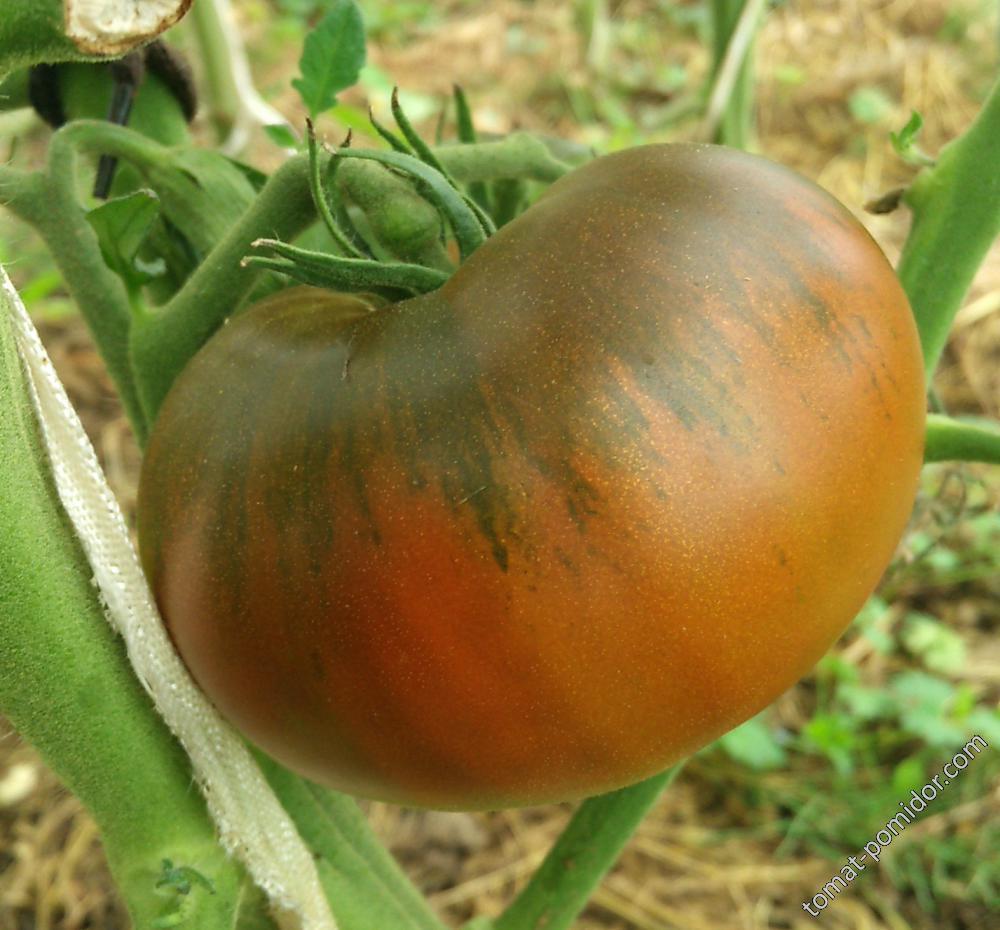
I liked the variety; the seeds were from Dianaseeds. The taste is very good, juicy, with a smoky aroma and spicy notes. It’s just a pity that it doesn’t store well. In the heat, it didn’t reach the 500g mark, and it can crack.
In the greenhouse, it grew to 1.2m (4 ft), the yield was average, and the weight was 100–250g (3.5–8.8 oz). It started ripening in mid-July. It’s very tasty, but some cracked in a circle around the bottom; though the cracks weren’t deep. Makes delicious juice.
I really liked the Paul Robeson variety for its excellent yield and the sweet taste of the fruits.
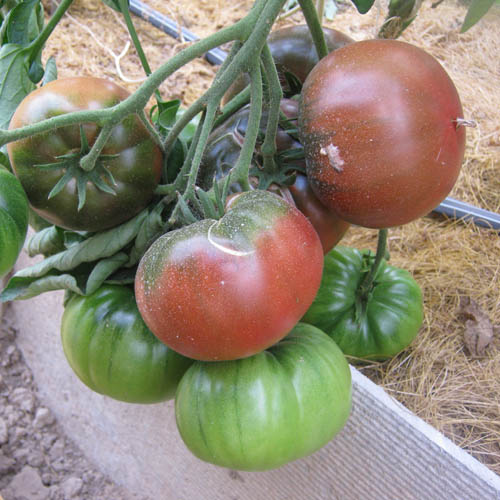
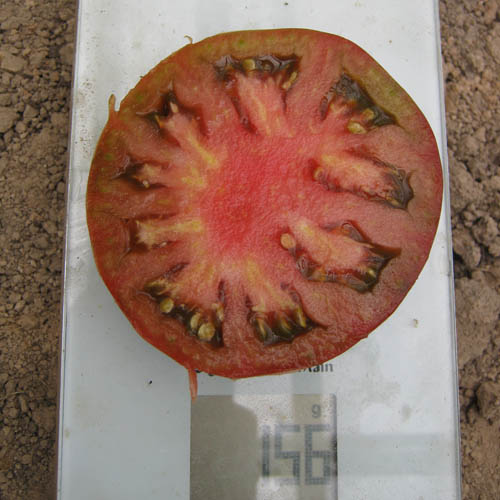
I grew it for the first time in 2016 and I didn’t like it at all. Maybe it was an off-type (wrong seeds). The seeds were from Biotekhnika. The color matched the description. It’s a semi-determinate, its stems split/fork endlessly, but few suckers.
I grew it both outdoors and in the greenhouse. The greenhouse yield was lower (I blame the heat, we had a hot summer last year), while outdoors the tomatoes grew like crazy. But the taste was bland in both places, I had other varieties to compare it with. Average yield, weight 150–200g (5–7 oz).
I had a few bushes last season. It’s a very tasty tomato, with smoky notes as mentioned above. Productive. The downside is that the skin is thin, it doesn’t store at all, and transporting it is also problematic. But I liked it much more than Black Prince and Watermelon varieties.
One of my favorites of the 2016 season. Large, sweet, with a noticeable and characteristic black tomato taste. Very productive and undemanding. It definitely remains a permanent member of my collection!
By the way, he was never an opera singer. The name was given to the tomato during the Cold War, in the 60s. The author of the variety is M. Danilenko, bred, as stated on Wikipedia, in 1965.
I planted it for the first time in 2018 outdoors in open ground and liked it. Large, productive, tasty. Repeated it in 2019 but in the polycarbonate greenhouse; it was productive, but the tomatoes were significantly smaller. In my case, it liked being outdoors much better.