Grower’s Review and Photos (USDA Zone 11 Experience)
Perle de Lait (Pearl of Milk) is a French heirloom, though its exact ancient backstory remains unrecorded. Seeds were originally obtained by French collector Pascal Antigny from an old gardener in the Loire-Atlantique region.This is a mid-season indeterminate variety featuring heavy production and an exceptionally long harvest season. In my garden, it set every single cluster without skipping a beat, no dropped blossoms anywhere. My seed stock came from Valdis Pulins in Latvia.
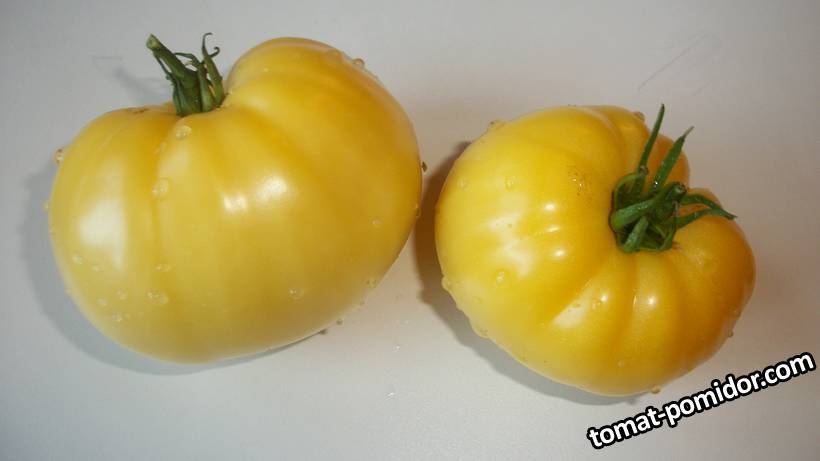
The plant is sturdy, heavily leafed out with regular foliage, and topped out at 6 ft (1.8 m). I trained mine to two main stems. Clusters hold 2 to 3 fruits each, weighing anywhere from 7-14 oz (200-400 g) and measuring roughly 3 inches (8 cm) across. Shape is an oblate, lightly ribbed beefsteak.
Texture, Shelf Life, and Low-Acid Dietary Benefits
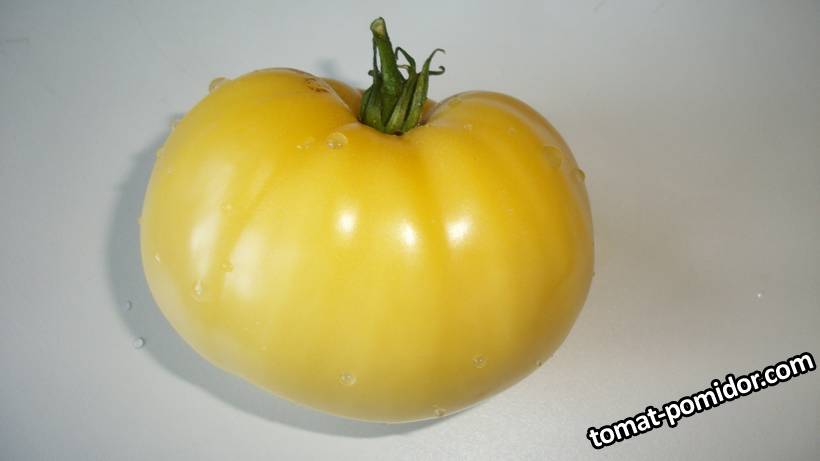
The fruits are juicy and exceptionally meaty, true to the best white-fruited heirlooms. The skin is a warm creamy-white with pale yellow highlights, developing a soft pink veil over the blossom end as it reaches peak ripeness. The delicate interior flesh is milk-white with a blush of pink swirled right through the center. Flavor is sweet with a very pleasant, mild aroma.
Here is what sets it apart: unlike many white varieties that spoil if you just look at them wrong, Perle de Lait does not turn to mush or get watery, even if you let it hang ripe on the vine for days or store it on the counter. It is also completely crack-resistant.
The reason behind that mild, soothing flavor is the near-total lack of sharp organic acids (like oxalic and uric acids). It lacks standard red lycopene and purple anthocyanin pigments, but makes up for it with higher natural sugars, giving you pure sweetness without the aggressive tomato bite. It makes a premier fresh slicing tomato for platters and salads. I fell in love with Perle de Lait, I am a huge fan of white heirlooms.
P.S. White tomatoes are considered an ideal dietary food, often recommended for therapeutic diets and young children as an easily digestible source of nutrients. They are fantastic for folks dealing with stomach irritation, liver conditions, or acid-related joint inflammation. Rich in vitamin A, they are sometimes called “calming fruits” and suggested for those prone to nervous tension or irritability. The plant flavones they contain help soothe the nervous system, improve mood, and support healthy circulation. They help balance metabolism and flush excess cholesterol. Sweet, juicy white tomatoes like this can safely be shared even with toddlers.
Edited November 13, 2019 by Tiffany
Full Summary: Growth Habit, Flavor, Shelf Life, and Usage
- 🌿 Plant Type: Indeterminate vine with robust vigor and dense regular foliage. Reaches 6 ft (1.8 m) and trains easily to two leaders. Demonstrates flawless fruit set without blossom drop.
- 🍅 Fruit Appearance & Size: Medium-to-large ribbed beefsteaks, 7-14 oz (200-400 g) and ~3 inches (8 cm) in diameter. Trusses bear 2-3 fruits. Translucent creamy-white skin and flesh developing a warm pink interior blush at the blossom end when fully ripe.
- 👅 Flavor Profile: Exceptionally sweet, fruity, and mellow. Virtually zero tartness or acid bite due to low concentrations of organic acids and high sugar content.
- 📦 Firmness & Keeping Quality: Far superior shelf life compared to typical soft white heirlooms (such as Great White or White Beauty). Does not crack, rupture in humidity, or soften into mush while hanging on the vine.
- 🥗 Best Kitchen Use: Prime slicing tomato for fresh sandwiches, summer caprese platters, and acid-free fresh eating.
- 🌎 Trial Conditions: Grown under intense coastal sunshine and warm subtropical conditions in USDA Zone 11 (Canary Islands, Spain).