Quick Summary of Sevryuga (and Severyuga / Pudovik)
- 🌍 The Naming Mystery: This is one of the most famously debated varieties in the Russian tomato community. Commercially, the Siberian Garden company (SibSad) released it under the names Sevryuga (a type of sturgeon fish) and Pudovik, stating they are the same variety. However, old-school seed savers maintain a separate, older heirloom strain called Severyuga (slang for a “harsh northerner”).
- 🌿 Plant Habit: While commercial packets claim it is a determinate (bush) growing up to 1.5m, experienced growers unanimously agree it behaves as an indeterminate (tall) vine. It produces flower trusses every 3 leaves.
- 🍅 Fruit Characteristics (The Great Divide):
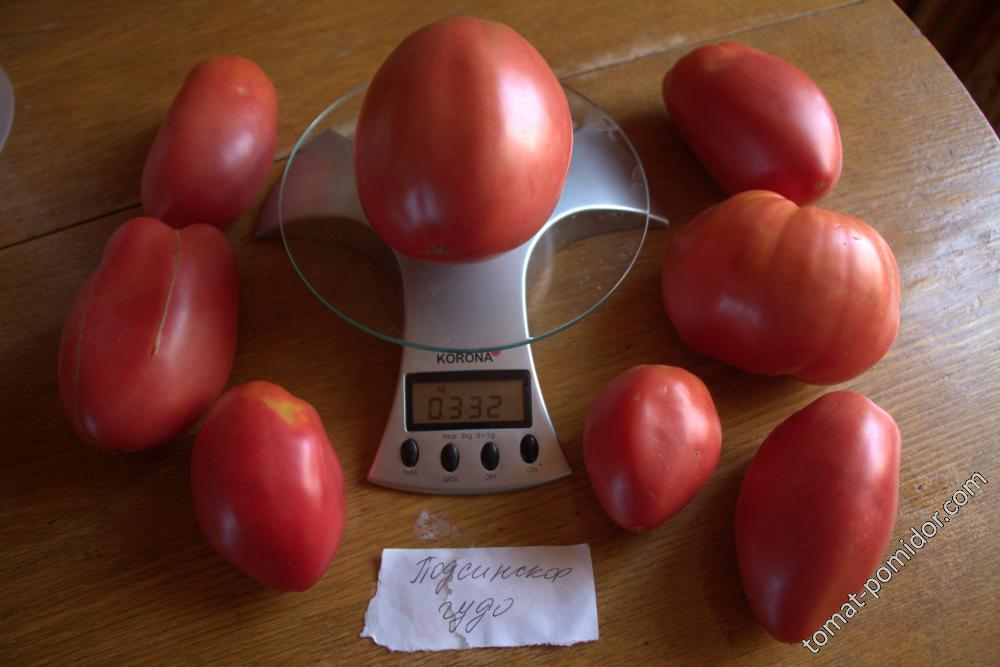
- The Commercial Strain (Sevryuga/Pudovik): Produces massive, beautiful pink, heart-shaped (oxheart) tomatoes.
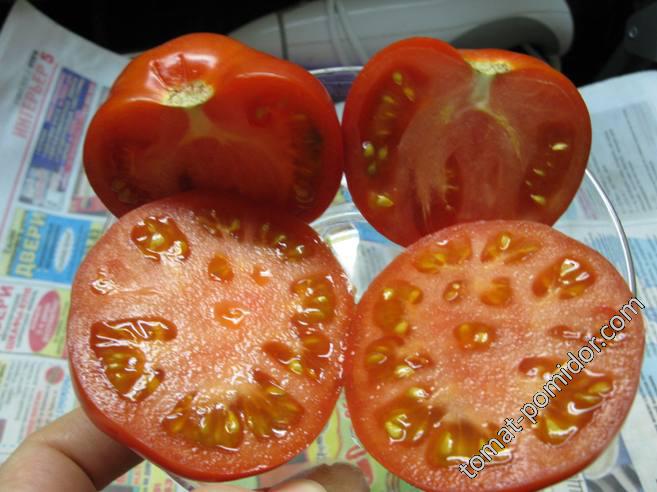
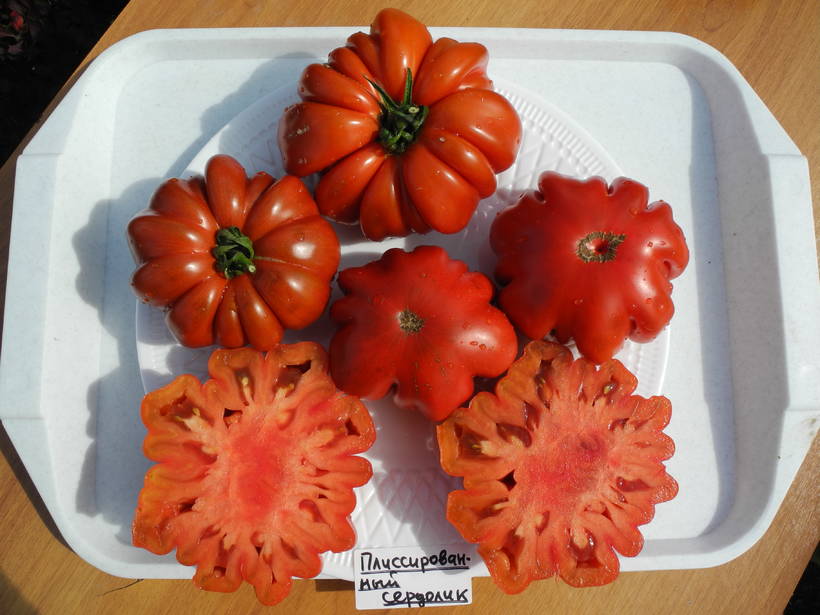
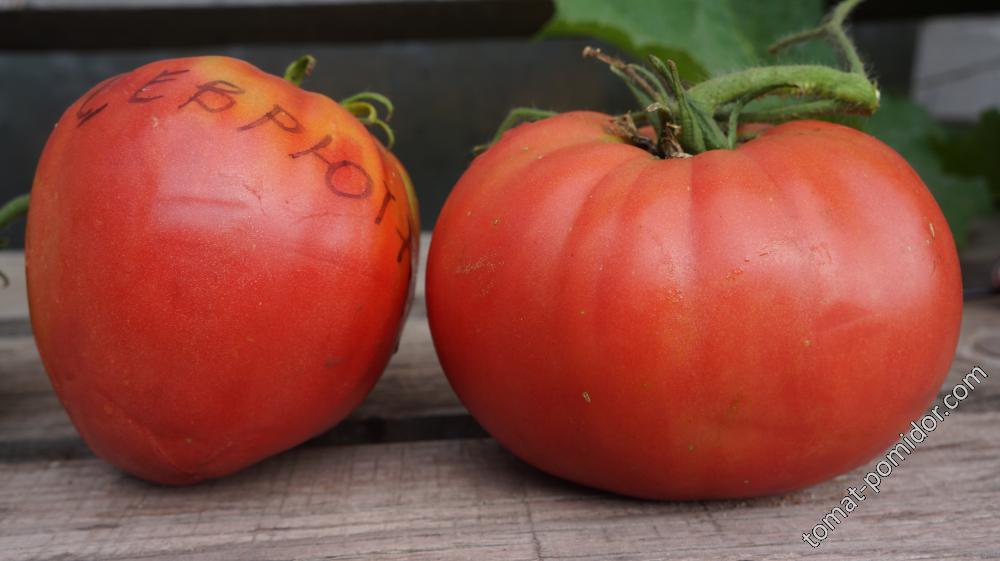
- The Heirloom Strain (Severyuga from MADanilich): Produces massive, red-to-raspberry, heavily ribbed/wrinkled, flat-round (beefsteak) tomatoes, not hearts.
- 👅 Flavor: Regardless of the strain, it is universally praised for its outstanding, sweet, meaty, classic old-fashioned tomato flavor.
- 📈 Yield: Known for producing giant fruits (frequently 500-700g / 1-1.5 lbs) and very high overall yields.
And this is the famous “Severyuga”. The variety is quite early, the fruits are wrinkled (ribbed), the first fruits reached a weight of up to 500g (1.1 lbs), very tasty, but it’s not like that every year; last year the biggest was 350g (12 oz). Up to 6.5-7.0 kg (14-15 lbs) per bush. Not incredibly thick, but I like them.
Edited December 4, 2014 by Drosera

Andrey, is your Sevryuga red? If yes, then I’ll be begging you for some seeds.
The thing is, this year I have 4 bushes of Sevryuga from SibSad growing. Productive, large hearts, started ripening early, delicious, but… every single one of them is pink. Clearly not Sevryuga. Most likely Pudovik.
And I wanted Sevryuga so badly!… 😞
Natasha, Pudovik and Sevryuga are the exact same variety. If it’s pink, it might be Velmozha. 😳
On my seed packet it literally says “Pudovik (Sevryuga)”. I understood they are one and the same. I’ve been planting it for the third year, and they grow as pink, heart-shaped tomatoes.
So what is Sevryuga supposed to be then? And what on earth is growing for Meri and me?
Lyubushka, thanks for the link! I’ve reread that whole thread more than once before writing this. According to the description on the packet, Sevryuga is supposed to be red. But does a red one actually exist at all?
I will definitely save seeds from mine (already marked the fruits on the bushes). But under what name?
I dug through everything. Somewhere I had the packet, but the name on it was “SevEryuga” and here it’s “Sevryuga”. What’s the difference?! Hard to say.
Maybe it’s a typo by the vendors, maybe a typo in general, or maybe they are different names altogether. Although judging by the picture, SEVRYUGA looks just like my sevEryuga. The color of the fruit is raspberry, closer to red, and the weight is up to 700g (1.5 lbs). On average 450-650g (1-1.4 lbs). Very few seeds. For the first time ever, one tomato had zero seeds! First time I’ve seen that.
Quote by Tata55:
The thing is, this year I have 4 bushes of Sevryuga from SibSad growing. Productive, large hearts, started ripening early, delicious, but… every single one of them is pink. Clearly not Sevryuga. Most likely Pudovik.
For as long as I have been growing “Severyuga”, the tomatoes have NEVER been heart-shaped.
Andrey, I think the name doesn’t differ in anything except the spelling.
Quote by Verunya:
Andrey, I think the name doesn’t differ in anything except the spelling.
Well, yeah, yeah. But I would like to write it correctly. I distinctly remember that on the packet I was given about 10 years ago, it was written “SevEryuga”. By the way, it wasn’t a colorful commercial packet, just a plain paper one.
Actually, “Sevryuga” is a species of FISH, so I lean towards the name “Severyuga” [Note: slang for harsh northern conditions].
It’s a large-fruited variety for northern regions, up to 2 meters (6.5 ft) tall. Maybe I’m wrong — I’m not entirely sure.