📌 Quick Summary (TL;DR): Fixing Leggy Tomato Sprouts
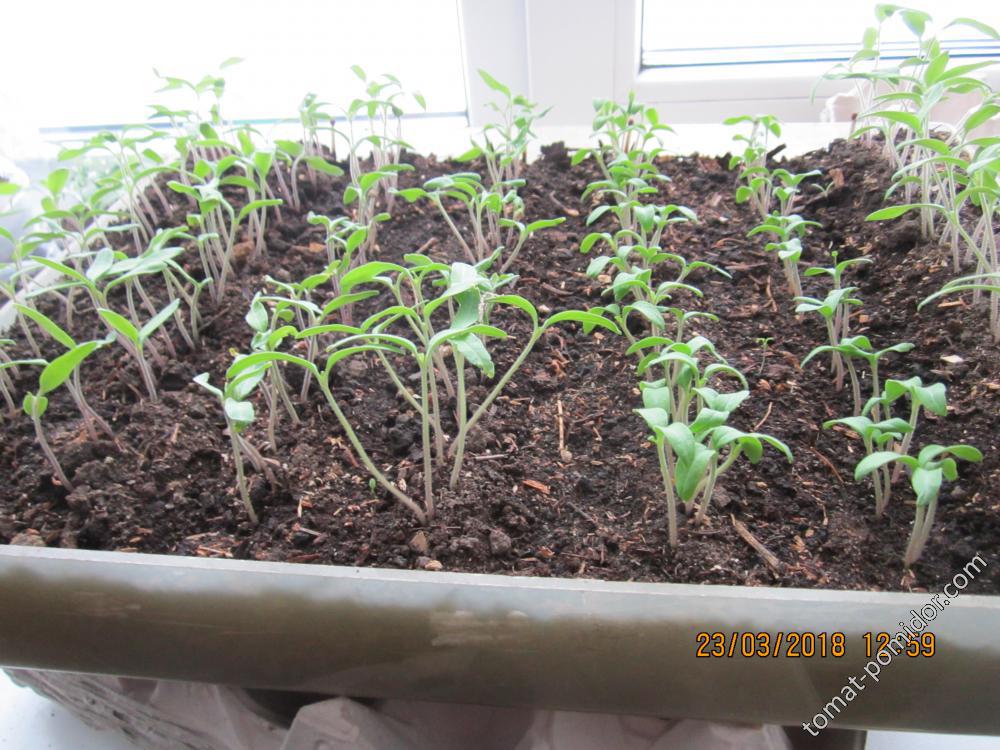
- 🌱 The Problem: You left the humidity dome on too long, or the trays didn’t get enough light, and now your newly emerged sprouts (still in the cotyledon / seed-leaf stage) are extremely tall, spindly, and “leggy”.
- 💡 The Solution: Don’t throw them away! Because tomatoes can grow adventitious roots all along their stem, you can bury the extra stem right away to fix the problem and build a stronger root system early on.
- 🛠️ The “Diagonal Arc” Method: Take a small starter pot or cell pack and scoop out the soil at a 45-degree angle. Lay the tiny, leggy sprout down into the trench in a gentle arc or U-shape (it’s okay if the taproot points slightly upward). Gently bury the stem, keeping just the cotyledons (seed leaves) centered above the soil.
- ⚠️ Pro Tip: Do this in the afternoon/evening and do not water the sprouts before transplanting! Letting them get slightly thirsty makes the fragile, young stems soft and pliable so they won’t snap when you bend them. After transplanting, water only around the edges of the cell to prevent stem rot (damping off).
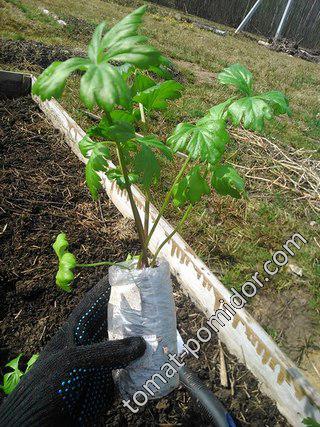
Photo author: MADanilych
Good afternoon Ludmila and guests of your garden diary!
This is the first time this has happened to me. I went out of town and didn’t expect the tomato seeds to pop up so fast. I completely missed the germination. The tiny sprouts got incredibly leggy and spindly, and the delicate stems even bent and curled under the humidity dome.
Can this be fixed right now while they are so young? Maybe transplant and bury them deeper? Or is it a lost cause and I shouldn’t even bother because nothing good will come of them?
Schurka (Marina) wrote:
Can this be fixed right now while they are so young? Maybe transplant and bury them deeper? Or is it a lost cause…
You absolutely can, and it’s actually very easy. I even did an experiment on this once.
I sowed some tomatoes and intentionally let them stretch out right after the seed leaves (cotyledons) opened, just to see how far they’d go and what could be done with them to fix it. And last year, I actually ended up in the hospital right when my seeds were sprouting. They weren’t even on the windowsill, just sitting on a table in a dark room.
Here’s what I did. I filled plug trays (or other small starter cells) with loose potting mix, tapped them a bit to settle the soil, and planted them like this: I used a spoon to scoop out a trench diagonally at a 45-degree angle in the cell.
Then I took the newly emerged sprout with a little bit of soil still on the root and laid it down in that diagonal trench in an arc (sometimes the taproot was even pointing slightly upwards). I carefully covered it with soil, supporting the stem so the top seed leaves were centered in the pot. Then I gently firmed the soil with my fingers and watered only around the outer edges of the cell.
The most important trick: you need to do this in the afternoon or evening, and make sure you do NOT water the sprouts beforehand. That way, the fragile stem is flexible and pliable. Once planted, you must water carefully around the edges of the pot so the buried stem doesn’t rot (damping off).