Quick Summary of Taymyr
- 🌍 Origin: An ultra-early commercial Russian variety introduced by the “Biotechnica” seed company. It is named after the Taymyr Peninsula in the extreme north of Siberia, hinting at its exceptional cold tolerance.
- 🌿 Plant Habit: Originally bred to be an ultra-compact determinate (dwarf/tree-type) bush, reaching only 30 cm (12 inches) in height. It is highly recommended for container gardening or very tight spacing in open ground.
- ⚠️ Fertilizer Warning: The seed packet specifically warns NOT to use nitrogen-based fertilizers after planting it in the ground. If overfed with nitrogen (or long-release fertilizers), it will abandon its dwarf genetics, throw out massive suckers, and grow into a sprawling 1-meter (3.3 ft) tall bush!
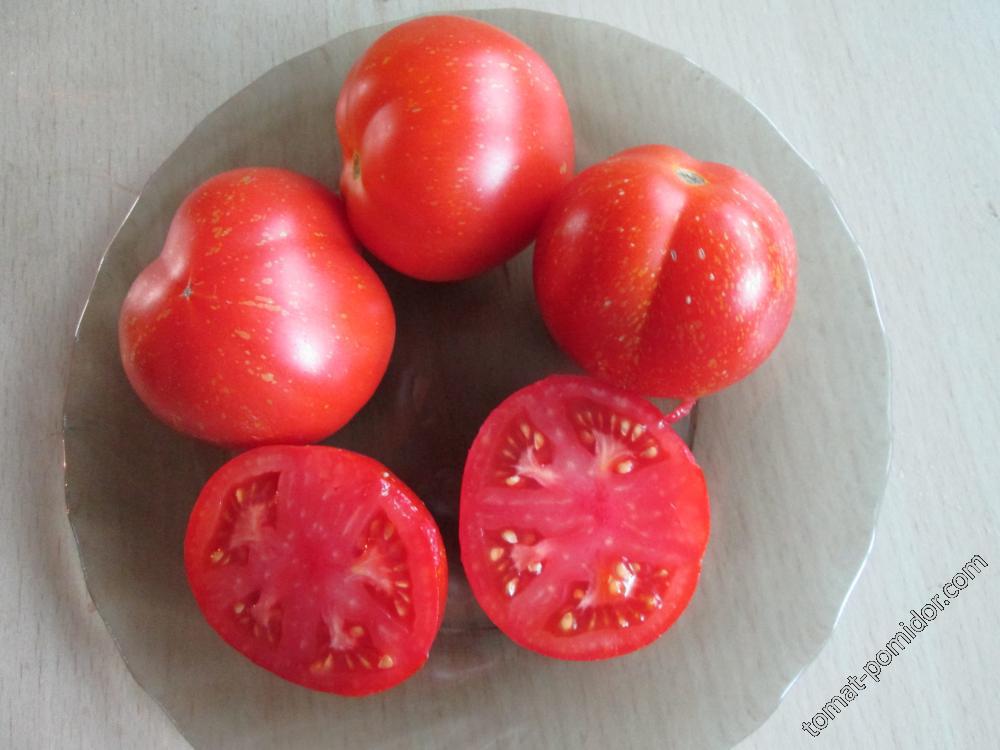
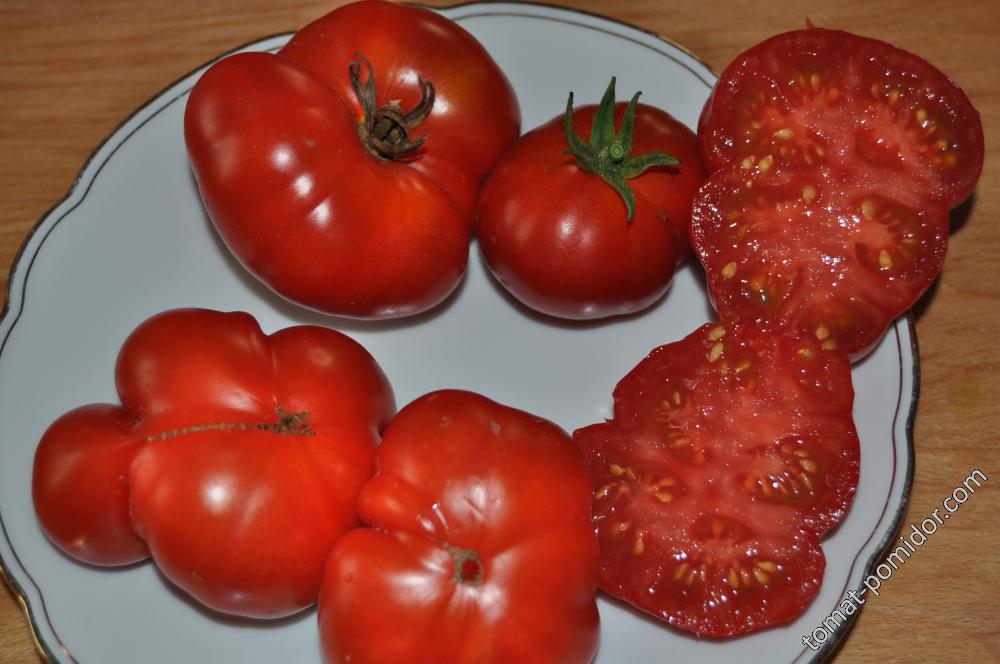
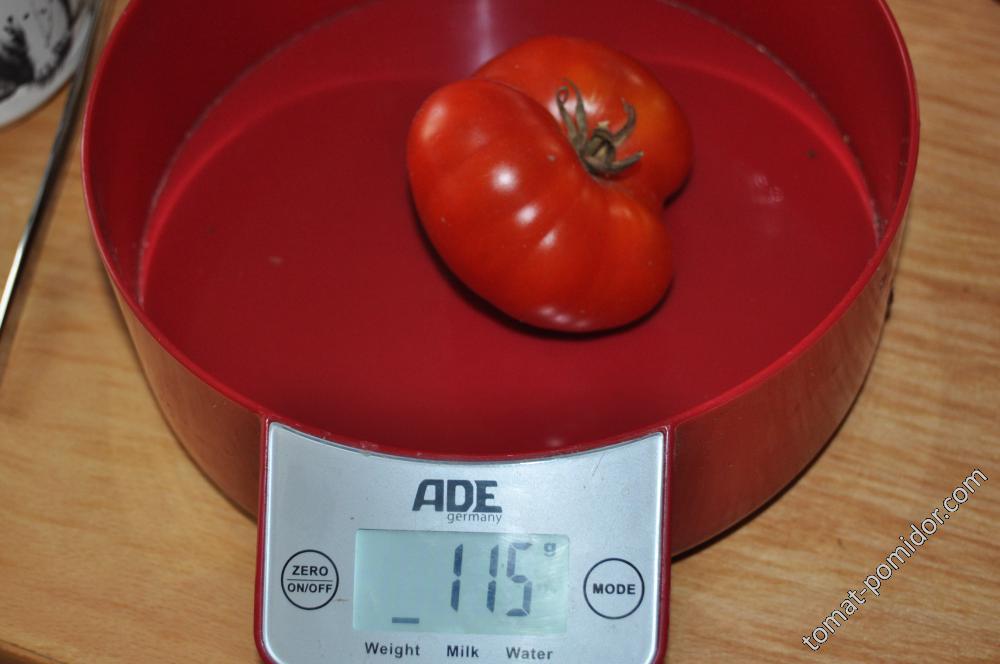
- 🍅 Fruit Characteristics: Small-to-medium round red tomatoes.
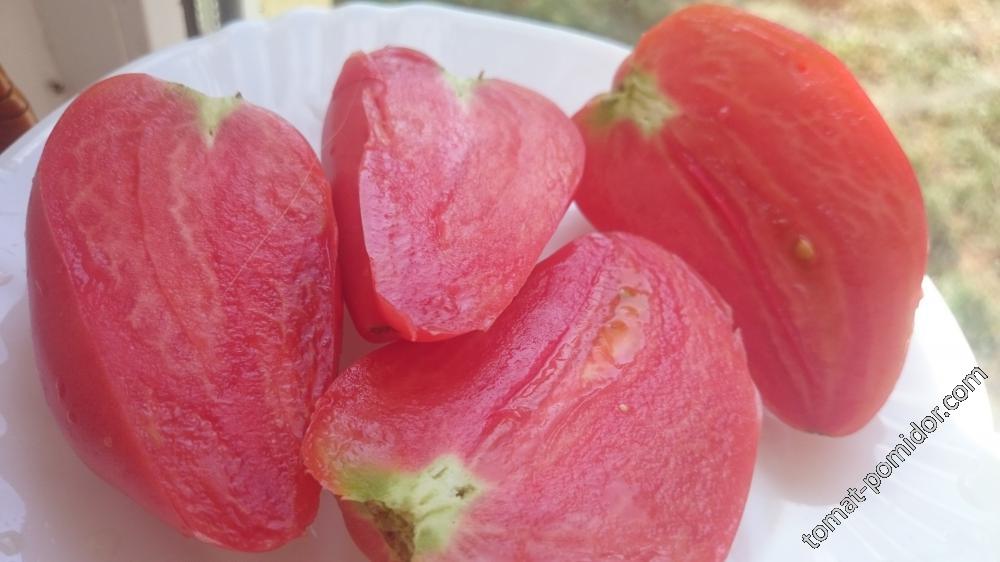
- 👅 Flavor: The seed packet is suspiciously quiet about the taste, but growers report that it is surprisingly fantastic for such an early variety. It has a wonderful balance of soft tartness followed by sweet notes.
- ⏳ Maturity: Ultra-early. It ripens its crop so fast that it completely dodges the late summer onset of Late Blight (Phytophthora).
- 🌱 Propagation Hack: Because it grows so quickly, growers note that you can easily root the lower suckers in mid-summer, plant them out, and get a full second harvest from those clones exactly one month later!
Our variety is from the “Biotechnica” company. It is supposed to be a tree-type dwarf up to 30 cm (12 inches), and the yield matches the description—up to 1.5 kg (3.3 lbs) per bush. The fruits ripen completely on the vine.
There was absolutely nothing written about the taste on the seed packet; they were shy about it, but in vain. The taste is unforgettable—a soft tanginess, followed by sweetness, a very wonderful combination for this ultra-early variety. You can eat it straight from the bush just like that, it’s good without any seasonings.
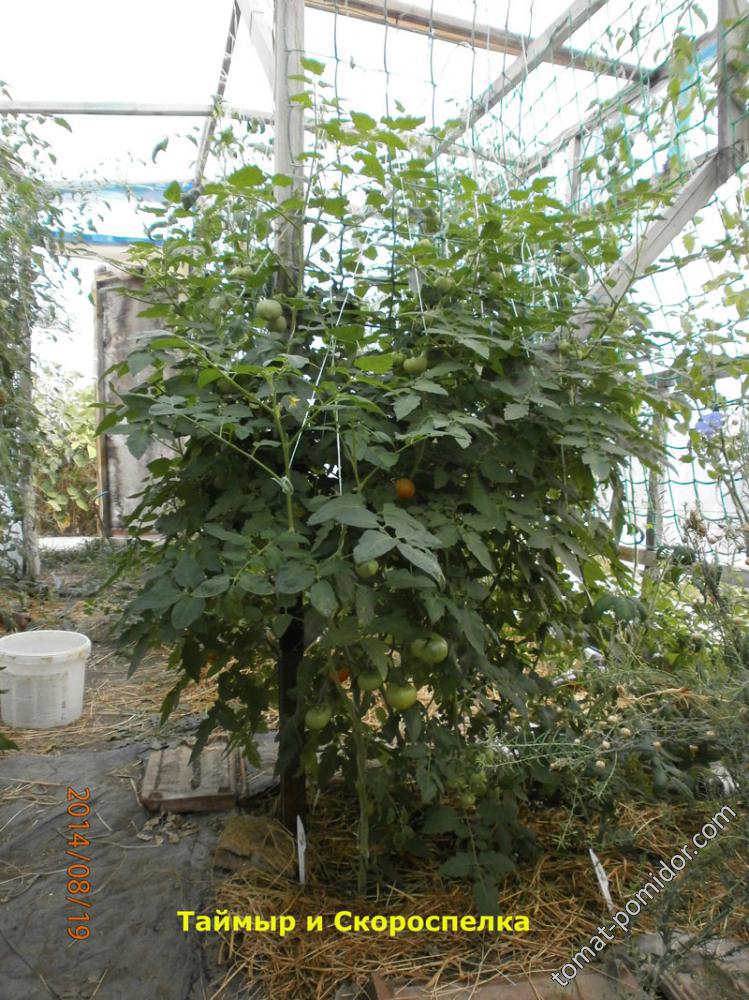
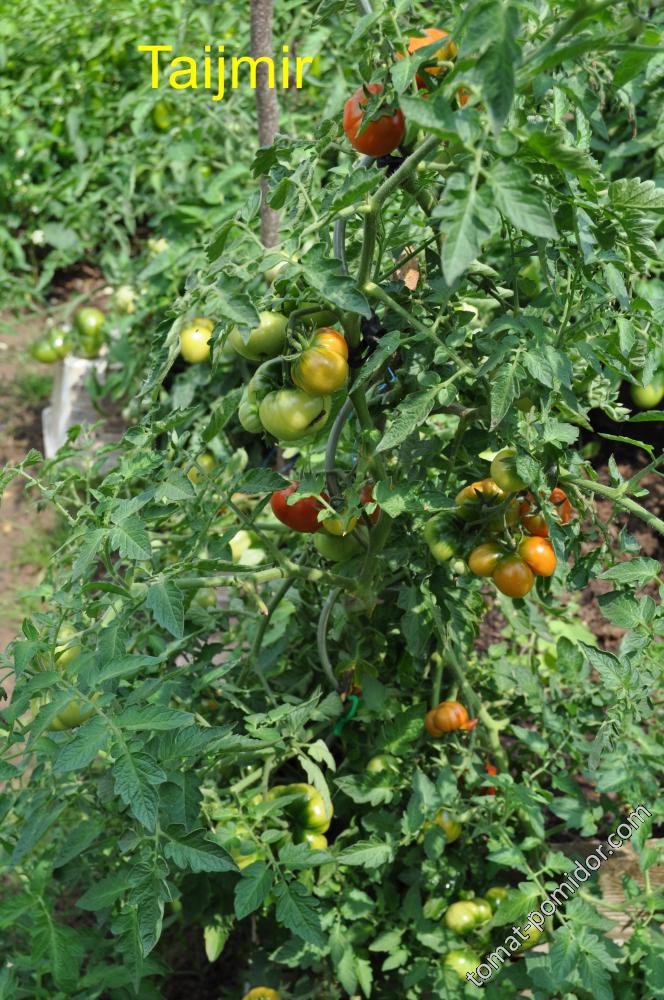
They recommend sowing the seeds for seedlings in the second half of April. We sowed on February 10, and potted up this specific bush on February 19—because who can actually wait until mid-April?! 😄 It turned out to be an excellent, massive bush, over 1 meter (3.3 ft) tall, with more than 20 trusses (compared to the promised 4-5), so the harvest was great. Of course, tying it up was a lot of work, we had to install a heavy support.
The ones we sowed in March grew into small bushes, but still taller than 30 cm.
From the first (large) bush, we rooted 2 lower suckers. We planted one in the open ground and the other under film. They gave a full harvest exactly one month after the main bush. On the packet, they recommend a dense planting of up to 15 bushes per square meter. That would have never worked for us—the bushes grew much taller than the stated height and sprawled out in all directions.
The tallest Taymyr, next to the Polyarnyi Skorospelyi (Polar Early) variety.
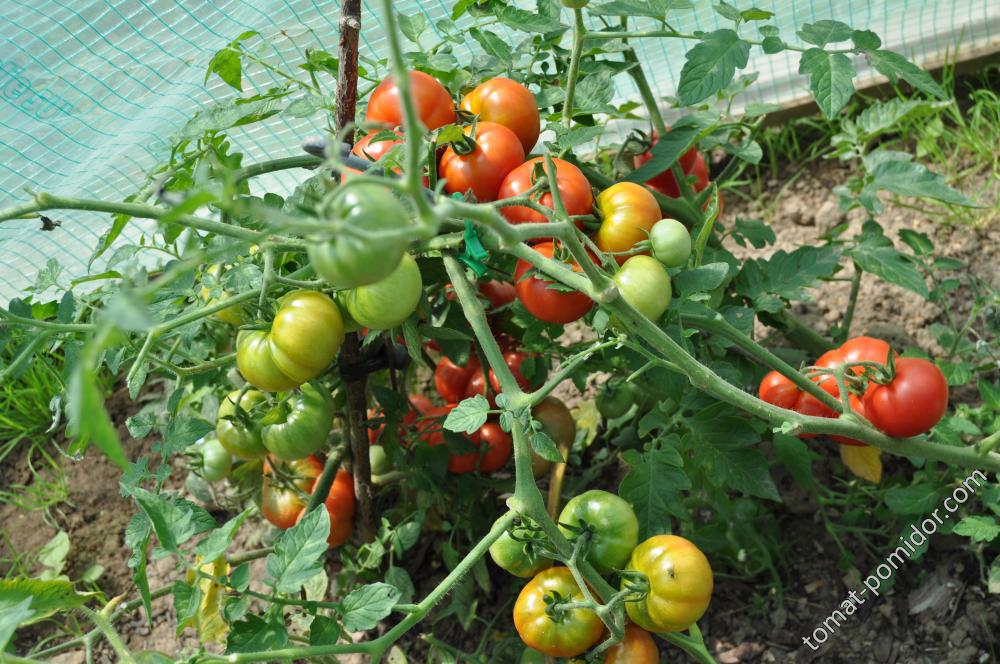
Starting to ripen.
The bush grown from a rooted sucker.
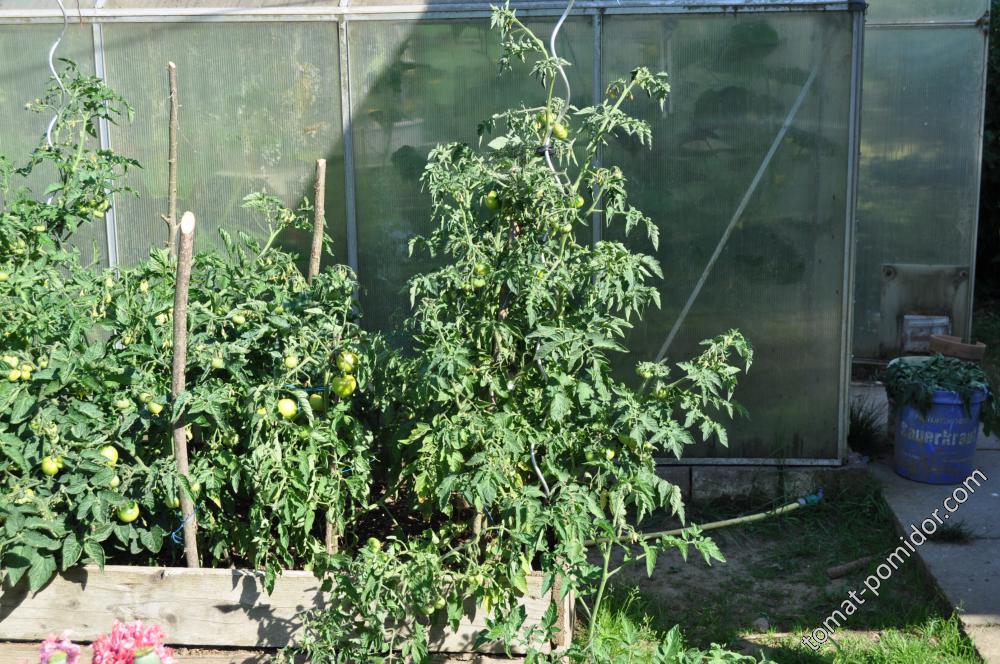
I planted Taymyr in 2013. Sowed it in April, it got leggy, so I had to plant it horizontally in a trench. I didn’t see any suckers on it at all; it pushed out 2-3 trusses, finished fruiting, and that was it. But it is definitely early—it managed to finish completely before late blight (phytophthora) hit, and the blight arrived in early July that year because it was a very wet summer.
I managed to take a good picture—in the second photo, you can clearly see the suckers coming off the main stem, already bearing a harvest. And in the first photo, one sucker is hanging down in front of the wooden boards, and on the right, a large one has already grown, which will also fall down eventually; I’ll put buckets under them for support. It was from this exact bush that the 2 lower suckers were rooted. Even the shorter bushes produced suckers.
I forgot to mention that the packaging specifically states not to feed it with nitrogen-containing fertilizers after planting it in the ground. Which is very difficult to do if you use one single all-purpose fertilizer for all your tomatoes. I used a slow-release, 6-month granular fertilizer. That is almost certainly the reason for the excessive height and the numerous suckers. You live, you learn…
tatiana_F wrote:
I planted Taymyr in 2013… it pushed out 2-3 trusses, finished fruiting, and that was it.
Tanya, I grew two bushes from your seeds, and they reached 1.5m (5 ft) in my greenhouse. Thank you for the seeds! 🌹🌹🌹