Quick Summary of Tomatoberry
- 🌍 Origin & Genetics: Originally released as an F1 commercial hybrid. However, a major point of excitement among forum members is that this variety successfully de-hybridizes! Growers planting F3 and F4 generation seeds saved from previous years report that it repeats its parent characteristics with 100% accuracy.
- 🌿 Plant Habit: Indeterminate (tall), frequently exceeding 2 meters (6.5 ft). The plant is described as tall, slender, and “well-behaved” (it doesn’t aggressively push out excessive suckers).
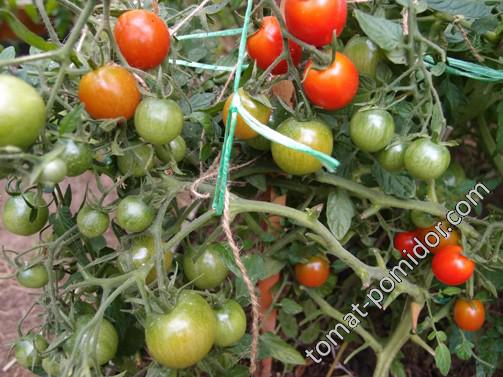
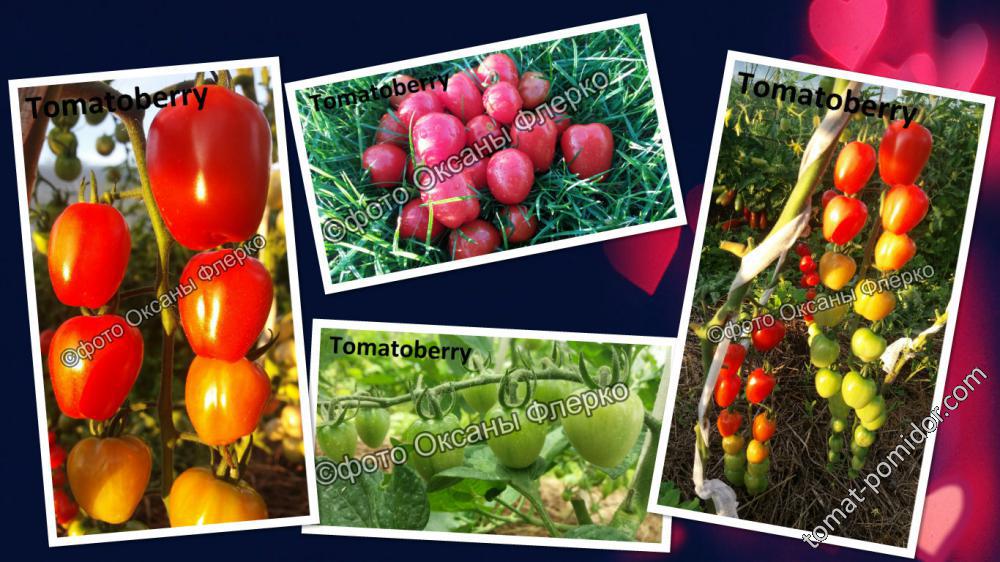
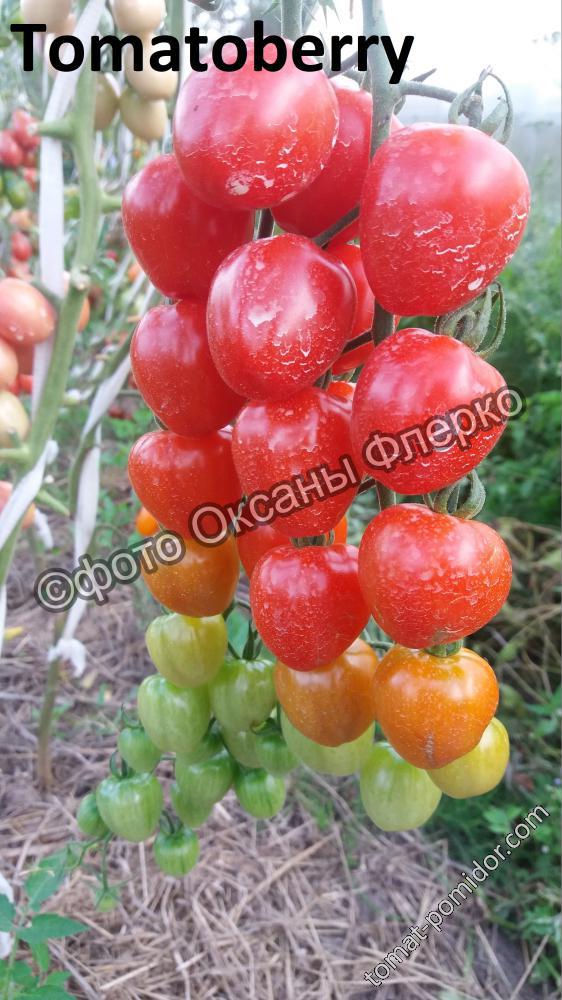
- 🍅 Fruit Characteristics: Gorgeous, bright red cocktail/cherry tomatoes shaped like perfect little strawberries or hearts. They typically weigh 10-13g.
- 👅 Flavor & Texture: Extremely sweet with a very low acid profile—often described as “pure sugar” when grown in full sun. Note: The flesh is very firm and dense, almost crunchy like a store-bought winter tomato.
- ⏳ Maturity & Yield: Early-to-mid season (100-110 days). It is an incredibly heavy yielder, producing massive, sprawling trusses that can reach over half a meter (20+ inches) in length!
- 📦 Storage: Because of their firm texture, these little strawberry-tomatoes have an exceptionally long shelf life after picking.
Indeterminate, over two meters (6.5 ft) tall, long trusses, cherry-type tomatoes.
You have to manage the number of trusses just like you manage the number of stems. I grew it in three stems, topped it in mid-July, and the upper trusses still didn’t have time to set fruit. But maybe the weather was to blame—we practically didn’t have a summer.
The trusses are very beautiful and long; the tomatoes are sweet.
Seeds were from Angelina. (🌹)
People wrote about this variety that it was originally a hybrid.
V. Redko wrote:
You can save Tomatoberry for seeds, it repeats its varietal characteristics. I received seeds of this variety last year from Croatia (the seeds were from someone’s own harvest, not from a commercial packet, so it was already the F3 generation). I planted it last year (making it the F4 generation), and it repeated all characteristics 100%.
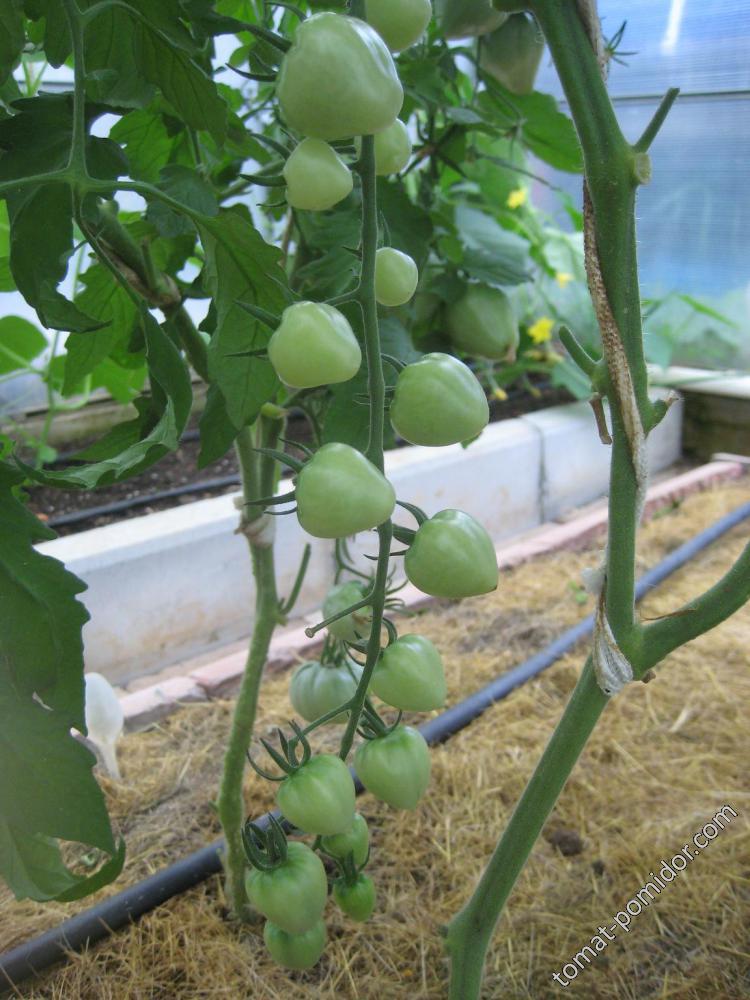
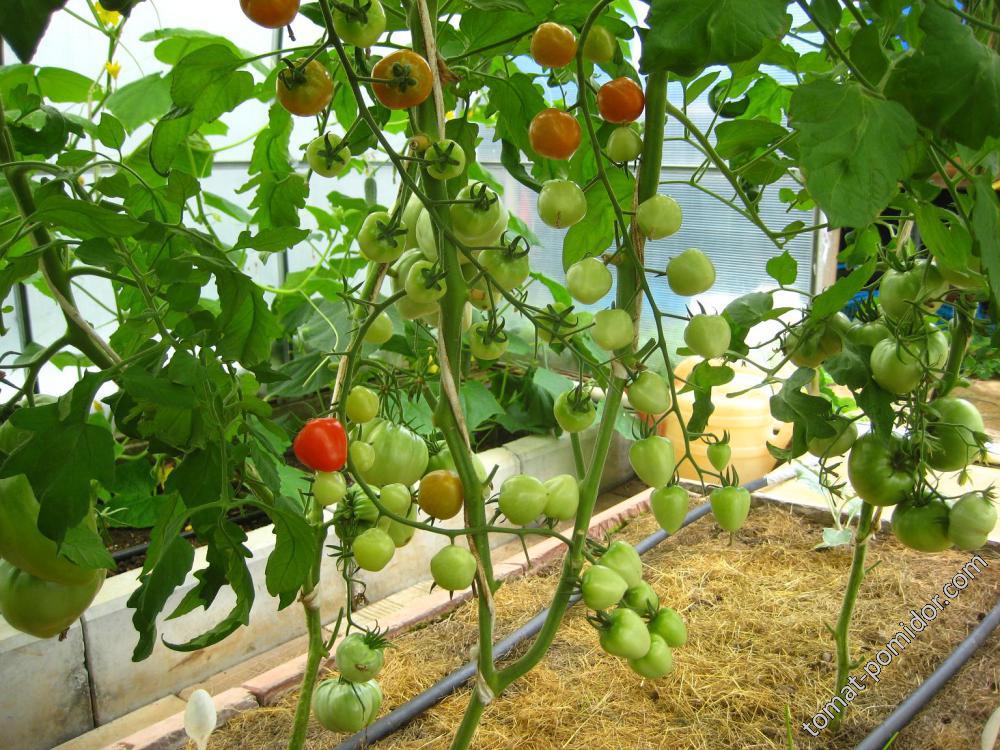
I grew it in 2014, I really liked the taste, sweet little hearts. I didn’t prune (sucker) it, the bush was not overly aggressive, very sturdy. The yield is above average 👍
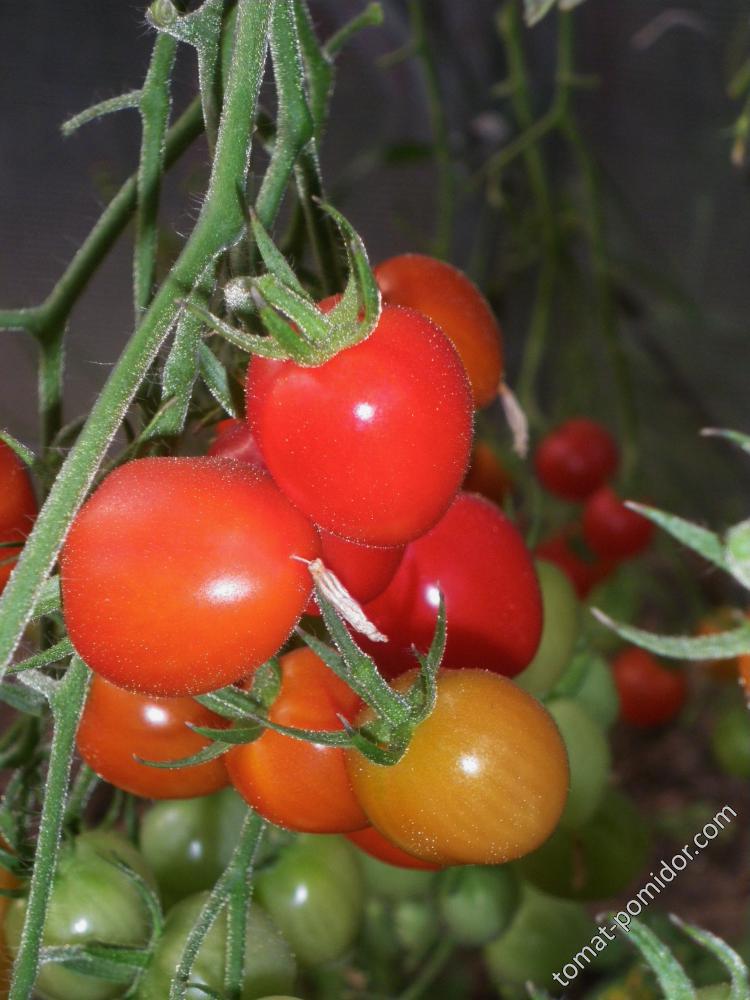


TOMATOBERRY garden – Tall, mid-season, cocktail type tomato. The fruits are glossy red, weighing about 10-13g, shaped like little hearts with a delicate sweet flavor (low acid percentage) and a fairly thin skin, resistant to cracking.
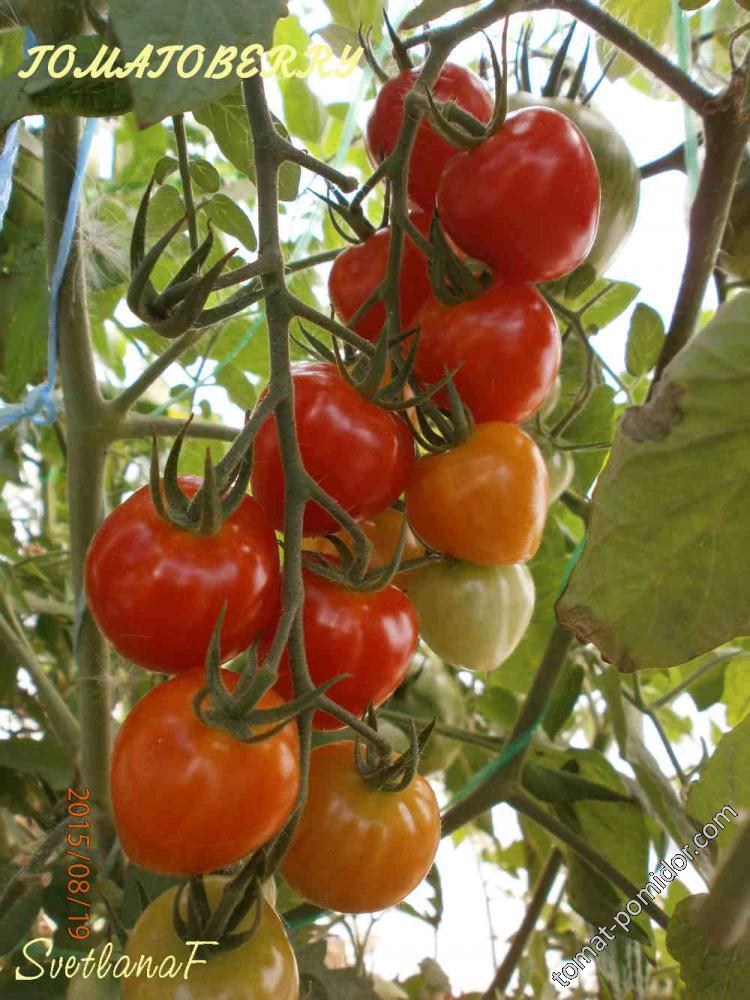
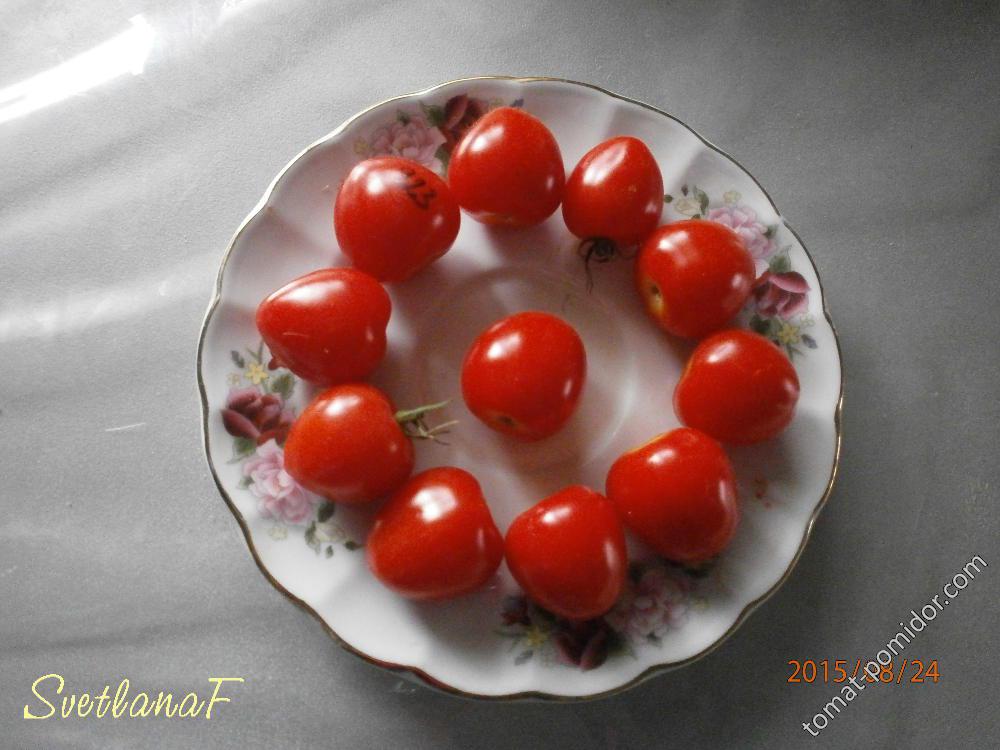
Hello everyone!
I will be growing Tomatoberry for the fourth year in a row. I really like this hybrid, the fruits are tasty, sweet, and the kids eat them with great pleasure. This year I’ll try to save seeds, I read on the forum that the hybrid repeats itself well from seeds.
In 2013, my Tomatoberry looked like this.
Growing in sandy soil, my bushes turned out quite powerful, with beautiful, delicate “lacy” foliage. I specifically saved the first truss to take a picture of it when it fully ripened. 🙂
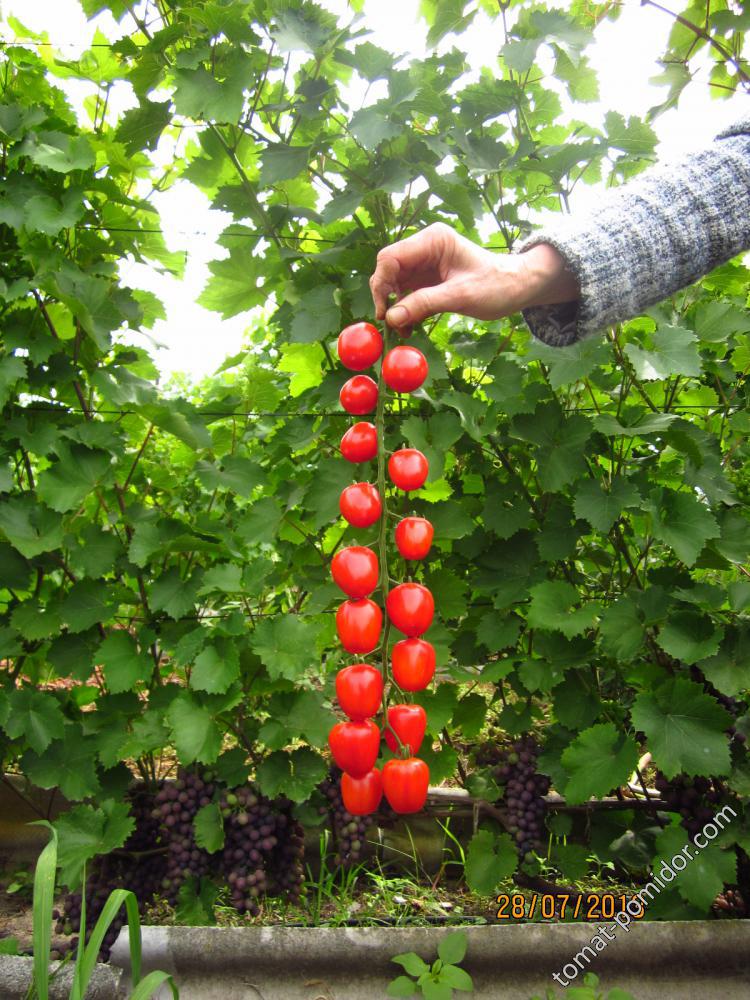
A very productive and beautiful tomato. Grew in open ground, it set completely full trusses. The taste has a slight tanginess to it..
Just one single truss..
The tomato that shoulder-checked my beloved Black Cherry out of its top spot!)
A tall, light-colored, slender but not flimsy indeterminate. It is “well-behaved” in terms of suckers, producing long, highly productive trusses. Just admire the photos. They are over half a meter (20 inches) each! I grew it to the 6th truss keeping only 1 main stem.
It is demanding regarding light during the seedling stage. It won’t die on you, but it will stretch and won’t set its first truss properly. So, sowing it in March without proper conditions (grow lights, 5-liter pots, a heated greenhouse) is pointless. In the open ground, it’s unpretentious. It is heat-, wind-, and “rain”-resistant.
I wouldn’t say it’s completely immune to disease—the leaves slowly degraded from some kind of infection. I didn’t treat it with anything, just picked off the affected leaf sections. It didn’t affect the bush as a whole in any way.
Early. Roughly 100-110 days of vegetation. It was the second one to ripen right after the ultra-early varieties.
Sweet! It’s always sweet—ripe, underripe, even during cold weather. Grown in full sun, it is just pure sugar)))
But there is one tiiiiny flaw) It is hard, almost crunchy. It has the consistency of a store-bought winter tomato. But thanks to that, it stores incredibly well. I don’t even know how long it can last without changing. After the third week, I stopped the experiment and threw them in the freezer) It ripens off the vine (counter-ripens) without any problems, even just dumped in a bulk bag—you don’t even need to lay them out in a single layer.