📌 Quick Summary (TL;DR): Zilbert
- 🌍 Origin: A fascinating case of mixed-up heirloom history! There was once a pink Soviet beefsteak named Zilbert bred in the Ural mountains. However, the variety circulating today under the name “Zilbert” is actually a dark mahogany/black heirloom originating from Germany.
- 🌿 Plant Habit: Indeterminate. An incredibly resilient workhorse that can easily survive intense heatwaves, droughts, and cold snaps while continuing to set fruit. Grows to about 6 feet (1.8 m).
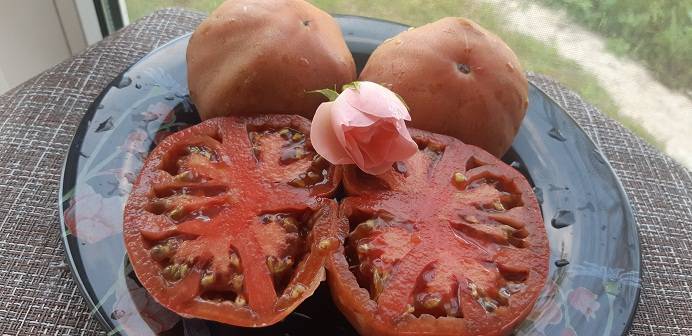
- 🍅 Fruit Characteristics: Oblate (flattened round) dark red-brown or mahogany beefsteaks weighing around 10.5-14 oz (300-400 g). The seeds are surrounded by a distinct green gel.
- 👅 Flavor: A classic, rich “black” tomato flavor. Sweet, juicy, meaty, and slightly tangy, comparable to a smaller Black Krim.
Until recently, I was completely convinced this variety was bred right here in the Middle Urals. I have a 1990 gardening book by famous local horticulturists, and on page 127 it says this:
“Zilbert. Bred by I.I. Zilbert at the Ural Research Institute of Agriculture. The bush is about 5 feet (1.5 m) tall with average foliage. Grow in a greenhouse pruned to 2 stems. The truss holds 5 to 6 sweet and tart fruits weighing 9-12 oz (250-350 g). There is usually one large megabloom on each truss which should be pinched off, otherwise it produces deformed fruit. The fully ripe fruits are pink. Good or very good yield. We once sent seeds of this variety to a grower in the Ukrainian SSR, and he wrote back: ‘I tested forty tomato varieties this year. The best one among them is Zilbert.'”
I was so impressed by that glowing review that I spent a quarter of a century unsuccessfully trying to track down seeds for this variety. Imagine my shock and excitement when, at a local seed swap in Yekaterinburg last March, I heard Galina mention she had grown it! The only weird thing was that Galina thought Zilbert was bred in Germany. Naturally, I begged her for some seeds and planted them in 2020, completely expecting to get pink beefsteaks.
I planted my Zilbert in the center bed of my polycarbonate greenhouse. It grew a bit taller than the book described, hitting about 6 feet (1.8 m). It survived the June cold, the crazy July heatwave where greenhouse temps stayed over 104°F (40°C) for a long time, a month-long drought, and two weeks of August chill. I grew it pruned to 2 stems as instructed. The foliage was average. I didn’t notice any megablooms on the trusses, though. It set 5 fruits per truss, weighing around 10.5-14 oz (300-400 g).
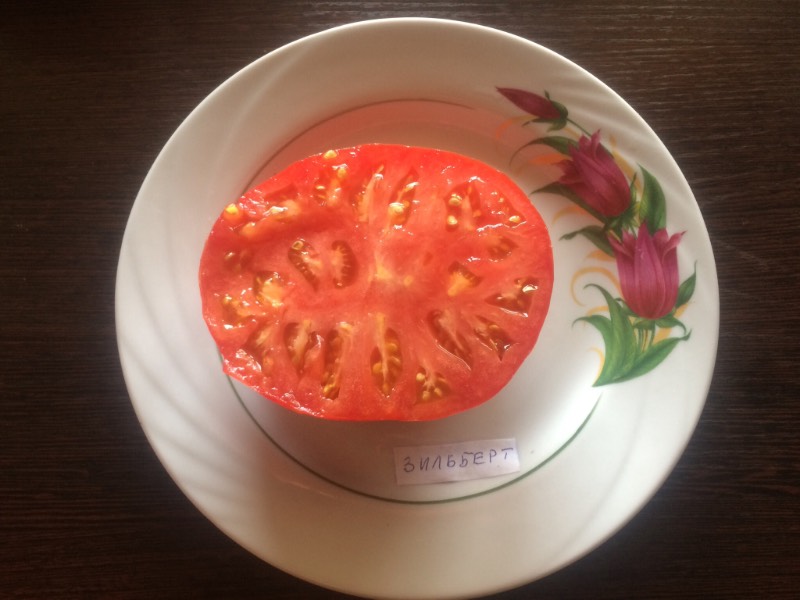
But in the end, the fully ripe fruits weren’t pink at all—they were a red-brown mahogany color! The tomatoes themselves are oblate with a slight dimple at the bottom. Very pleasant taste with a slight tanginess, not bland at all. Juicy, with a lot of dense meat and plenty of seeds.
On top of that, the variety turned out to be mid-season, not early! And it was one of the few varieties this year that successfully sets every truss without dropping blossoms!
I looked it up online and yes, it turns out there is a German variety called Zilbert that is mid-season, highly tolerant to temperature swings, and produces red-brown tomatoes.
Obviously, the original Soviet Zilbert variety has either been lost to time or is currently circulating under a different name. And in its place, we now have a completely different German variety using the same name, which honestly isn’t any worse than the first one, and might even be better.
In my opinion, this German Zilbert deserves a spot in our variety catalog because it has some incredibly valuable traits. For me, it has earned a permanent spot on my grow list right alongside Black Heart and Black from Tula, all thanks to its great flavor, low maintenance, and ability to be a heavy yielder despite extreme heat and cold.
Sergey, my Zilbert matched those exact same characteristics – my seeds were also from Galina. The only difference is that the heatwave really stunted my plant, so it couldn’t reach its full potential. Yes, the fruits are oblate, burgundy or red-brown, with seeds sitting in green gel. Very meaty, juicy, tasty, and sweet. A typical “black” tomato, very similar to Black Krim, but the fruits on mine were a bit smaller.
Hey everyone! The tomato is alive and looks like this:
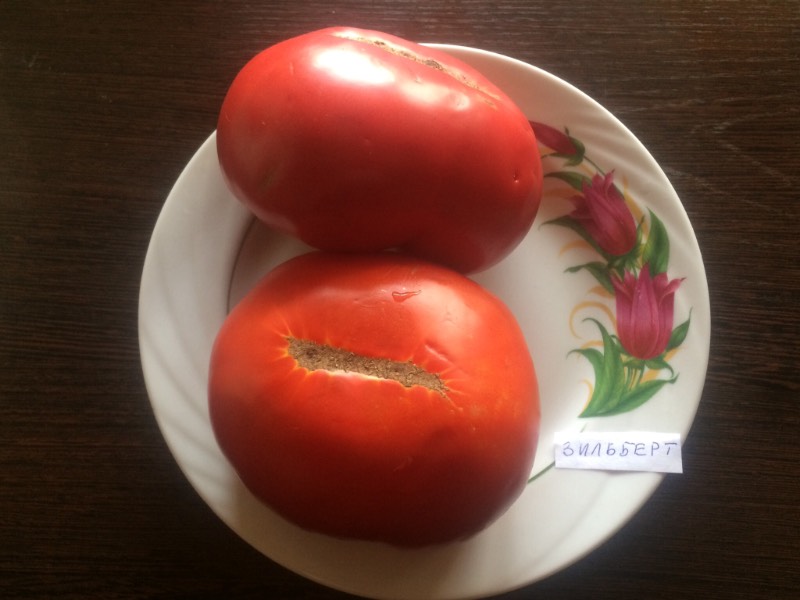
Sergey, thank you so much for the info on this variety!
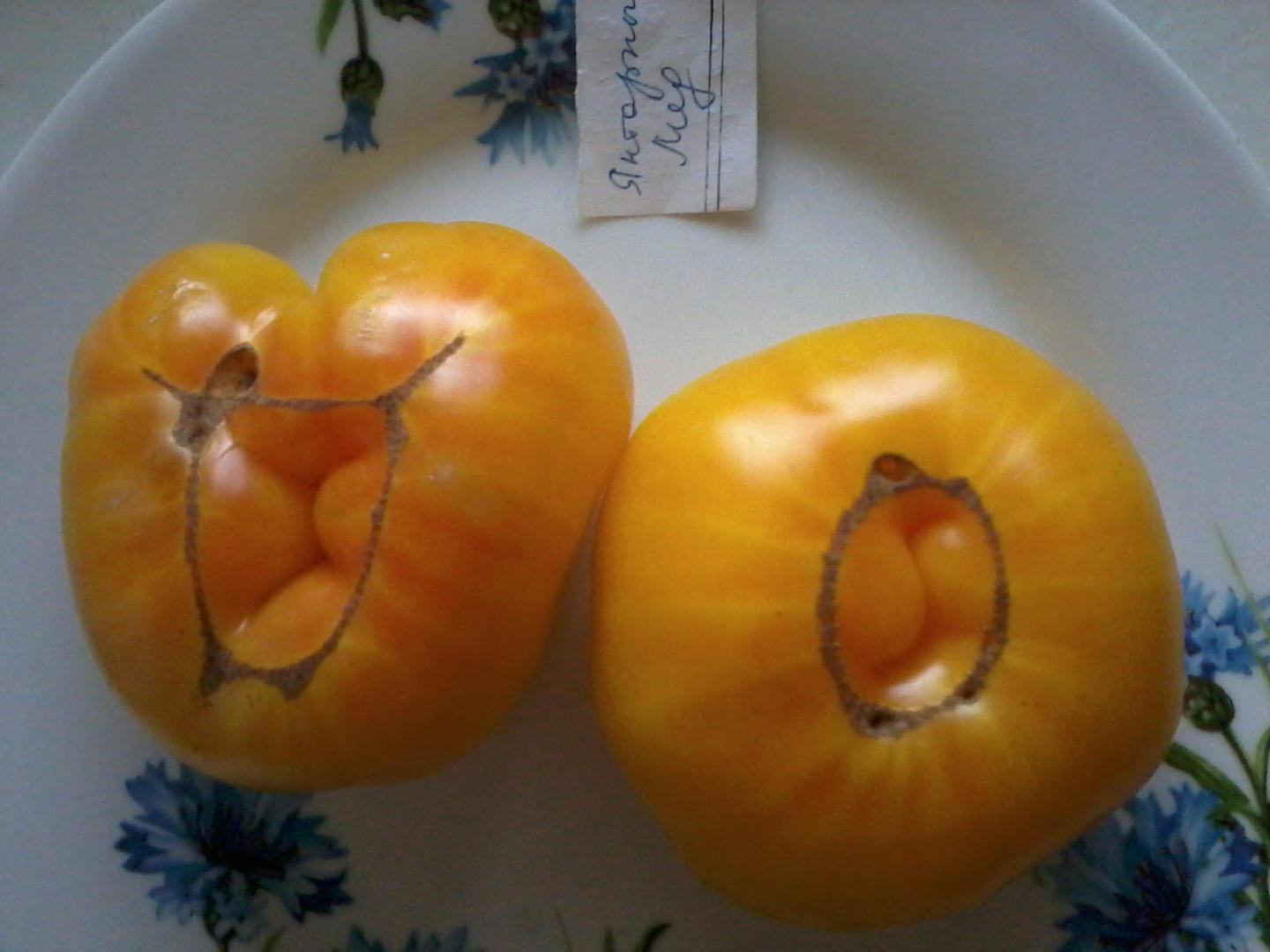
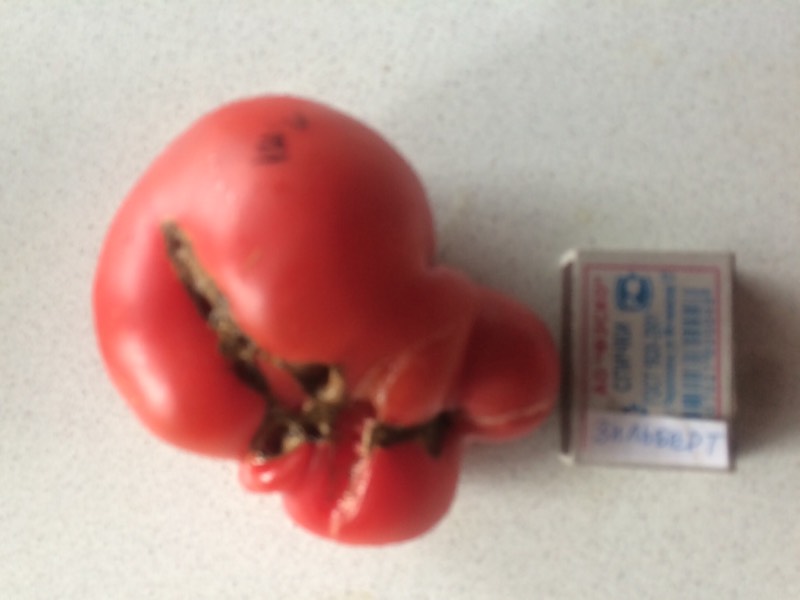
Back in ’20, I actually did get a megabloom, and the fruit that grew from it looked like this:
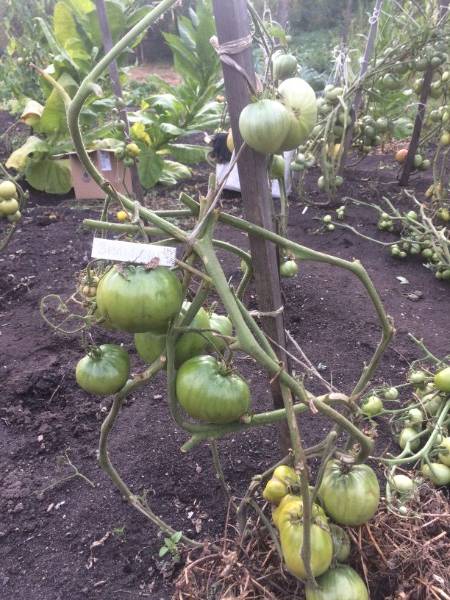
This year I didn’t have any megablooms, and the yield was much higher since it grew outdoors in the dirt.
The story Sergey shares in this thread is a classic example of how chaotic international heirloom seed trading can be!
In the Soviet Union, there was a documented pink beefsteak variety named Zilbert, honoring the agricultural researcher I.I. Zilbert. However, as seeds are passed from hand to hand, names get crossed. At some point in the last couple of decades, the “Zilbert” tag was accidentally attached to a completely unrelated dark mahogany German heirloom.
Today, if you buy or trade seeds for “Zilbert”, you are almost certainly growing the German “black” tomato, which, as the growers note, is an absolute superstar in its own right!