🍅 Quick take: Polish Linguisa is a classic 19th-century indeterminate heirloom paste tomato carrying slender, wispy foliage and massive 7-9 oz (200-250 g) sausage-shaped red fruits with pointed tips. Renowned for its low seed count and remarkably sweet, non-acidic flesh, it is a staple for thick sauce and sun-drying. Like many wispy paste vines, high greenhouse heat can abort upper blossoms, but fruit sizing rebounds vigorously once summer temperatures cool down. Full summary ↓
Growers’ Notes and Field Trials (USDA Zones 4 & 6)
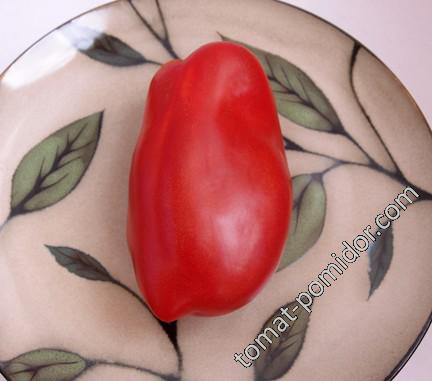
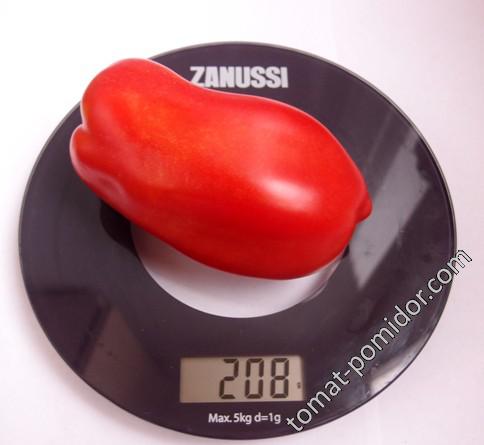
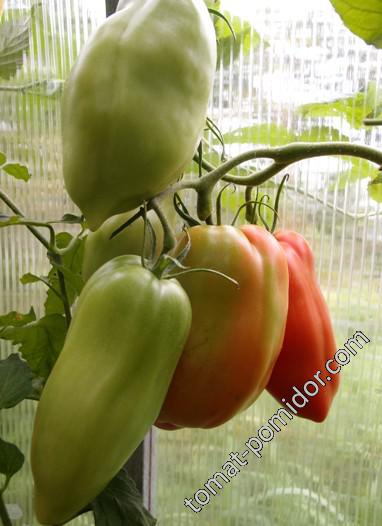
Indeterminate, mid-to-late season variety featuring fine, wispy foliage. Regular leaf type. Fruits are solid red, elongated and pepper-shaped with a pointed tip: dense, meaty, and very low on seed count. In my garden, they turned out genuinely sweet and tasty. Fruit weight averaged 7-9 oz (200-250 g).Grew this in the greenhouse where yield came in right around average, mostly because the top flower clusters completely torched under the glass during our mid-summer heatwave.
Late-Season Sizing, Sauce Reduction, and Dehydrating
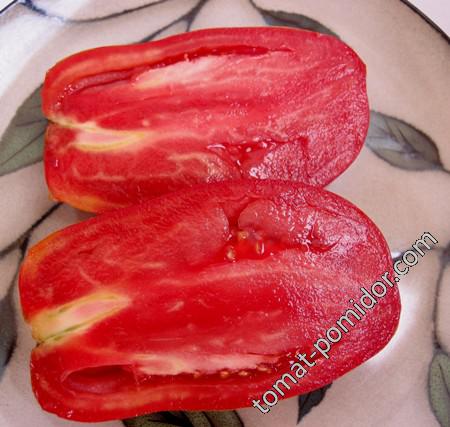
Total showstopper of a variety!Come late summer and autumn, the tomatoes sized up noticeably bigger once that brutal summer heat finally broke. Flesh has medium firmness, very few seeds, sweet and delicious.
We tried drying a batch in the dehydrator and cooked down another batch into thick tomato paste. Both turned out phenomenal.
Full Summary: Vine Habit, Heat Dynamics, Flavor, and Processing
- 🌿 Plant Habit: Indeterminate vine with distinct, slender “wispy” regular foliage. Like many heirloom pastes and oxhearts, the canopy looks delicate but roots deeply and produces vigorously.
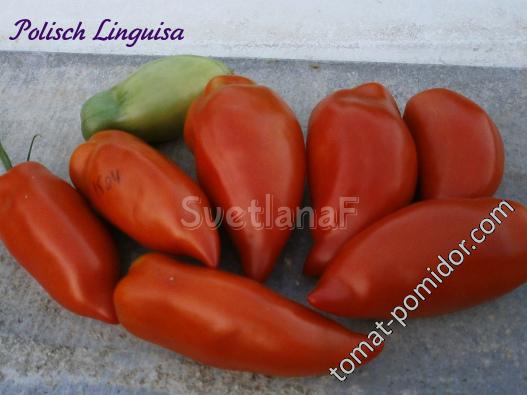
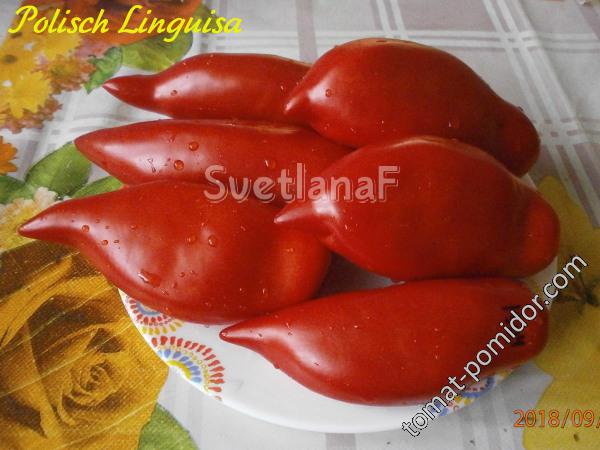
- 🍅 Fruit Characteristics: Substantial elongated sausage-and-pepper fruits weighing 7-9 oz (200-250 g), terminating in a pointed tip. Deep crimson-red skin enclosing dense, meaty flesh with minimal free-flowing gel and exceptionally low seed count.
- 👅 Flavor Profile: Far sweeter than commercial processing pastes (such as Roma or Amish Paste), boasting a rich, old-fashioned sweetness that makes it enjoyable sliced fresh off the vine.
- ☀️ Heat Resilience: Due to wispy leaf cover, extreme mid-summer heatwaves under unshaded greenhouse glass can cause blossom drop on upper trusses. However, the vine recovers rapidly and sets much larger fruits once daytime temperatures moderate in late summer and autumn.
- 🥫 Preservation & Kitchen Use: A premier dual-purpose variety. Exceptional for thick, rich tomato paste, marinara reductions that require minimal simmer time, and drying into sweet sun-dried slices in the dehydrator.
- 🌎 Reviewer Zones: Evaluated in cold short-season greenhouse conditions in Kostroma (USDA Zone 4) and long-season southern conditions in Pyatigorsk (USDA Zone 6).
🍅 Grown Polish Linguisa? Did you dry them or can sauce? Drop your review and photos in the comments below!
👨🌾 Editor’s Note: Polish Immigration Heritage & “Wispy” Foliage
Polish Linguisa is an authentic 1800s heirloom carried to upstate New York by Polish immigrants. Its name references its striking resemblance to traditional coiled or tapered Portuguese-Polish smoked sausage links. Gardeners new to this variety should not be alarmed by its drooping, “wilty” appearance: this characteristic “wispy foliage” is a classic genetic trait of elongated paste and oxheart heirlooms and does not indicate underwatering or disease.
Polish Linguisa is an authentic 1800s heirloom carried to upstate New York by Polish immigrants. Its name references its striking resemblance to traditional coiled or tapered Portuguese-Polish smoked sausage links. Gardeners new to this variety should not be alarmed by its drooping, “wilty” appearance: this characteristic “wispy foliage” is a classic genetic trait of elongated paste and oxheart heirlooms and does not indicate underwatering or disease.