🍅 Quick take: Pearls of Wisdom is an indeterminate striped anthocyanin plum bred by Brad Gates (Wild Boar Farms, California). Vines produce 3.5-5 oz (100-150 g) elongated, teardrop-shaped fruits painted in dusky burgundy with metallic olive-green and purple striping. Growers highlight its slender, polite canopy, balanced sweet-savory flavor, and dense meat that excels both fresh and in the canning jar, though stripe contrast deepens significantly under direct outdoor ultraviolet sun.
Skip to sun vs. greenhouse striping comparison ↓ | Full summary ↓
Skip to sun vs. greenhouse striping comparison ↓ | Full summary ↓
Growers’ Notes and Field Trials (USDA Zones 4-5)
A variety that checked every single box for me: gorgeous, unique fruit shape, and very respectable flavor.Transplanted it out very late in the season just as a quick trial run to see what it could do. Grew outdoors in the open garden and still managed to fill out three solid clusters. Fruit weight came in around 3.5-4 oz (100-120 g). With regular irrigation, they would probably size up even bigger; during this scorching hot summer, almost all my varieties produced smaller fruits than usual.
Edited August 29, 2016 by Drosera
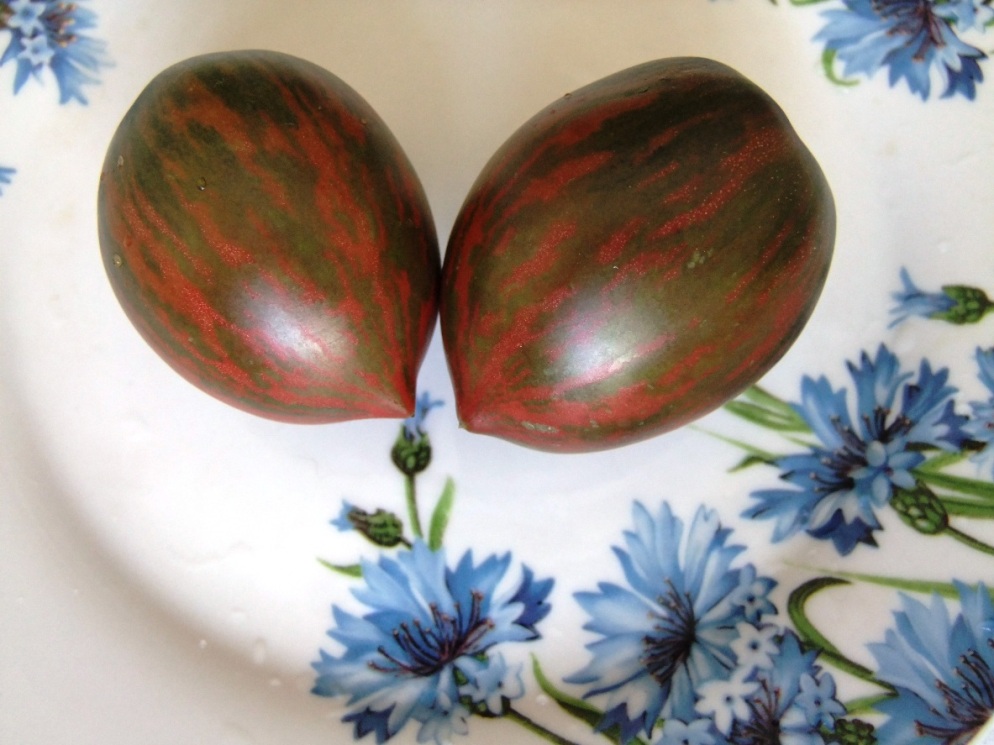
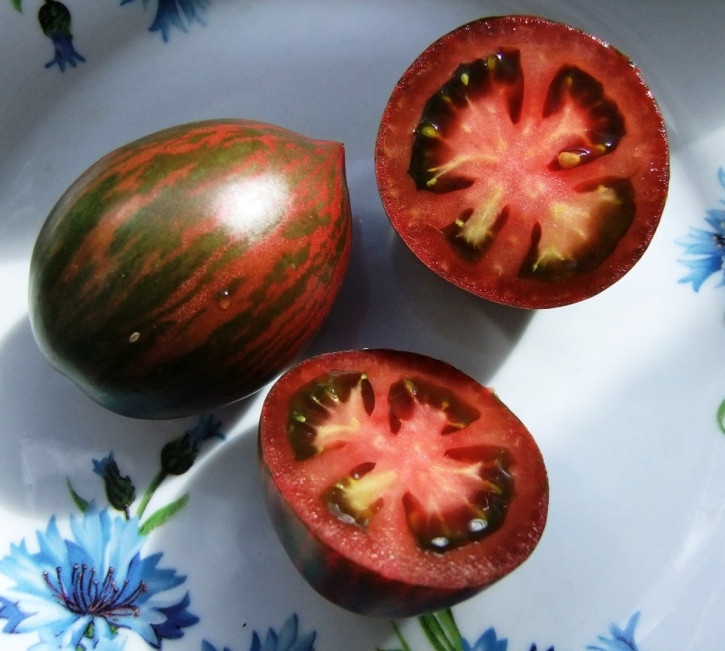
Sasha, I completely agree! Loved this variety for both its looks and its taste. Definitely saving seed to grow it again next season. Mine weighed in a bit heavier, right around 4-5 oz (120-150 g).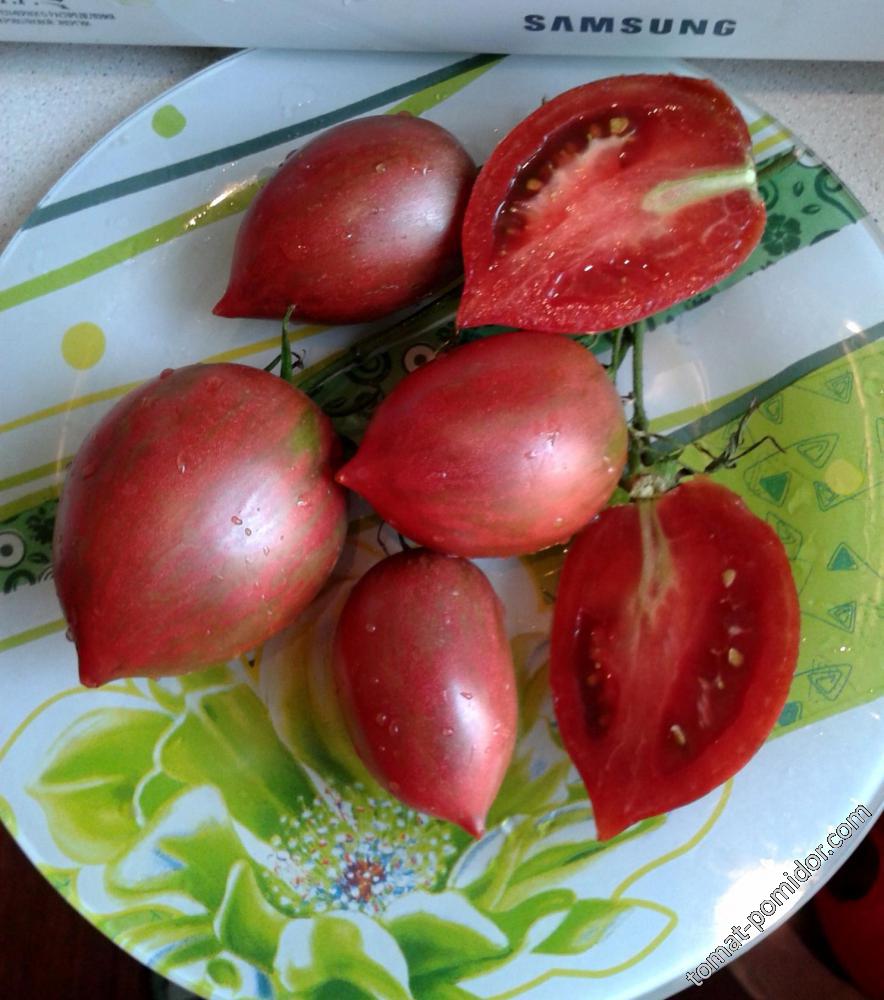
Sunlight Intensity, Fruit Sizing, and Greenhouse Performance
Yours definitely sized up bigger, probably had better access to consistent water. Mine look a bit denser on the inside, and the exterior striping seems darker and more pronounced.These anthocyanin-striped lines can express very different paint jobs depending on growing conditions, even though the line feels fairly well fixed by now, probably past the F5 or F6 generation.
Sandr said:
Yours definitely sized up bigger… Mine look a bit denser on the inside, and the exterior striping seems darker…
Sasha, that difference comes down to the growing location, hands down. Mine grew in a crowded greenhouse canopy, while yours were out in open ground getting baked by full direct sunlight 👍 Plus, minor ongoing genetic variation still plays a small part.
Elena, is it an indeterminate? What is the vine structure like?
Nadia said:
Elena, is it an indeterminate? What is the vine structure like?
Yes, Nadia, true indeterminate. Climbed right up to the greenhouse rafters. Slender vine with polite, airy foliage, not an unruly leaf jungle at all.
Grew mine outdoors in open ground. Productive and stunning to look at, but the flavor did not particularly impress me.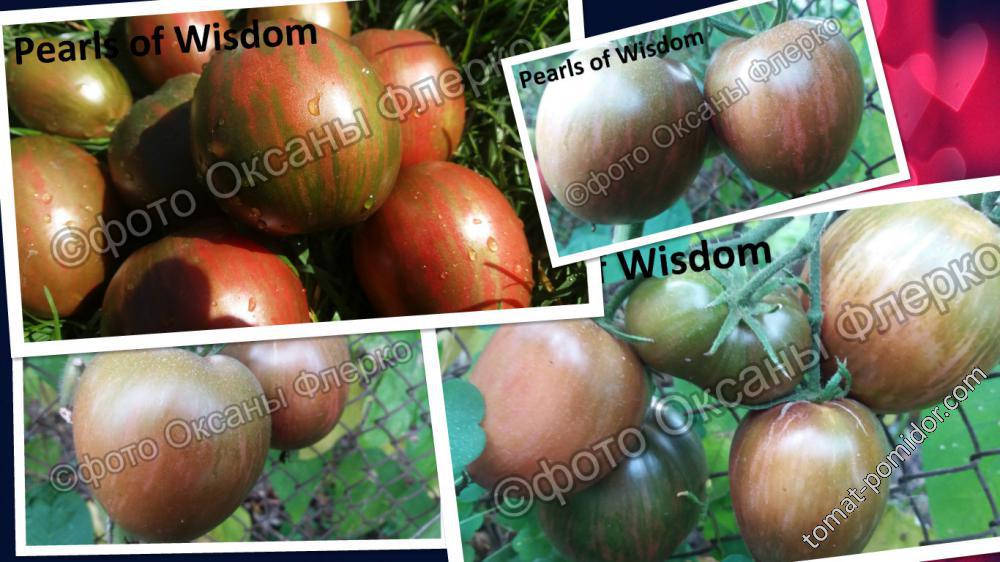
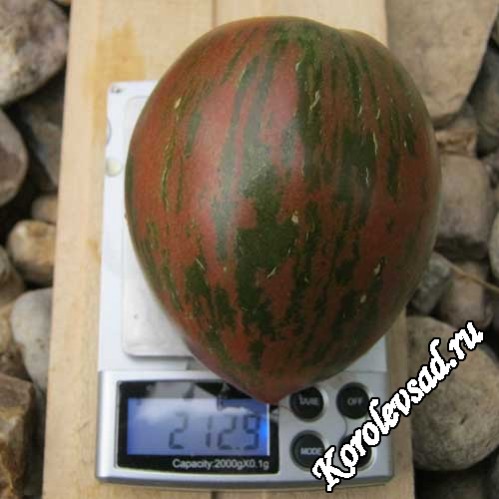
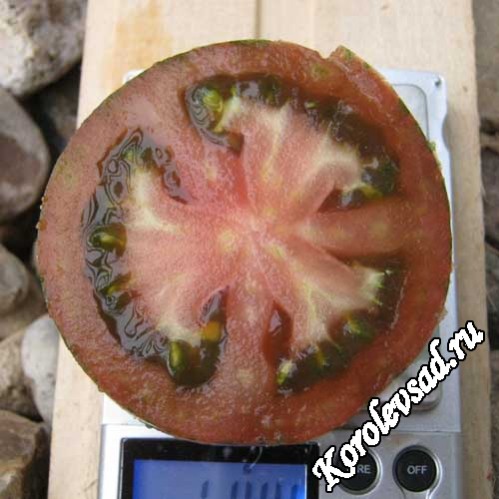
Inside the greenhouse, Pearls of Wisdom grew tall, hitting 6 ft (1.8 m) with mid-season maturity.Fruits are medium-sized, dusky burgundy plums. Outstanding flavor: sweet, juicy, yet pleasantly meaty. Perfect candidate for canning whole in jars.

Full Summary: Vine Habit, Striping Dynamics, Flavor, and Culinary Fit
- 🌿 Plant Habit: Indeterminate vine climbing to 6 ft (1.8 m) in greenhouses. Features a slender, open growth habit with sparse, polite regular foliage that ensures plenty of airflow and sunlight penetration.
- 🍅 Fruit Appearance & Mass: Elongated plum-to-pear fruits weighing 3.5-5 oz (100-150 g). Deep mahogany-burgundy background patterned with metallic olive and violet anthocyanin stripes.
- ☀️ Environmental Color Expression: Full open-ground UV exposure produces bold, high-contrast dark striping and denser flesh. Greenhouse culture with filtered light yields slightly larger fruits with softer, more blended color patterns.
- 👅 Flavor Profile: Sweet and complex with rich savory undertones when grown in warm, sunny conditions, though cool, wet open ground can dilute its complexity.
- 🥫 Preservation & Kitchen Use: Excellent dual-purpose plum. Meaty enough for gourmet canning, roasting, and dehydrating, while remaining juicy enough for fresh summer slicing.
- 🌎 Trial Conditions: Tested across short-season regions in the Moscow Region (Zone 4), Kaluga (Zone 4), and Belarus (Zone 5).