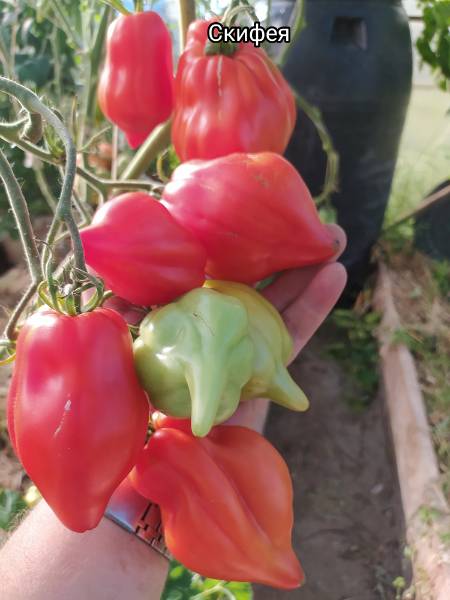
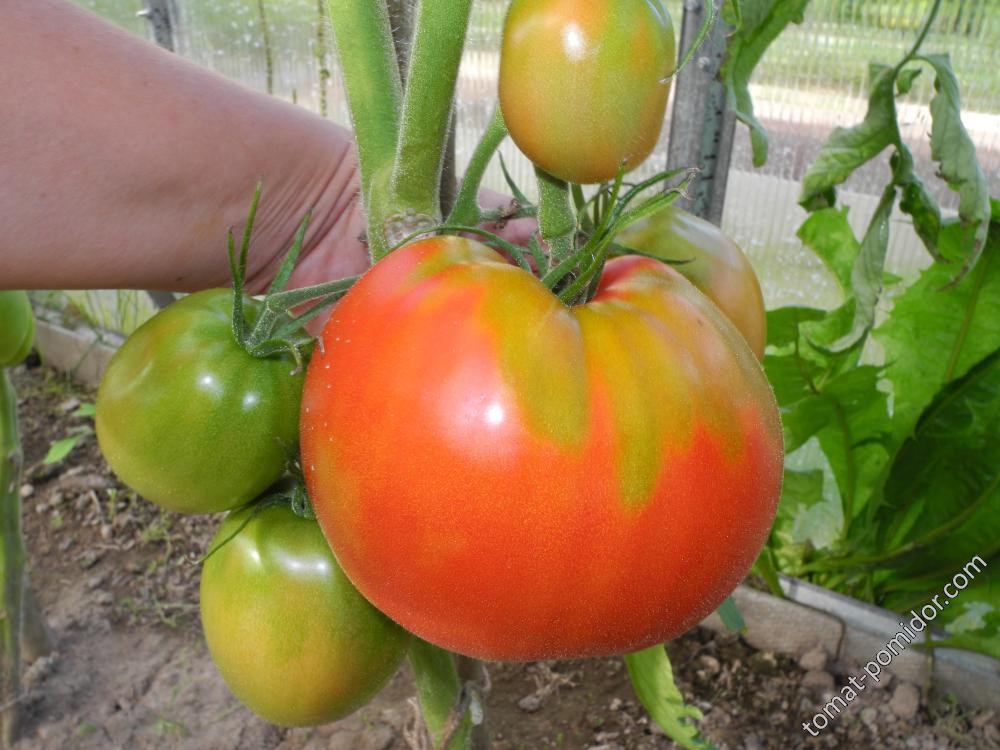
🍅 Quick take: Riccio di Parma (The Ribbed/Curly of Parma) is a historic indeterminate, mid-to-late season Italian beefsteak heirloom originating from the culinary heartland of Emilia-Romagna. Revered in Italy for traditional passata and thick sauces, it bears huge, deeply ribbed, meaty scarlet fruits. Growers in tough climates note it can be temperamental with pollination, dropping blossoms in both blistering heat waves and unseasonably cold springs, though hormone fruit set sprays help kickstart production. Blossom set tips ↓ | Pests & dark variant ↓ | Full summary ↓
Growers’ Notes and Photos (USDA Zones 4-8 Experience)
Riccio di Parma. Here is the seller’s catalog blurb:
“A highly ribbed red from Parma in the region of Emilia-Romagna. These get huge! Great old-fashioned flavor. Outstanding to look at and even better to eat. Great sauce maker too. Indeterminate, regular leaf, mid-to-late season.”
Grew very tall, definitely late season for me. It refused to set fruit in the blistering summer heat and kept dropping blossoms. Finally picked a few big, fully ripe fruits in late August. Going to give it another go next year, maybe it will acclimate better to our wild climate swings. Grown in the greenhouse. The fruits turned out large, dense, delicious, and sweet. Earned an easy 5+ rating from me.
Edited November 21, 2017 by Drosera
“A highly ribbed red from Parma in the region of Emilia-Romagna. These get huge! Great old-fashioned flavor. Outstanding to look at and even better to eat. Great sauce maker too. Indeterminate, regular leaf, mid-to-late season.”
Grew very tall, definitely late season for me. It refused to set fruit in the blistering summer heat and kept dropping blossoms. Finally picked a few big, fully ripe fruits in late August. Going to give it another go next year, maybe it will acclimate better to our wild climate swings. Grown in the greenhouse. The fruits turned out large, dense, delicious, and sweet. Earned an easy 5+ rating from me.
Edited November 21, 2017 by Drosera
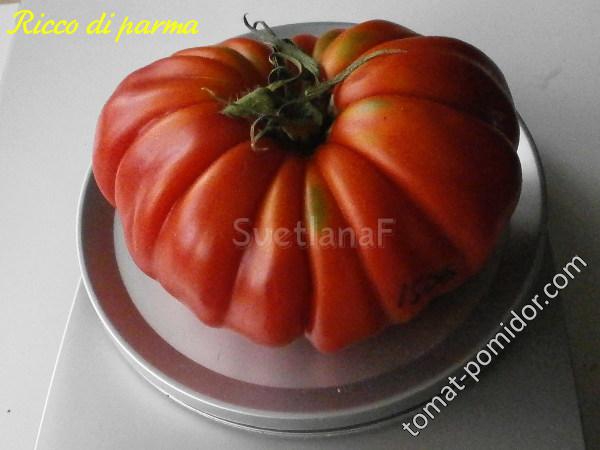
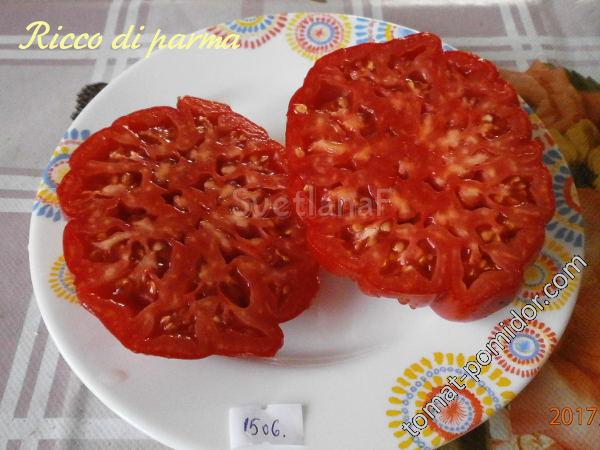
Seeing the words “great sauce maker” immediately reminded me of the variety circulating around our local seed exchanges under the name Verace. Those seeds originally came over straight from Italy too. The fruits look practically identical, and the descriptions of maturity and vine growth line up almost down to the letter.
Here is that original Italian seed description for Riccio di Parma:
Here is that original Italian seed description for Riccio di Parma:
A highly ribbed red from Parma in the region of Emilia-Romagna. These get huge! Great old fashioned flavor. Outstanding to look at and even better to eat. Great sauce maker too. Indeterminate. Regular Leaf. Mid-Late Season.
Huge, deeply pleated red fruits with that classic old-school richness. Gorgeous presentation on the cutting board and even better in a skillet or canning pot.
Edited November 21, 2017 by Olviya
Grew Riccio di Parma this season as well:
This cultivar actually has its own dedicated regional festival in Italy, and traditionally, almost the entire harvest goes straight into gourmet tomato pastes and sauces:
Edited November 21, 2017 by Aleksander
This cultivar actually has its own dedicated regional festival in Italy, and traditionally, almost the entire harvest goes straight into gourmet tomato pastes and sauces:
Edited November 21, 2017 by Aleksander
Aleksander, I just copied over whatever was written on the imported seed envelope. Good catch, appreciate the info!
Blossom Drop, Cold Sensitivity, and Fruit Set Sprays
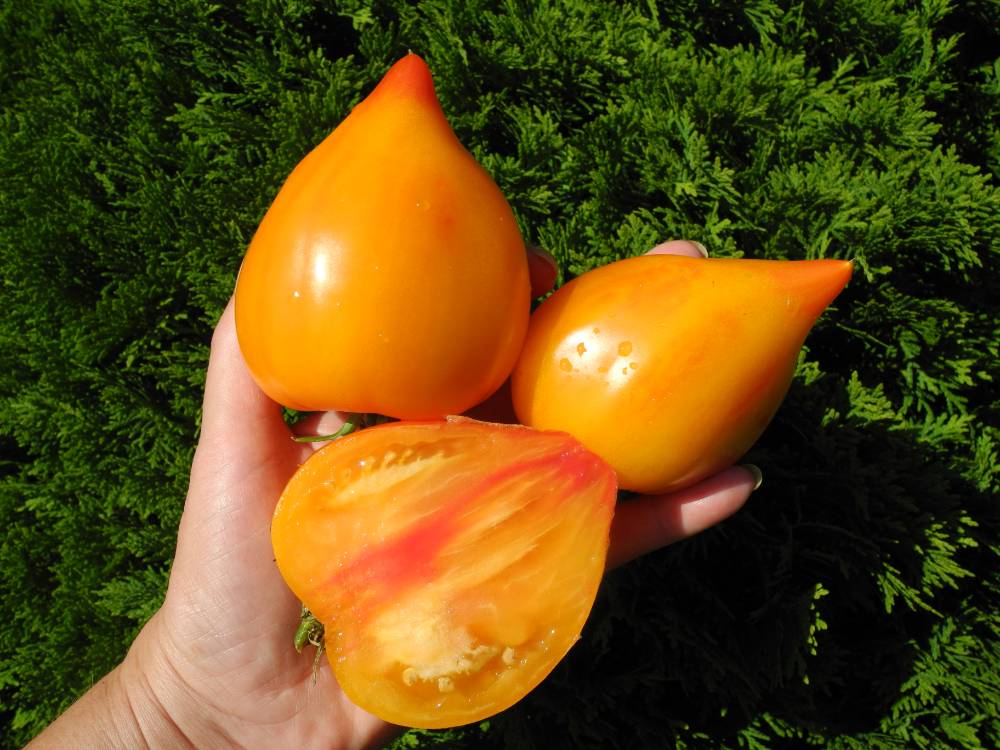
For me, it turned out VERY late and flat-out refused to set fruit for the longest time. We did not have any heatwaves this summer, so in my case, it was clearly balking at the chilly northern nights. Ended up with just 3 large tomatoes on the entire vine. They never fully ripened on the vine before frost, had to pull them and let them finish ripening on the counter indoors. Slicing them open showed those same pale, fibrous vascular streaks you can see in Svetlana’s cut photos. Didn’t log any flavor notes.
Riccio di Parma (Curly of Parma / Ribbed from Parma).
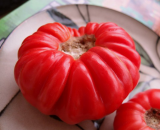
Riccio di Parma (Curly of Parma / Ribbed from Parma).
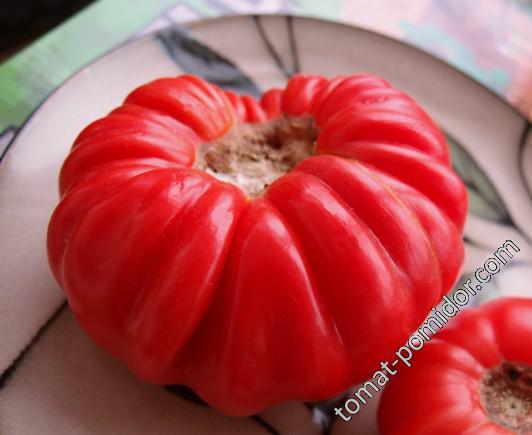
Grew it again this season, just couldn’t resist that gorgeous pleated shape. Started seeds in early February and transplanted out into the greenhouse in April. Hit the first flowering clusters with blossom set spray, and that did the trick! Once it took off, the vine set all subsequent clusters completely on its own. Flavor was outstanding, very sweet. The fruitworm caterpillars seemed to think so too. First ripe fruit was picked on July 7th.
Fruitworm Battles and a Dark Burgundy Outcross
What kind of fruitworms?
What kind of fruitworms?
Armyworm and cutworm caterpillars! Absolute nasty pests! They tunnel right into the fruit, chewing through both green and ripe tomatoes without mercy!
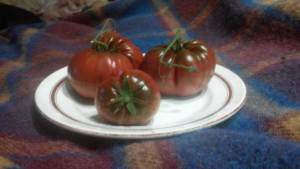
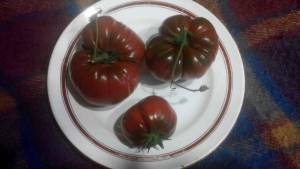
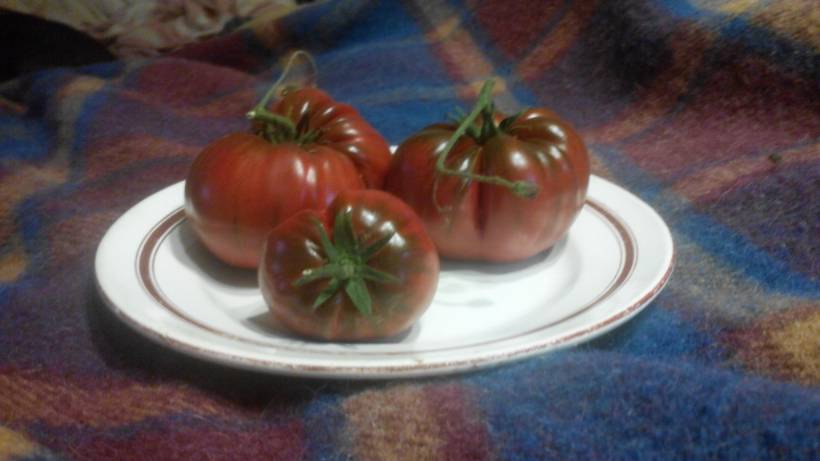
Grew Riccio di Parma for the first time this year from seeds traded right here on the forum. For me, it performed as a true mid-season. Strong, sturdy vine that stayed very well-behaved and didn’t go crazy throwing endless suckers. Curiously, my fruit segregated as a dark black/burgundy tomato! Dense, meaty, and amazingly flavorful, easily one of the tastiest tomatoes out of my garden this whole season. Visually they looked just like glossy Christmas ornaments, deep dark burgundy, though with only subtle shoulder pleats.
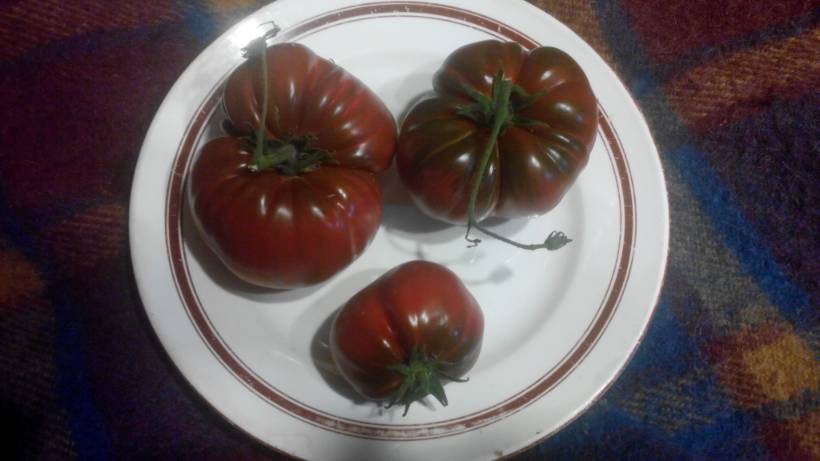
Full Summary: Plant, Yield, Taste and Storage
- 🌿 Plant & Growth Habit: Vigorous indeterminate vine reaching 6.5 ft (2 m) or taller in greenhouses. Well-behaved branching habit that does not produce excessive, unmanageable suckers. Regular leaf foliage. Typically mid-to-late season.
- 🌡️ Pollination Sensitivity: Known to be finicky when setting fruit. Cold nighttime temperatures in northern short seasons (Zone 4) can cause heavy blossom drop and delayed maturity, while extreme southern heat waves (Zone 7/8) cause blossom abortion. Using an auxin or gibberellin fruit set spray on the first trusses reliably triggers pollination, after which vines set naturally.
- 🥫 Fruit & Sauce Quality: Authentic scarlet-red beefsteaks are heavily fluted and ribbed. The interior is exceptionally meaty with minimal seed jelly, making it a celebrated Italian sauce cultivar that reduces rapidly into rich, sweet passata. In cooler years, some white internal vascular core tissue may appear.
- 🧬 Segregation Alert: A dark burgundy/purple outcross variant circulates in seed trades, as reported by Alevtina. This off-type delivers outstanding dessert sweetness and glossy skins, though with flatter ribbing than the true heirloom type.
- 🌎 Who Reviewed It: Tested in contrasting climates: Zone 7/8 (Pyatigorsk, North Caucasus) and northern Zone 4 regions (Kostroma, Novgorod, and Moscow Region).
🍅 Grown Riccio di Parma? Did you use it for fresh slicing or cook it down into sauce? Share your yields, climate zone, and tips in the comments below!
👨🌾 Editor’s Note: Blossom Sprays
Fruit Set Aids: Svetlana mentions kickstarting production with “Zavyaz”, a common Eastern European gibberellic acid blossom spray. For US growers facing similar blossom drop in extreme heat or cold, commercial hormone sprays like Blossom Set (containing kinetin or cytokinins) work on the exact same physiological pathway.
Fruit Set Aids: Svetlana mentions kickstarting production with “Zavyaz”, a common Eastern European gibberellic acid blossom spray. For US growers facing similar blossom drop in extreme heat or cold, commercial hormone sprays like Blossom Set (containing kinetin or cytokinins) work on the exact same physiological pathway.