Quick Summary of Adora Tomato (Sweet Marmande type)
- 🌍 Origin: Originally a commercial variety (branded as Adora / Sweet Marmande type) developed by HM.CLAUSE and grown in Spain/Italy. Its parentage reportedly includes Marmande and Black Krim. This thread documents forum members successfully growing out saved seeds from supermarket fruits (F2/F3 generations).
- 🌿 Plant Habit: Indeterminate (tall), growing up to 2+ meters (over 6.5 feet). Some growers noted it produces fewer suckers than average, keeping a relatively slender profile.
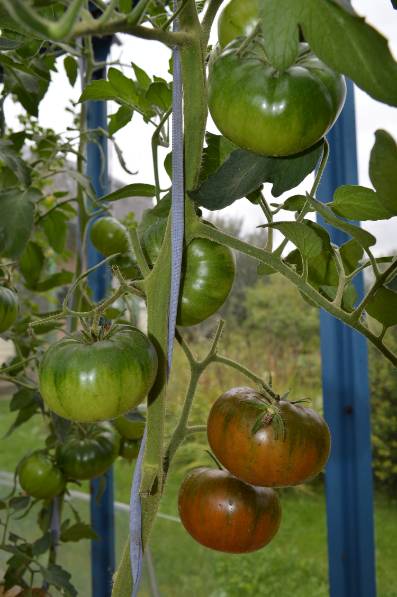
- 🍅 Fruit Characteristics: Deep brown, brick-red, or mahogany colored with green shoulders. Distinctly ribbed (classic Marmande shape). Very dense and firm, weighing between 150–300g (5.3–10.5 oz).
- 👅 Flavor: Exceptionally sweet for a dark tomato, often reaching 5-6 Brix. Very meaty and not overly watery. Growers note that leaving it on the vine longer intensifies the sweetness.
- ⏳ Storage & Shelf Life: Outstanding. Due to its thick walls and firmness, it can hang on the vine for weeks without spoiling and stores incredibly well indoors—some growers were still eating fresh salads from their Adora harvest in January!
It seems that another one is being added to the new commercial varieties for the European market (like Kumato, RAF, Monterosa)—ADORA.
Here is what they write about it (machine translation without edits):
The ADORA tomato takes the silver medal at the 2018 Fruit Logistica Innovation Awards in Berlin.
After being nominated for the innovation awards at Fruit Logistica in 2018 in Berlin, it won the silver medal. This honor comes less than six months after the official introduction of ADORA in the fruit and vegetable sector at the Fruit Attraction exhibition in Madrid. What a striking entrance for this unique tomato that combines the authentic shape of Marmande with an extraordinary brown-red color. Those who taste the sweet and aromatic ADORA will be met with a new, unprecedented sensory experience.
The ADORA tomato is already available in several European retail outlets (Switzerland, Germany, UK, Netherlands, etc.). It is currently supplied exclusively through a network of producers located in the traditional tomato production zone (Cabo de Gata Natural Park, Andalusia, Spain). Each producer complies with a very strict set of specifications, which guarantees consistent quality.
I bought a few ADORA tomatoes at the supermarket.

They look very nice, the walls are quite strong, and there is quite a lot of juice inside. Now for the most interesting part—the tomato is VERY sweet. I saved the seeds and will try to grow it this year.
There is very little info out there, mostly ads. I read on one site that it took 60 years to develop (do you believe that?) and that it belongs to the Marmande group. It is grown in Spain and Italy. I also saw a phrase saying it is early, but why then did it hit the shelves in February?
P.S. One of the six tomatoes we ate turned out to be less firm, with a pleasant softness, though externally it didn’t differ from the others. The tomato tasted best in scrambled eggs.
Aleksander said:
… The tomato tasted best in scrambled eggs.
😂
However, Signora Adora, unlike Madame Marmande, turned out not to be a semi-determinate, but a slender and tall representative of indeterminates, with a characteristic ribbed fruit shape, at least that’s what can be seen now. I’m glad to see normal fruit set starting from the very first truss, let’s wait and see.
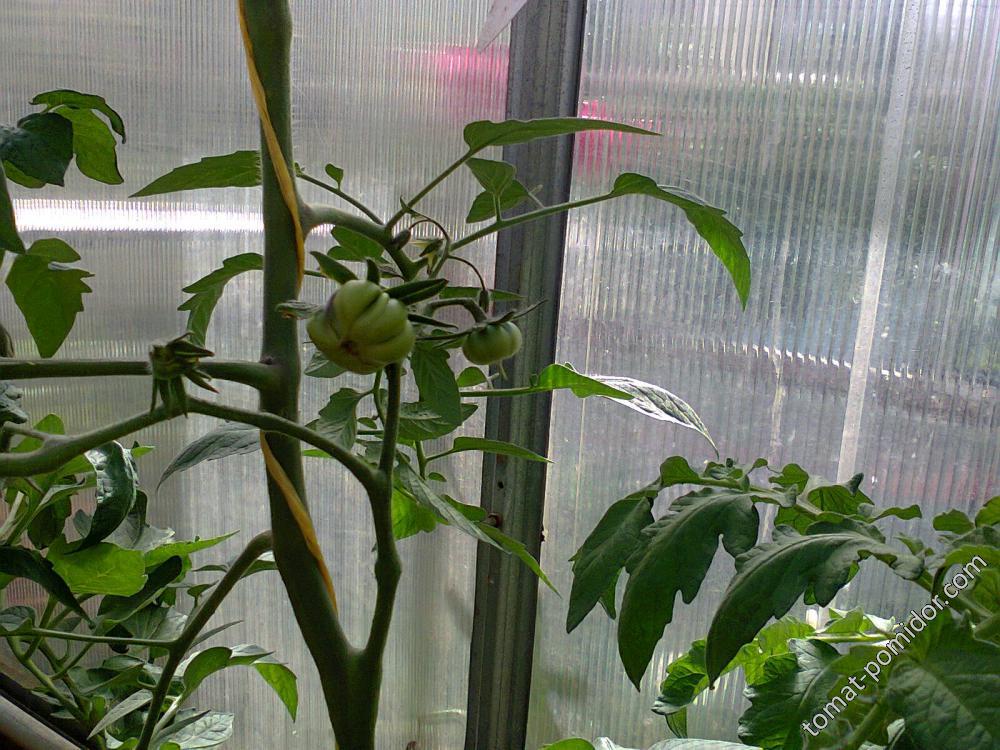
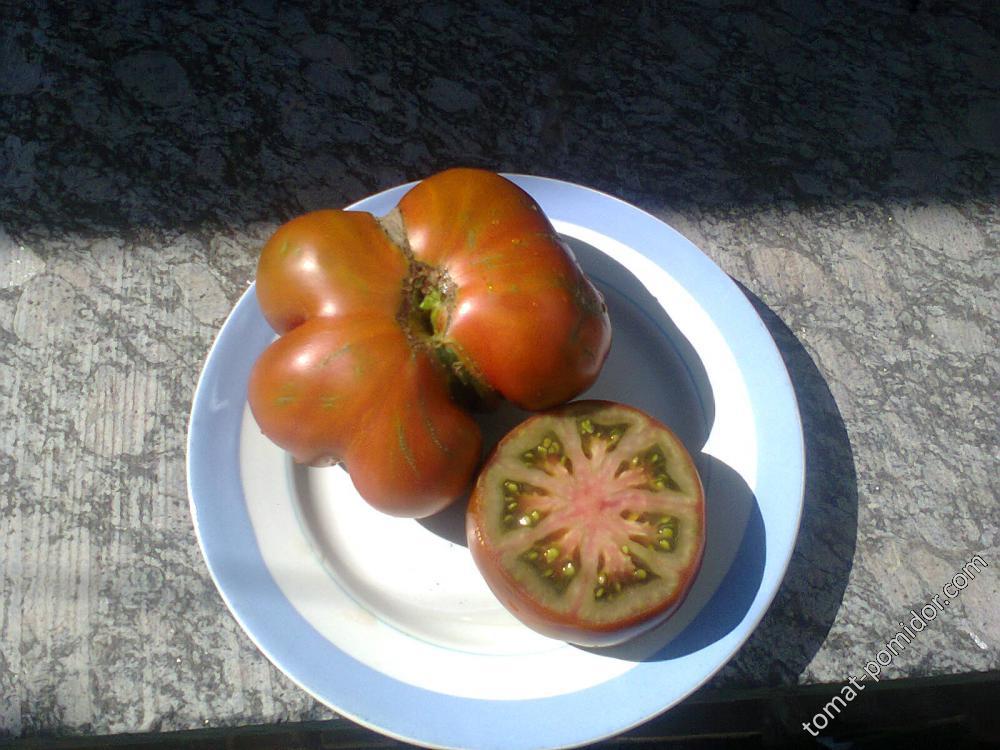
Here is what I got this season with Adora.
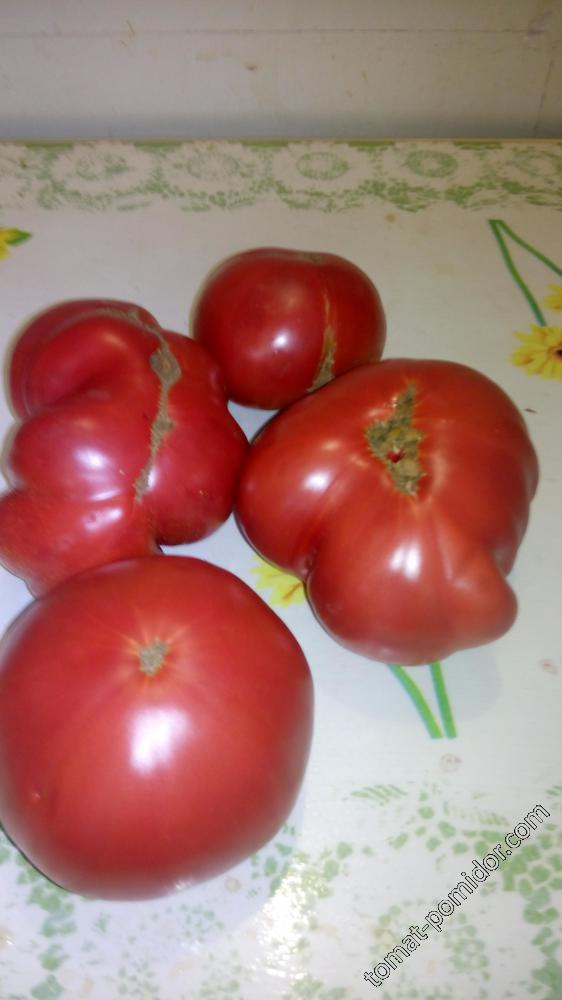
It is not yet clear whether the mother variety traits repeated exactly or not. The first fruits were larger than the store-bought ones, but the later ones were like this, slightly smaller than the store ones:
In terms of taste, the first fruits were nothing special, just like most “black” varieties, but these last ones are very sweet and delicious. In firmness, the tomatoes are similar to Kumato, but very sweet! Now, at the end of the season, when you’re tired of tomatoes with tender flesh, eating such firm and sweet ones is a real pleasure.
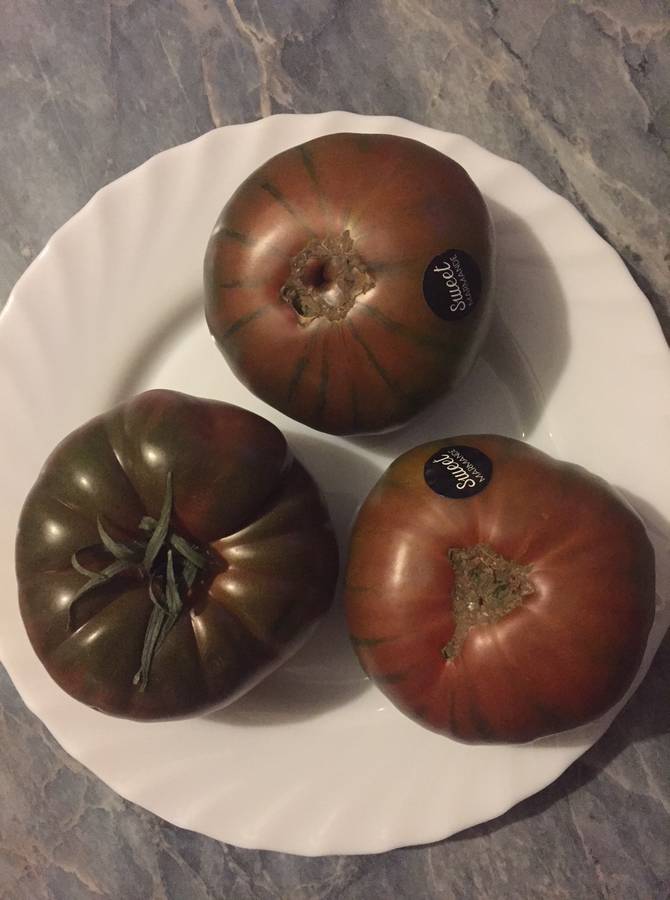
I’m sitting here looking at three Sweet Marmande tomatoes I bought today in Lidl. They are an exact copy of the ones you bought, and I’m wondering whether to save the seeds or not.
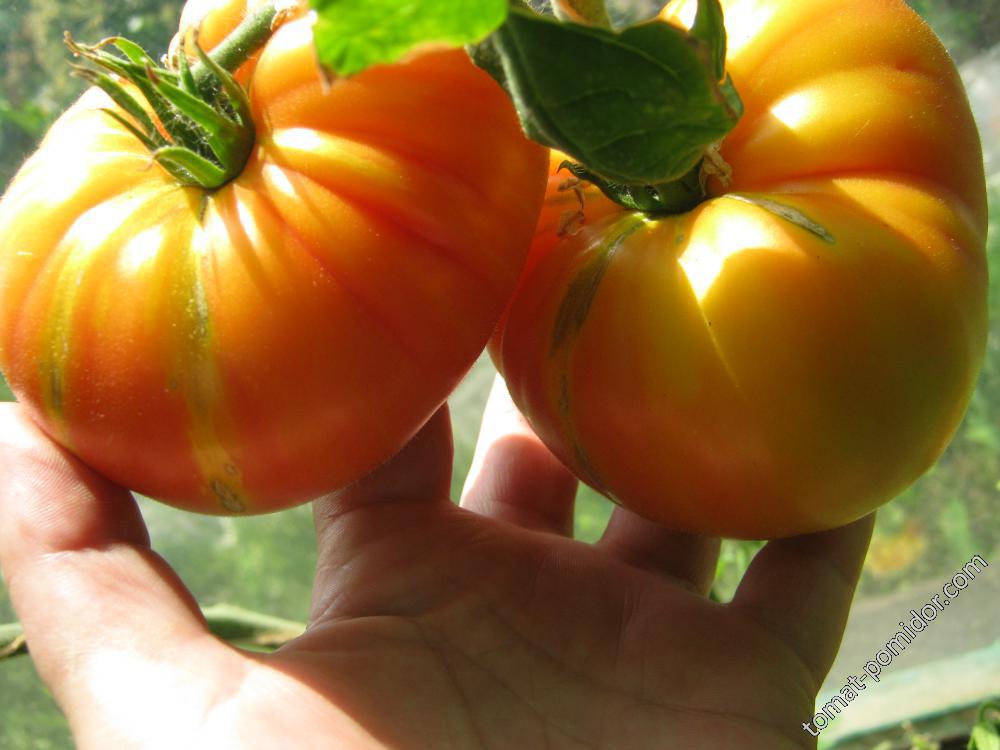
I bought them out of curiosity, each weighs a little over 300g (10.5 oz). They are firm, oblate, with pronounced dark green stripes (like Chocolate Stripes) running down from the shoulders.
I found “Tomate Adora, categoría Sweet Marmande” on the net, is that it or ????
Valentina03 said:
I found “Tomate Adora, categoría Sweet Marmande”, is that it or ????
Valentina, most likely, it is. During the time I wasn’t posting, more articles appeared (almost all in Spanish) saying that the parents include not only Marmande but also Black Krim, and that currently there are only four growers producing the fruit, all in Spain, strictly following HM.CLAUSE’s agricultural techniques. But my store-bought ones were redder (browning), I bought them in February. The 5-6° Brix sweetness rating is also mentioned in several articles. Try saving the seeds and growing them; there will be at least three of us testers now—I gave seeds to Lena Remko at the Moscow meeting at her request.
Guten Rutsch! Happy New Year!
That’s it! You convinced me!
I’ll scrape out the seeds. If anyone else wants to participate, I can share. I settled down quite far away, but hopefully, it’ll reach you by letter.
My three are also slightly darker than on the mentioned webpage, and the blossom ends have a pronounced red hue, no yellow, mostly brownish-burgundy.
If the slugs don’t ruin the experiment, I’ll keep you posted! 😂
Wishing you happiness in the New Year!
Here they are, the mysterious ones:
Good evening!
Since the little tomatoes were too hard, I decided to let them sit for a bit. The color is turning matte burgundy-brown, and they are starting to soften. I think in a couple of days I’ll be able to open them up for seeds.
Good afternoon!
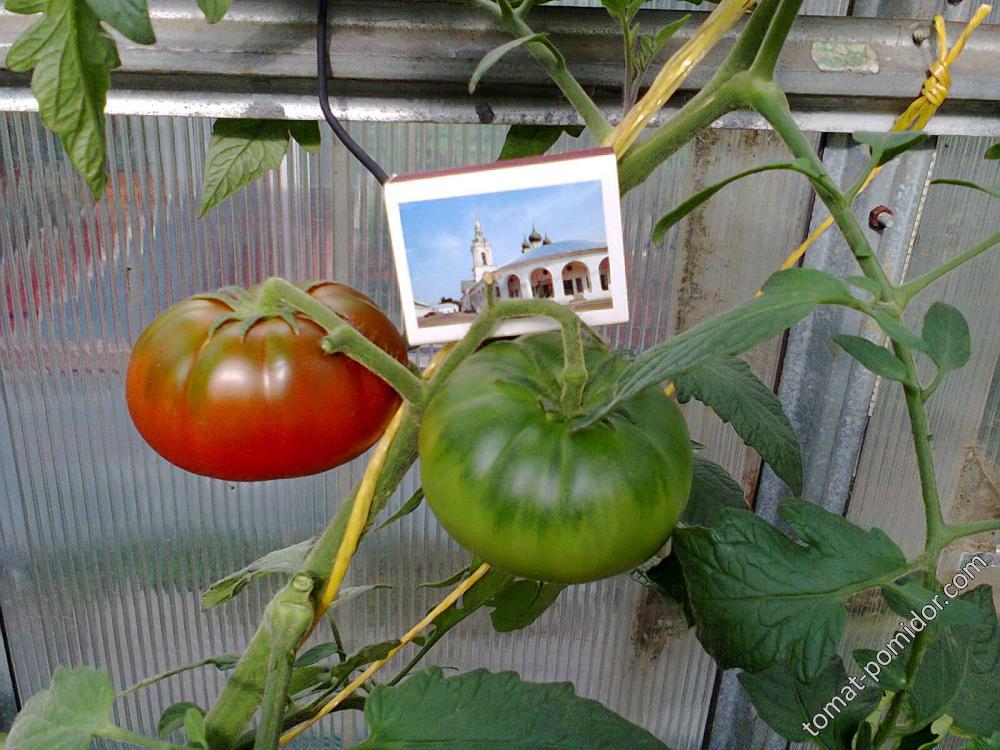
Well, I planted two seedlings outside under a canopy on May 9th (I sowed them in late Feb / early March, didn’t write down the exact date. They took forever to germinate, about three weeks; I was even thinking of resowing).
The seedling is clearly not “skinny”; it looks like the plant will be vigorous. The foliage is darker than the rest, regular leaf, slightly ruffled.
Now the main thing is that the slugs don’t destroy them, but it’s still chilly—spring is in no hurry and there is very little sun, just gray all around… I’ll keep my hopes up!
Here they are, my darlings 😂
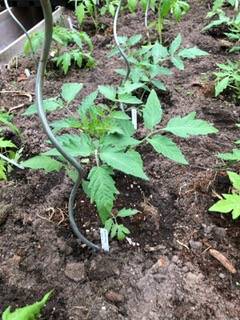
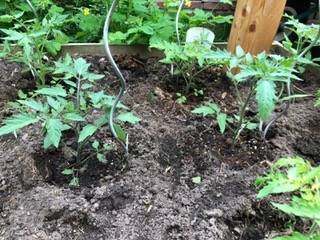
.JPG.bdb59b69465cd5cf9904b430522ed42c.JPG)
My Adora today:
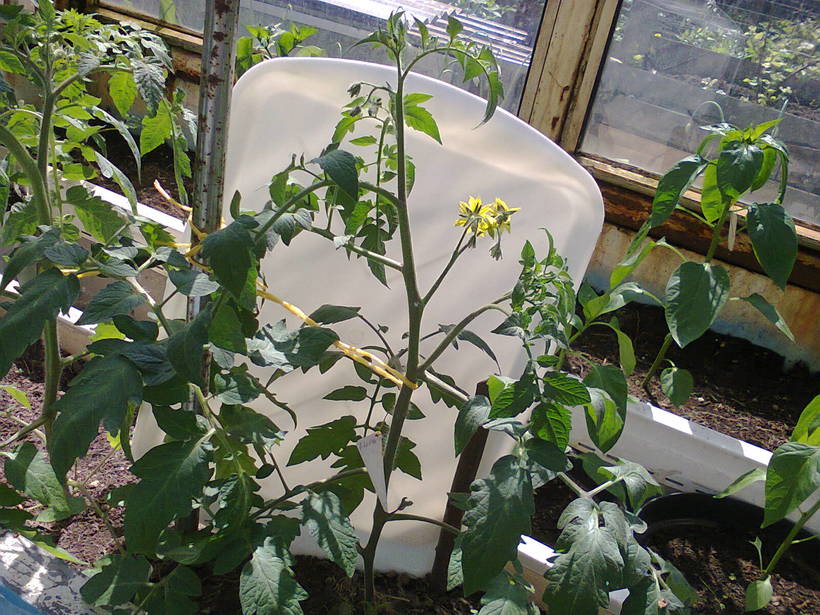
Good afternoon!
I didn’t risk putting it in the greenhouse; mine is small and low, I only plant determinates and semi-determinates in there. In the open ground, forecasters are still threatening freezing temperatures right now 😂 It will be an open-ground experiment!
My pair decided to go into heavy vegetative growth (got “fat”)—the tops split into three and the leaves curled into rings against the stem. I had to take radical measures: watered them heavily, threw a handful of wood ash under the roots, and did some ruthless pruning. Let them “remember” their main purpose—offspring! 😂
A short update on my Adora.
It seems it is not early. At the moment, I’m not fascinated by the yield (by the way, our summer this year is terrible for tomatoes—abnormal heat up to +40°C / 104°F in the shade for weeks; they bloom heavily but drop blossoms and don’t set fruit, rains are rare). Maybe the excessive vegetative growth at the beginning of the season had an effect, or maybe my skills failed, and the adaptation period (growing out F2s) cannot be ignored.
At the moment, one bush has set about a kilogram (2.2 lbs), the second one is totally lazy—there are little spheres hanging, but they aren’t sizing up.
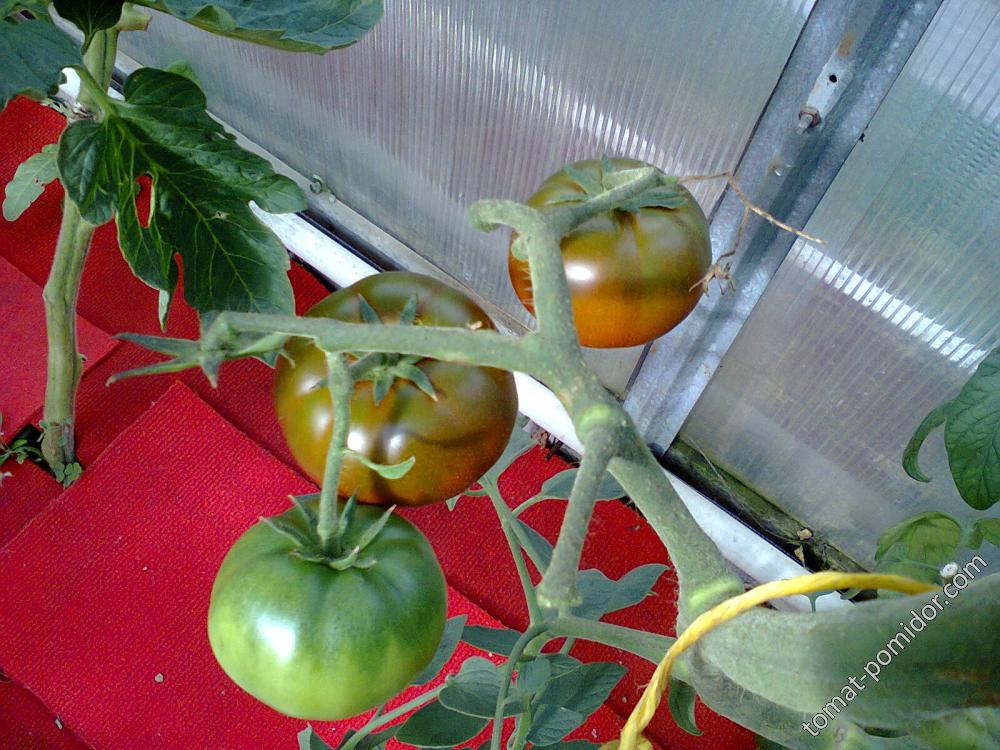
The bushes are of medium height, slender, don’t throw out too many suckers, look healthy. Under the canopy they are now 1.5 – 2 m tall (5-6.5 feet).
The fruits are typical for Adora in color, shape, and size—so far, I see no segregation (genetic splitting).
Waiting for more to happen 😂
My Adora. The bush is also short, doesn’t set fruit very heavily, but that might be due to my conditions. The tomatoes hanging are large, but almost all have blossom end rot (BER) (or maybe it’s not BER? Looks like some sort of dense sunscald). On the same bed, all other tomatoes are fine, but Adora is affected. This is what the tomatoes look like, each over 200 grams (7 oz).
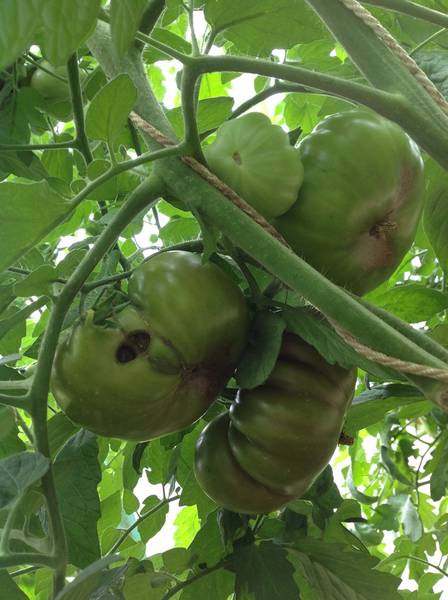
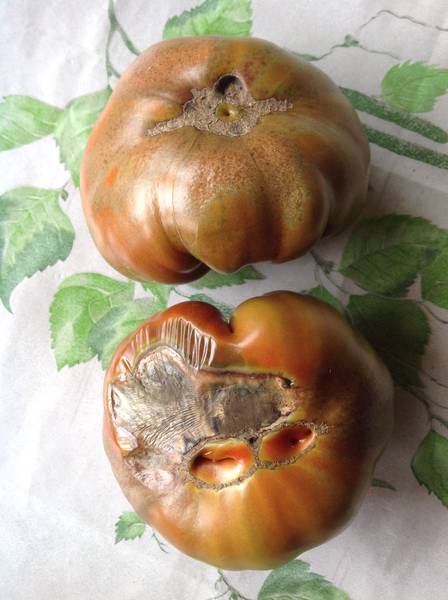
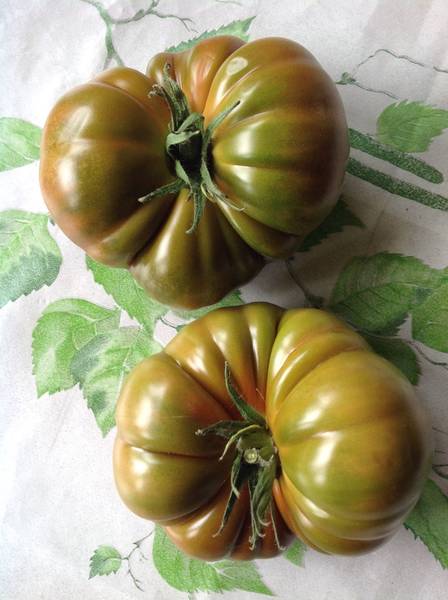
Mine look exactly the same. They also weigh 200-300g each.
Somehow this BER (if that’s what it is) is a bit atypical—I’ve never seen BER with “freckles” (tiny spots) before, or maybe my BER is just weird, I don’t know.
Maybe other forum members can chime in?
Well, today I finally tasted my Adora—it really is sweet, but not tasteless like some sweetish tomatoes (I call them “bland” in taste). However, in my opinion, it loses to, for example, “Black Krim” in flavor depth.
Moderately juicy, not “watery”. I think ketchups made from it will be mind-blowing—the acidity is very moderate. Well-balanced, not bad for a salad.
The fruit color is very unusual, I haven’t seen anything like it before—it’s bright brick-red, lighter and brighter than ochre, without a standard red tint (the store-bought ones were more towards burgundy and darker).
A huge positive trait is the ability to leave the fruits on the vine until needed. It hung there for over a month in a “table-ready” state, and would probably have hung for another month if I hadn’t gobbled it up 😂. The rest are still hanging experimentally!
You can adjust the taste and firmness by choosing when to harvest.
I think it will have excellent storage capabilities. It didn’t handle the heat too well, but then again, this is its first season being grown out from “grocery store” seeds. Right now, each bush has set about 1 more kg, but they are still small. Maybe I’ll finally get to test their winter keeping qualities! 😂
I’ll share about my Adora tomato. Seeds are from Aleksander. It started setting fruit earlier than any of my other varieties.
The plant is slender, tall (over two meters / 6.5+ feet), and didn’t torture me with too many suckers. It did skip some trusses, but luckily I didn’t prune them off—when I picked the first fruits, those skipped trusses set fruit too.
June 23 was the first tasting. The flavor is bright with sweetness. The tomato is very firm and stores perfectly. The color at full maturity is brick-red. All tomatoes have a perfect shape, weighing up to 200g (7 oz). The bush was very healthy; I pulled it out at the end of September. The tomatoes that were ripened indoors retained an excellent taste. I will definitely grow it again.
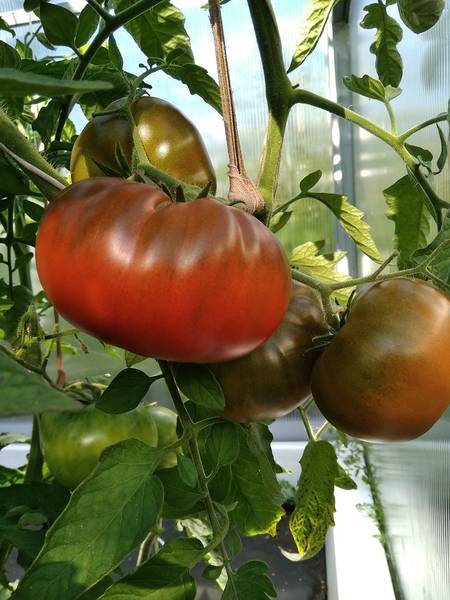
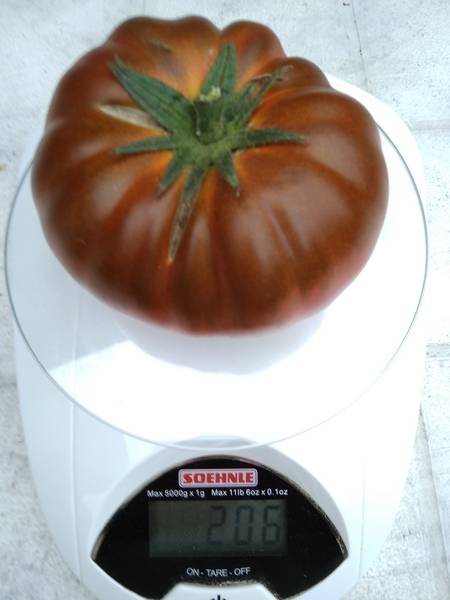
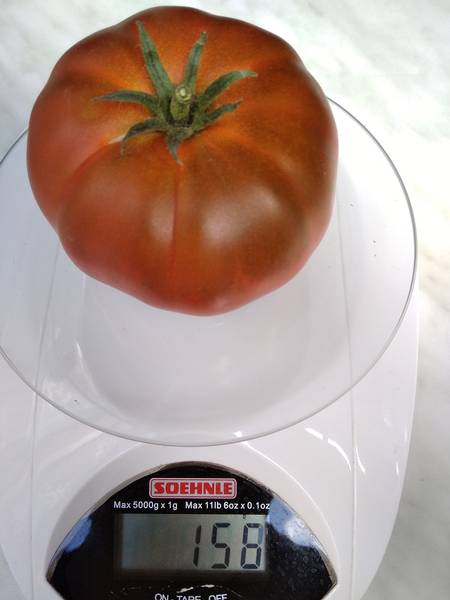
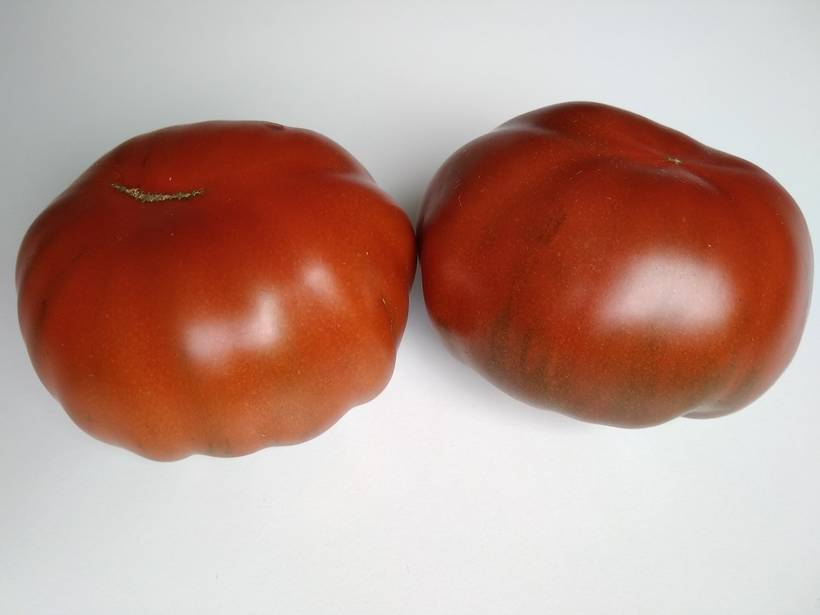

This completely matches the description of my Adora.
I plan to continue the experiment next season. The yield from the first “trial” year was small, probably due to using “commercial” F2 seed material, and the abnormal heat caused a break in the pollination process.
It wasn’t sickly, nor was it “aggressive” in green foliage mass; under my canopy, it was about 1.5 – 2 m tall. I’ll be picking them to ripen indoors in the coming days.
Well, here comes the final stage of the experimental year for my Adora.
Today is December 17th, and I made a salad with Adora. The taste is very decent, sweet. The storage capability is fantastic—they don’t dry out, don’t wrinkle, and are just as firm and glossy as before. They could easily sit for at least another month without any problems, but something inspired me to make a salad 😂
It’s on my list for next season. Wishing everyone a Happy New Year!!!
January 8th. I found a few small Adoras among the remaining “last year’s” stash.
They survived nicely, after all! 😂 The color is slightly distorted in the photo.
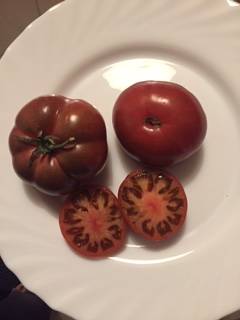
I cordially congratulate everyone on the new season!
I already planted Adora from my own saved seeds (F3). Unlike the seeds straight from the supermarket, these popped up on the third day. Continuing to observe 😂
Adora was the very first of the indeterminates to ripen for me this year. And it turned out to be very sweet. Seeds were from Galka (who loves black tomatoes)…
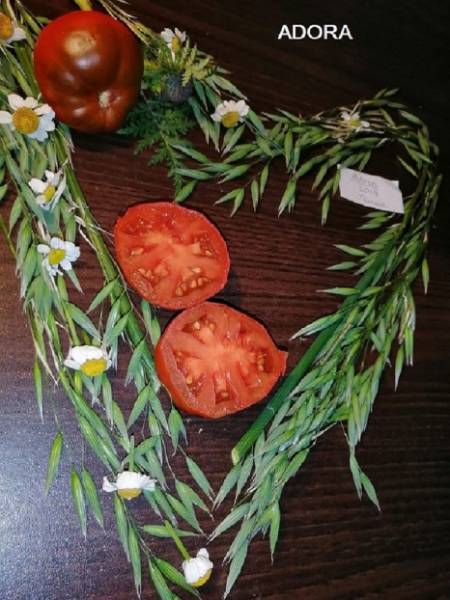
My Adora, grown from store-bought tomato seeds. Mine turned out significantly larger, 150-240g (5.3 – 8.5 oz), less ribbed, and less sweet (but this year everything was less sweet for me). Yield is good, it’s late September and it is still blooming and the bushes look beautiful. I will repeat it using my own seeds.