📌 Quick Summary (TL;DR): Feeding Greenhouse Cucumbers
- 🌱 The Simple (Visual) Method: Start young plants with pure Nitrogen (Ammonium Nitrate or chicken manure tea). A week later, use a balanced granular mix. Once they start fruiting heavily, switch to Calcium Nitrate to support cell structure.
- 🧪 The Pro “Tank Mix” Formula: For heavy fruiting, experienced growers mix their own custom water-soluble fertilizer. A standard fruiting ratio requires high Potassium and steady Nitrogen (e.g., 550g Potassium Nitrate + 400g Magnesium Nitrate + 400g Calcium Nitrate + 150g MKP + 100g Ammonium Nitrate per 1000 Liters / 264 Gallons of water).
- 🔄 Adjusting for Plant Age: As cucumber vines get older and enter mass fruiting, they demand massive amounts of Potassium. If you see cucumber leaves getting a pale halo around the edges or the cucumbers curling into hook shapes, immediately increase the Potassium Nitrate!
🌍 You’re reading a translated thread from our Russian-language forum. These growers garden in climates very similar to Minnesota, Wisconsin, Maine, and Ontario (short summers, late frosts, and cold soil). Do you mix your own custom NPK fertilizers, or use organic compost teas? Drop a comment below! We’d love to compare notes.
The Simple Method: Eyeballing & Organics
Aleksan9ra (Ludmila) wrote:
…I am currently watering with chicken manure tea. You can also use Calcium Nitrate, or alternate with a balanced fertilizer (two Nitrogen feedings, then one balanced)…
Good afternoon, Luda! Could you please specify exactly which balanced granular fertilizer you use, and how much Nitrogen you give them?
Also, can I use pelletized (store-bought) chicken manure for the tea? 🐔
I just picked my first 5 cucumbers from the outdoor bed today! I am so happy! 🥒
Here is my feeding schedule:
Right after I transplant the seedlings, I give them Ammonium Nitrate (pure Nitrogen). My plants are spaced far apart, so I just sprinkle a tiny pinch (about 1/2 teaspoon) by eye under each bush. Then I water the bed heavily to dissolve it.
The next feeding is a liquid tea made from chicken manure, also poured right at the root. A week after that, I give them a pinch of a balanced granular fertilizer (like a Spring-Summer blend) under each root.
From there, I just watch how the plant develops and see if it’s lacking anything. Right now, the plants have started fruiting heavily, so for their Nitrogen source, I will switch to giving them Calcium Nitrate.
As for the pelletized chicken manure: yes, you can use it. Soak it in a 1:2 ratio with water, let it steep, and dilute it just like fresh manure. But keep in mind, its effectiveness is about three times weaker than fresh manure. And never forget: ALL liquid fertilizers must be applied to soil that is already wet! 💦
The Pro Method: Custom NPK Tank Mixing
Astero (Anatoly) shared this exact custom fertilizer recipe specifically for cucumbers.
Cucumbers require a completely different diet than tomatoes. During the period of intense vegetative growth and fruiting, you can use the following bulk recipe (designed for a 1000 Liter / 264 Gallon irrigation tank):
* Potassium Nitrate: 550 grams (1.2 lbs)
* Magnesium Nitrate: 400 grams (0.88 lbs)
* Calcium Nitrate: 400 grams (0.88 lbs)
* Monopotassium Phosphate (MKP): 150 grams (0.33 lbs)
* Ammonium Nitrate: 100 grams (0.22 lbs)
* Total fertilizer weight: 1600 grams (3.5 lbs)
You must dissolve these salts exactly as you would for tomatoes: dissolve each component completely in a small bucket of water separately before mixing them all together in the main tank! 🧪🚰
Simka (Olga) wrote:
…During the period of intense vegetative growth and fruiting, you can use the following bulk recipe…
Cucumbers, just like tomatoes, need to be fed differently depending on their exact stage of development.
In the very beginning, they need more Nitrogen and Phosphorus. Then, they need more Nitrogen and Potassium. Finally, during mass fruiting, they demand huge amounts of Potassium.
The formula you posted above is best suited for the “Flowering to Early Fruiting” stage. The macronutrient ratio of that specific mix works out to exactly N:P:K:Ca:Mg = 1 : 0.16 : 1.2 : 0.5 : 0.18.
However, once the plant enters the Mass Fruiting stage, I would tweak that recipe: I would bump the Potassium Nitrate up to 800 grams and remove the Calcium Nitrate entirely, leaving the rest unchanged. That changes the ratio to N:P:K:Mg = 1 : 0.18 : 1.87 : 0.2.
Personally, I feed my cucumbers by rotating different things: herbal weed tea, a balanced vegetable water-soluble mix, and pure Potassium Nitrate. I recently noticed a pale halo forming around the edges of my cucumber leaves, and the cucumbers themselves were bending into hook shapes (a classic sign of severe Potassium deficiency!). I immediately fed them twice in a row with Potassium Nitrate. It seems to have fixed the issue. 🥒🪝
Now that my cucumber vines are getting older, I plan to give them Potassium Nitrate much more frequently—even directly after giving them herbal tea. Old cucumber vines need massive amounts of Potassium! But honestly, I just eyeball the amounts; I don’t calculate the exact ratios like the formula above. 🤷♂️
Valery mentions a brilliant diagnostic trick in this thread. Cucumbers will physically tell you what fertilizer they are missing by the shape of the fruit!
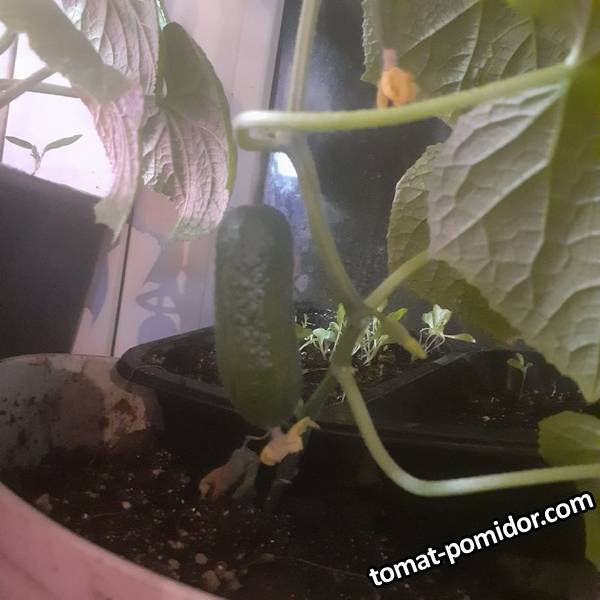
- Curled / Hook-Shaped Cucumbers: If the cucumber curls into a “C” or hook shape, and the leaves have a pale halo around the edge, the plant is starving for Potassium (K).
- Lightbulb-Shaped (Fat bottom, skinny top): Also a sign of severe Potassium deficiency.
- Carrot-Shaped (Fat top near the stem, skinny/pointed bottom): The plant is starving for Nitrogen (N).
- Hourglass / Pinch in the middle: This is usually caused by inconsistent watering (dry spells followed by flooding) rather than a fertilizer issue.