📌 Quick Summary (TL;DR): De Barao Kabardinskiy (Kabardian De Barao)
- 🌍 Origin: A very rare, old amateur “folk breeding” variety. The name references Kabardino-Balkaria, a republic in the North Caucasus region.
- 🌿 Plant Habit: Indeterminate. Produces tall, highly vigorous, and powerful vines.
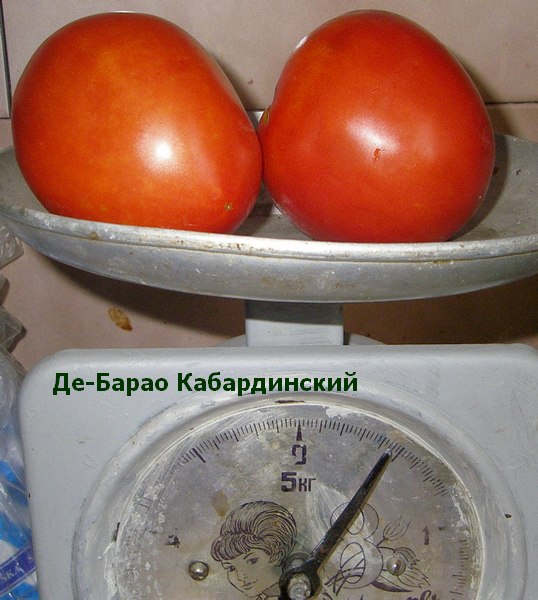
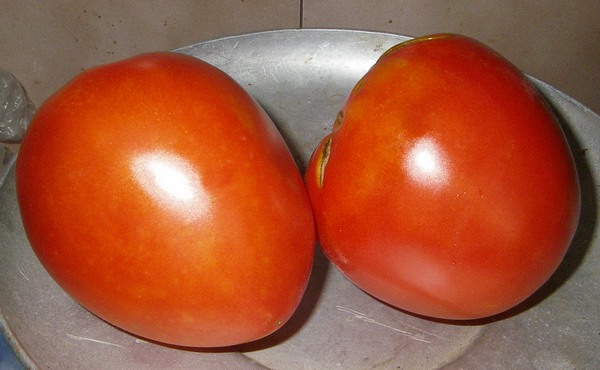
- 🍅 Fruit Characteristics: Despite the “De Barao” name (which is typically a small paste tomato), this variety produces large, round-to-oblate red beefsteaks. Fruits can easily reach 14 oz (400 g) or more.
- 👅 Flavor & Use: Excellent, well-balanced traditional tomato flavor. Better suited for fresh eating and slicing rather than canning.
- ⚠️ Grower Notes: There is significant debate among growers whether this variety is actually related to the true De Barao lineage or if the breeder simply used the famous name for marketing purposes.
An old amateur folk variety. I don’t even remember when or where I got the seeds from originally. It used to be quite popular back in the day. I’ve grown it a couple of times, my last saved seed batch is from the year 2000.
Indeterminate, climbs very well, the bushes are quite powerful. Mid-season. The flavor of the fruits is good and harmonious, yield is average.
Edited January 29, 2015 by Drosera
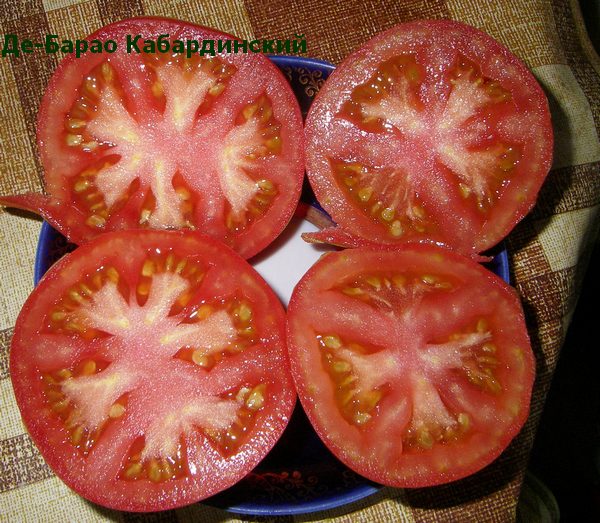
How does it differ from a standard red De Barao?
Marina, mostly by the size of the fruits – a couple of tomatoes weighed over 14 oz (400 g). And the flavor, in my opinion, is totally different.
Galya, do these tomatoes crack badly?
Girls, I literally live in Kabardino-Balkaria, and this is the first time I’m hearing about this variety!!! 😂 😂 😂
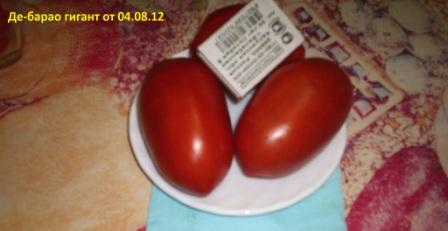
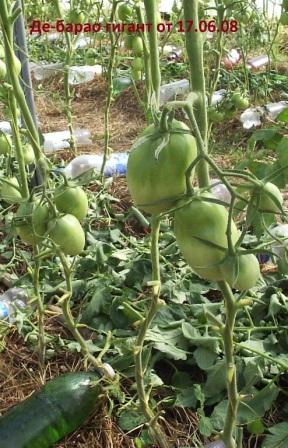
I grew De Barao Gigant a couple of years ago. The shape is very similar to this one, and the weight was also around 7-10.5 oz (200-300 g). But mine had hollow cavities inside and wasn’t very juicy, which is why I culled it from my grow list. Here is De Barao Gigant from 2008.
Quote from OLGA:
Galya, do these tomatoes crack badly?
Olya, I don’t recall them ever cracking at all.
This variety was bred by one of our amateur breeders over 20 years ago. To my great regret, I can’t remember exactly who it was, even though there weren’t many of them back then.
Olya, last season I grew De Barao Gigant – it was a scrawny, wispy plant, but it had a lot of fruits. They were meaty, juicy, and the skin was a bit too thin for a De Barao type. One major downside – it does not store well. You have to process it immediately because it gets soft and starts leaking. I liked it for juice and it was decent in salads.
Quote from Esme:
This variety was bred by one of our amateur breeders over 20 years ago…
Galochka, I’ve heard a lot about this variety, people praise it highly. In Ukraine, amateur breeders cross it with other varieties and get pretty good results, which means it has very strong genetics.
Quote from vavladi:
Olya, last season I grew De Barao Gigant… One major downside – it does not store well.
Whose seeds were they? I am planning to plant it too, but I was really hoping for something with a long shelf life 🤭
Quote from Alena Andreeva:
Whose seeds were they?
Alena, let’s move this conversation to the “Wishlist” thread… but they were from SibSad…
So are there exactly 7 different variations of this variety?
Sasha, I can completely vouch for the name “De Barao Kabardinskiy”. I bought it a very long time ago (maybe 20 years ago), back when there wasn’t such a massive overwhelming amount of varieties available. This specific variety was well known then. I just can’t remember whose catalog it was from originally. I grew it a couple of times since, and now my seeds are just my own saved stock.
Galya, I’m just saying that whoever originally named this variety clearly considered the standard De Barao to be the gold standard to measure against.
I planted De Barao Kabardinskiy right next to De Barao Gigant, because people kept comparing them in this thread, so I decided to test it out myself…
They are different. Very different.
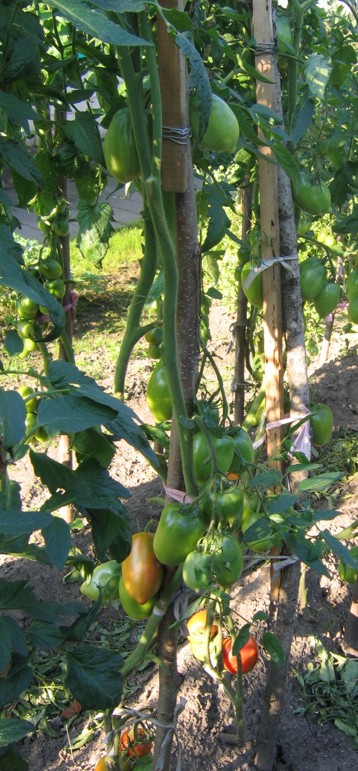
They are growing side-by-side in the same bed. The external plant habits are similar (height, color, and leaf shape), but the differences in fruit are obvious.
Kabardinskiy lags behind in flowering by about one truss, but that might just be because my Gigant was grown from my own fresh saved seeds, and the Kabardinskiy was not.
The truss structure on Kabardinskiy reminds me of Rozovyi Myod (Pink Honey). The ovaries taper down into a cone shape, they are larger than Gigant’s, and lighter in color. Gigant’s trusses have a much more uniform structure, the ovaries are plum-shaped, elongated (some even have a “waist” / pear shape), and they are darker green.
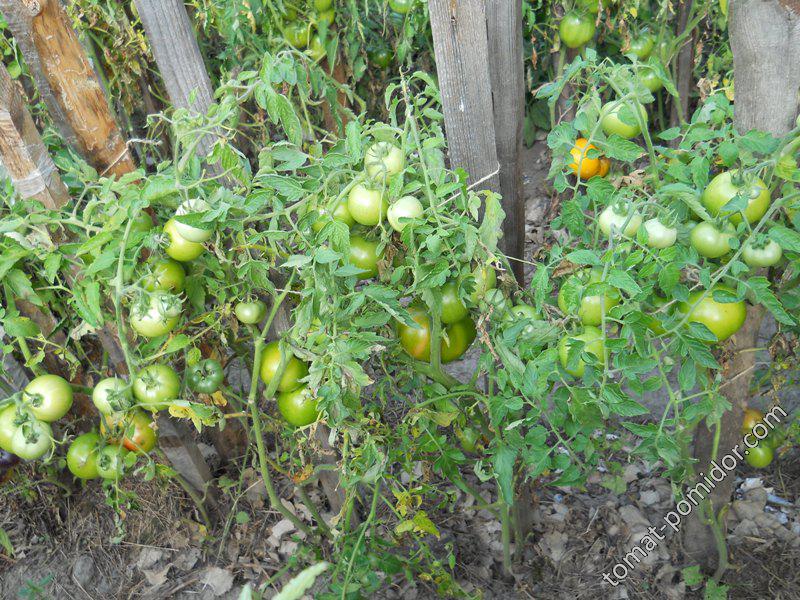
I crawled into my tomato jungle today because I saw some leaf mold (Cladosporium) starting on the lower leaves, so I was pruning them. Anyway, my Kabardinskiy has grown quite a bit. I took a really close look at it, and it looks almost like an exact copy of… Yablochnyi Lipetskiy (Lipetsk Apple). Only those two varieties have trusses that look exactly like this.
I fetched some pics for you guys. Here is the truss structure and fruits, they are about 2.3-2.7 inches (6-7 cm) right now. The fruits are round, firm, and the truss is long and quite uniform.
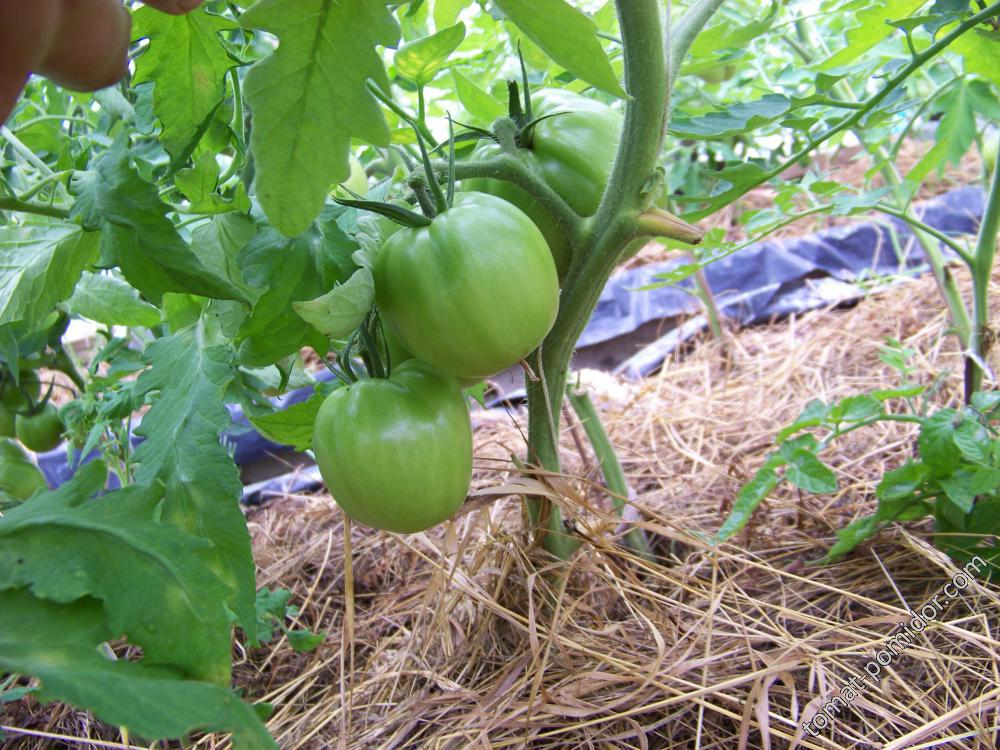
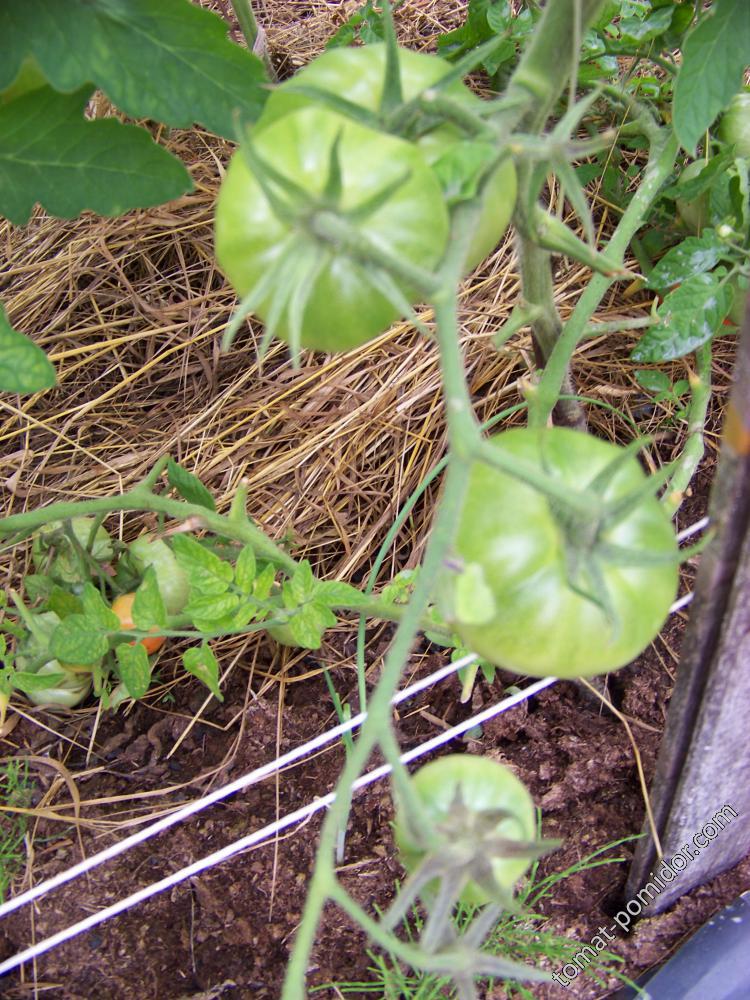
It’s probably just some local regional variety bred using De Barao as a base. Although the traits listed for it aren’t exactly top-tier…
The “Kabardian” Name: A user in the thread jokes that she lives in Kabardino-Balkaria and has never heard of this tomato! Kabardino-Balkaria is a republic in the North Caucasus region of Russia, known for its mountainous terrain and agriculture. In the world of Russian “Folk Breeding” (where amateur gardeners breed and name their own tomatoes), it’s very common for a grower to cross a famous variety (like De Barao) with a local regional beefsteak, and name the resulting seeds after their hometown or region to signify its origin!