Growers’ Notes and Photos (USDA Zones 4-11 Experience)
Dirty Curty
EXPERIMENTAL VARIETY. Might still be segregating. Valdis Pulins shared the seeds with me.
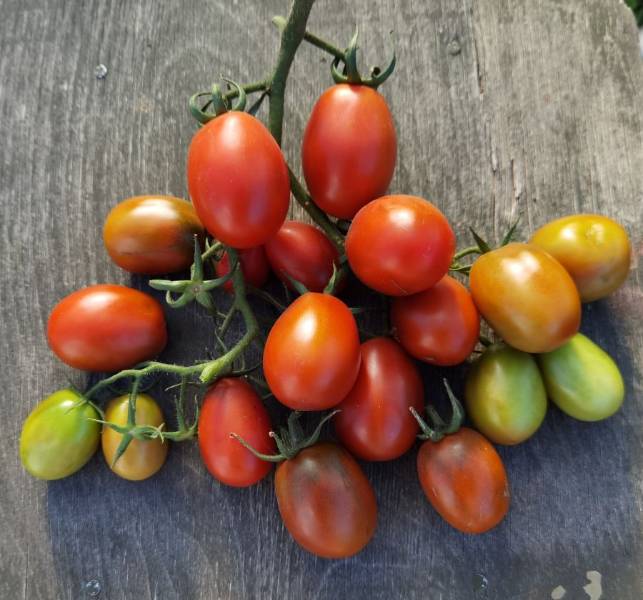
Mid-season, heavy yielding indet. Plant height is roughly 5.5 feet (1.70 m). Pruned it to 2 stems. Regular leaf. Tomatoes are oblate, red-pink with dark blue or dirty gray shoulders, sometimes throwing dark stripes too, weighing up to 10.5 oz (300 g). The fruits are incredibly tasty, sweet and juicy. This was hands down one of the best-tasting blue varieties I’ve ever grown. Definitely growing it again.

Got my seeds from Valdis too. But mine didn’t turn out oblate. Super unusual color. And the shape wasn’t oblate at all, it was more boat-shaped. Definitely growing it again. Really happy with the yield and flavor, next year I’ll make sure to plant it in a sunnier spot.


Full Summary: Genetics, Taste, and Growing Tips
- 🌿 Plant & Genetics: A mid-season, regular-leaf indeterminate vine that reaches around 5.5 feet (1.7 m). Note that this is an experimental line that may still be segregating; while the intended shape is oblate, some seeds will produce elongated, boat-shaped fruits.
- 📈 Yield: Excellent. Multiple growers emphasize that it is a very heavy producer.
- 👅 Taste: Universally praised. Growers rank it as one of the best-tasting anthocyanin varieties available, noting its sweet, juicy, and rich flavor profile.
- 🍅 Fruit: Red-pink base splashed heavily with dark blue, purple, or “dirty gray” anthocyanin shoulders, and occasionally dark stripes. Fruits weigh up to 10.5 oz (300 g). Like all anthocyanin varieties, it requires direct, full sun exposure to develop the darkest coloring.
- 🌎 Who Reviewed It: Two veteran growers representing very different climates: Las Palmas, Spain (Zone 11) and the Moscow Region (Zone 4).