📌 Thread Summary: Growing Giant Sweet Onions from Seed
- Topic: A masterclass on growing massive, sweet “Exhibition” onions from seed. Note for US Growers: This exact same method is the gold standard for growing giant sweet varieties like Walla Walla, Candy F1, Vidalia, and Ailsa Craig.
- The “Cold Treatment” Secret: The biggest mistake growers make is keeping onion seedlings too warm. As soon as the green loops emerge, move them to a bright, cold spot (10-12°C / 50-54°F). Heat stimulates top growth (floppy leaves), while cold stimulates root growth. Strong roots equal giant onions.
- The “Haircut” Rule: Trim the onion seedling tops with scissors by about 2-3 cm (1 inch) whenever they get too tall and floppy. Doing this 2-3 times indoors keeps the plants sturdy and manageable.
- Climate vs. Flavor: Sweet onion varieties require heat and sun to develop their high sugar content. If grown in a cool, cloudy northern climate, they will often turn out pungent and spicy, just like regular storage onions.
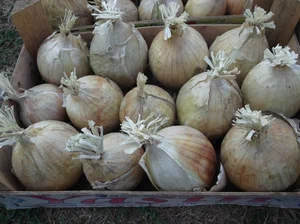
Lately, growing Exhibition onions has become very popular. It is a sweet, extremely large, annual salad onion. It is grown exclusively from seed.
It’s time to talk about growing Exhibition and other onions from transplants. So, where do we start? As always, everything starts with the garden bed! 😉
1. Fall Preparation & Seeds
– Prepare the bed in the fall; it should be well-amended with rotted organic matter (compost). A bed where cucumbers or peppers grew previously is perfect. Ensure this bed warms up early and gets plenty of spring sun.
– Buy fresh seeds. Onion seeds lose viability quickly, especially Exhibition (often dropping to 50% germination or lower). Buy an extra packet or two just in case.
2. Containers & Soil
– Use a good peat-based seed starting mix.
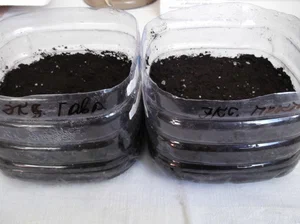
– The most convenient containers are cut-down 5-6L (1.5 gal) water jugs. Crucial: Cut them so the height is no more than 18-20 cm (7-8 inches). Fill the soil no higher than 8 cm (3 inches). Why? The shallower the soil, the faster the root system hits the bottom and starts branching out, which is very important.
3. Sowing (The Boiling Water Method)
This is where many make mistakes. Follow this order:
– Enrich the potting mix with macro and microelements and warm it up.
– Fill the container with max 8 cm (3 in) of mix and tamp it down well.
– Pour boiling water over the soil (to sterilize and warm it). Wait until the soil temperature is about +50°C (120°F)—hot but tolerable to the touch. Sow the onion seeds 1-1.5 cm (0.5 in) deep, cover with a thin layer of dry soil, press down lightly, and put the container in a plastic bag.
– Place in a warm spot (+24-26°C / 75-79°F). Soil temperature is key here; a cold windowsill won’t work.
4. Emergence & The Cold Treatment
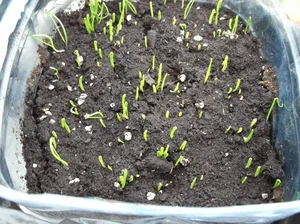
If done right, green “loops” will appear on the 5th day. Do not miss this moment! Move them immediately to LIGHT and COLD!
Why? In onions, cold temperatures stimulate root growth, while warmth stimulates top (leaf) growth. If you keep them in the warmth even a day or two too long, the tops will shoot up before roots form, and the seedlings will flop over and die. If you put them in the cold (+10-12°C / 50-54°F), top growth slows down, and the roots take off.
5. Growing On & Haircuts
– Temps: After the first week of cold, aim for +18°C (64°F) days and +10°C (50°F) nights. Harden them off two weeks before planting.
– Watering: Water carefully around the edges of the container, preferably in the morning so they go into the night dry (prevents damping off).
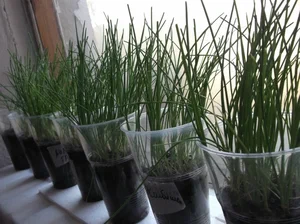
– The Haircut: Top growth will always outpace root growth indoors. Once the tops get unreasonably long and floppy, give them a haircut! Trim them back by 2-3 cm (1 inch) with scissors. You’ll usually do this 2-3 times before planting out.
6. Planting Out
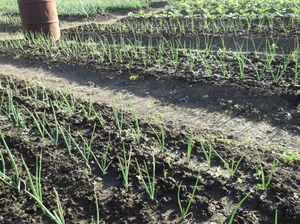
Grow seedlings for 55-60 days. By planting time, they should have 3-4 leaves, be 15-18 cm (6-7 in) long, with a great root system.
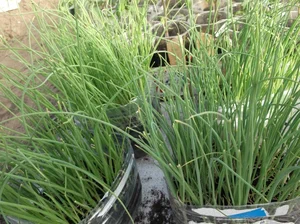
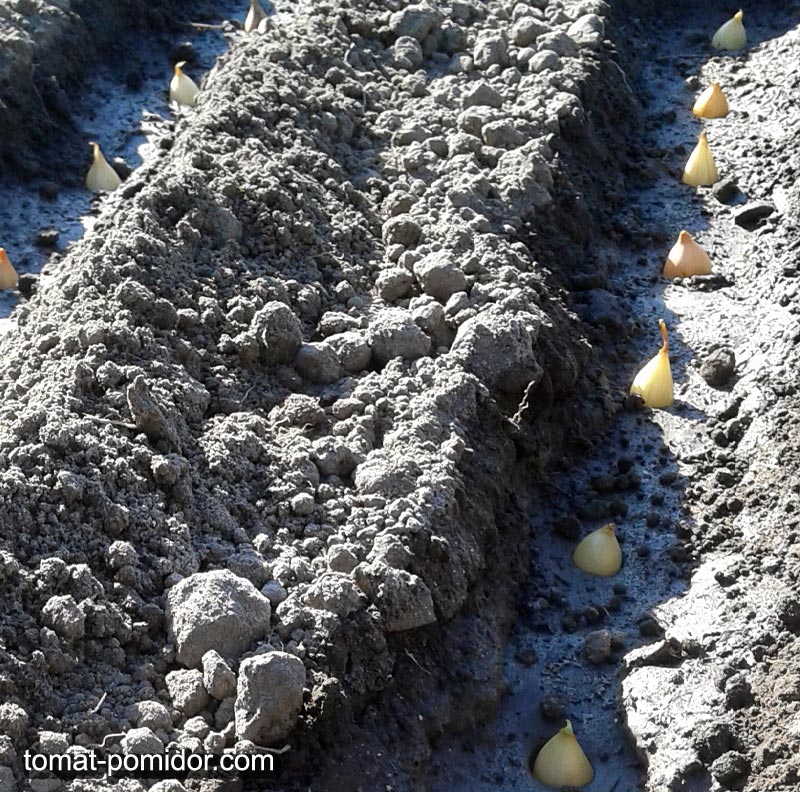
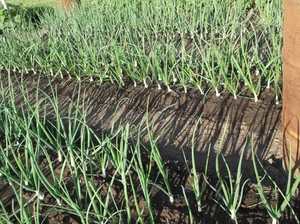
Once the threat of hard frost passes and soil is +6°C (43°F), plant them out. Rows 20-25 cm (8-10 in) apart, plants 12-15 cm (5-6 in) apart.
Prep for planting: Trim the roots back to 4-5 cm (2 in) and the tops to 8-12 cm (3-5 in). Plant shallowly (no deeper than 1 cm / 0.4 in). Water heavily.
7. Feeding for Giants (1kg / 2.2 lbs+)
If you want record breakers:
1. 2 weeks post-plant: Manure tea.
2. 2 weeks later: Complex onion fertilizer.
3. 1 week later: Foliar spray with Epsom salts (magnesium sulfate).
4. 1 week later: Potassium boost.
5. 2 weeks later: “Salt shower” (traditional trick).
6. 2 weeks later: Double superphosphate.
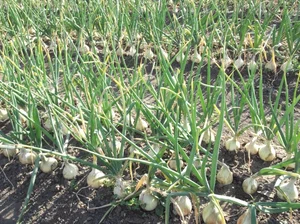
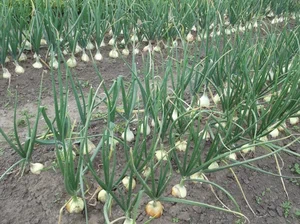
Stop watering completely 1 month before harvest!
Super! Could you please explain what a “salt shower” is and how to do it correctly?
Marina, good evening! A salt shower is watering the onions with a salt solution. It can be weak (100 g / 3.5 oz, or about 3 heaping tablespoons) or a bit stronger (250 g / 8.8 oz, about a slim cup) per 10 liters (2.5 gal) of water. This amount is enough for one garden bed about 6-7 meters (20-23 ft) long. We water it in the evening, and in the morning we wash it off the foliage with clean water.
Good afternoon. 🤠 The watering with a salt solution makes me a bit nervous, as sodium ions aren’t exactly “healthy” for the soil. What is the salt for in this case? For the onion maggot fly?
Do we need to pull the dirt away from the bulbs, and if so, at what stage?
Tanya! My onions always grow on top of the soil naturally, and I never pull the dirt away. As for Exhibition, it’s the type of onion that forms its bulb above ground right from the start, so I don’t think you need to pull anything away.
I wonder where this “pulling the dirt away” advice even came from. There is a method of growing onions in hilled ridges—in that specific case, there is a moment when you un-hill the dirt from the bulbs.
On 12/10/2018, Nata 1971 said:
The watering with a salt solution makes me a bit nervous…
Natasha, if it makes you nervous, then you don’t need to do it. I think that in your case, omitting it won’t really change how your onions grow.
On 12/10/2018, Aleksan9ra said:
Natasha, if it makes you nervous, then you don’t need to do it…
Please don’t be offended, I’ll be growing this onion for the first time, so any information is valuable, especially practical experience. I just want to understand the *why* behind a certain action before making a decision to use it. 🙏
Natasha! If you thought I was offended, that’s not true at all. Really, you can skip the salt shower and nothing bad will happen.
It’s actually very good that, since you are growing Exhibition for the first time, you want to get to the core of things and understand how it works beforehand. I think that will only benefit you. I’ll be happy to help and answer any questions.
I just re-read my own phrase. Yes, it really did sound a bit passive-aggressive. 😅
I remember when I was little, my grandma used to give me a “mission”. If the onion tops started turning yellow, she would hand me a box of coarse salt and instruct me to throw it “right in the very center!” of the onion cluster—as much as fit in my little child’s hand. It was great if it rained right after. If it didn’t, my grandma would water them herself with a watering can the next day. Her onions were always fantastic and sweet. 🤠
In small amounts, salt won’t do any harm, but of course, you shouldn’t overdo it.
I remember back in the day, we’d get assigned to harvest melon fields, and sometimes they’d throw in an onion plantation as extra work. Out of all the procedures, the only thing we did was weed. No watering, no pulling dirt away, and definitely no watering with salt. I didn’t see the planting process, whether it was from sets or seeds. But either way, it was mechanically seeded. The onions were large and commercial grade.
If you decide your soil lacks Sodium, you should amend it before planting, not do “weird science” later on. Chlorine isn’t exactly an element plants desperately need either. Why not just water the onions with bleach then?
As for the procedure: the onion leaf starts to yellow, you water it with a salt solution, and the leaf might just dry up. If the goal is to speed up the drying of the foliage so it doesn’t rot, then sure. But it’s still a bizarre method.))
Sergey, I don’t think we need to be so categorical. Watering onions with saltwater is a very old trick used by our grandmothers. I don’t know where it came from—whether from ignorance or desperation when they had nothing else. But a tablespoon of salt certainly isn’t going to cause a disaster.
Here in the Moscow region, we have areas in the Moscow River floodplain where people have been growing onions for generations. If you chat with them at the farmer’s market, they also complain that growing onions has become a hassle lately: late springs, hot and dry Mays, and pests doing their dirty work.
Alexandra, thank you so much for the valuable and timely advice! I was just getting ready to grow this onion for the first time.
Irina, good luck! Just don’t rush with sowing; wait until the end of February or early March.
Really? That’s good.
But you wrote that the seedlings should be 60 days old, and I calculated that I’d be running late if I wanted to plant them out in April.
Well, look at it this way: for example, you sow on Feb 25th. They emerge around March 2nd. By late April or early May, that’s exactly 55-60 days.
BUT! This article was written a few years ago, when we were just learning how to grow onion seedlings. Time passed, we gained experience, the weather patterns changed a bit, and I came to the conclusion that onion seeds should be started in the first days of March, and transplanted in the first week of May. As we know with any seedling, the later you sow it, the faster it grows. A later-sown onion seedling will still have 4-5 leaves at 50 days old.
On 1/11/2019, Aleksan9ra said:
Watering onions with saltwater is a very old trick used by our grandmothers…
If every grandma in the world who watered with saltwater got better onions than the grandmas who didn’t, then sure. Super remedy. I think it was just the additional watering itself that did the trick. But if you do every watering with a little spoonful of salt, which supposedly “won’t hurt,” and repeat that all season, for years…
That same sodium is found in detergents. People usually dump soapy water in a specific spot. Many advise adding dish soap (another grandma’s recipe) as a surfactant when spraying. There’s also plenty of it in human urine. Speaking of which, there was a grandma’s recipe for wireworms: she literally collected urine, diluted it, and watered with it.
The issue is we don’t know how much of this “harmless” stuff is already in our soil; maybe that one spoonful is enough to tip the balance. At that point, salt water only makes things worse.
My advice: regular watering with regular water is often more effective. I mean, you could bless the water with holy water if you want—anything is better than salting it. Leaves turn yellow from a lack of moisture far more often than from a lack of salt.
Sergey, enough about this spoonful of salt already! We all got your point. Thank you! Better yet, tell us how *you* grow them, since we can’t do this and we can’t do that. What *can* we do and what works best?
I love growing onions and they always turn out fantastic for me. But hey, a fly in the ointment is to be expected, right? 😁
Good evening, can leeks also be sown on February 25th?
Natasha, that is the perfect time for leeks. They are usually notoriously slow germinators and take a long time to come up, especially from treated (pelleted) seeds.
Thank you, February 25th it is.
Once in Sochi (down South), I randomly got to try a sweet onion. It looked like a normal storage onion. I bought it at a market and made a tomato salad. I was in absolute shock—the onion was completely sweet, like an apple!
In 2018, I finally decided to grow sweet onions from seed. I chose Exhibition. Everything went well, they grew decently sized, BUT… they turned out incredibly spicy/pungent!!!!! It was hard just peeling them without crying.
Then this fall, I was reading an old gardening magazine about sweet onions. And ATTENTION, right in the middle of the article in HUGE CAPITAL LETTERS!!!!!!! there was a paragraph emphasizing that ANY sweet onion variety grown in northern conditions (meaning, not down South) will taste just like a REGULAR pungent onion. 😂 😁 😂
CURTAIN DROP 🤦♀️ 🤦♂️
Natasha, that is exactly right! The drier and hotter the weather, the sweeter these onions will be. But if it’s cold and lacks sunshine, they become spicy and pungent. Take the famous Yalta onion, for example. Up here in the North, it will never turn out like it does in the South. I’ll be growing Yalta for the first time this year, I’ll let you know how it goes in the fall.
On 1/12/2019, Aleksan9ra said:
Natasha, that is exactly right! The drier and hotter the weather, the sweeter these onions will be…
The frustrating part is I can’t even buy them in Moscow… I get that people grow them in the South, but can’t someone ship them up North to sell? I have a great, huge farmer’s market right by my house, they sell pineapples, strawberries, and all kinds of exotics. But the “Southern” onions they rip you off for at 300 rubles a kilo taste just like regular spicy onions. 🤷♀️ Does anyone know a place in Moscow? I wouldn’t mind driving there to buy real sweet ones.
I plant my seedlings out between May 1st and May 15th, usually in two stages. And even that doesn’t always save them. Planted on the 5th—it snowed. Planted on the 15th—it snowed. I will note that root celery handled the snow much better than Exhibition onions. But leeks? Snow is just like water to them, they don’t care.
A few observations from my experience:
Soil Depth: Root development and overall growth are much stronger in a deeper layer of soil (15 cm / 6 inches) compared to 10 cm (4 inches). My wife skimped on soil for her tomatoes once and only gave them 5 cm (2 inches)—they grew into dwarves.
Trimming (The Haircut): I do trim the tops, even though I know you aren’t supposed to trim foliage if you’re growing from regular onion sets. If the onion is growing well and sturdy, it won’t flop over in the seedling stage (just don’t overseed/crowd them). But we tend to trim everyone—both the floppy weaklings and the sturdy ones. However, giving them a hard trim right before transplanting outside definitely speeds up their establishment.
Fertilizing: If I use anything, it’s only at the very beginning (at transplant out) to stimulate growth—nitrogen-based stuff like humates or herbal compost teas. As for synthetic minerals, only if they were amended into the soil in the fall. I’d rather add a slow-release deoxidizer in the fall than acidify the soil with liquid minerals all season. Same goes for microelements: a single dose in the fall or a couple of weeks before planting. Micro-doses. I ignore the manufacturers who claim you need to apply it every two weeks.
Sergey, thank you! Very interesting. I’m also thinking of trying a soil depth of 12-15 cm (5-6 inches) this year, I usually only fill to 8 cm (3 inches).
My leeks turn out wonderfully in the garden bed, but the seedling stage is nerve-wracking—germination is terrible: slow and sparse. I don’t even have the desire to sow them this year.
Germination is a lottery. The expiration date on the packet isn’t an indicator, even for expensive and trusted brands.
I will note that for Exhibition, germination was over 90% for fresh seeds, and about 80% for those nearing their expiration date. This year I’ll test that same batch a year later to compare.
By the way, my shallot-type onions had the best germination (around 95%), and they actually grew better and more vigorously in the seedling stage than the Exhibition did.
On 2/14/2019, Aleksan9ra said:
I noticed last year that leeks prefer light shade (especially in the afternoon) rather than direct sun.
Do you mean light shade once they are out in the garden bed? We grow three varieties, and they are always in full sun. I only provide shade right after transplanting to prevent shock.
Before planting, I trim the roots to 1 cm (0.4 in) and the tops, leaving about 3 cm (1.2 in). I plant them deep in trenches, and then gradually hill the soil up around them as they grow. By fall, they are in mounds—that’s how you get those long, beautiful white stalks! ))))
Yes, I meant out in the garden bed.
My Exhibition from our forum’s group seed buy is already looking like a dense forest! Germination was excellent! Last year, out of two store-bought packets, I only had 8 seeds sprout (even though I soaked them). This year I didn’t even soak them, just sowed them in a cut 5-liter jug and everything is perfect.
And the Pandero variety from the group buy sprouted a day even earlier. So the whole secret is just the freshness of the seeds, apparently.
On 2/14/2019, Mariya Suvorova said:
Pandero from the group buy sprouted a day even earlier…
Mariya, did you soak those? I bought them for the first time too, they are pelleted (colored green/funny looking). Do we need to soak that coating off?
Tanya, I got Pandero and Exhibition from the same group buy this year. I didn’t soak anything, I just planted them using the boiling water method on the soil. Germination is fantastic. Pandero came up on day 5, Exhibition on day 6.
Lyudmila, when will you be sowing other onion varieties for bulbs from seed? I bought a bunch of different onion seeds this year, I want to try growing them from seed instead of sets for the first time… but I’m afraid I’ll fail and end up with no onions at all! 🙂 I’ll be copying your every move.
Anya, we will sow all the bulb onions on the exact same day in late February.
What exactly is considered “excellent germination”? From my group buy seeds, about 50 out of 100 sprouted. But I didn’t pre-sprout them.
Natasha, 50% is actually not a bad germination rate for onions. More will likely slowly pop up over the next few days.
When should we sow “Parade” bunching onions (scallions) for greens?
Parade can be sown all season long, depending on when you want the greens. You can sow it now for transplants and move it to the greenhouse later, or you can direct sow it into the garden in April for summer greens.
Last year I used tweezers to perfectly space out my seeds in two 5-liter jugs. But when out of two store-bought packets I got maybe 10 tiny sprouts at best… my mood dropped fast. 😠
This year I bought different brands, and didn’t bother spacing them, just scattered them so they weren’t too clumpy. We’ll see what happens. I was so disappointed last year. 😭
Good morning, the seeds from the forum bulk buy are professional grade, folks who have already sown them say they pop up like a thick carpet! 👍 The lack of an “F1” label on regular store packets surprised me a lot too.
Nowadays seed companies write whatever they want on the packets, sometimes you don’t even know who to trust anymore.
Good morning. Lyudmila, could you advise whether we should put the onions out in the cold during the day or at night after they emerge?
Olya! It’s better to put them out during the day. But if you have nowhere to put them during the day, you can put them in the fridge at night. That’s a last resort, though.
If you put them out in the cold during the day, you must cover them with a plastic bag and find a spot with maximum sunlight. For example, put them out at 9:00 AM, bring them back in at 5:00 PM, and put them straight into warmth near a radiator. This applies if germination is still patchy and you are waiting for more to come up.
If they have already emerged like a thick brush, just leaving them on a cold windowsill close to the glass is enough. Keep an eye on them to ensure they are comfortable and the tops aren’t stretching out too fast, you want them stocky.
Lyudmila, good afternoon.
Why do we need to cover them with a plastic bag? I missed that part. I take them out to the loggia (balcony) where it’s about 10°C (50°F), completely uncovered. And at night I just bring them to the windowsill. I have lots of loops, but they aren’t in a hurry to straighten up. Should I put them somewhere warmer at night?
On 2/27/2019, GalinaD said:
Why do we need to cover them with a plastic bag?…
Galya, you might be fine without a bag. But if the temperature is low, I cover the jug with a bag or put it inside a plastic grocery bag. It creates a specific microclimate.
For example, when the sun comes out, the temperature inside the bag immediately rises—creating great growing conditions. When the sun hides behind a cloud, the heat is trapped inside longer than it would be without the bag. On one hand, we take them out to the cold so the tops grow slowly at first, but on the other hand, bright sunlight and high temperatures inside the bag promote even growth of both the roots and the tops.
If it’s been 5-6 days since they emerged, you can now raise the ambient temperature and keep them warmer, but watch closely to ensure the foliage grows evenly and stays sturdy. The optimal temp now is +18 to +20°C (64-68°F).
It’s day 5, and out of all the onions I sowed, I only see a few loops from the “Spanish Medallion” variety. Exhibition is completely silent (Lyudmila, is it probably too early to put it out on the balcony now? Should I wait until they all emerge together?!
Olya, that makes perfect sense. Spanish Medallion is considered an early variety, so it’s rushing out first, while Exhi is finicky and sometimes takes a long time to think about it. Wait another day or two if there are very few loops, and then you’ll see what your final germination rate looks like.
Lyudmila, just recently you advised feeding the onion seedlings with something high in nitrogen. 2 grams per liter. I searched all the onion threads yesterday and couldn’t find it. Was it Urea? And should the seedlings be about 10 days old for that?
Edit: Found it! It was in the “All about onions” blog. Thank you!