📌 Quick Summary (TL;DR): Gordost Sibiri (Pride of Siberia)
- 🌍 Origin: A well-known commercial heirloom released by the Russian seed company “Siberian Garden” (SibSad). The name translates to “Pride of Siberia”.
- 🌿 Plant Habit: Semi-determinate / Indeterminate. Typically stays relatively short, often topping out around 3.3–5 ft (1–1.5 m) even in a greenhouse. Does very well outdoors in open ground.
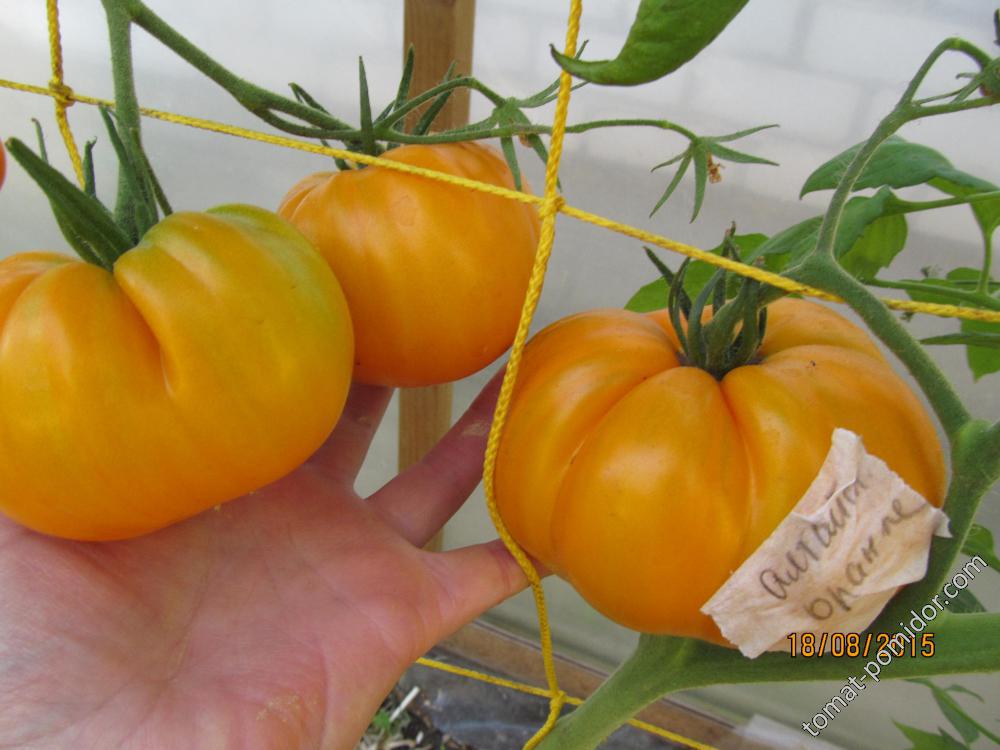
- 🍅 Fruit Characteristics: Bright, saturated red, flat-round beefsteaks. Average weight is around 5.3–8.8 oz (150–250 g).
- ⏳ Maturity: Early season. Known for being one of the first large beefsteaks to ripen in the garden.
- 👅 Flavor: The standout feature! Widely praised for being incredibly sweet and delicious, often described by growers as the absolute sweetest red tomato they’ve grown.
Grower Reviews & Photos
Gordost Sibiri (Pride of Siberia). Seeds were from Irochka (St. Petersburg).
Indet (stated up to 5 ft / 1.5 m), early, bright red, large-fruited, flat-round (oblate). Grown in the greenhouse, the height was accurate, maybe slightly taller – around 5.6 ft (1.7 m)… The bush is not excessively vigorous. Like many varieties from SibSad, it “stalled out” after the first wave of harvest. Unfortunately, I couldn’t get it to restart production even with a series of feedings. It just didn’t really work out for me this year. I want to try it again, because Irochka praised it highly.
The fruits have an amazingly bright, saturated red color (it takes 1st place for color this year), and a very pronounced, balanced tomato flavor with a bit of tang/acidity.
Edited January 29, 2015 by Drosera
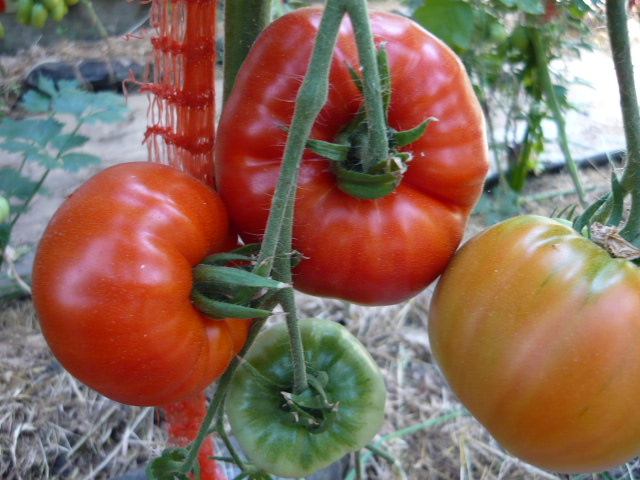
I grew the variety Gordost Sibiri 2 years in a row, and both times it was the absolute leader in early maturity.
I planned to plant it outdoors in open ground, has anyone grown it like that?
I have 2 bushes growing – one in the greenhouse, the other outdoors. They are setting fruit without any problems in both spots (I think they honestly don’t care where they grow). But they are acting a bit strange – they are already setting the 9th-10th truss, and the tomatoes everywhere are exactly the same size, about 5.3 oz (150 g). Usually, the first ones bulk up first……. I’m thinking, maybe I should top the plant (cut off the growing tip) so they start sizing up? Feels like a pity though – they are setting fruit so well…..
This variety was a fail for me. The first ones were ugly/misshapen, then the rest were small. Grown in the greenhouse.
They aren’t ugly, they just grew from a megabloom (fused flower)…
Grew this variety for a couple of years from SibSad seeds. Tall, but the yield wasn’t great 🤷♀️ It set two trusses and then just stopped. The fruits were up to 8.8 oz (250 g). Taste-wise, it was the absolute sweetest variety I had. I remember it was labeled on the seed packet as “Super Sweet”…. But eventually, I kind of drifted away from it, it was pushed aside by newer varieties…. and completely lost in the shuffle…
Poltava. Outdoors / open ground.
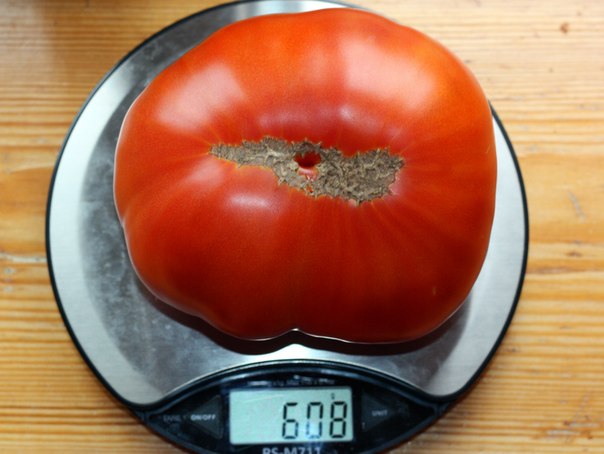
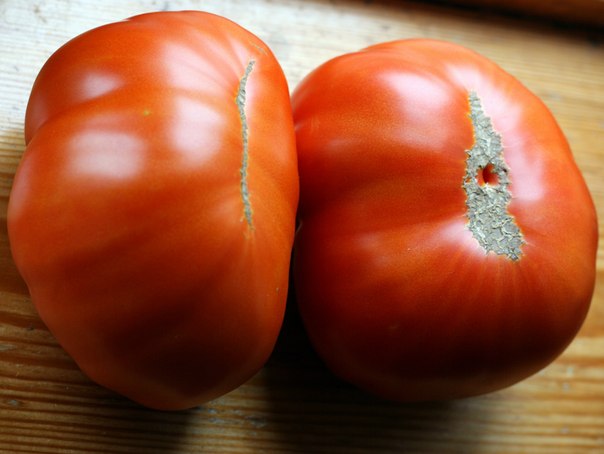
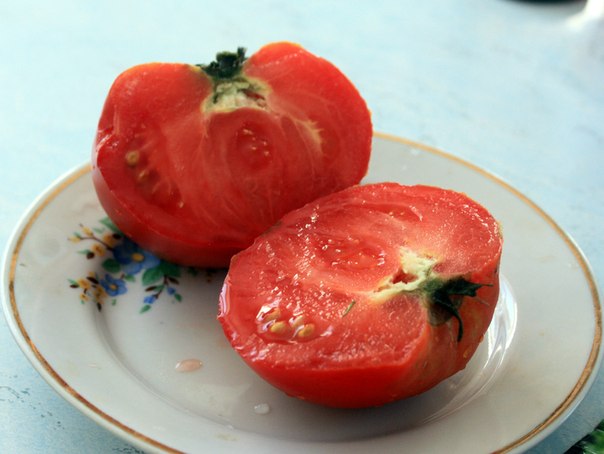
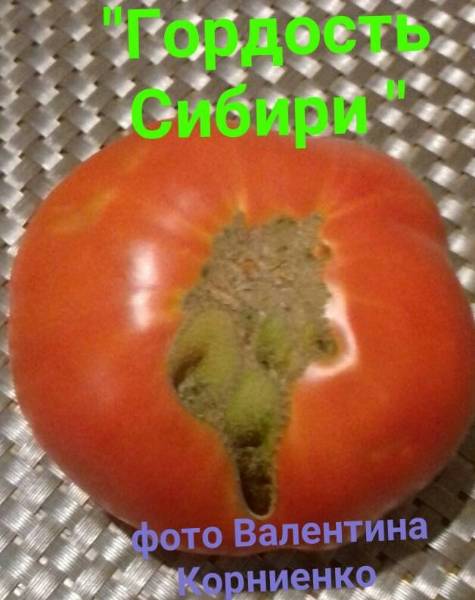
Gordost Sibiri was the absolute sweetest variety among my red tomatoes. And that’s considering I practically didn’t have any sour ones. The bush was about 3.3 ft (1 m), I kept it to 2-3 stems, fruits around 7 oz (200 g). The fruit shape is a slightly irregular beefsteak. There was a brown spot at the bottom, but it wasn’t deeply embedded and was easily removed. The photo happens to show a fruit with a large spot, usually they were much smaller. No tough white fibers inside. The color is light red, with a slight orange tint. The texture of the fruit is juicy, but not watery – very meaty. I loved the variety. Will definitely repeat it. This is a case where the taste is way better than the outward appearance.
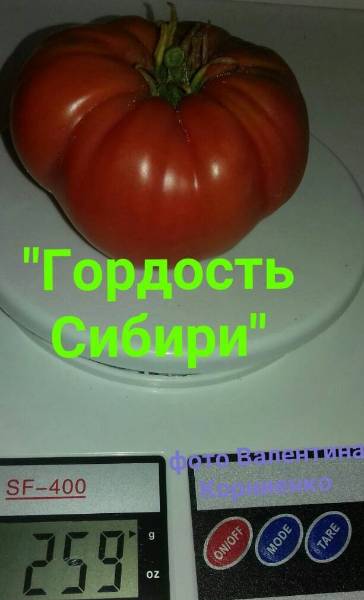
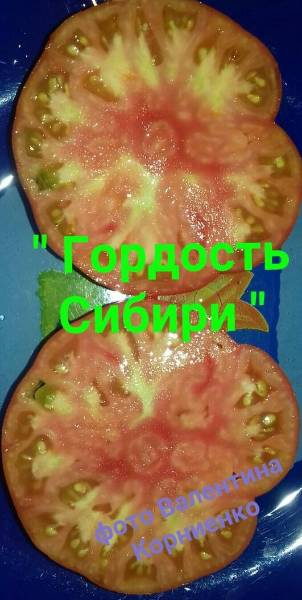
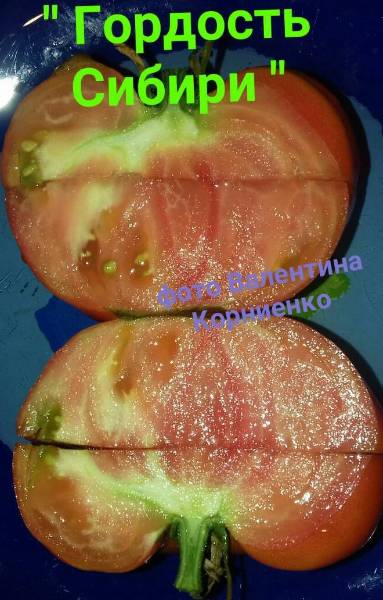
I liked the tomato, grew it to 2 stems, planted outdoors, the fruits didn’t weigh more than 7 oz (200 g). To be honest, the taste seemed a bit watery to me, but that definitely depends on the weather and the growing location.
Valentina-11 mentions a “brown spot at the bottom” of her tomatoes in her review. This isn’t Blossom End Rot or Late Blight! What she is describing (and photographing) is a classic case of catfacing. In large heirloom beefsteaks – especially those that form from megablooms or set fruit during temperature fluctuations – the blossom end of the tomato can heal unevenly, leaving a brown, corky scar. As Valentina notes, this is purely a cosmetic issue on the skin surface. You just slice a thin layer off the bottom, and the tomato meat inside is perfectly fine and delicious!