📌 Quick Summary: Korol Londona (King of London)
- 🌍 Origin: A famous Russian heirloom name surrounded by confusion. There are at least two completely different varieties sharing this name. The original old strain comes from Russian breeder N.S. Bykhanov and produces large, oblate beefsteaks. Modern commercial seed companies (like Siberian Garden) sell a variety under this exact same name that produces dark pink oxhearts.
- 🌿 Plant Habit: Indeterminate (tall). Depending on the strain, height ranges from 3.2 to 6.5 feet (1-2 m). Both strains require staking and pruning to 1 or 2 leaders.
- 🍅 Fruit Characteristics:
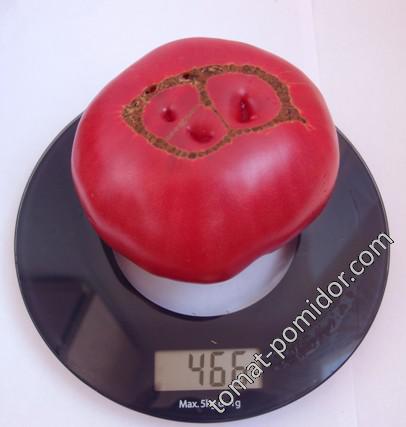
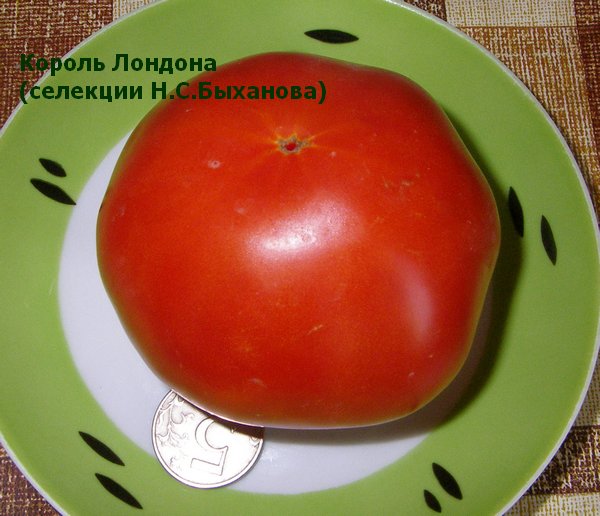
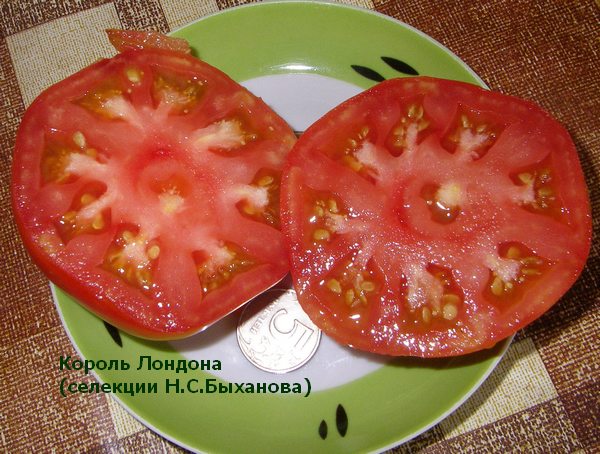
- Bykhanov’s Strain: Large, oblate (flattened), ribbed beefsteaks. Very meaty, but can be prone to cracking.
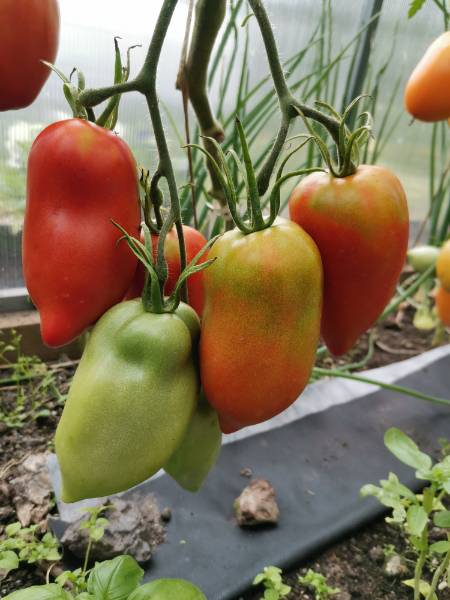
- Commercial/SibSad Strain: Large, raspberry-pink, smooth oxhearts, often reaching up to 1.6 lbs (723 g).
- 👅 Flavor: Both variations are highly rated for having a classic, rich tomato flavor with tender, sugary flesh.
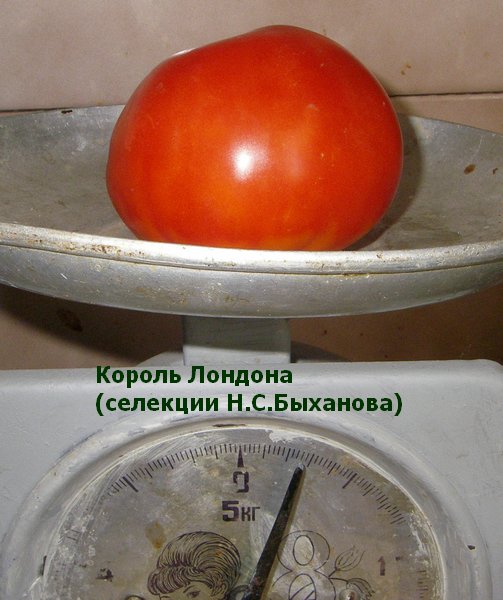
The seeds of this Korol Londona (as well as the Dzhan and Kommuna varieties) were obtained from the breeder N.S. Bykhanov. And you can see from the photo that this Korol Londona looks absolutely nothing like the Korol Londona currently being sold by a ton of seed companies.
The descriptions of the Dzhan and Korol Londona varieties are similar, but they are definitely different varieties (I had them planted near each other, and you could visually see the difference).
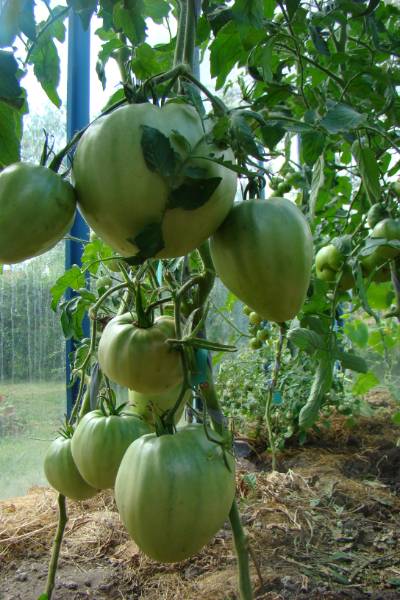
Korol Londona is an indeterminate, but with pretty average vigor. The leaves are light-colored, almost cupping at the edges like a saucer (see photo). Mid-early ripening. Fruits are large, meaty, and juicy. The downside, just like with the Dzhan variety, is that it gets pretty large cracks (but not on all fruits). The taste is good, classic tomato flavor.
Galochka, my Korol London is a dark-pink oxheart (like on the packet picture). I haven’t planted it yet though, if I have enough space I’ll try planting it to see what grows 🙄
Lenochka, the Bykhanov strain is 15 years old, if not older. But yeah, nowadays they sell heart-shaped ones or elongated ones with a beak (I pointed that out in my text).
I’m going to try Korol Londona this year too. Mine is from SibSad (Siberian Garden). And yeah, the description says the fruits are raspberry-red hearts. Powerful bush, 3.2 to 5.5 feet (100-170 cm) tall. Recommends growing in 1-2 stems. Does that mean it’s an indet?
These are completely different King of Londons (I wrote the history of mine above), but yes, both are indets.
My Korol London was just like Galochka’s, from SibSad. The exact same shape, large, tasty, and meaty.
“These are completely different King of Londons”
What is that supposed to mean?! The real Korol Londona has to match the variety description in the State Register! If it doesn’t match, then it’s a different variety! There simply cannot be “different King of Londons” in principle.
The real Korol Londona has to match the variety description in the State Register! If it doesn’t match, then it’s a different variety! There simply cannot be “different King of Londons” in principle.
The Korol Londona variety is not in the State Register, so there absolutely can be different varieties floating around with the exact same name.
I planted Korol Londona from Popenko. The bushes in the greenhouse turned out very productive, reaching up to 6.5 feet (2 m) tall. The fruits are very beautiful and tasty. Tender, with sugary flesh.
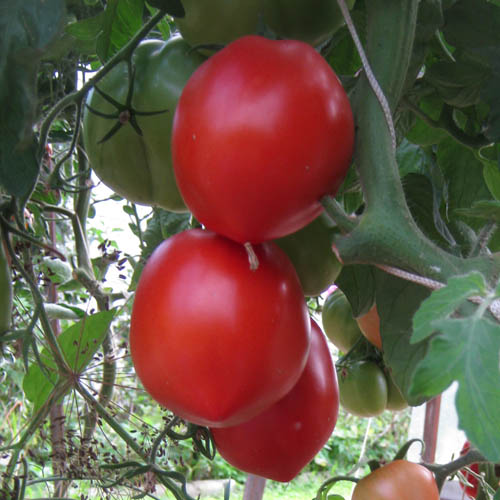
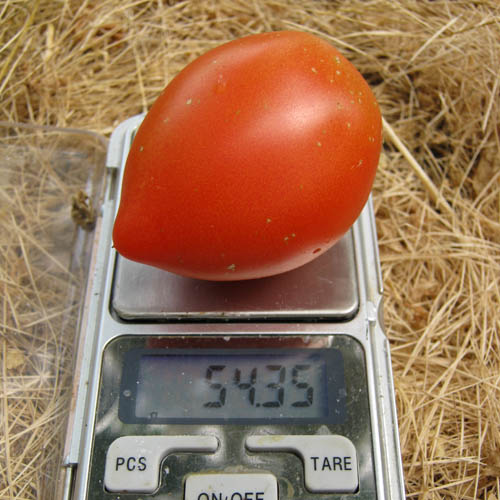
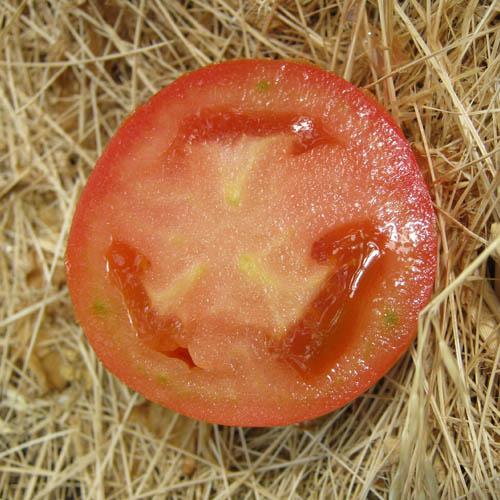
Korol Londona from Semena Altaya. The largest one was 1.6 lbs (723 g), the rest were anywhere from 5.6 oz to 1.2 lbs (160 to 550 g).
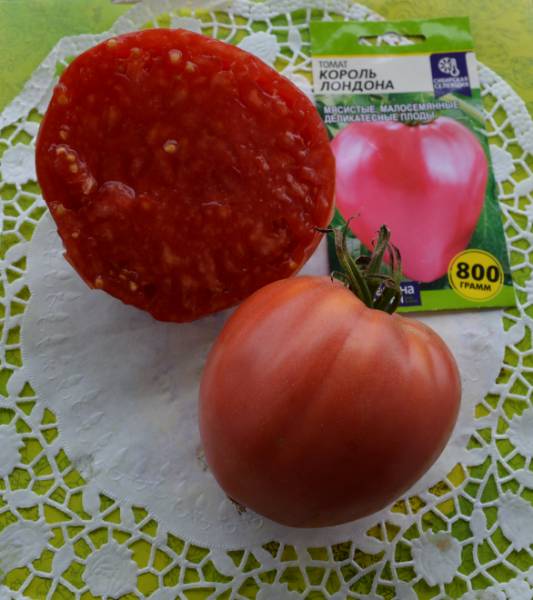
In this thread, you can witness the absolute chaos of the Russian commercial seed market. User Borisych angrily points out that a variety must match the “State Register” . The State Register is Russia’s official government database of approved agricultural crops. However, many amazing heirloom and hobbyist varieties never get officially registered because the process is expensive and bureaucratic.Because “King of London” was never officially patented or registered, commercial seed companies like Siberian Garden (SibSad) and Semena Altaya legally “stole” the name, slapped it on a completely different pink oxheart tomato, and started selling it. This is why you will often see Russian growers explicitly tracking exactly which seed breeder or collector they got their specific strain from!