📌 Quick Diary Summary: The Kupchikha Strawberry
- 🍓 What is a Zemklunika? Kupchikha (The Merchant’s Wife) is a famous Russian hybrid between a garden strawberry and a European club strawberry (musk strawberry). It produces long, rectangular, or multi-lobed berries with an incredibly sweet, musky flavor.
- 💧 The “Pea-Sized” Problem: Kupchikha is extremely sensitive to drought. If you miss even two days of watering during a heatwave, the berries will instantly shrink to the size of a pea and turn into dry “croutons” on the vine.
- ☀️ Sun vs. Shade: Unlike standard strawberries that love full sun, Kupchikha actually produces much larger, juicier berries when planted in partial shade.
- ♻️ When to Replace: The official breeder recommendation is to replace Kupchikha mother plants every 2 years, as the berry size naturally decreases over time, though heavy feeding can stretch it to 3 or 4 years.
gala7496 wrote:
Kupchikha.
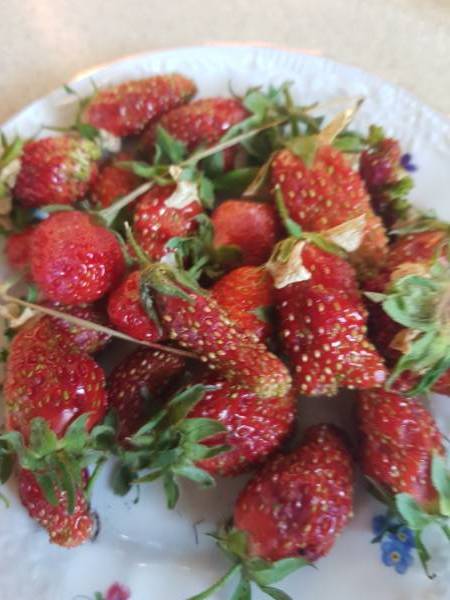
Hello! I want to ask about the Kupchikha strawberry.
My first berries were huge, but then the bushes pushed out a ton of blossoms, and now the berries are literally the size of a pea! Why is this happening and what should I do?!
I have them planted densely in a single row out in full sun. I noticed that in the spots where the row gets some shade, there are still some large berries, but out in the blazing sun, they are all tiny. Could it be because the bushes are still young?
Ketrin007 wrote:
…now the berries are literally the size of a pea! Why is this happening…
Katya, my Kupchikha is also tiny this year. Last year, the first berries were the size of a matchbox. This year, only the very first ones were large, and the rest are like peas. It might be the extreme heat; we haven’t had rain since May.
Also, keep in mind that Kupchikha beds need to be refreshed (replanted from runners) after two fruiting seasons, otherwise the berries naturally start to shrink.
Ketrin007 wrote:
Could it be because the bushes are still young?
Good morning! Katya, those huge ones are just the first flush of berries. After that, they get much smaller. This is exactly why I have mixed feelings about this variety. My Kupchikha was just planted last year, so it is still very young. It could be the heat, or it could be some genetic splitting since it is a complex hybrid.
I’m actually about to rip out my Kupchikha bushes that I planted back in 2018. The berries are practically nonexistent at this point.
GalinaD wrote:
…keep in mind that Kupchikha beds need to be refreshed after two fruiting seasons…
Kupchikha is incredibly responsive to watering! If you water it even slightly less than it wants, the berries will shrink right before your eyes.
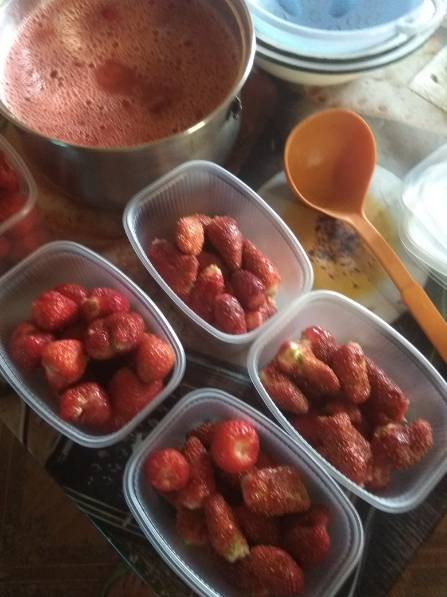
During my first year growing it, I didn’t water it enough. The bushes were full of tiny, dry little “croutons” instead of berries. I wanted to throw the whole patch out, but a coworker who bought the same variety talked me out of it. Her berries were huge. I moved my plants, started watering them very heavily, and the harvest was excellent. The jam is so aromatic, and they are so sweet when frozen.
I also have to disagree about replacing them every two years. My third-year bed is just as good as my second-year bed. I will replace them eventually (I don’t keep them longer than three years), but still. Also, Kupchikha definitely prefers partial shade-the berries grow much larger there!
Natalia98 wrote:
Kupchikha is incredibly responsive to watering!
Part of my Kupchikha is actually planted along the edge of a bed inside my greenhouse. (I planted them there in the spring because it was still freezing outside). They are hooked up to an automatic drip irrigation system because of the tomatoes. So the watering is perfectly regular, but the strawberries are still small! They are slightly bigger than the ones outside, but still small overall.
gala7496 wrote:
…the watering is perfectly regular, but the strawberries are still small!
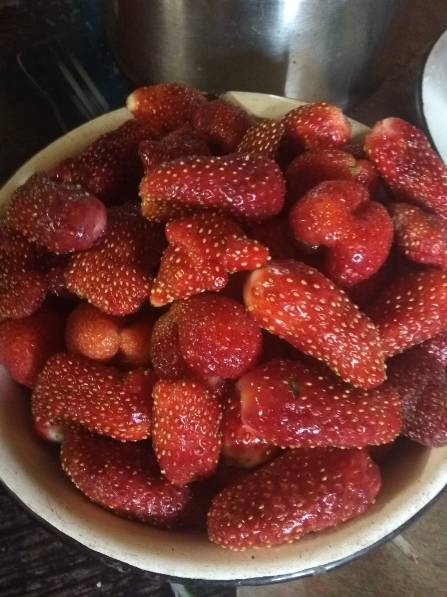
I can’t upload a photo right now, but I just measured my Kupchikha berries. The long ones are 2.5 to 2.7 inches (6-7 cm) long. The wide, fan-shaped ones are up to 2 inches (5 cm) wide, and the columnar ones are about 1.2 inches (3 cm) wide. I think those are excellent sizes!
But I will repeat: you only get this size with heavy watering. If I take a two-day break from watering, boom – the berries shrink. We had a week of crazy, blistering heat this year, and no amount of watering could save them. We still got berries, but if the temperature had been just a bit lower, the harvest would have been much bigger.
Good afternoon everyone!
Girls, I got the Kupchikha strawberry completely by accident; I didn’t even know it was such a highly prized variety! I haven’t refreshed the mother plants in at least five years, I just moved them to a new garden bed two years ago. I did start feeding and watering them heavily, though. I usually try not to let the runners (stolons) take over, but this year I’m definitely going to use the runners to propagate new plants. The berries are huge right now, there are only a few small ones left on the bushes.
Natalia98 wrote:
Kupchikha is incredibly responsive to watering!
Yes, you are completely right. Last year we were flooded with rain, and the berries were huge. This year, we haven’t had a drop of rain since mid-May. Plus, my strawberry bed is right next to a metal fence (which radiates heat). The upper blossoms simply dried up and died on the vine.
It’s just impossible to water them deeply enough by hand to match what a good soaking rain can do for the soil.
By the way, the advice to renew Kupchikha beds every two years actually comes directly from the original breeder of the variety (if I’m not mistaken).
👨🔬 Editor’s Botanical Note: Watering and Shading Zemklunika
1. The “Crouton” Effect: Unlike standard commercial strawberries that will just produce slightly smaller, soft berries during a drought, Kupchikha reacts violently to a lack of water. As Natalia noted, the berries will instantly stop swelling and dry out into hard, crunchy “croutons” on the vine. It requires significantly more water than standard strawberries to size up its fruit.
2. The Shade Advantage: While regular strawberries demand 8+ hours of full, blistering sun, Kupchikha’s wild forest ancestry means it actually prefers partial shade (especially afternoon shade). In the blazing sun, the delicate blossoms often dry up before they can fully pollinate, resulting in pea-sized deformed berries.