Growers’ Notes and Photos (USDA Zones 4-5 Experience)
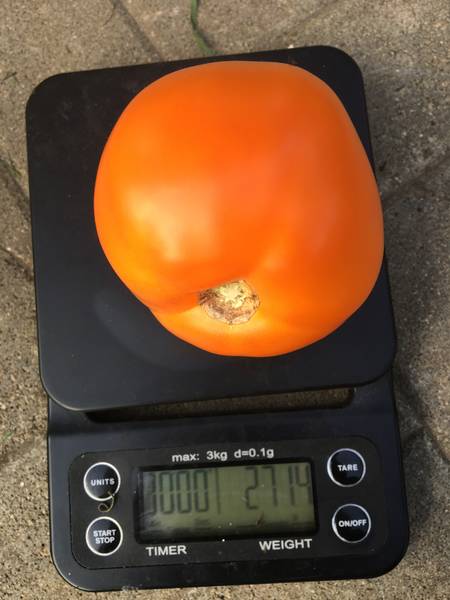
Tall vine, hits about 5.6 ft (1.7 m), sets in trusses, mid-season, weight is around 7 oz (200 g). Bright orange, super meaty and sweet, heavy yielder. Seeds from V. Redko.
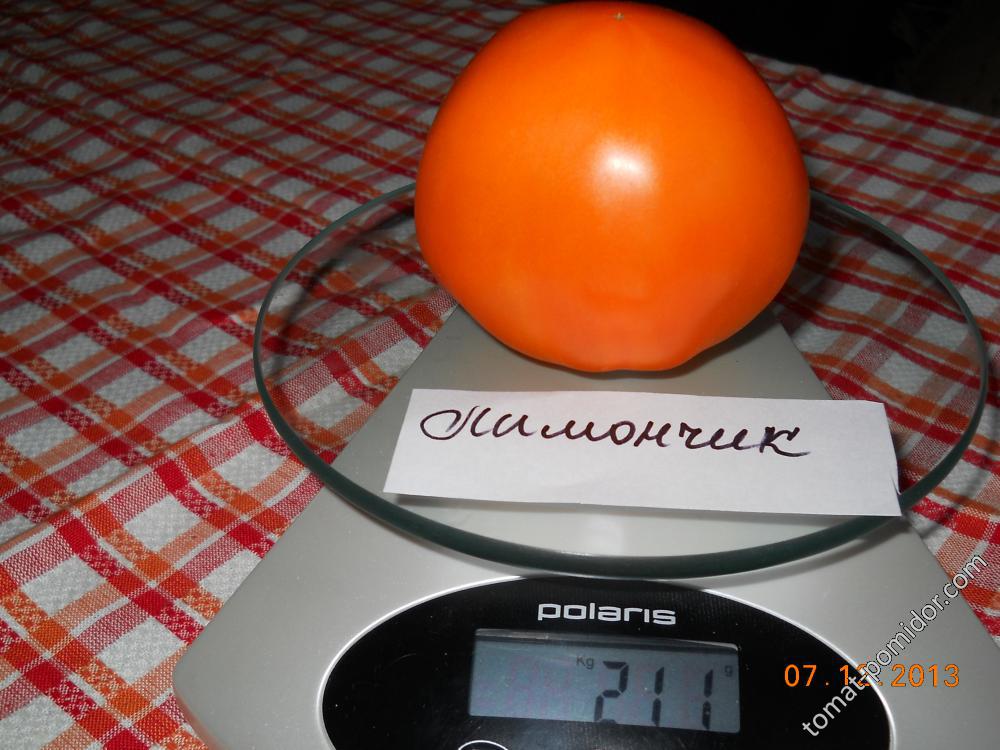
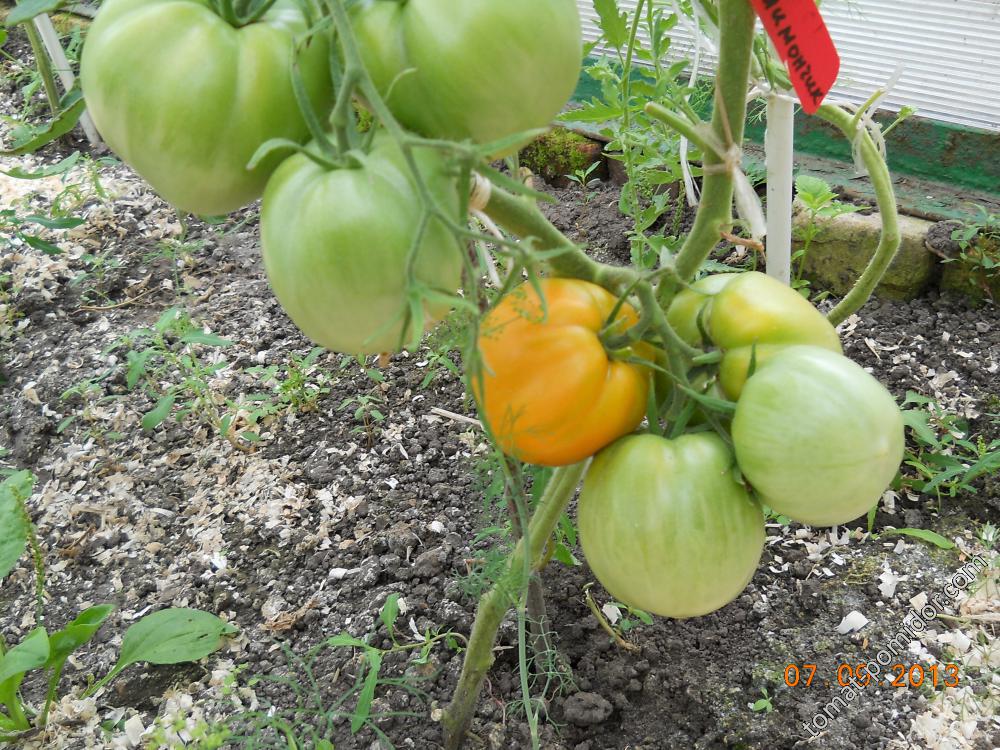
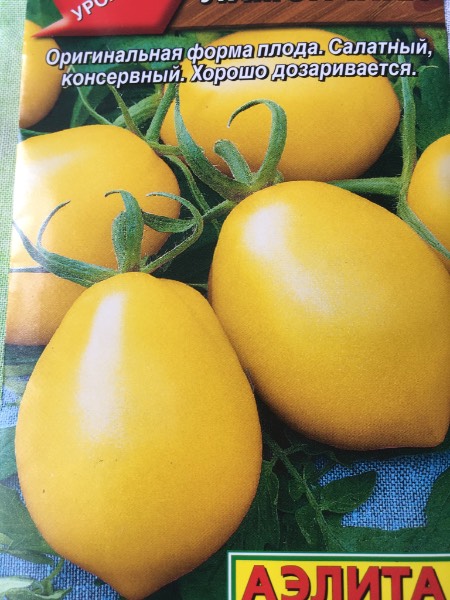
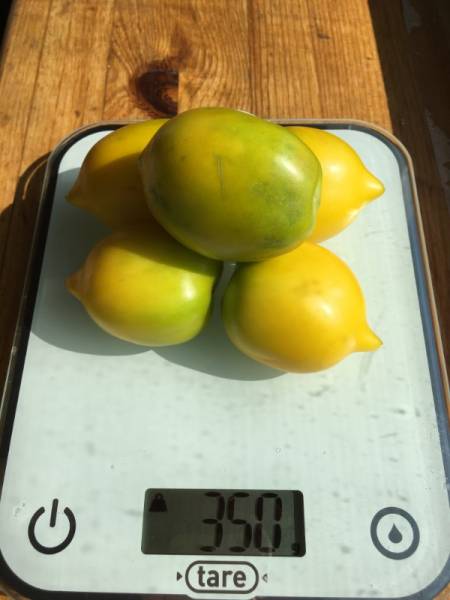
Is this really Limonchik? I thought this variety was supposed to be shaped like a lemon, yellow with a little pointed tip… 😲
On 2/1/2015 at 10:15 AM, NatashKa said:
Is this really Limonchik? I thought this variety was supposed to be shaped like a lemon, yellow with a little pointed tip… 😲
Redko’s Limonchik grows exactly the way Irina’s did..
The yellow ones with a pointed tip that actually look like lemons are Citrus Garden, Anna German, and Wonder of the World 🙂
Got it! Thanks for clearing that up, Svetlana. 🌸
(I’m still a total newbie with this stuff) 🙂
On 1/31/2015 at 11:25 AM, PanIrina said:
Tall vine, hits about 5.6 ft (1.7 m), sets in trusses, mid-season, weight is around 7 oz (200 g). Bright orange, super meaty and sweet, heavy yielder. Seeds from V. Redko.
Ira, thanks for the seeds! 🌸 Verrry productive variety 👍 No matter how I tied it up, it still kept trying to flop over 😛 Beautiful and tasty! 😋 Flavor-wise, it falls just a tiny bit short of Southern Tan. But it totally blew it out of the water in terms of yield! 🧺 Fruits weighed up to 9 oz (250 g).
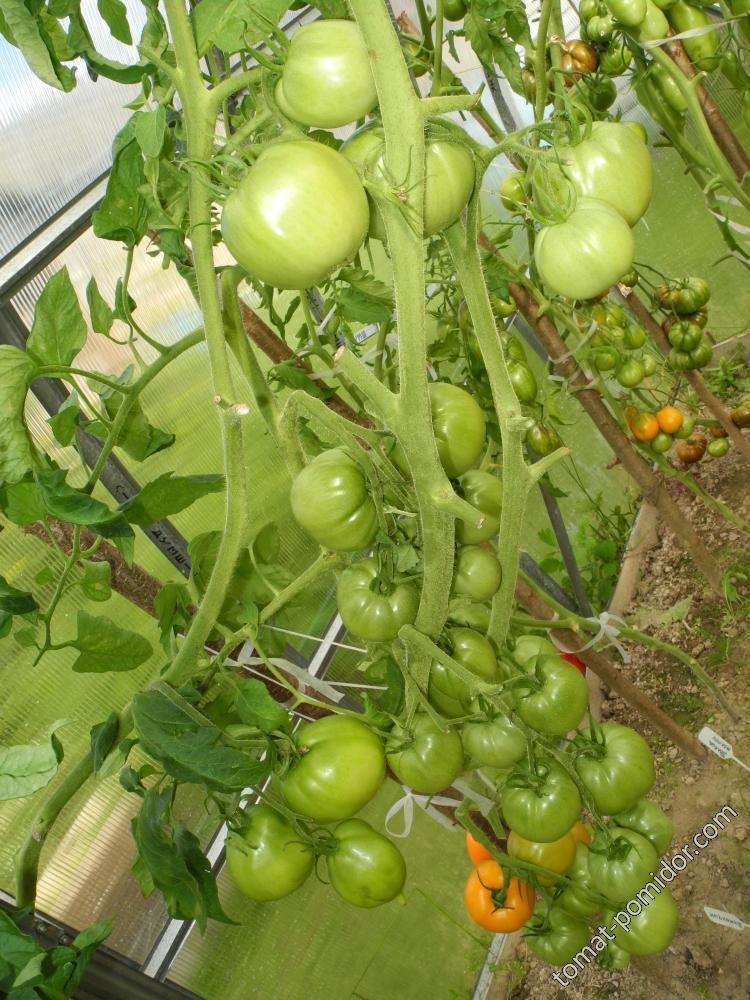
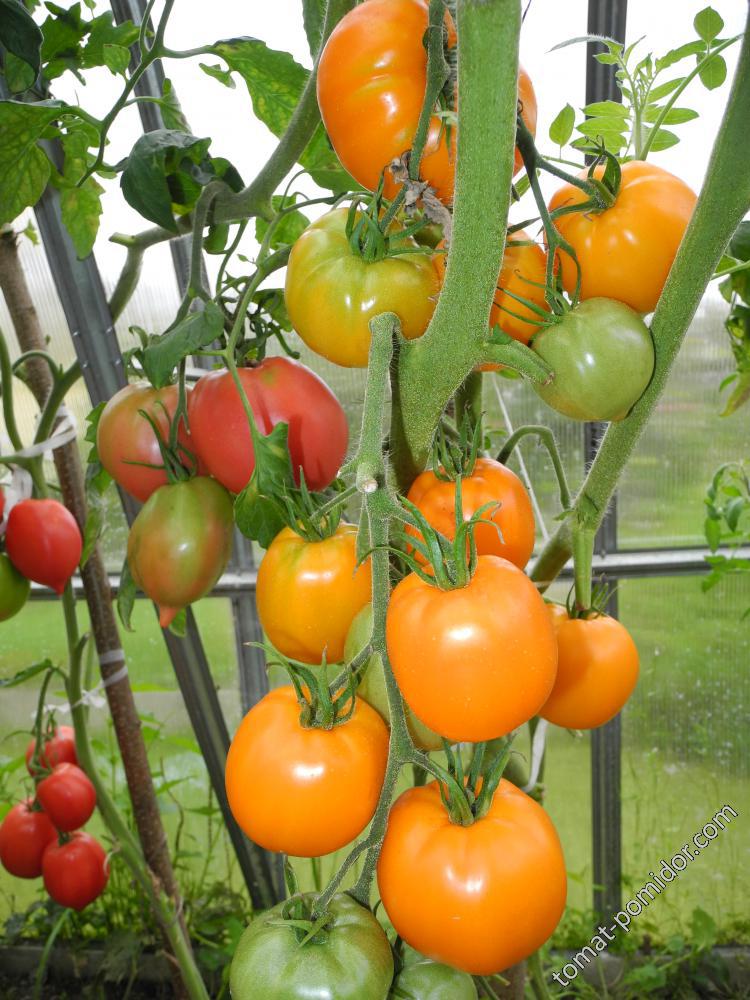
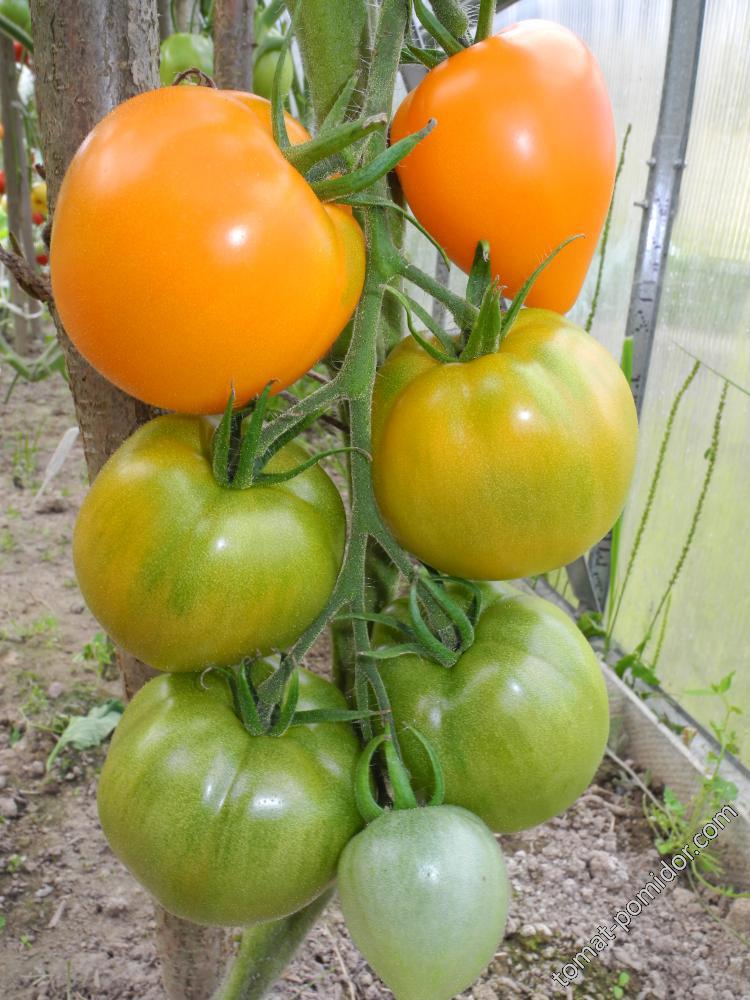
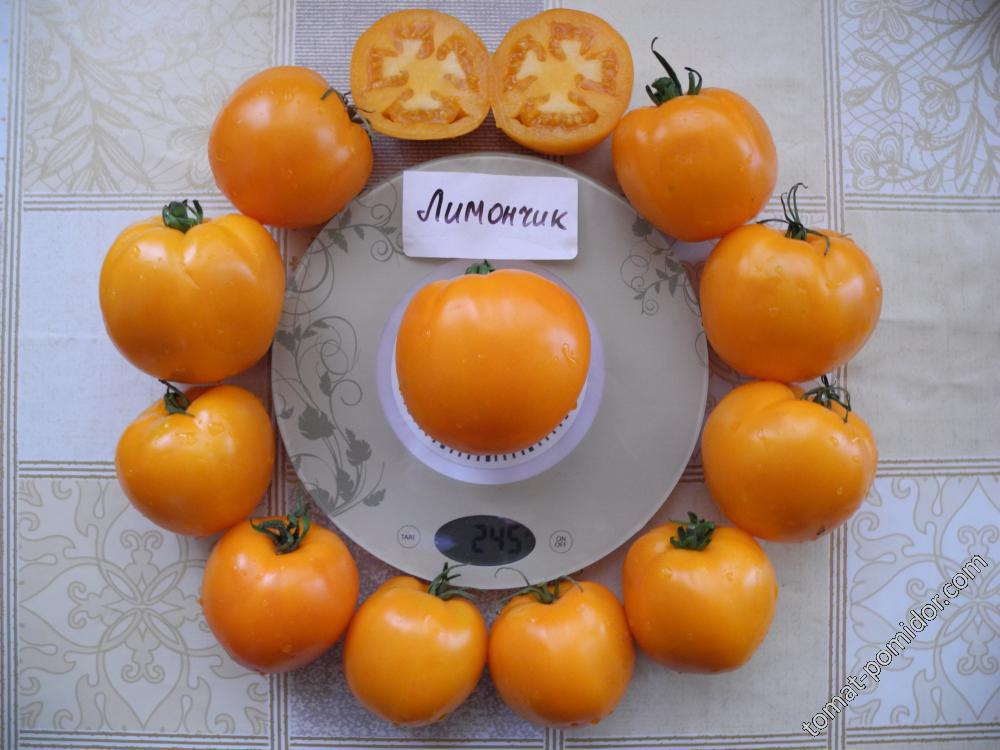
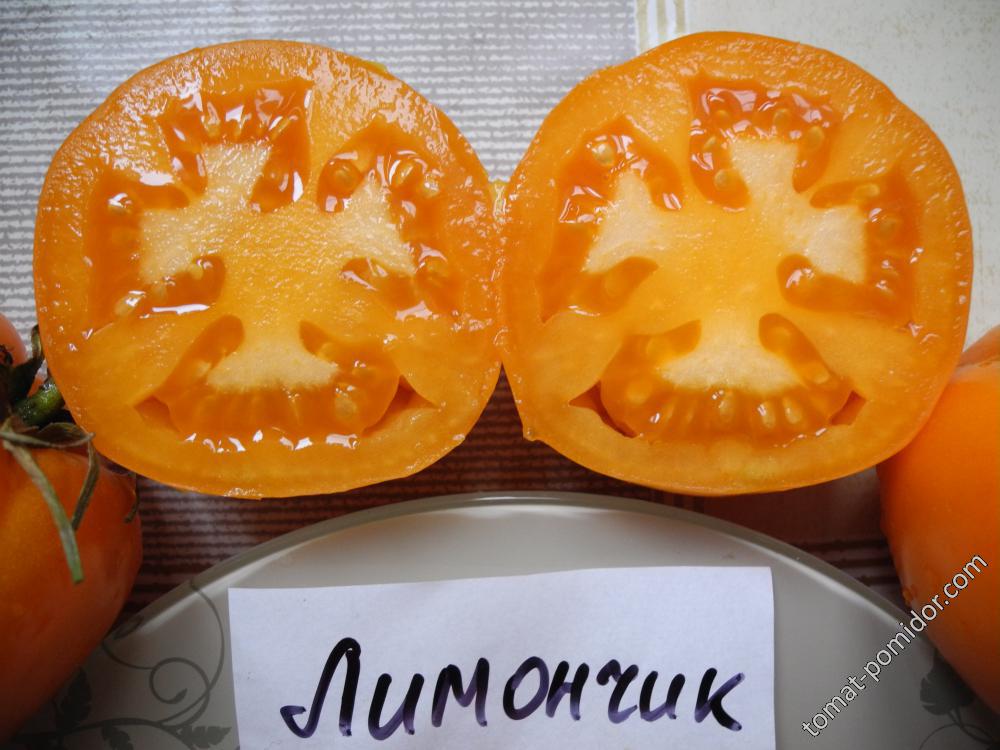
I can’t say it’s exceptionally tasty. But it’s very… dense. Not hard, but dense, it has a great texture for processing and canning. Dropped some blossoms in the heat, very vigorous plant. It’s one of the few varieties I want to take another look at and try to tame for its yield potential.
Growing Limonchik for the second year. Seeds were from Sveta Svetikk. I love this variety for its reliability, yield, and flavor. The tomatoes don’t grow into massive giants, the trusses hold up almost all of them without needing extra support, I weighed one truss and it was 2.8 lbs (1.3 kg). Meaty. Low acid, practically none at all. Last summer they were sweeter, this time it grew in the shade of a cucumber vine and apparently didn’t get enough sun. The lower trusses had seven fruits, they all set and grew perfectly. Further up the vine there are more blossoms per truss, but for me, they didn’t all set, averaged about four.
Edited September 12, 2019 by Tink@
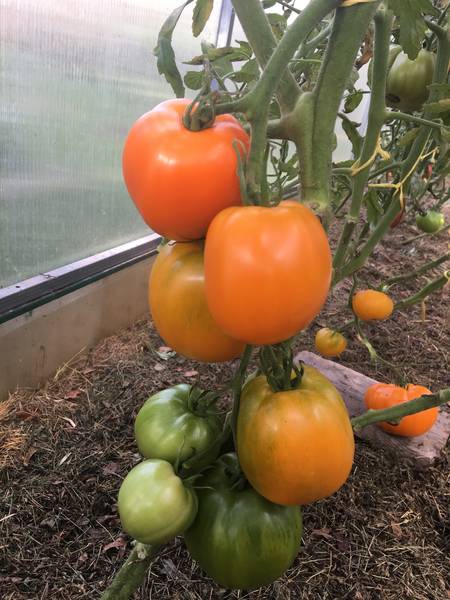
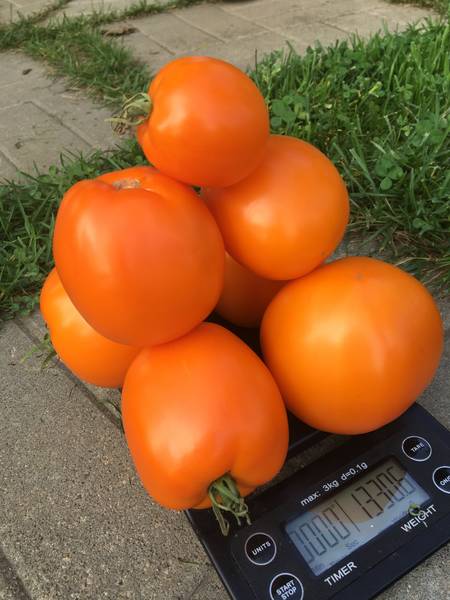
I’ve got some other kind of Limonchik 🤷♀️. Seeds from Aelita. Extremely prolific, handled the heat perfectly, set an absolute ton of fruit, it was hard to keep it fed. The plant started showing signs of magnesium deficiency, and as a result, the fruits on the bottom truss weren’t sweet. That single truss weighed over 8.8 lbs (4 kg), I fed and watered this plant heavier than any of the others. The flavor of the fruits on the upper trusses improved, but those trusses were around 4.4 lbs (2 kg) each. Excellent for canning, there are better slicers for salads, but this one needs to be fed heavily and you absolutely have to amend the planting hole with banana peels among other things.
Edited March 9, 2022 by Natalya79
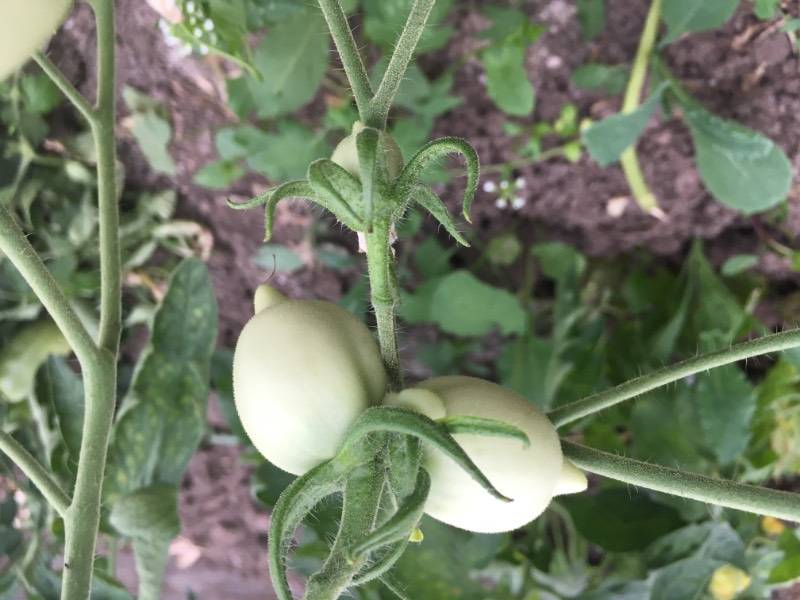
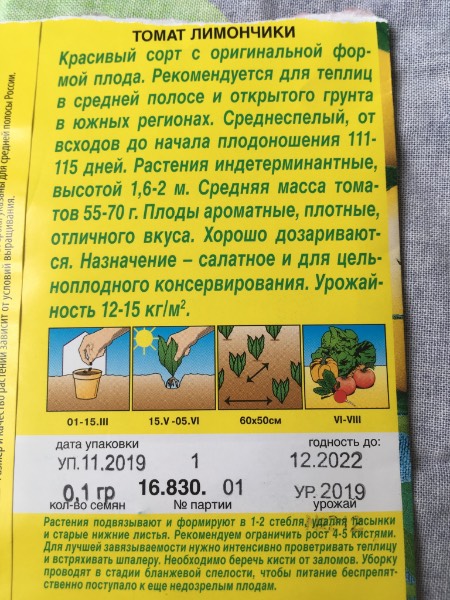
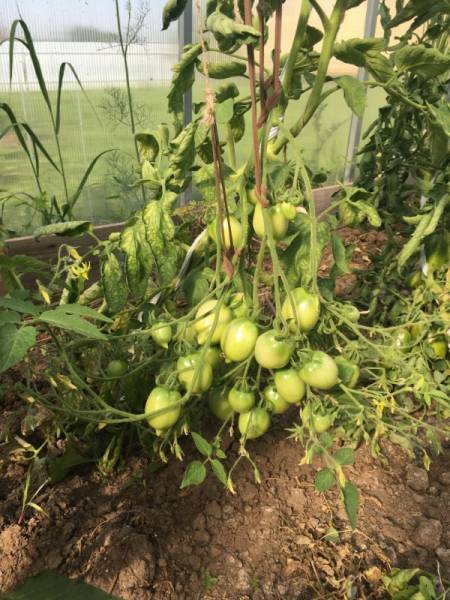
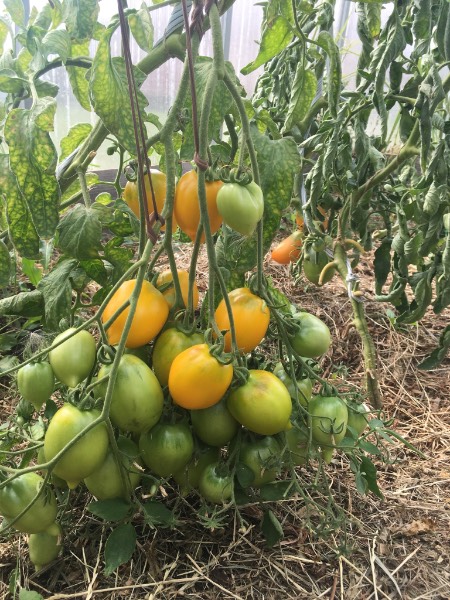
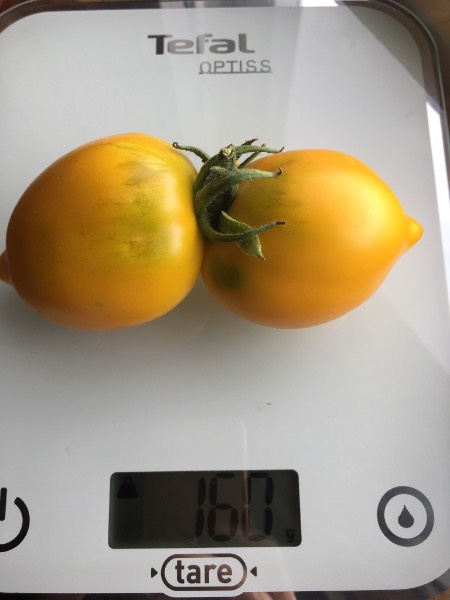
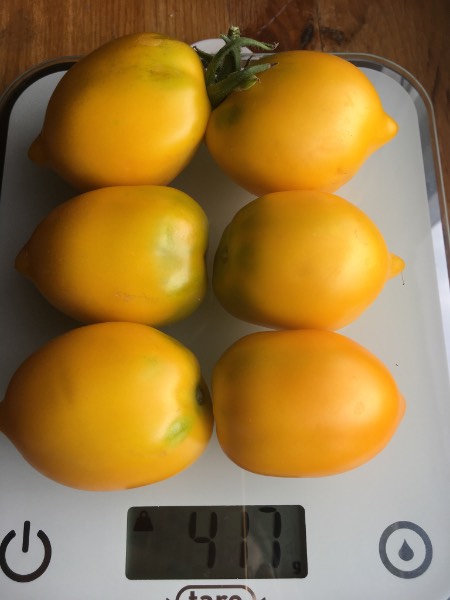
Full Summary: Plant, Yield, Taste and Storage
- 🌿 Plant: Indeterminate vine growing to about 5.6 ft (1.7 m). Despite the name translating to “Little Lemon”, the most commonly grown version of this heirloom produces round, bright orange fruits weighing 7-9 oz (200-250 g). The plant is incredibly vigorous and requires robust support.
- 📈 Yield: Astronomically high. The plant produces massive, heavy trusses, with growers reporting single trusses weighing between 2.8 lbs (1.3 kg) and an incredible 8.8 lbs (4 kg). Because of this extreme fruit load, the plant requires heavy feeding to prevent magnesium and potassium deficiencies.
- 👅 Taste: Sweet, meaty, and very low in acidity, provided it gets enough sun and nutrients. Some growers consider it a top-tier fresh eater, while others find its dense texture better suited for canning and processing.
- 📦 Hardiness: Handles extreme summer heat well, though it may drop a few blossoms if temperatures spike too high.
As seen in the thread, the name Limonchik (Little Lemon) causes immediate confusion. In the Russian seed trade, there are a few strains floating around with this name. The one discussed here (popularized by vendor V. Redko and commercial brand Aelita) is a bright orange, round slicer. If you are looking for the Russian heirloom that actually looks exactly like a yellow lemon with a pointed tip, you should look for Wonder of the World (Chudo Sveta) or Anna German.
Also, Natalya mentions burying banana peels in the planting hole. This is a very common old-school Russian garden hack for varieties that set excessively heavy trusses. The decomposing banana peels provide a slow-release source of potassium and magnesium, which helps prevent the exact deficiencies she experienced when her plant pushed out an 8.8 lb (4 kg) cluster of fruit!