Growers’ Notes and Photos (USDA Zone 4 Experience)
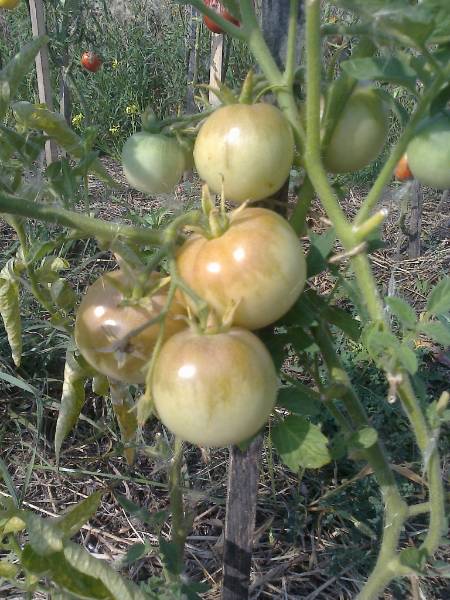
A very unusual variety. Takes a really long time from the start of ripening to becoming fully ripe. First, the fruits turn white, hang there white for a long time, then start coloring up red, and finally become red-orange (the color is incredibly beautiful). Thick-walled fruit, would be perfect for canning (haven’t canned them myself), tart tomato flavor. Weight is around 3.5 oz (100 g). The plant is about 3.3 ft (1 m) tall, the first truss appears after the 9th leaf, the next one after the 3rd. Wispy foliage, lower leaves yellow quickly.
Edited September 24, 2013 by Marina
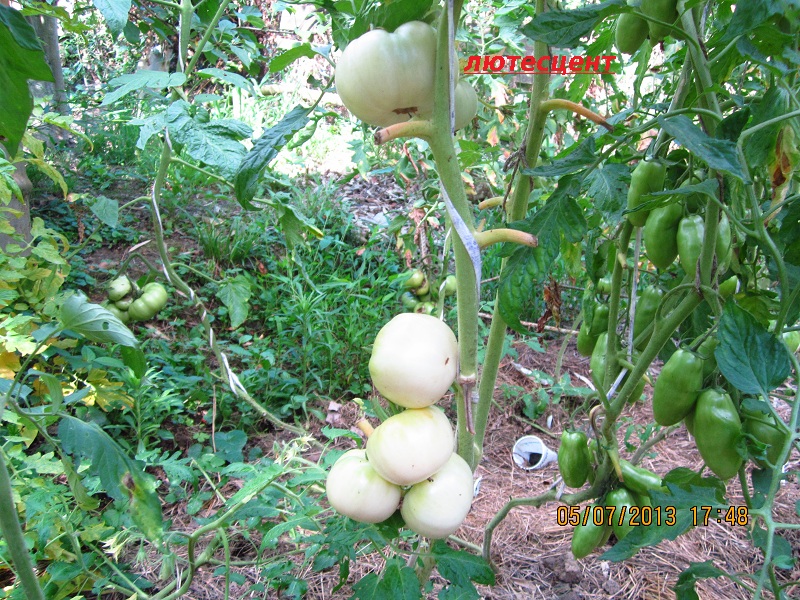
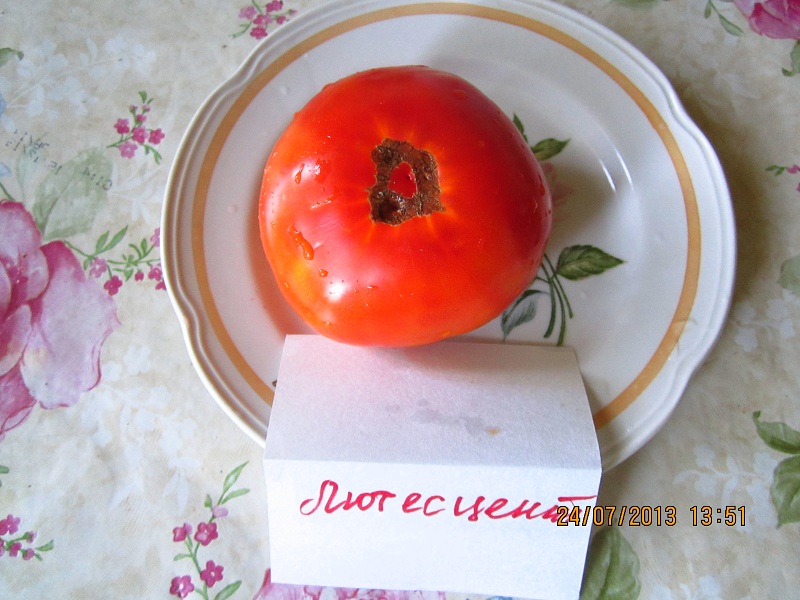
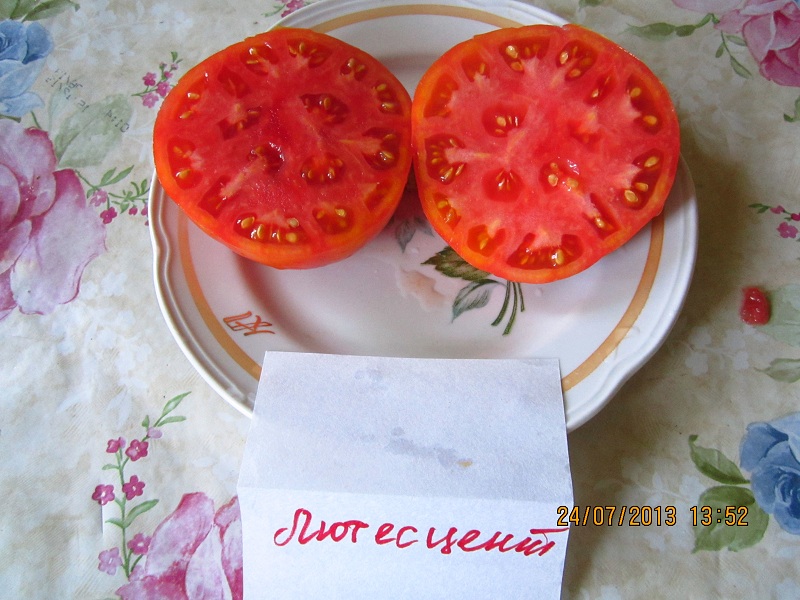
Man, this variety gave me a run for my money. First I was trying to save it from chlorosis. It seemed to bounce back, but by fall the whole plant was just standing there covered in yellow leaves again. Then I was fighting off diseases. Then I waited forever for it to finally ripen. Never actually got there, I just picked them while they were still white. Ripened them indoors on the counter. We just didn’t click, definitely not sowing this one again.
From the catalog description:
Lutescent, Alexander Livingston, USA. An antique variety, created by the author in 1897; it was known under various names: Livingston’s Honor Bright, Lutescent Long Red, Honor Bright. As Alexander Livingston noted in his first description of the variety made in 1900, before the fruit becomes fully ripe and turns red, it goes through some interesting transformations. The variety is mid-season, semi-determinate, and everything about it is very unusual. The leaves at the beginning of the season are yellow-green or yellow with green veins, later they turn green. Flowers are white or pale yellow. Fruits are heart-shaped or flat heart-shaped, slightly ribbed. They are true chameleons, changing color during ripening from green to white, then sequentially to lemon-yellow, orange, and finally red. By the second half of summer, fruits at different stages of ripening hang on the vines, making the plants look unusual and very colorful. Fruit weight is 7-9 oz (200-250 g). The flesh is juicy, aromatic, with a well-balanced flavor. The variety is high-yielding, resilient; fruits store very well for 2.5 to 3 months. Good for fresh eating, making juices, and sauces.
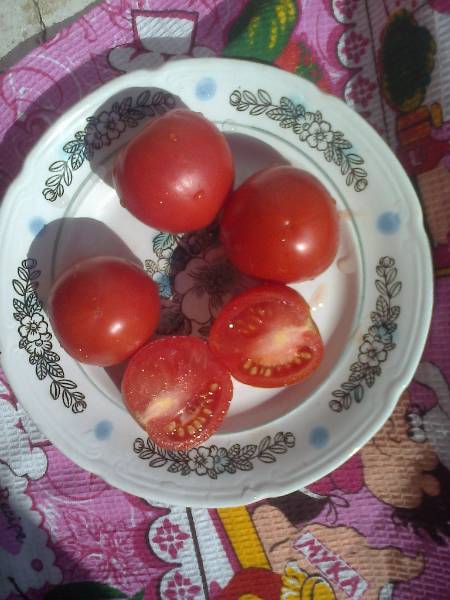
Yeah, it’s an interesting variety. The seedlings had distinctly different foliage, and it ripened super weirdly. Mine had zero disease issues. Held up in storage all the way until New Year’s, decent taste. Actually, they even made it to March. I won’t be planting it again though, summer tomatoes fresh off the vine are just a whole different ballgame, and for soups and freezing, anything else works fine. Mine only weighed about 2 oz (60 g). Out in the dirt, all my varieties turn out smaller than the catalog specs.
Full Summary: Plant, Yield, Taste and Storage
- 🌿 Plant: Semi-determinate, reaching about 3.3 ft (1 m). This is a heavy novelty variety with a unique genetic mutation. The foliage is wispy and sickly-looking (pale yellow/green), the flowers are white, and the fruits transition through an incredible color spectrum: green → bright white → lemon yellow → orange → red. Growers report fruits weighing anywhere from 2 oz (60 g) up to 3.5 oz (100 g).
- 📈 Yield: Moderate to high, though it is extremely slow to ripen on the vine.
- 👅 Taste: A traditional, tart tomato flavor. The walls are thick and meaty, making it suitable for canning, sauces, or stews.
- 📦 Storage: Absolutely exceptional. Daks reported her harvest lasting in storage from autumn all the way to March of the following year! However, the plant itself can be divisive; SvetaR struggled heavily with what she thought was chlorosis and disease.
Notice how Svetlana mentioned she was fighting “chlorosis” because her plant was covered in yellow leaves? This is a super common misunderstanding with this heirloom! The variety carries the recessive lutescent gene (often referred to in botany as the l gene). This gene naturally causes the chlorophyll to break down rapidly, making the foliage look pale, yellowish, and downright sickly even when the plant is perfectly healthy. It also causes the flower petals to be white instead of the usual yellow. So if your Lutescent plant looks like it’s dying of a nutrient deficiency, don’t panic—it’s just doing exactly what Alexander Livingston bred it to do back in 1897!