📌 Quick Summary (TL;DR): Mid-June Hacks
- 🥔 All Vines, No Potatoes: If your potato plants are over 3 feet tall and extremely lush, they have too much Nitrogen. This delays tuber formation. Spray the foliage with Potassium and Phosphorus (like MKP or Superphosphate) to force the plant to stop growing leaves and start sizing up tubers.
- 🍈 How to Prune Melons: Melons fruit on the “granddaughter” vines. Step 1: Pinch the main stem after the 5th leaf. Step 2: Keep 2-3 of the strongest side shoots (daughters) and pinch them after their 5th leaf. Step 3: The next shoots (granddaughters) will produce flowers and fruit. Once a melon is the size of an apple, pinch the vine 4 leaves above it and remove all non-fruiting vines.
- 🐔 Fresh Chicken Manure Rule: Fresh chicken manure is pure, burning Nitrogen. Only use it as a diluted “tea” (fermented in water for 3-5 days) on heavy nitrogen-feeders like cabbage, cucumbers, peppers, eggplants, pumpkins, and peas. Never use it on root crops like beets!
🌍 You’re reading a translated thread from our Russian-language forum. These growers garden in climates very similar to Minnesota, Wisconsin, Maine, and Ontario (short summers, late frosts, and cold soil).
Mid-June Harvest & Potato Problems
Good day, everyone!
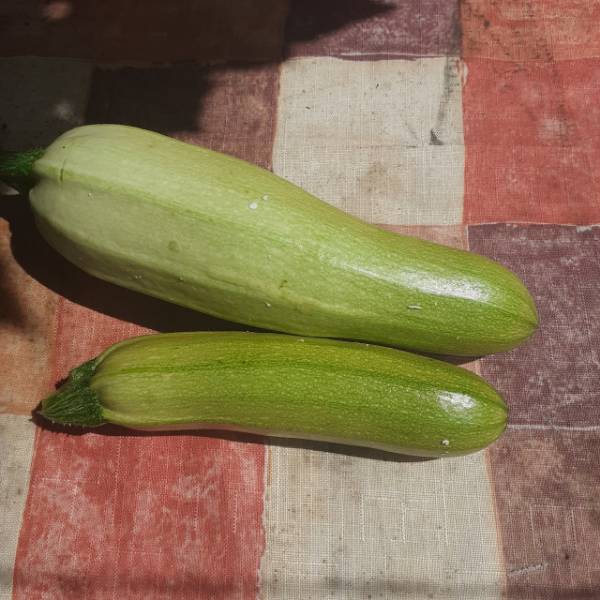
Yesterday I harvested two zucchinis from my ‘Cavili’ plant. I wanted to wait until they got bigger, but I couldn’t resist! We fried them up and ate them, they were delicious. The cucumbers are coming in by the bucketful now. We are eating the ‘Tasty Green’ and ‘Zena’ varieties fresh, and I’ll start canning the bumpy varieties in jars soon.
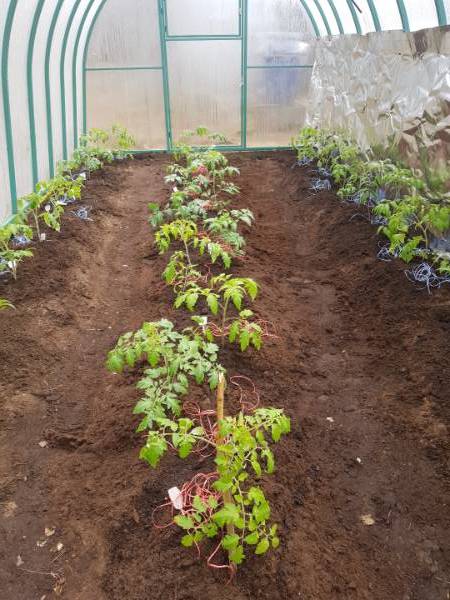
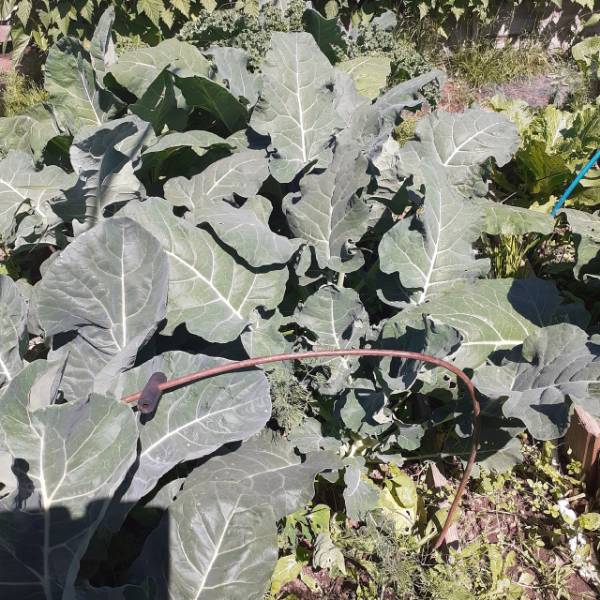
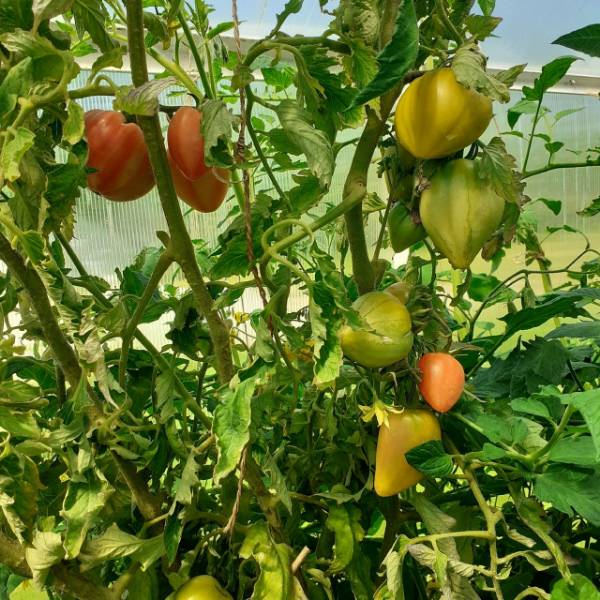
We are also eating our early determinate tomatoes (‘Kazybalykskiy’ and ‘Vera Ivanovna’). It’s not a lot, just enough for a dinner salad. The early cabbage is already forming solid heads, and the kohlrabi is ready to cut. 🥬🍅
But my potatoes are acting weird! The vines are over 3 feet (1 meter) tall. I wonder if there is actually anything in the ground, or if it’s “all vines, no taters” this year? By June 13th in previous years, I was already digging up fresh young potatoes, but this year I haven’t even checked yet. I pinched the flowers off about 6 days ago. 🥔
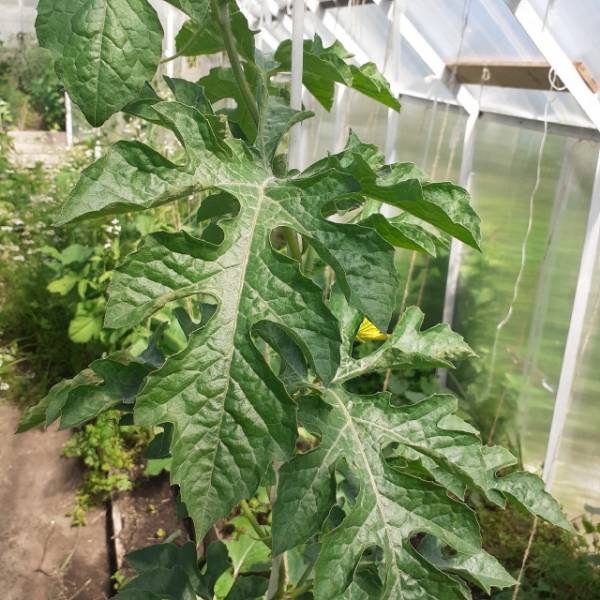
As for my melons, I am completely confused. I pinched the main vine after the 5th leaf, like you are supposed to, but now dealing with the suckers/side shoots is a nightmare… some vines have three or four branches and it’s a jungle! 🍈
Maria Suvorova wrote:
The vines are over 3 feet tall. I wonder if there is actually anything in the ground…
Masha! Everything looks so wonderful!
About the potatoes: If the potato vines are extremely fat and lush, it means the formation of tubers will be severely delayed (the plant is stuck in vegetative growth). You need to feed them with a Superphosphate extract (liquid tea) to force them to focus on the roots.
How to Prune Melons
Yes! I forgot to add instructions for the melons.
1. Your first pinch is right above the 5th leaf on the main stem.
2. The plant will grow “daughter” side shoots. Leave the 2 or 3 strongest ones (usually the lowest ones).
3. Pinch those “daughter” shoots above their 5th leaf, and wait.
4. Next, “granddaughter” shoots will grow from the daughters. This is where the actual melons will form!
5. Hand-pollinate the flowers. Once a melon grows to the size of an apple, leave a maximum of 2 melons per vine. Pinch the tip of the vine 3-4 leaves above the second melon. Immediately cut off any vines that have no fruit on them so they don’t waste the plant’s energy! 🍈✂️
Aleksan9ra (Ludmila) wrote:
…you need to feed them with a Superphosphate extract…
Luda, can I spray the potato leaves with MKP (Monopotassium Phosphate) instead? I already have that at home, otherwise, I’ll have to go buy Superphosphate…
As for the melons… I know the theory! But in practice, it’s never that smooth. Out of greed, I planted the melons way too close together and trellised them vertically. Now, to reach the ones in the back to prune them, I have to stand on one leg like a yoga master! 😂 And when I look at the vines, I can’t even tell which one is the main stem and which is the sucker anymore…
Who can (and can’t) handle Fresh Chicken Manure?
Luda, girls, I have a question about chicken manure. My neighbors keep chickens and give me the manure for free.
Which vegetables or flowers is it strictly prohibited for? I’m so excited to have free fertilizer that I might accidentally overfeed everything! 🐔💩
Da4nica (Ekaterina) wrote:
Which vegetables is it strictly prohibited for?
Katya, if the manure is completely fresh (straight from under the chickens), it contains a massive, burning amount of Nitrogen. You can use it for heavy nitrogen feeders: cabbage, cucumbers, peppers, eggplants, pumpkins, and peas.
If it’s year-old composted deep litter, you can use it sparingly on other crops too—except for beets! Never use it on root crops.
How to use it safely:
You can use a liquid manure “tea” either fresh or fermented.
* If you use it fresh: Mix exactly 2 cups (0.5 L) of raw manure into 2.5 gallons (10 L) of water. Pour 2 cups of this mixture at the base of an adult plant, but ONLY if the soil is already thoroughly wet (to prevent root burn).
* If you ferment it: The safest way is to fill a bucket half full of manure, top it off with water, and let it sit in the sun to ferment for 3-5 days. Most of the harsh ammonia gas will evaporate. It becomes much less toxic, and you can eyeball the dilution when watering! 🌿
In this thread, Maria asks if she can use MKP (Monopotassium Phosphate) instead of Superphosphate on her overgrown potatoes. The answer is YES. Both fertilizers do the exact same job: they deliver a massive dose of Phosphorus and Potassium with zero Nitrogen. This “shocks” the potato plant out of making more leaves and forces it to start growing tubers underground. A foliar spray (spraying the leaves directly) is the fastest way to deliver the message!