📌 Quick Summary (TL;DR): Paper Towel Germination Experiments
- 🧻 The Paper Towel Method: Pre-sprouting seeds in a damp rolled-up paper towel works great for many crops. Growers report excellent results starting radishes, beets, and arugula this way—producing sturdy, strong little sprouts.
- 🌱 What NOT to Sprout in Towels: Herbs with delicate taproots and stems like dill, cilantro, and parsley tend to stretch immediately. Growers note they become as thin as threads (severely leggy) and are better off being direct-sown into soil.
- 🔥 Reviving Old Seeds (Thermal Shock): One grower successfully germinated 9-year-old seeds (from 2012) using a brief thermal shock: dipping them in boiling water for a few seconds, immediately followed by cold water.
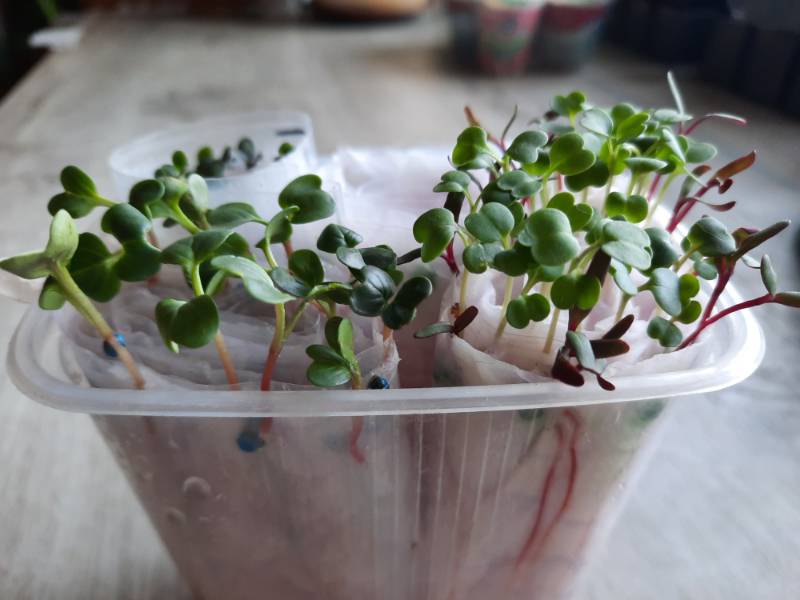
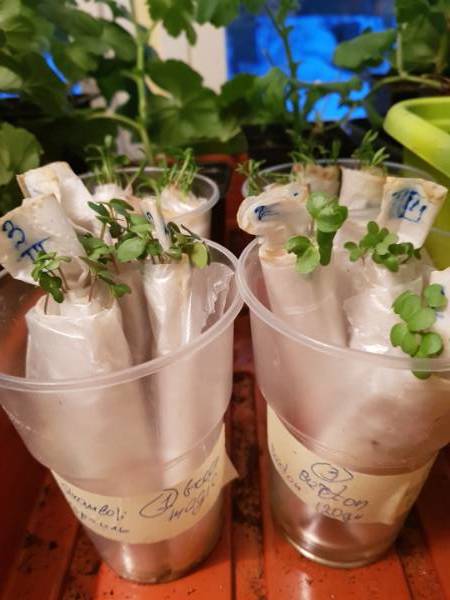
Maybe this will be useful to someone… On March 18th, I rolled up some cabbage seeds in damp paper towels to pre-sprout them, and just as an experiment, I did the same with radish, beet, and arugula seeds.
Today I pricked out the cabbage into cell packs and left them indoors in a cold room. And I heeled in all the others into flats out in the greenhouse. A frost might hit this greens, but I don’t really mind losing them if it happens. But here is the main takeaway: radish, beets, and arugula do perfectly fine germinating in paper towel rolls exposed to light without any soil! (Unlike dill, cilantro, and parsley—those come out incredibly thin and spindly, like little threads.)
The radish and beet sprouts turned out very sturdy and robust. Take a look.
AAA (Alexandra) wrote:
[Photo of paper towel sprouts]
Sasha, what beauties! Are those cabbage and radishes, or just radishes? I was also planning to roll up a packet of radishes in a paper towel, but I’ll probably wait and do it around the 30th-31st. That’s right when I’ll be starting my late cabbage and putting zucchini seeds into little plastic condiment cups.
brilliant wrote:
Even if it doesn’t sprout, whatever. 🙂
No way! You can’t go without early cabbage, we’ll just have to sow more!
Broccoli (3 varieties) on the left, white cabbage (3 varieties) on the right.
Aleksan9ra (Ludmila) wrote:
Are those cabbage and radishes, or just radishes?
Radishes on the left, arugula and beets on the right. The cabbage is already living large in its own separate pots…
Aleksan9ra (Ludmila) wrote:
No way! You can’t go without early cabbage, we’ll just have to sow more!
You absolutely can go without it! 😆 I comfortably survived the whole winter on store-bought cabbage. Even fermented it for sauerkraut. I love homegrown, but I ate it all a long time ago. Finished the Napa cabbage back in February. Today I bought some Egyptian potatoes. Obviously, you can’t compare the taste to homegrown, but whatever, it’s fine. Nelly sent me a video of them hiking through the canyons in Egypt, I was really impressed. And their potatoes aren’t bad either.
Anyway, I can’t get out to the dacha before May, so whatever grows, grows. As Lidia suggested, I took some very old seeds and held them in boiling water for a few seconds, then immediately plunged them into cold water. They germinated nicely all at once, but now the latest ones to emerge are growing strangely—the leaves are kind of twisting and curling. The seeds were from 2012. 🤷♀️
1. Pre-sprouting Root Crops: While crops like beets and radishes are almost always direct-sown because they hate root disturbance, pre-sprouting them in a damp paper towel can give you a massive head start. Just be extremely careful when transplanting them to ensure the tiny taproot points straight down into the soil!
2. Thermal Scarification: Galina’s trick of dropping old seeds in boiling water and then cold water is a form of thermal scarification. It shocks the hard, old seed coat into cracking, breaking dormancy and allowing moisture in. The reason some of her sprouts had twisted, curling leaves is that a 9-year-old seed is already lacking vigor, and the intense heat likely caused minor cellular damage to the cotyledons. However, it’s still a great rescue technique for seeds you thought were completely dead!