Growers’ Notes and Photos (USDA Zones 4)
These vines hit over 6.5 feet (2 meters) tall in my greenhouse. Yields were solid, but since my soil was too acidic and I didn’t lime it, a chunk of the fruit got hit with BER (Blossom End Rot). The unaffected ones were incredibly tasty, though – very sweet, with a great juicy and meaty texture.
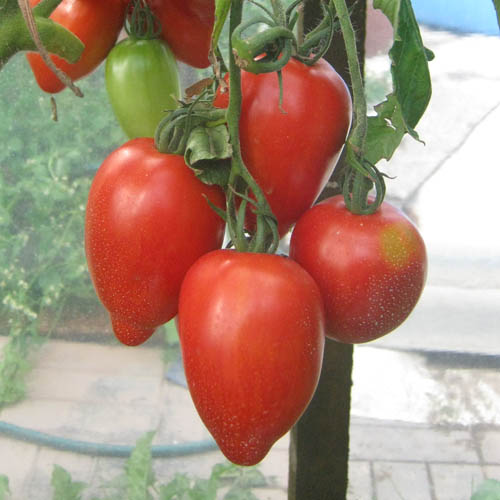
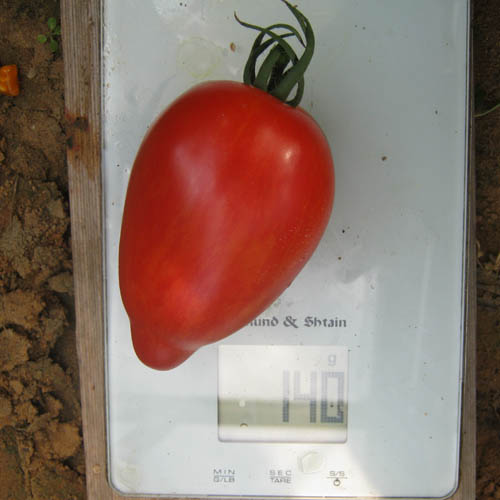
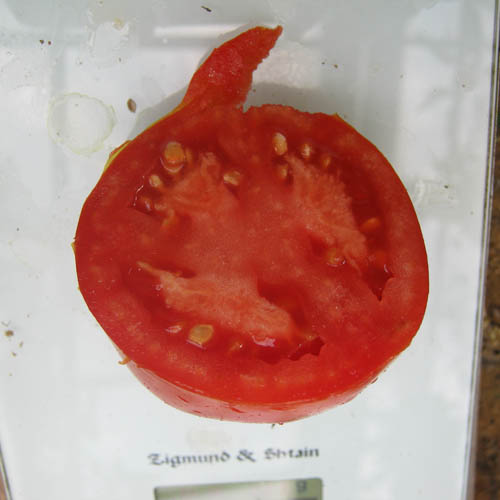
Do these look true to type to you guys? A distinct feature on my fruits is that the blossom end is kind of dented or pushed in.
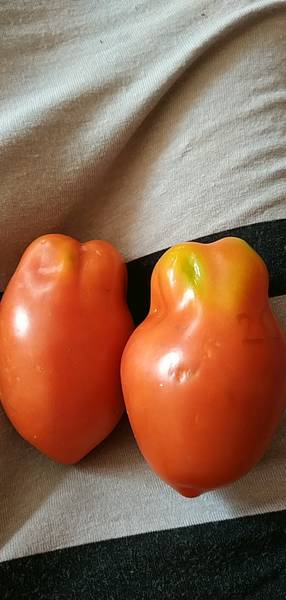
Full Summary: Plant Habit, BER Susceptibility, and Shape
- 🌿 Plant & Foliage: Indeterminate vine. It is a tall, aggressive grower that will easily surpass 6.5 feet (2 m) in a greenhouse setting. Requires strong staking and regular pruning to manage the heavy fruit load.
- 🍅 Fruit & Shape: Large, blocky, elongated red paste tomatoes. The name “Glasses” comes from their cylindrical shape. True-to-type fruits often feature a blunt or slightly indented blossom end.
- 📈 Yield & Health: Very high yielding. However, like many elongated/paste varieties, it is highly susceptible to Blossom End Rot (BER)*. Growers must ensure adequate soil pH (liming if too acidic) and consistent watering so the plant can properly uptake calcium.
- 👅 Taste: Unlike many dry commercial paste tomatoes, this heirloom strikes a great balance. It is meaty enough for sauces and canning, but retains enough sweet, juicy flavor to be excellent for fresh eating.
👨🌾 Editor’s Note: The Minusinsk Heirloom Legacy
Minusinsk is a historic city located in the Krasnoyarsk Territory of Eastern Siberia. Despite the harsh, short Siberian summers, the region sits in a unique microclimate (a structural basin) that traps heat, creating perfect conditions for growing massive, incredibly flavorful tomatoes. The city even hosts an annual “Tomato Champion” festival, where locals compete to grow the largest fruit (often exceeding 4-5 lbs).
When you see “Minusinsk” in a tomato’s name, you are dealing with genetics specifically adapted to produce huge yields and rich flavor in a compressed growing season. The word Stakany simply means “Drinking Glasses”, a common Russian naming convention for any cylindrical, blocky paste tomato.