Growers’ Notes and Photos (USDA Zones 3-5 Experience)
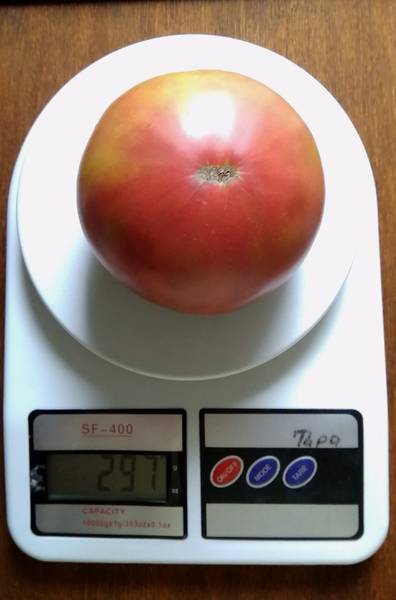
Black-green bicolor, grown outdoors in open ground. Got it in the dirt late, but it still pumped out 2 complete trusses with 5-6 beefsteaks each, running 7-10.5 oz (200-300 g). Trusses 3 and 4 are still sizing up. Taste is sweet and rich, right in line with similar colored varieties, really enjoyed it.
I probably picked this one a bit early, looks like they turn more red as they sit. But based on my past experience with these dark bicolors losing their flavor once overripe, I decided to harvest in stages to pinpoint the sweet spot for peak flavor and color.


Just as I thought, the color shifted and flushed a lot redder as it fully matured. With these types of tomatoes, the key is catching that exact window when the flavor peaks. It stayed just as sweet, but got way juicier, honestly bordering on watery.


Aleksandr, did you grow this in a greenhouse? Did that fruit end up catfaced because of a megabloom during high heat?
Grew it straight outdoors. Relentless heat all summer long without a drop of rain, beds dried out constantly, but this variety turned out surprisingly productive despite the drought.
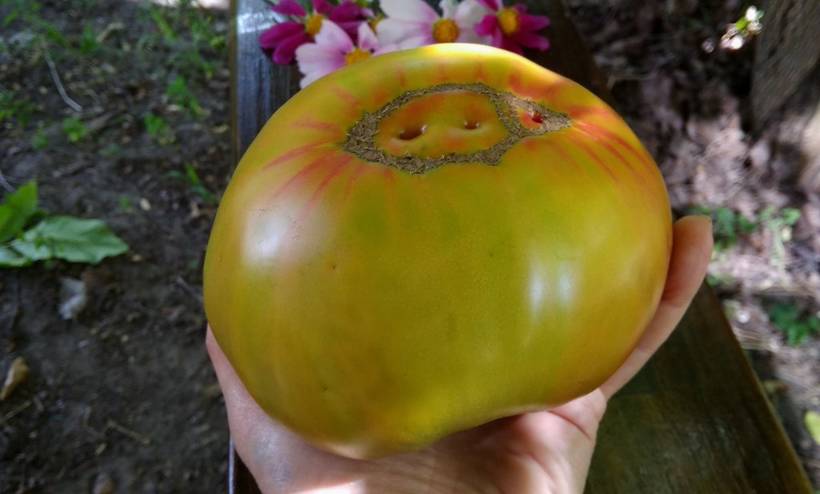
Here is how the coloring turned out on mine:


Looks like this variety still is not fully stabilized. Out of the exact same seed batch, I have seedlings throwing both regular leaf and potato leaf foliage.
Really? Mine look totally uniform. Just checked all 4 of my emerged seedlings and they are all identical regular leaf.
Look Aleksandr, that is just how they sprouted. Seeds came from a very trusted source, and this is definitely not the only novelty variety acting up like this!
Who knows, strange traits can show up generations down the road. My crop this year is already from home-saved seeds, and I took a close look after your post. Try keeping that potato leaf plant going, might end up with something very interesting if the line is throwing off-types.
Kept it! 🙂 Got curious myself, so I am going to tuck it right at the end of the bed. 😉
I had 2 come up with potato leaf foliage and 1 regular leaf. Kept both potato leaf ones thinking the regular leaf was an imposter. Now we wait and see. Love the suspense! 👍
On 2/19/2017 at 10:22 AM, ElenaN said:
Here is how the coloring turned out on mine:
Color looks fantastic. How is the flavor?
On 4/16/2021 at 8:06 AM, Reys1963 said:
Color looks fantastic. How is the flavor?
Extremely delicious, very sweet.
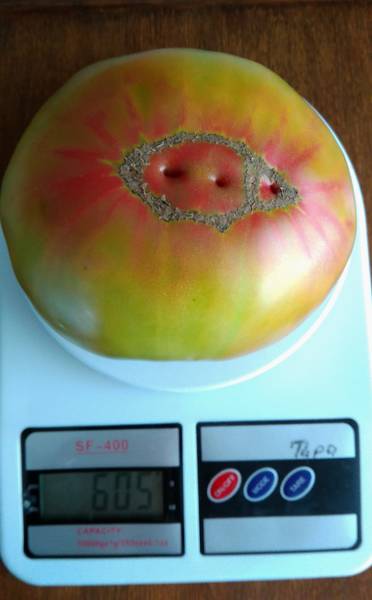
Grew this variety outdoors in open ground this season and it really delivered. Would not say it is a crazy record-breaking producer, but the table flavor is simply out of this world. The largest whoppers on the first cluster weighed in between 12-19.5 oz (350-550 g). Here is how the vine looked in the garden.
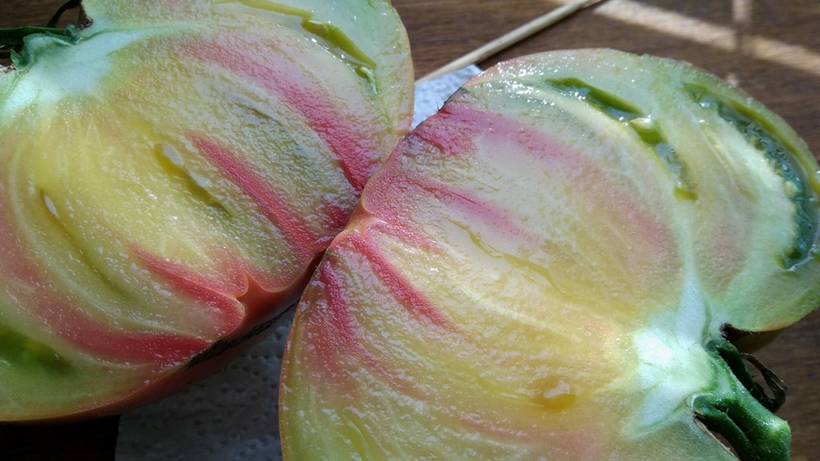
Will post taste notes and a cross-section cut later once these finish ripening up.


Tall, mid-season. Oblate fruit with very unusual color shifts between green, red, and chocolate, weighing 10.5-14 oz (300-400 g), firm. Flesh is green-beige with pink marbling, very sweet with a fruity profile. Super variety! High yields. For greenhouse culture.
Grew this in my greenhouse. Indeterminate vine, mid-season. Yield was about average. Delicious eating quality. I love these multicolored beefsteaks, but honestly, I wish the poundage had been higher. If you asked me to pick between Muddy Mamba and Black Pineapple (Ananas Noire), I would choose Black Pineapple every time.


Vines grow tall, but manageable and very sturdy. Fruit are whoppers, did not get a single one under 10.5 oz (300 g). Incredibly delicious and so gorgeous on the vine. Yield really pleased me, especially considering what a rough season this turned out to be. Easy candidate for my 2020 garden plan.

Full Summary: Foliage Segregation, Ripening Stages, and Garden Performance
- 🌿 Plant & Foliage: Indeterminate vine. While officially listed as regular leaf (RL), multiple seed batches throw potato leaf (PL) seedlings, suggesting occasional genetic drift or lingering segregation from the original cross.
- 📈 Yield & Hardiness: Exceptional performance in open ground (unprotected soil). Responded well to extreme heat and prolonged summer drought without blossom drop, yielding 7-10.5 oz (200-300 g) slicers up to 12-19.5 oz (350-550 g) heavy beefsteaks on early trusses.
- 👅 Taste & Harvest Timing: Sweet, rich, and intensely flavorful. Crucially, growers emphasize harvesting before full red maturity; overripe fruit becomes excessively watery and loses its complex smoky-sweet edge.
- 🌎 Who Reviewed It: Multiple growers across Russian USDA Zones 3 through 5 (Kostroma, Moscow, Kaluga, Ryazan, Ufa, Kursk, and Far East Primorye), proving strong outdoor adaptability in short-season regions.
Muddy Mamba was bred by heirloom developer Millard Murdock of North Carolina, the same breeder behind celebrated tri-color heirlooms like Captain Lucky. Like many complex multi-way crosses involving green-when-ripe and dark beefsteaks, occasional potato-leaf (PL) rogues appear from commercial seed stocks. Both leaf variants typically bear true-to-type, dusky-skinned fruit with marbled amber-green flesh. For best eating quality, harvest when the blossom end yields slightly to gentle thumb pressure rather than waiting for the entire fruit to flush brick-red.