Quick Summary of Russkaya Dusha (Russian Soul)
- 🌍 Origin: A commercial Russian variety from the famous “Siberian Garden” (SibSad) seed company. Designed specifically to perform well in harsh, cold climates.
- 🌿 Plant Habit: Indeterminate, but usually remains relatively compact outdoors in open ground, reaching about 1 – 1.2m (3.3 – 4 ft) in height. Some growers report the bush being a bit frail/wispy. It demonstrates excellent cold tolerance—as one grower noted, it “spat on the fact that we had no summer” and produced heavily anyway. Best pruned to 2-3 stems.
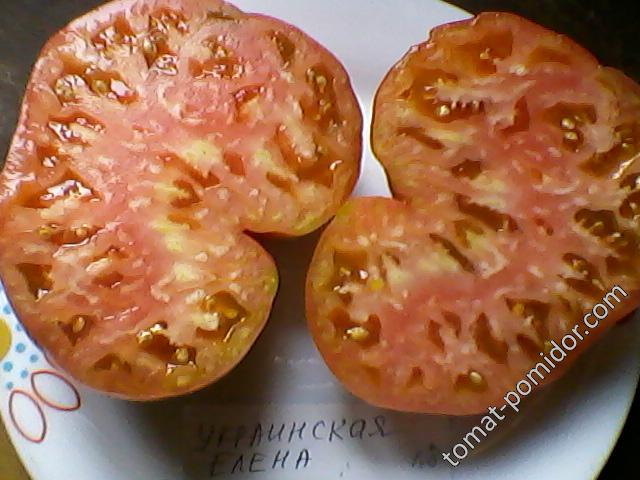
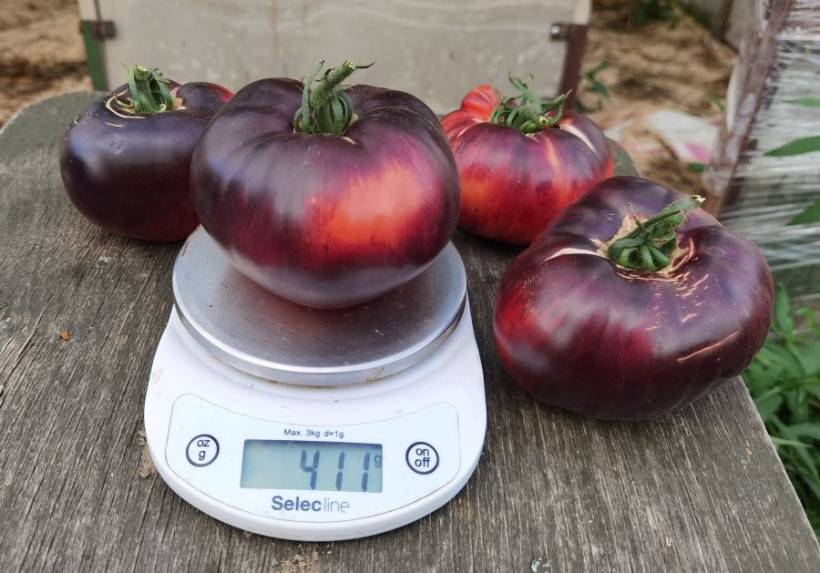
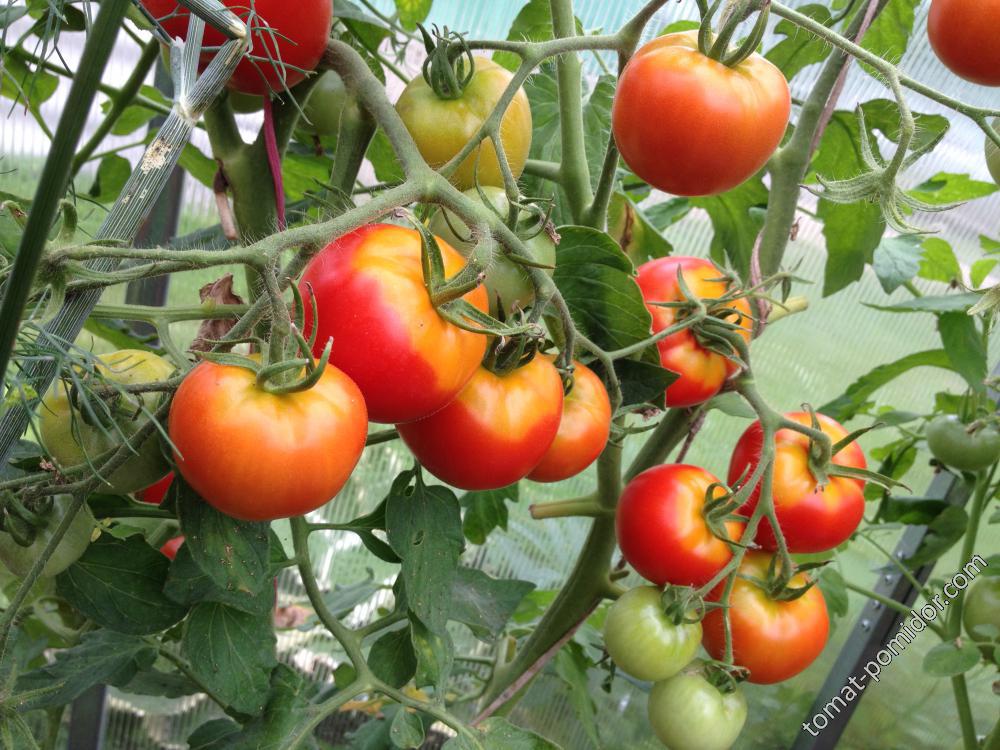
- 🍅 Fruit Characteristics: Large, meaty, scarlet-red beefsteaks. Important Note on Shape: Seeds straight from the commercial packet are known to produce two different fruit shapes—some plants yield flat-round (oblate) beefsteaks, while others produce heart-shaped (oxheart) fruits. Both are considered correct and taste identical. The fruits have beautiful green brushstrokes on the shoulders before fully ripening to red.
- 👅 Flavor: Consistently praised as very tasty, meaty, and sweet. The oblate phenotype can sometimes show an orange undertone/glossiness on the skin.
- ⏳ Maturity & Disease Resistance: Early to mid-early. Because it ripens fast, it often escapes Late Blight (Phytophthora) that strikes at the end of the season.
Russian Soul can be so different. Seeds were from the exact same packet from SibSad. The bushes are identical, the taste is identical too, but the look is different 🤫. Meaty, scarlet-red, tasty fruits. Quite productive. They didn’t crack for me. I saved seeds from both bushes—both the heart-shaped ones and the flat-round ones. Both are yummies. I will plant and compare both of them again.
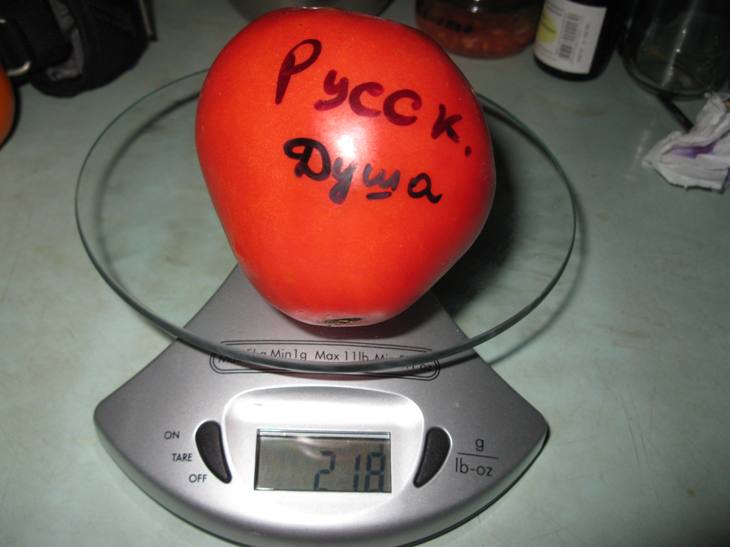
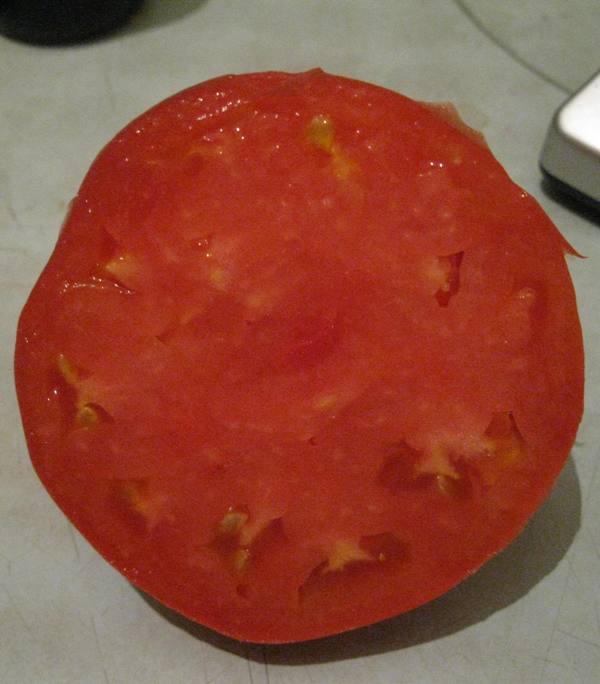
And here is the other one (the flat-round shape):
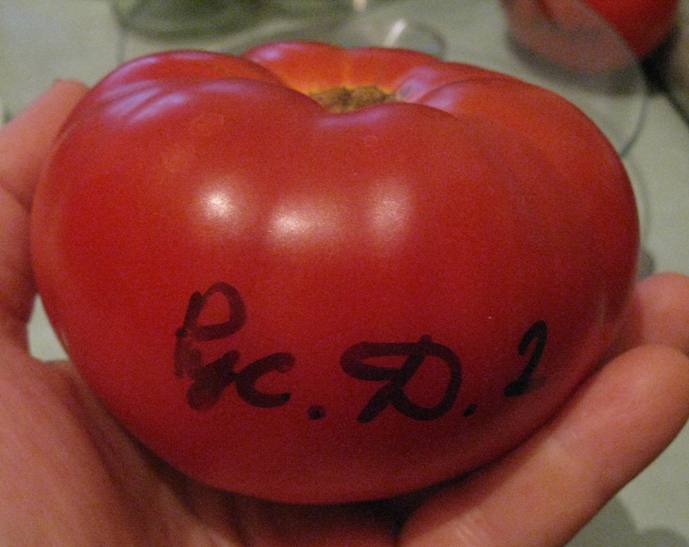
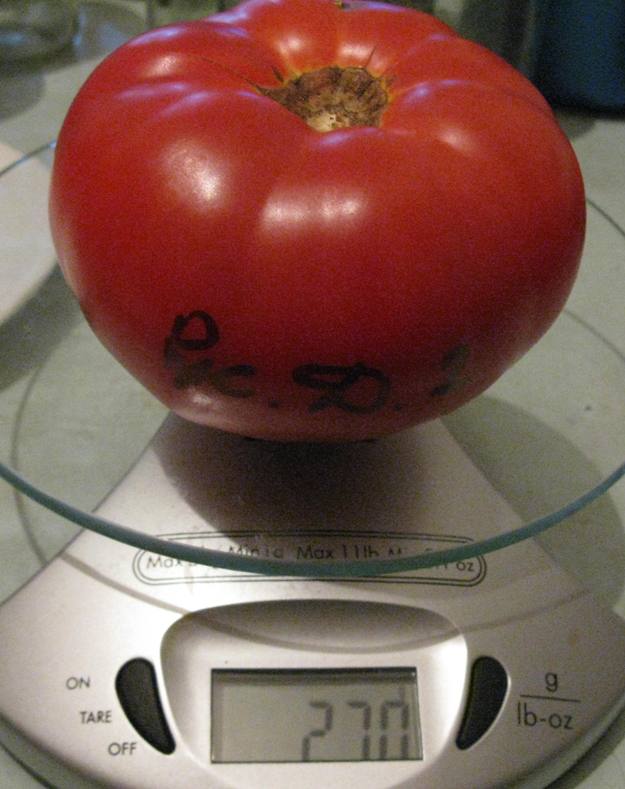
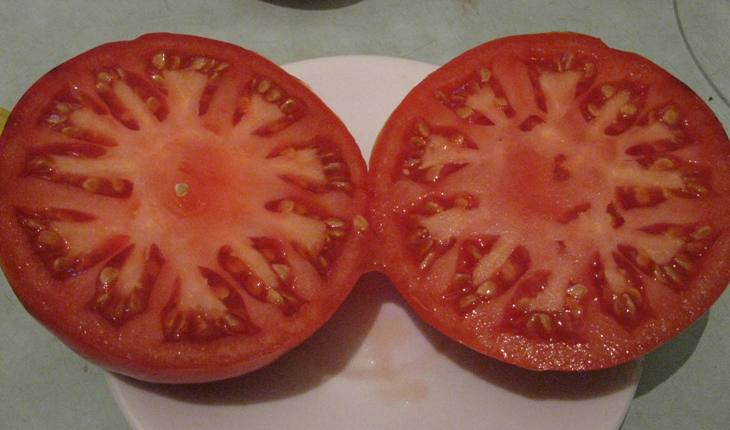
Mine were flat-round. Very few fruits and very late. At first, they turned orange, and then they had this orange undertone on top of the red. A very glossy tomato—that was its main virtue. Outdoors by the porch, it actually produced more than the ones in the greenhouse.
Marisha, mine also grew outdoors in open ground. I barely even pruned/suckered either of them, because due to the heavy rains I couldn’t even reach the tomatoes, so they grew however they wanted.
Svetlanka, could you please write when you sowed it for seedlings and when it started ripening?
I planted this variety from Sib Sad in 2012. The bush is a bit frail/wispy, height 1.5-1.7m (5-5.5 ft). The fruits were flat-round, red, with these green brushstrokes, like they were painted on, very beautiful. Large, meaty, tasty, but the yield was average—perhaps it needed adaptation to our climate. The variety is mid-season. I kept meaning to plant it again, but because of the huge amount of new varieties I had to try, I never got around to it. But I liked the variety. 👍👍
Sweet said:
Svetlanka, could you please write when you sowed it for seedlings and when it started ripening?
Svetik, that year I sowed it around March 23rd (give or take 1 day). I transplanted it into open ground on June 2nd. The bushes were not sickly at all. Length/height was not more than 1m (3.3 ft).
I liked this variety very much. It was the favorite of the year. Grew outdoors in open ground. It was about 1.2m (4 ft) tall. In early August, I snapped off the growing tip (toiled it). I don’t know how tall it would have grown without that. It successfully set fruit on every single truss.
It completely spat on the fact that we had no summer (ignored the terrible cold). The fruits were flat-round, like in Svetlyachok-plyus’s photo above. Highly productive. For me, it was early. Sown on April 10-15th, we were already eating them in July. There were a lot of ripe ones on the bush. The fruit size did not decrease higher up the plant.
On August 1st, a damp, freezing autumn arrived. It was NOT among the first to catch Late Blight (Phyto). I had three rows of tomatoes planted in the bed. It was in the middle row. The first row on the north side got hit by frost, and despite the row covers, there were losses in that first row. They didn’t die, but they suffered all summer and never fully recovered. But the second and third rows in that bed were fine. I don’t know if you can call it strictly “cold-tolerant” based on this, but it performed great. I can’t remember exactly how I pruned it. I sucker everything below the first truss, and after that, I judge by the bush. Based on the bush height, there were definitely 2-3 stems.