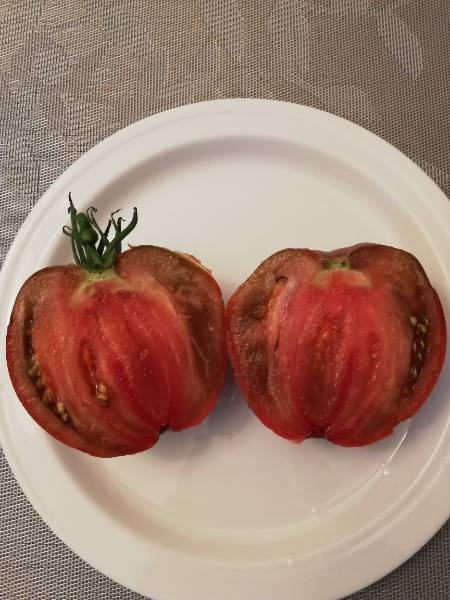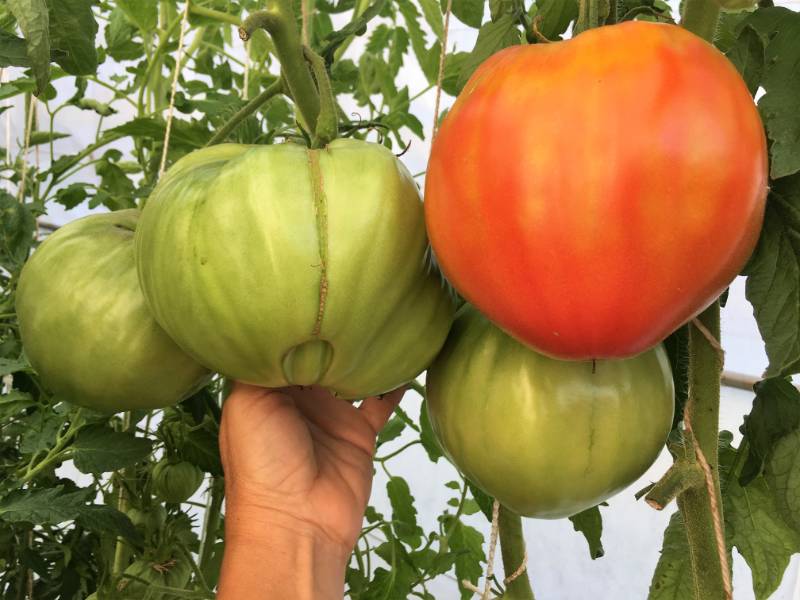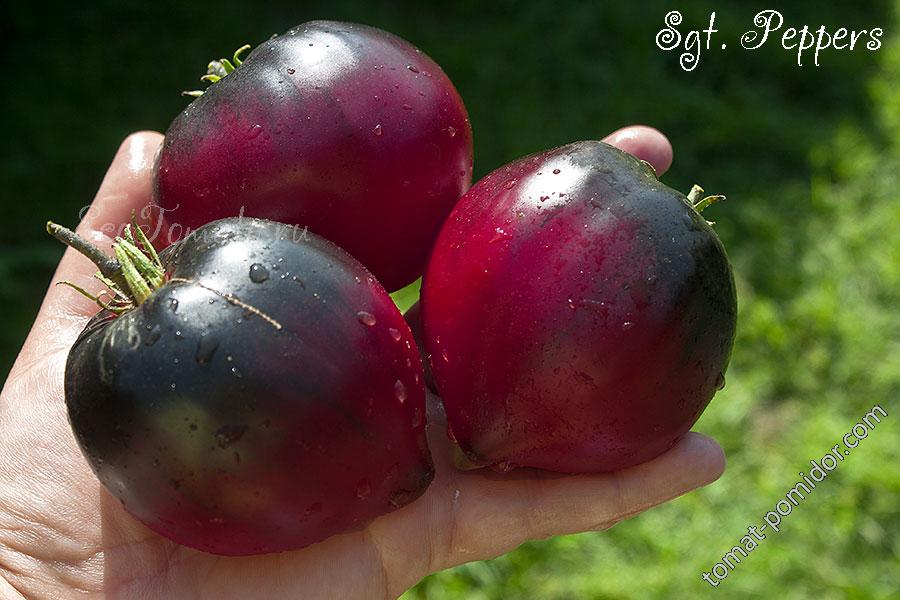
Quick Summary of Sgt. Pepper’s
- 🌍 Origin: A very popular anthocyanin (blue/purple) cross bred in the USA by Jason Haynes. It’s named after the iconic Beatles album.
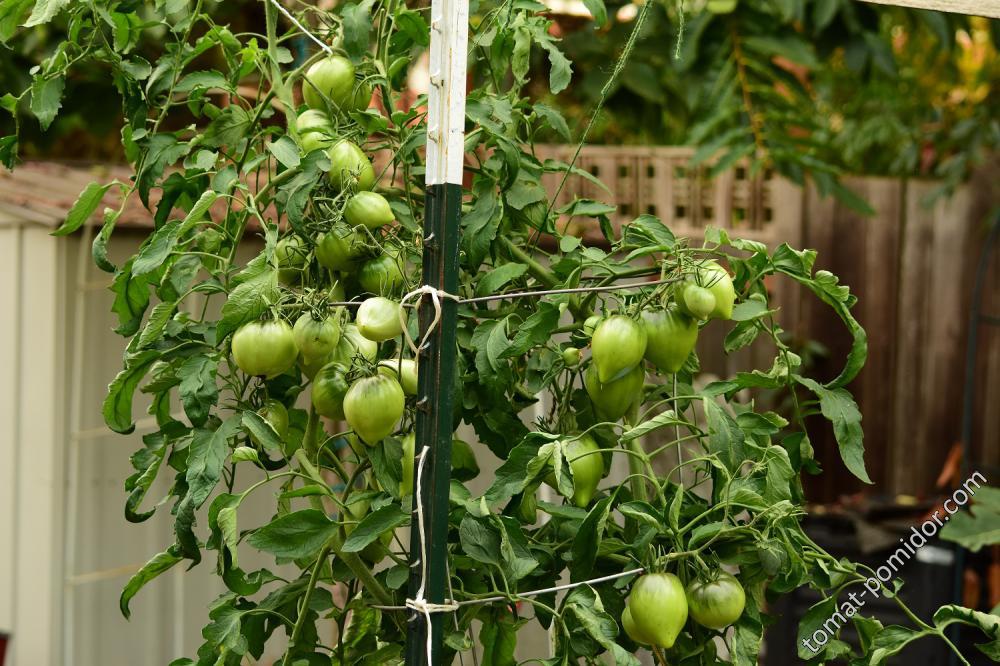
- 🌿 Plant Habit: Indeterminate. This variety is famous for its extremely “wispy,” slender, and weeping foliage. In the seedling stage and out in the garden, it looks incredibly frail and leggy (many growers joke it looks “half-dead” or like a “scrawny young soldier”), but this is completely normal for this genetic line. It sets fruit well but requires good staking and support.
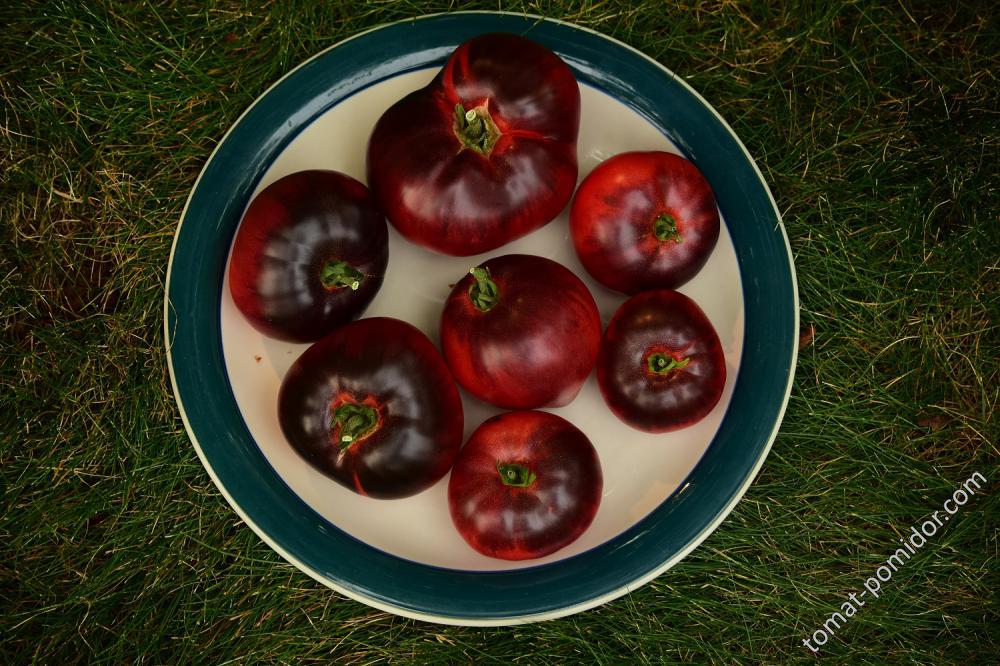
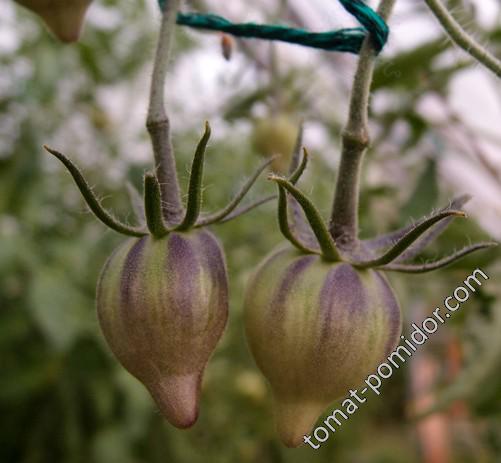
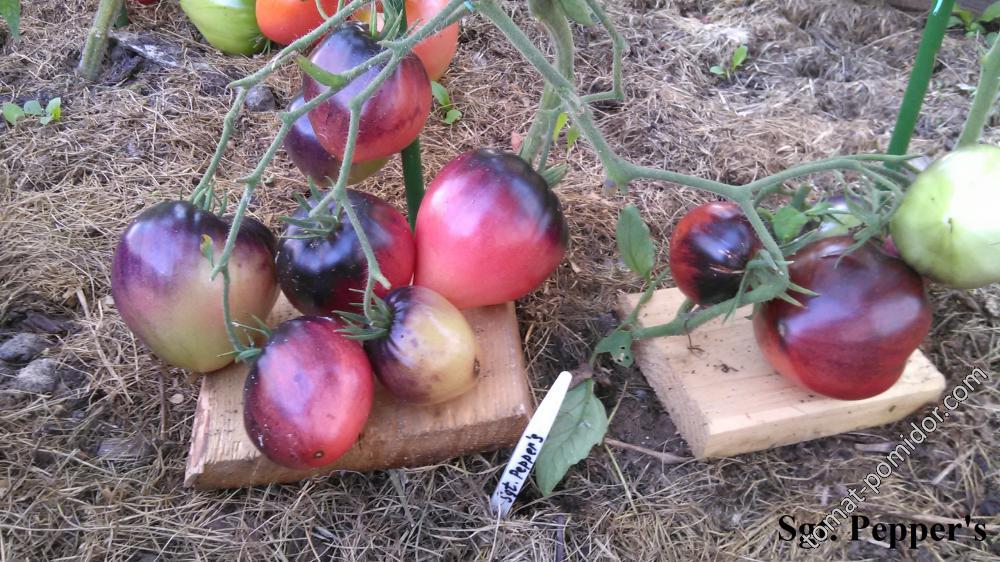
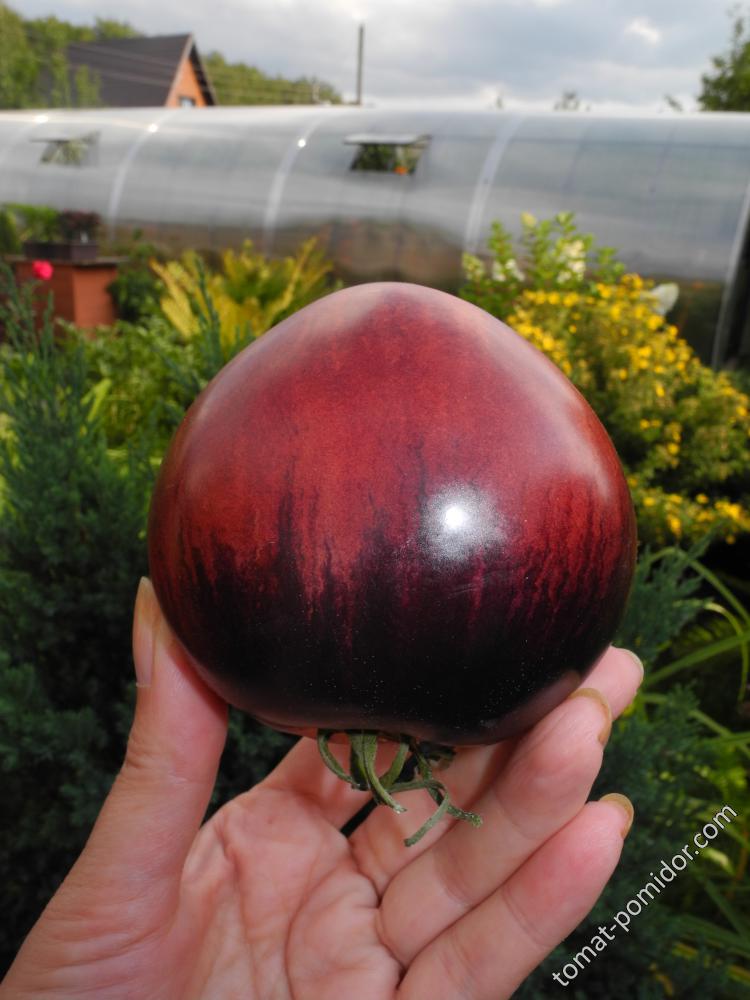
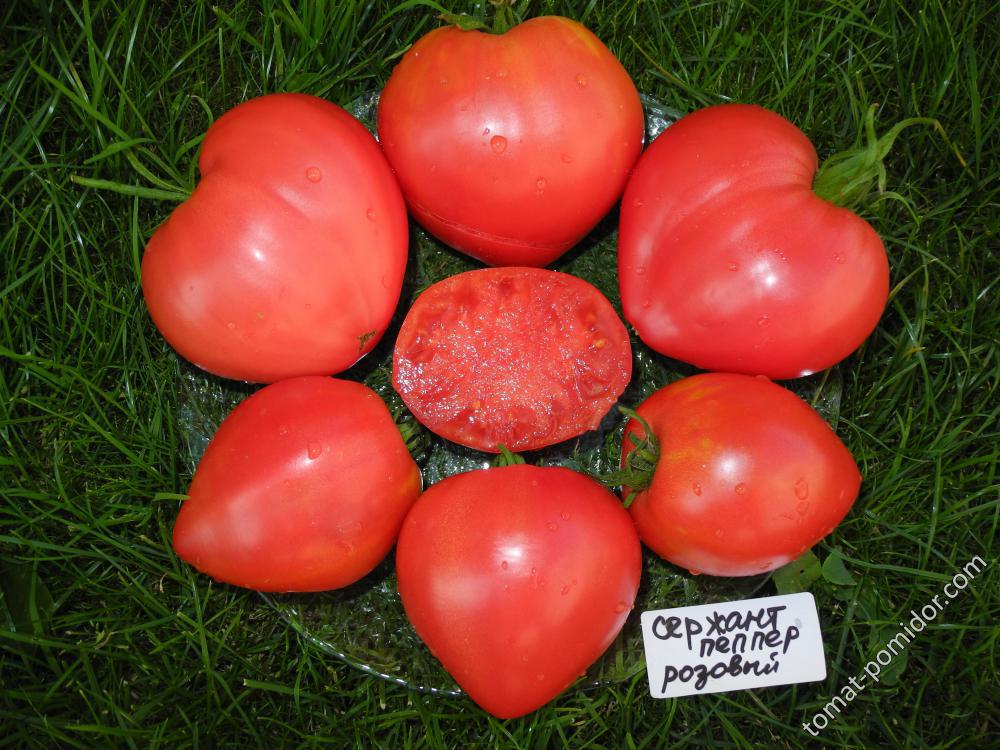
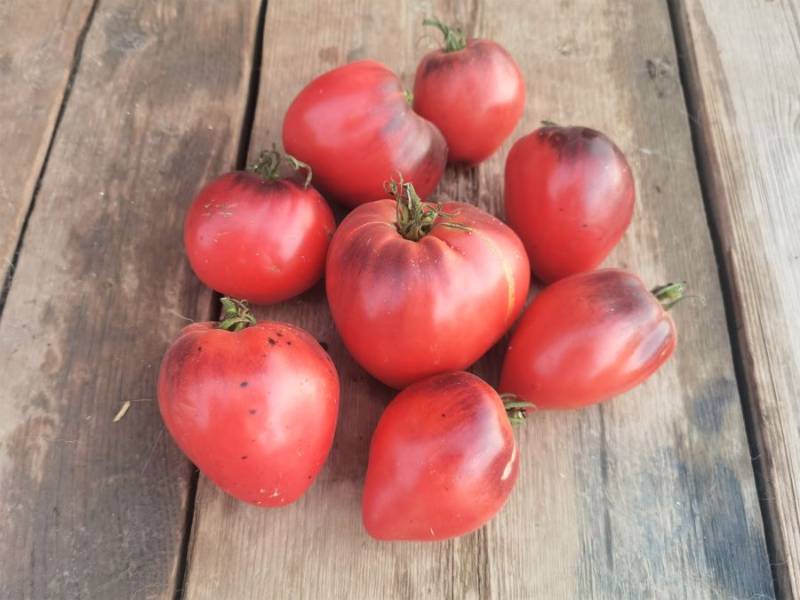
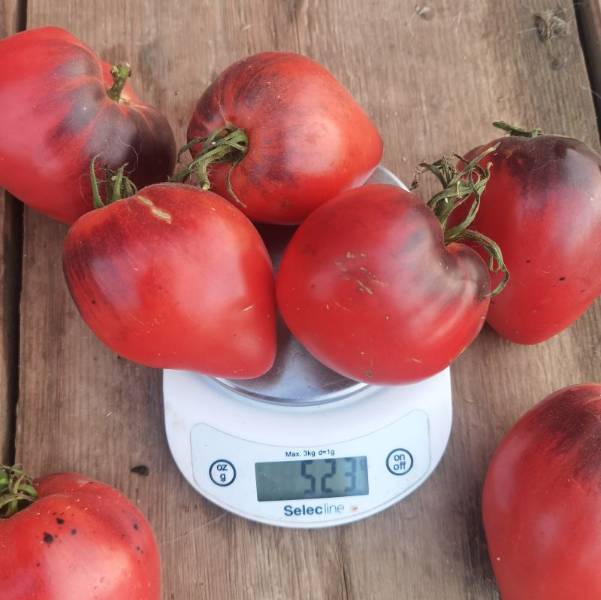
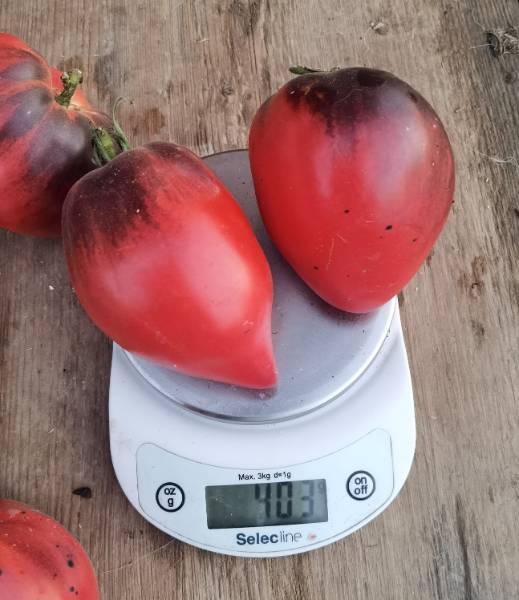
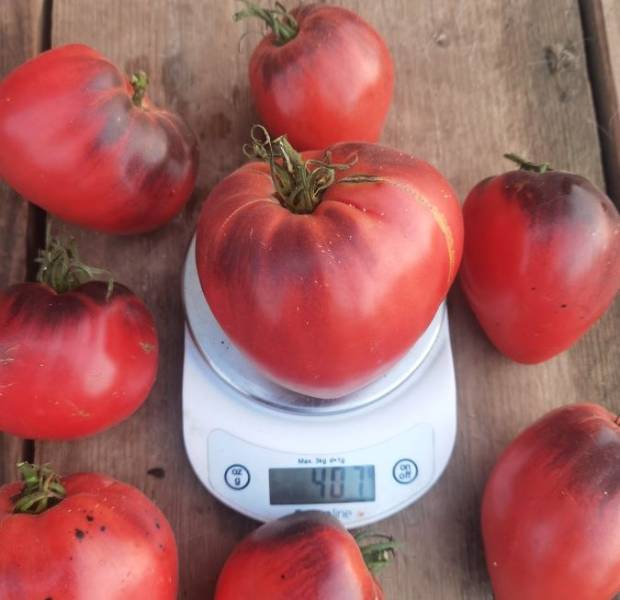
- 🍅 Fruit Characteristics: Beautiful heart-shaped fruits (oxhearts), often ending in a sharp point or “beak.” They feature a pinkish-raspberry base heavily splashed with dark blue/purple anthocyanin on the shoulders. Weights usually range from 150g to 300g+ (5-10.5 oz). Note: Because the variety was released somewhat early in its stabilization, there is a known “Pink” line (without blue shoulders) floating around in seed circles.
- 👅 Flavor Profile: Highly debated and heavily dependent on climate! In sunny, warm regions (or with high potassium), it develops a rich, sweet, caramel-like flavor with a hint of citrus. In cold, cloudy, or excessively rainy conditions, it can turn out bland, watery, or overly sour.
- 🥫 Usage: Stunning on a fresh platter. Growers also note that its dark flesh makes incredibly beautiful, dark-crimson sauces and pastes.
I got seeds from three different sources just to be absolutely sure I had the real deal:
Bunny Hop Seeds
Muddy Bucket Farm
Valdis Puliņš (a private collector from Latvia).
The seedlings started off nice and stocky. But after planting them out, like many others this summer, they got hit hard by the weather – a mix of constant cold, heavy rains, and zero sun. They all survived, but the first blossoms suffered and dropped.
In the end, the vines grew over 2 meters (6.5 ft) tall! Super leggy. The foliage is dark and very wispy, and the stems on the fruit clusters are long… honestly, they look so pathetic you just want to hug them and cry 😄
The clusters can hold up to 10 fruits, but I got a maximum of 5 tomatoes per truss. Where there were three, they all weighed 160-170 grams (5.6-6 oz). The smallest fruits were 100-120 grams (3.5-4.2 oz). So under normal conditions, it’s very realistic to get about 5 kg (11 lbs) or more per plant. The potential is definitely there!
I liked the variety a lot, except for the unexpectedly super-slender structure of the whole plant. You practically have to weave macrame to tie them up properly.
It didn’t push out too many suckers; it forked naturally right away. In a greenhouse, you can easily prune it to 2-3 leaders. Ripening time is mid-season.
Outside and inside, of course, it’s a beauty! It really does have violet-burgundy splashes here and there. The taste: imagine a sweet caramel candy with a fleeting hint of citrus acidity.
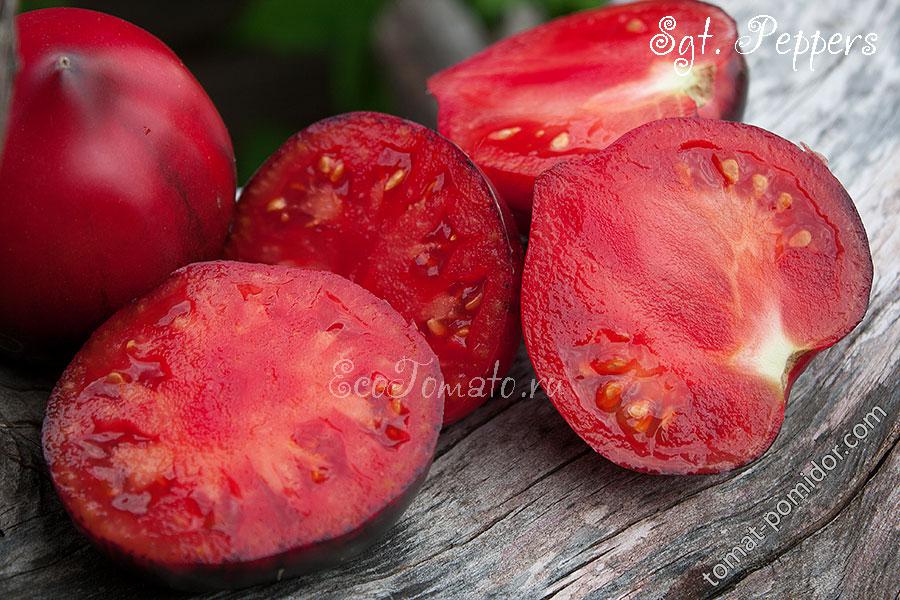
Alena, was the flavor consistent across all sources, or did it differ?
My results weren’t quite as stellar. I wouldn’t say my plants make you want to “hug and cry”; they are quite slender, but compared to Vater Rhein, they’re sturdier. Maybe it’s because I amended the planting holes with compost and a bit of horse manure? The yield is impressive, though during the heatwave (over +30°C / 86°F) they completely stopped setting fruit; this variety definitely prefers moderate weather. But the yield potential is veeery high. My clusters had 5-7 medium tomatoes (100-170 g, the largest was 330 g / 11.6 oz).
From the German seed source, the first fruits turned out totally pink, but when the nights got cold (+8 to +12°C / 46-53°F) and I pruned the lower leaves, the blue shoulders started showing up (though not on all plants). Some never showed any antho and stayed completely pink. The genetic line is clearly still a bit unstable.
On the Florida version, there was heavy antho on the fruits right from the start, even in the shade.
But I really struck out with the flavor this year. Despite feeding them ash, organic teas, having dolomite and calcium in the soil, and mulching with grass clippings, they turned out terribly sour. I don’t know where I messed up my feeding routine, but it is what it is. According to reviews from friends I shared these exact seeds with, their fruits turned out good and sweet. Maybe the weather messed up the flavor: super hot days and freezing nights.
Conclusion: an absolute stunner in terms of looks, and the yield in my garden was solid. I ran them with two leaders, which seems ideal for this variety. 6-9 clusters per plant is a great result for my setup. Outdoors they behave well both in full sun and packed tightly together, though the yield drops in the shade. Let’s see how they handle the upcoming rain and fog. I struck out on taste, so I want to try again with a different seed source or tweak my growing methods. We’ll see, but for now, I definitely plan to grow them again, they’re just too pretty!
All three sources were planted in three different greenhouses; some got full sun, and others were stuck in a dark, damp corner. It wasn’t on purpose, that’s just how the layout worked out.
As for the plants being skinny – real summer sun only showed up for me at the end of July, so a lot of my tomatoes are a bit leggy this year.
The stems on the Sergeant are sturdier and somewhat springy – not quite on the verge of fainting if you compare them to Vater Rhein, but they are definitely thin.
Soil varies in every greenhouse; you can dump all the manure and potassium you want, but the flavor won’t be identical across the board. But they still turned out sweet, some more, some less. My report was based on the plants that got the best spot.
And all of them had the antho coloring right away. My night temps didn’t warm up until around August 10th; before that, it was +10 to +12°C (50-53°F) at best. The lack of sun and low temps really brought out those blue shoulders.
Quote from Krasnaya Shapka:
The soil is different in all the greenhouses; you can feed them all the manure and potassium you want, but the taste won’t be identical. But they still turned out sweet – some more, some less. I reported on the bushes that grew in the coziest spot.
I think in my case, having to water daily due to the heat really watered down the flavor. And if I skipped a day, BER showed up instantly. The sun was just too brutal, and the nights were too cold, causing massive temperature swings. The daytime heat is breaking soon, so I’ll see if the flavor improves without those sharp drops. Next year I’ll try a different soil mix heavy on banana peels.
Oh, I forgot to mention: this variety does great in containers! I grew one in a 15-liter (4-gallon) pot, just a heads-up for anyone interested. Though during the heatwave, I sometimes had to water it twice a day.
P.S. Just to back up my claim, here are the pink-fruited Sergeants in the pot (late sowing, May 8).
Edited September 4, 2017 by Alisa
And here are the Sergeants from the Florida seed source, grown in a tight spacing setup, in the shade.
The first cluster of the Sergeant.
About my Sergeants 😊
Huge shoutout to Olesya from Canada for kindly sharing the seeds of these beauties with me- I am so grateful! 👏 👏 👏
I planted 4 plants across different greenhouses (2 in each). The ones in the smaller, drier greenhouse definitely performed better.
Obviously, this crazy year isn’t a great benchmark and doesn’t show the variety’s true potential, but I totally agree with the ladies – Sgt. Pepper’s has great potential!
I pruned them to 3-4 leaders, which worked out perfectly for me. I heavily amended the soil before planting with rabbit manure and ash… and kept up a solid feeding routine during the season.
Now, in early September, the vines have reached the greenhouse roof and are still loaded with clusters of little blue hearts…
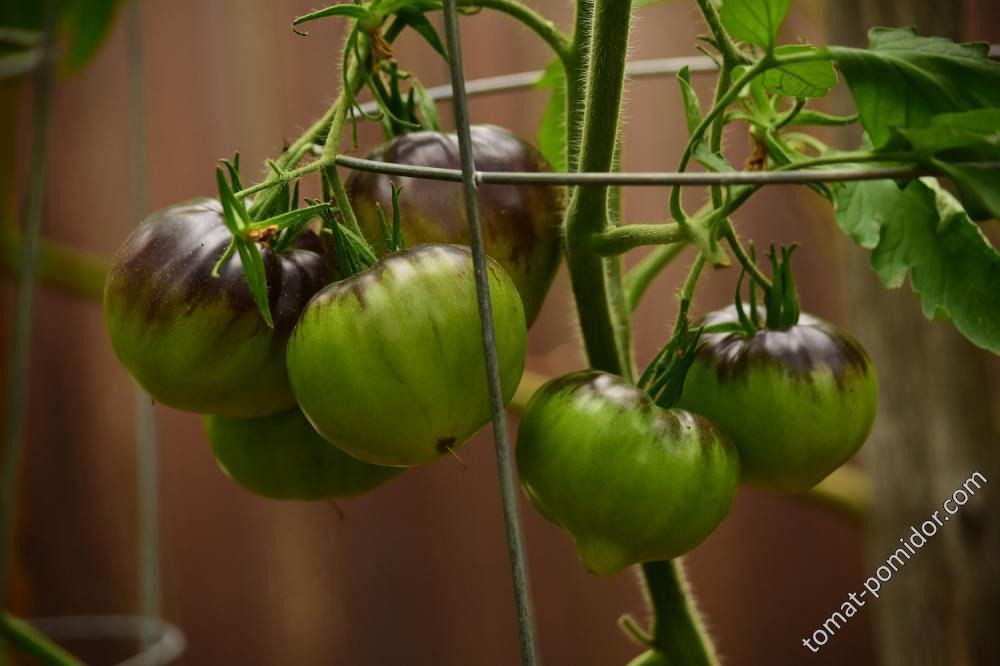
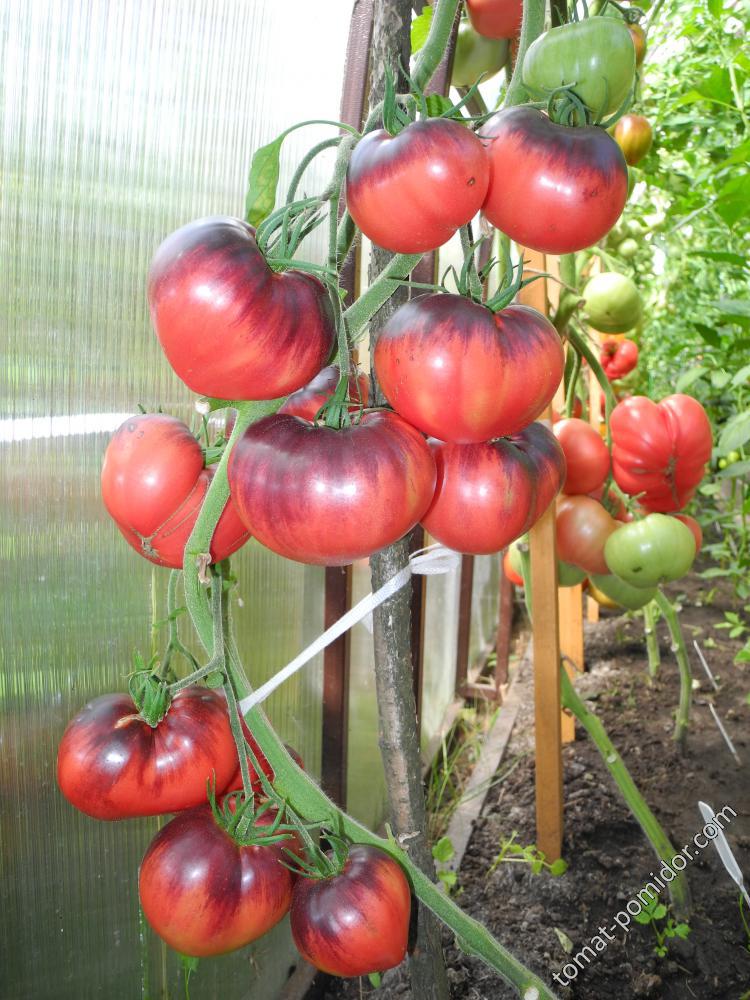
The ripe fruit is an absolute showstopper!!! First, the blue-violet shoulders and stripes appear, and then the antho pigmentation deepens and spreads down the fruit, mostly on the sun-exposed side…
Delicious, juicy, with a perfect balance of acidity and sweetness. Hands down the best find of the season!!!
You can forgive this gorgeous plant for anything! For its flawless looks and elegant shape!
I will 100% be growing it again next year!
Edited September 5, 2017 by Yaroslavna
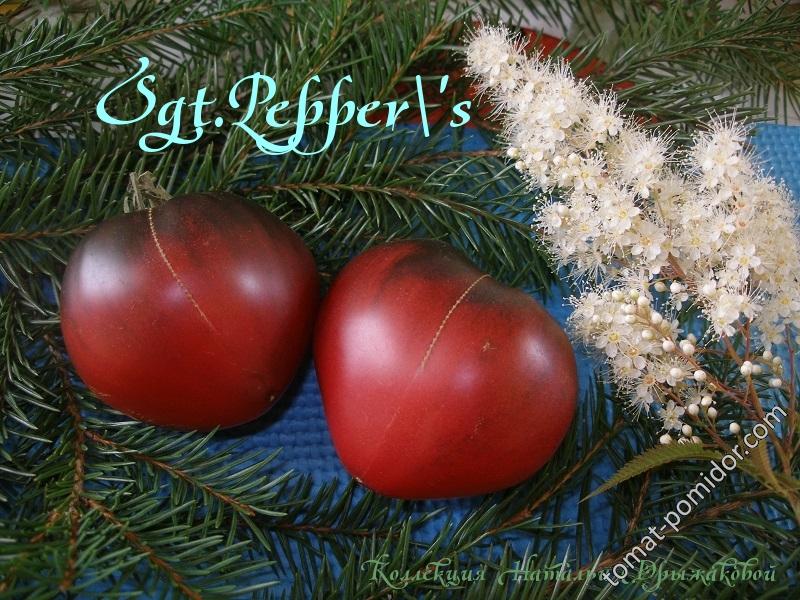
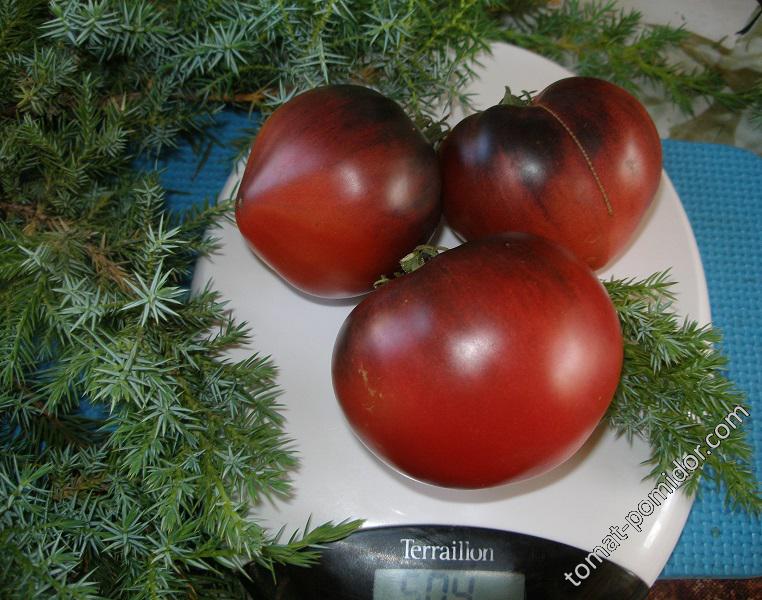
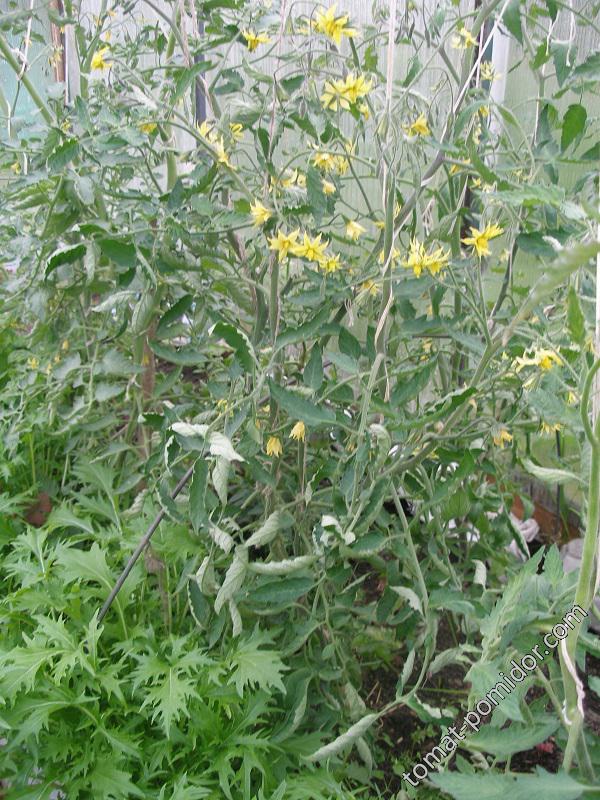
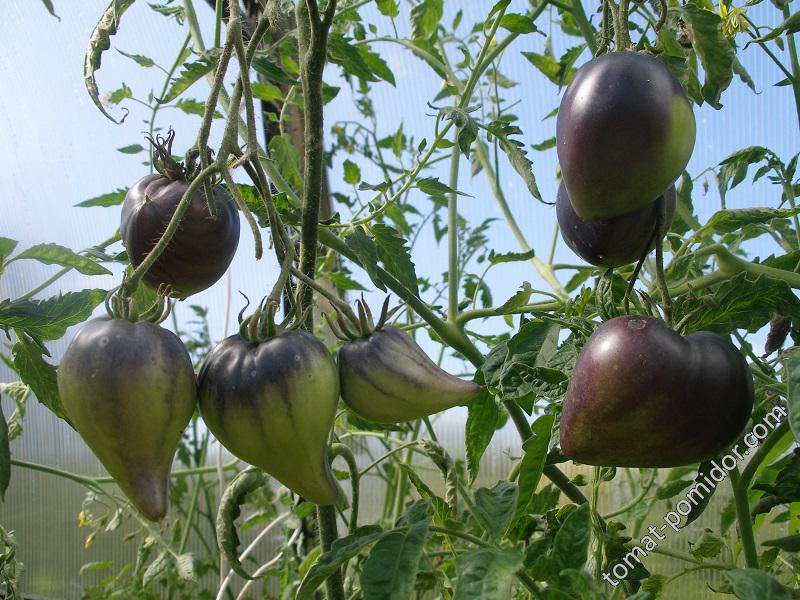
Sgt. Pepper won me over instantly. High-yielding, stunning, and delicious. The plant habit is wispy, just like almost all oxheart varieties.
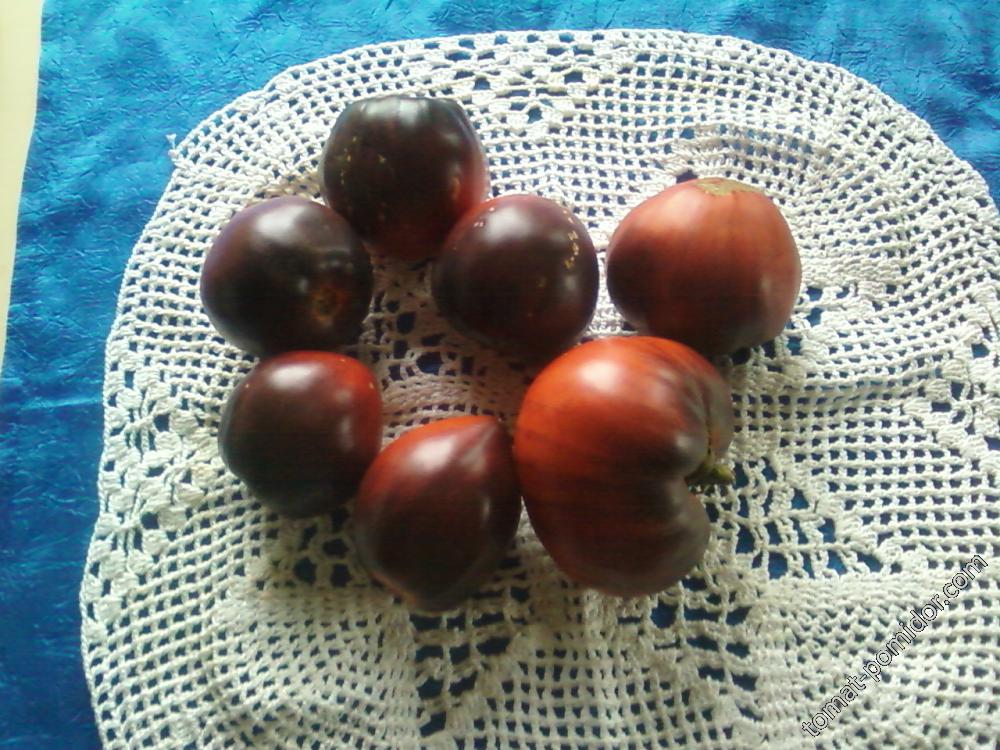
I grew this variety from two sources: from Olesya and from Irishka (Alisa). A huge thanks to both of them. I honestly don’t see much difference. Early on, the plants seemed to grow at different heights, but they eventually evened out in terms of taste, color, and production. Right now, the tomatoes on the smaller plant are ripening a bit later, but I think that plant just got stunted by something, which set it back.
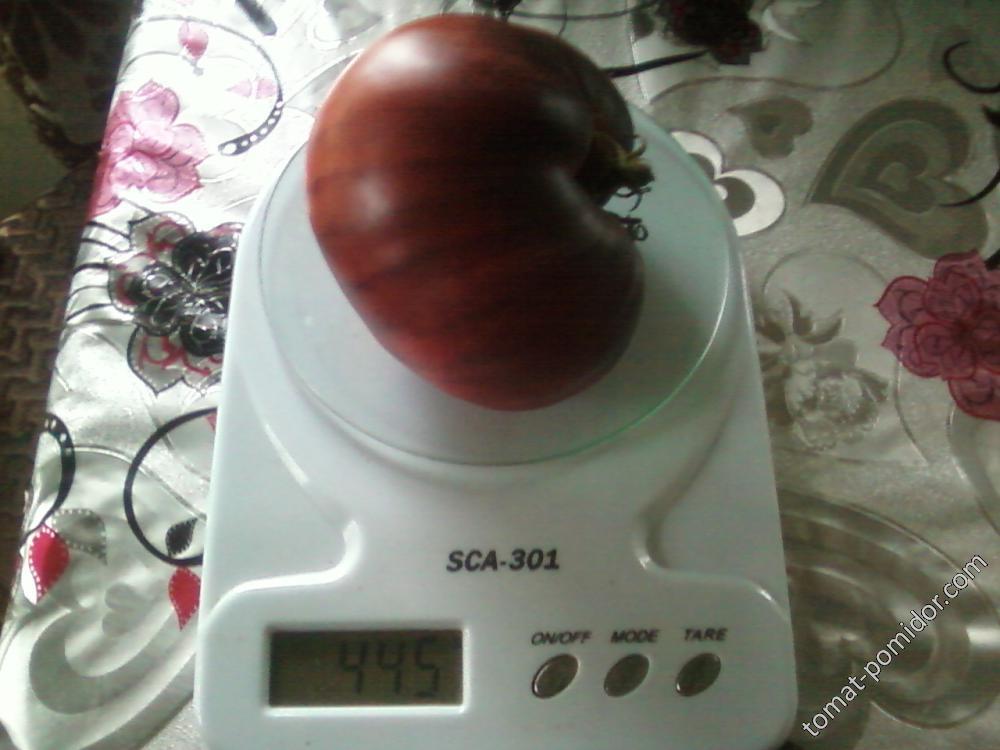
My Sergeants came from three sources: Marianna’s Seeds (2015 and 2016 batches), Bunny Hop Seeds (thanks Svetochka 777), and a private collector from Norway. There is absolutely no difference in flavor, plant structure, or yield. My plants actually turned out a little sturdier than standard oxhearts. Incredibly sweet and stunning fruit. The yield was also solid, despite the garbage weather. Definitely my favorite of the year! 👍
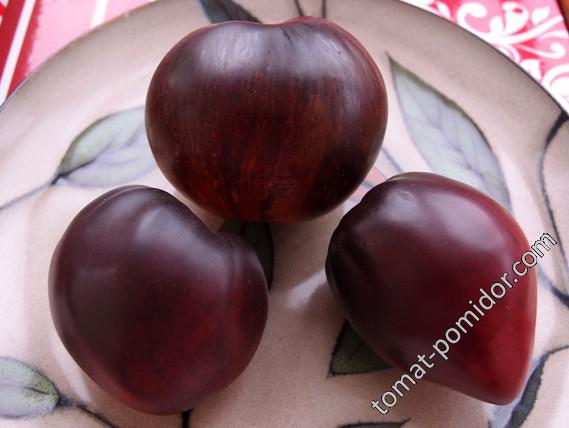
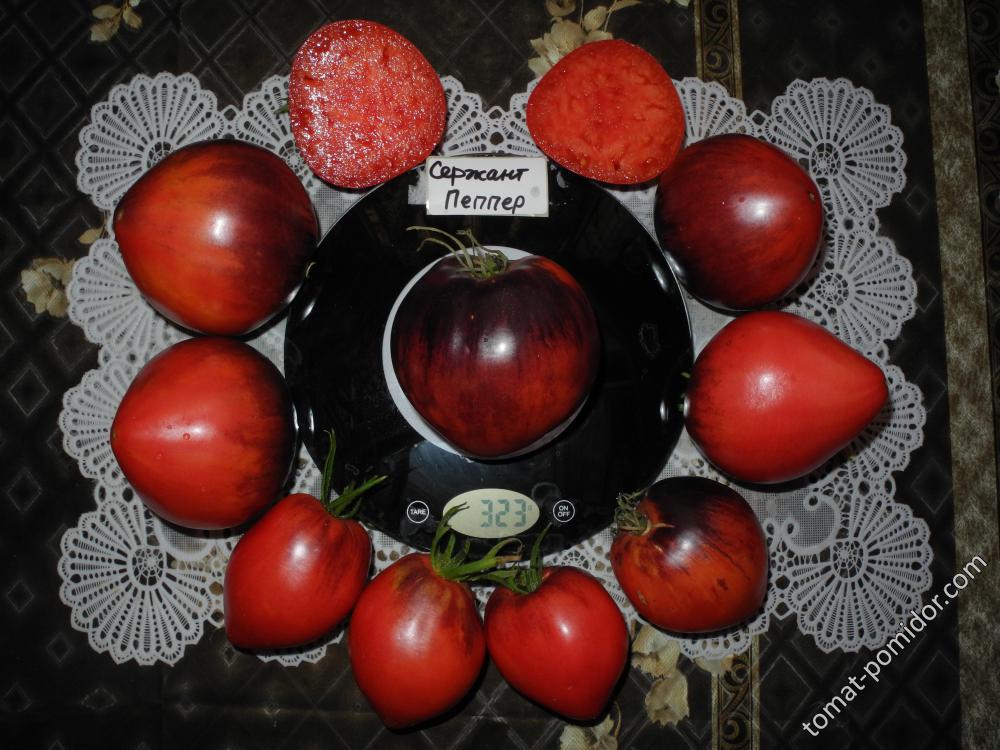
Attached is a photo comparing the fruit from the different sources.
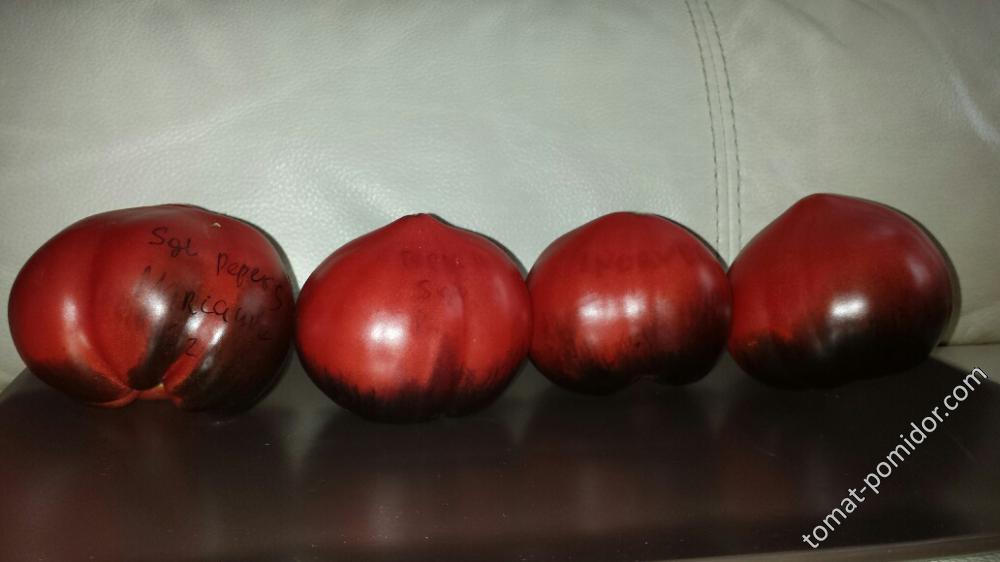
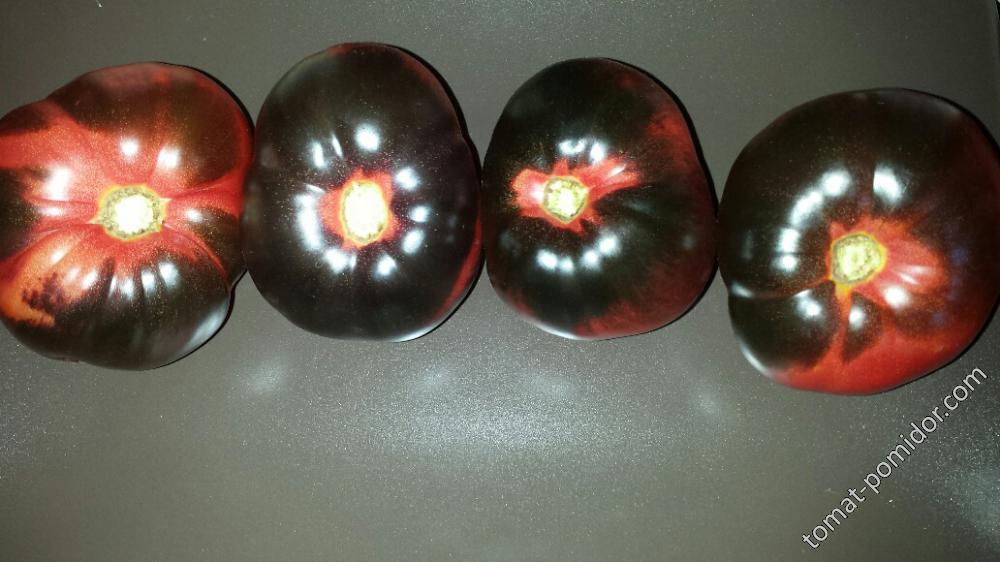
Gorgeous, highly productive, tasty. I’ll be growing it again.
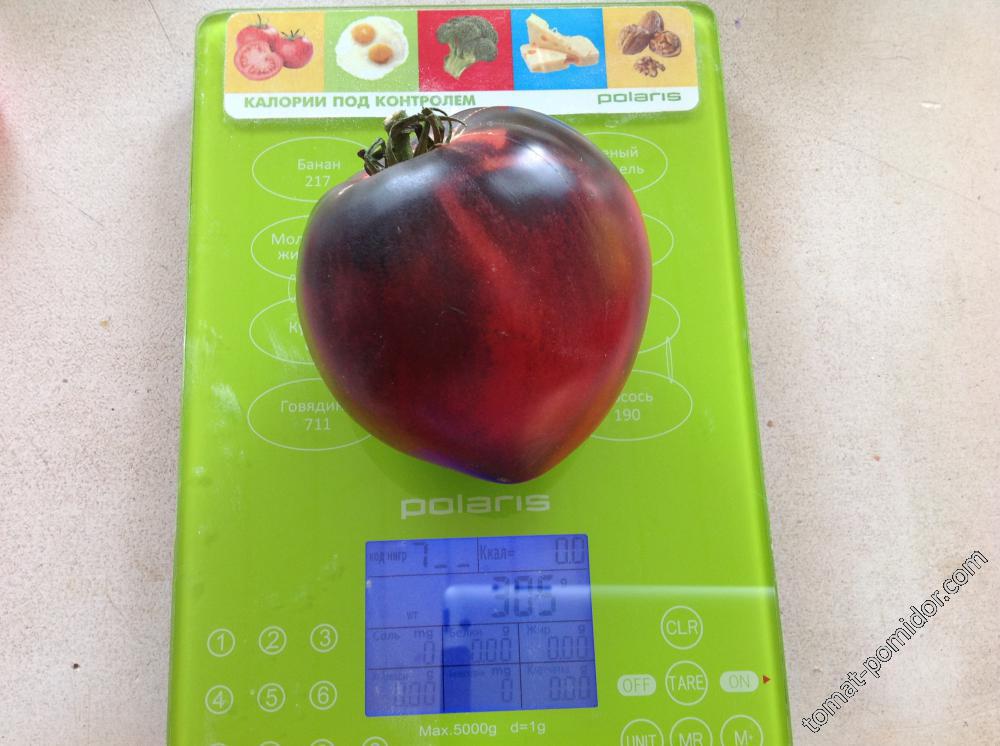
Quote from Yaroslavna:
About my Sergeants 😊
Now, at the beginning of September, the plants are right under the greenhouse roof and trusses with small, blue hearts are still hanging…
Those little pointy tips (beaks) drive me crazy! Maybe I’ll get those pointy ends on my upper clusters too? Natasha, did you save seeds from those specific ones?
Quote from Alisa:
These little noses/beaks drive me crazy! Maybe pointedness will appear on my highest trusses too? Natasha, did you save seeds from them?
The ones up near my greenhouse roof have pointy tips too.
Quote from Alisa:
These little noses/beaks drive me crazy! Maybe pointedness will appear on my highest trusses too? Natasha, did you save seeds from them?
Alisa, I absolutely saved seeds from the ones that vine-ripened fully…
Maybe I should try to wait for these pointy ones to ripen on the vine too? 😉
Moved the latest replies to the “How to speed up tomato ripening” thread.
Does the apostrophe ‘s’ in the name not bother anyone else?
Technically, it should be translated as “Sergeant Pepper’s.” It makes it sound like it’s talking about lonely hearts instead of tomatoes))
Quote from Drosera:
Does the apostrophe and the letter ‘s’ in the name not bother anyone?
Translated, it should be “Sergeant Pepper’s”. It’s unclear if this is about tomatoes or lonely hearts))
Good catch, but trying to pronounce the possessive ‘s in Russian is just super awkward. This variety was named after the Beatles album, so it *is* a nod to hearts)))
Maybe we just transliterate it and slap an ‘s’ on the end: “Serzhant Peppers”? Or go for a literal Russian possessive translation ; “Serzhanta Peppera”? What do you guys think?
Edited September 5, 2017 by Alisa
Quote from Alisa:
Maybe just add the letter “s” – Serzhant Peppers? Or translate it literally – Serzhanta Pertsa / Peppersa? What do you think?
That sounds even worse)))
Proper nouns aren’t usually translated, and the letter ‘s’ indicates possession.
Those of us who know Sgt. Pepper’s Lonely Hearts Club Band will obviously cringe at the butchered name, myself included. But honestly, the direct translation “Serzhant Pepper” (Sergeant Pepper) has already stuck in the Russian seed community.
People are just gonna call it Sergeant Pepper anyway, or even just Sergeant.
Quote from Drosera:
That would be even worse)))
Names aren’t translated, and the letter ‘s’ indicates possession to someone (or something).
“Sergeant Pepper’s”?
Whatever belongs to him is left out of the name, but it obviously implies the “Lonely Hearts Club Band,” and in our garden beds, it means “antho hearts.”
So maybe just stick to spelling it out phonetically in Russian: “Serzhant Peppers”?
Quote from Alisa:
So maybe regular transcription will work: “Serzhant Peppers”?
The English transcription is |ˈsɑːrdʒənt| or |ˈsɑːdʒ(ə)nt| – Sarjent.
I highly doubt )) anyone here is going to call it Sarjent Peppers.
Edited September 7, 2017 by Drosera
Quote from Drosera:
The transcription is |ˈsɑːrdʒənt| or |ˈsɑːdʒ(ə)nt| – Sarjent.
Doubtful )) that people will call the variety Sarjent Peppers.
You missed the “r” in the word Sergeant.
The way the OP named the thread is totally fine, or “Serzhant Peppers.”
Sgt is NOT read with an “a” after the “s”.
Decent producer, sets fruit well, but the tomatoes in a single cluster were all different sizes. The flavor is a bit subjective – maybe it just lacked enough heat this summer, but I was hoping for more sweetness. The absolute best flavor was when the fruit was borderline overripe (I intentionally taste-tested them at different stages). Otherwise, it’s a fun novelty variety to add some color to the garden bed.
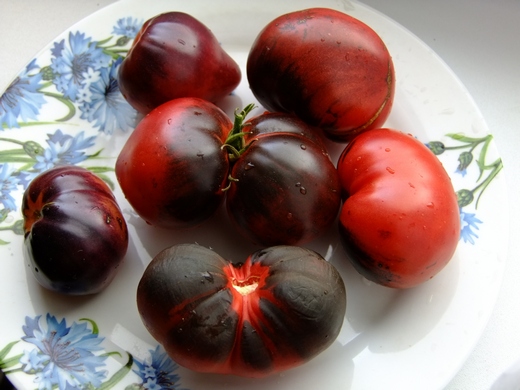
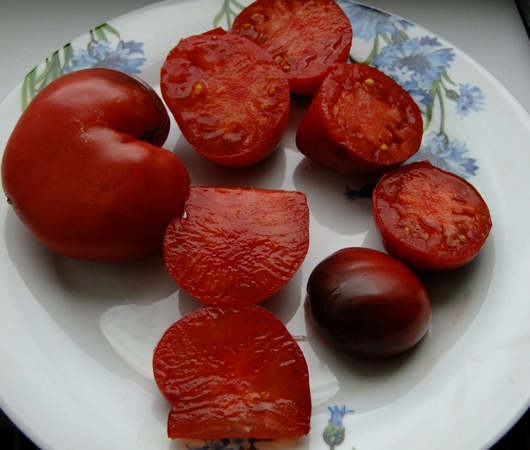
Quote from Alisa:
These little noses/beaks drive me crazy! Maybe pointedness will appear on my highest trusses too? Natasha, did you save seeds from them?
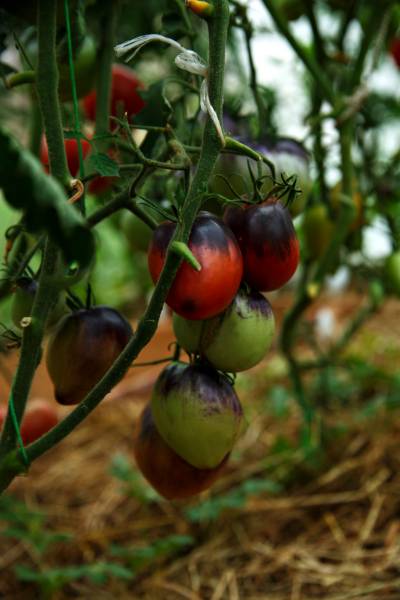
Those stunning, pointy Sergeants hung in the greenhouse right up until the last warm days of September. The heavy antho pigmentation completely covered the fruit, turning them into absolute beauties!!
They turned a deep purple, and that elegant shape with the elongated beak made them even more stunning! I really wanted to let them fully vine-ripen (the days were warm and sunny), but with night frosts rolling in, I didn’t want to push my luck…
I’ll let them ripen on the counter for a bit, and I’ll definitely save seeds from them. Next year I’ll roll the dice again – maybe the whole batch will throw those cute little pointy tips 😊
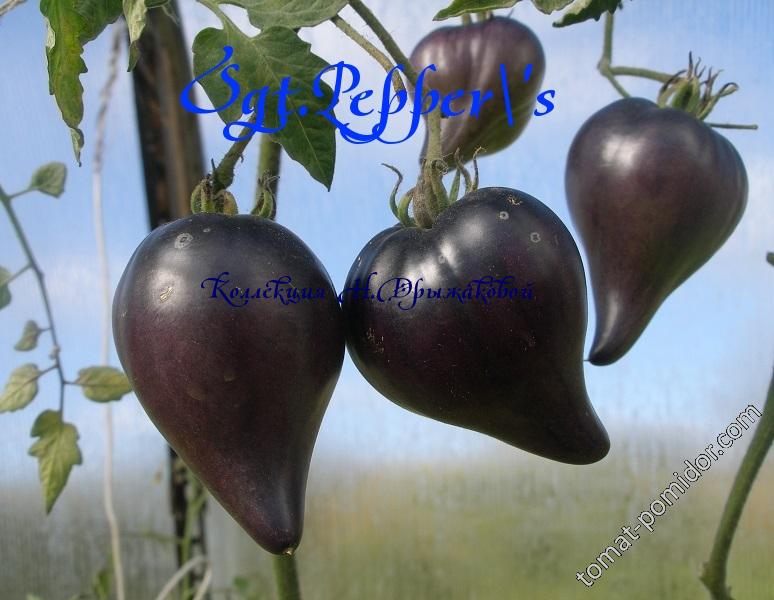
My late-season ones are doing the exact same thing – pointy, elongated, and completely dark blue. We literally just ate the very last one yesterday 😋
Getting “beaks” on many varieties toward the end of the season (on the top clusters), even on standard beefsteaks, is tied to the weather conditions during pollination. It’s affected by temperature and the amount of the hormone gibberellin the plant is naturally producing.
Down in the Krasnodar region, some commercial growers actually spray high concentrations of gibberellic acid (like “Blossom Set” sprays) just to force their paste tomatoes to grow that marketable pointy tip.


Quick question – is Sergeant strictly a greenhouse variety, or can it handle crazy weather outdoors?
It holds up incredibly well! 👍 I grew mine entirely outdoors in the dirt.
Quote from Olesya:
It is very adequate! 👍 It grew for me outdoors in the open ground.
Ah! I just need to figure out what kind of summer weather you actually get. Our climate is brutal. This year, I could count the sunny, warm days on one hand, and the first frosts hit in early September. Only the strongest survive here!
Quote from Krasnaya Shapka:
The pointedness of many varieties towards the end of the season… is due to the conditions under which pollination occurred… farmers use gibberellic acid…
Alena, I completely agree! Even my Peaches and Cream (which are huge beefsteaks) threw out massive beaks on the fruit that ripened in September! 😲
My Beauty King did the exact same thing this year. Grew a beak. I saved the seeds and literally labeled the packet “Beauty King with a beak.” 😉
Honestly, it’s just one of those extreme years where varieties are acting weird and losing their standard shapes.
Quote from Krasnaya Shapka:
In the Krasnodar region, some farmers selling tomatoes intentionally use an increased concentration of gibberellic acid…
Alena, I think there are plenty of commercial “breeders” pulling tricks like that all over the place, not just down south.
This variety was a total success for me. It was easily one of the most gorgeous, delicious, and productive plants of the season. Seeds came from Bunny Hop. I grew out two versions, planting three bushes of the Blue Sergeant total (two in different greenhouses, one out in the garden).
For me, it produced pretty early. The vines get tall, but I wouldn’t call them thick or powerful–they definitely have that wispy, slender habit. It was one of the very first to set fruit in the greenhouse. The harvest window is huge; I was still picking fruit in October, both inside and outside. I pruned it to 4 leaders, and the fruit weighed 150-300g (5-10.5 oz), with my biggest tipping the scales at 370g (13 oz). The flesh is dense and buttery, perfectly balanced with a rich sweetness.
The flavor stayed consistent all season. The color shifted though; as it got colder, the tomatoes turned completely blue, but they tasted just as good. Since it’s a new favorite, I took a million photos.


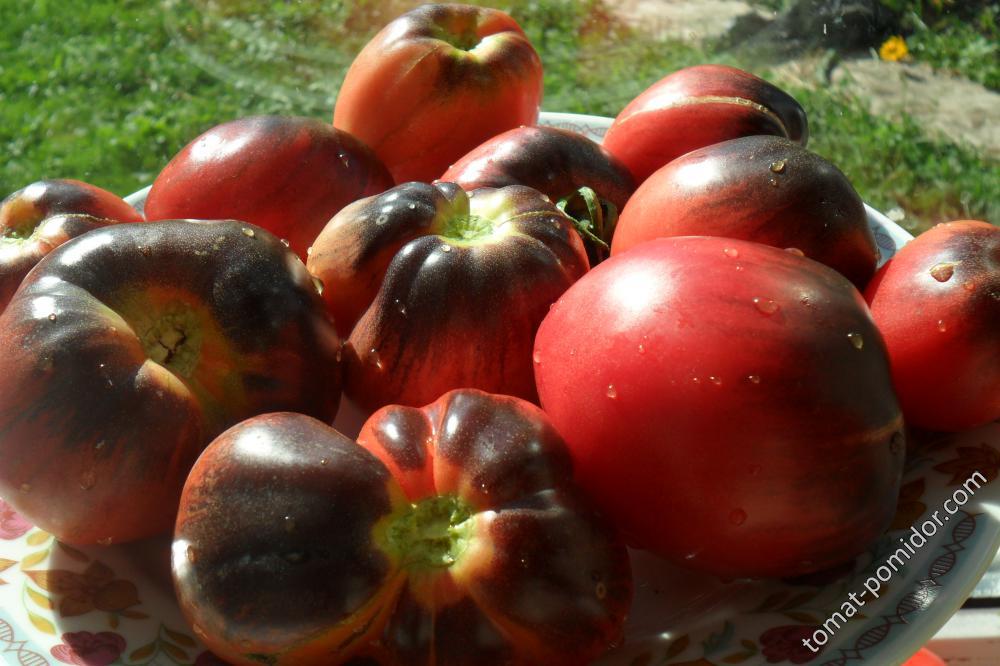


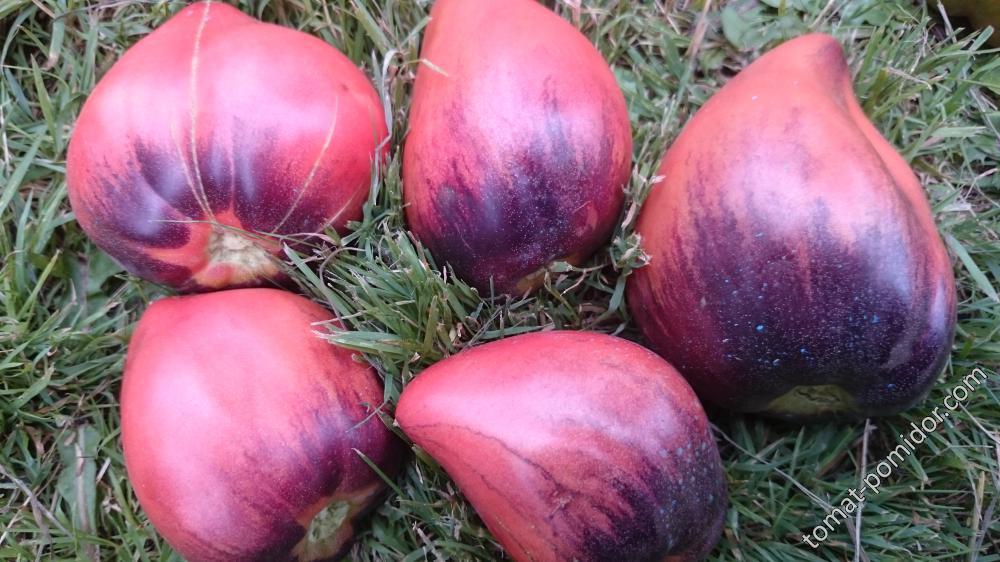


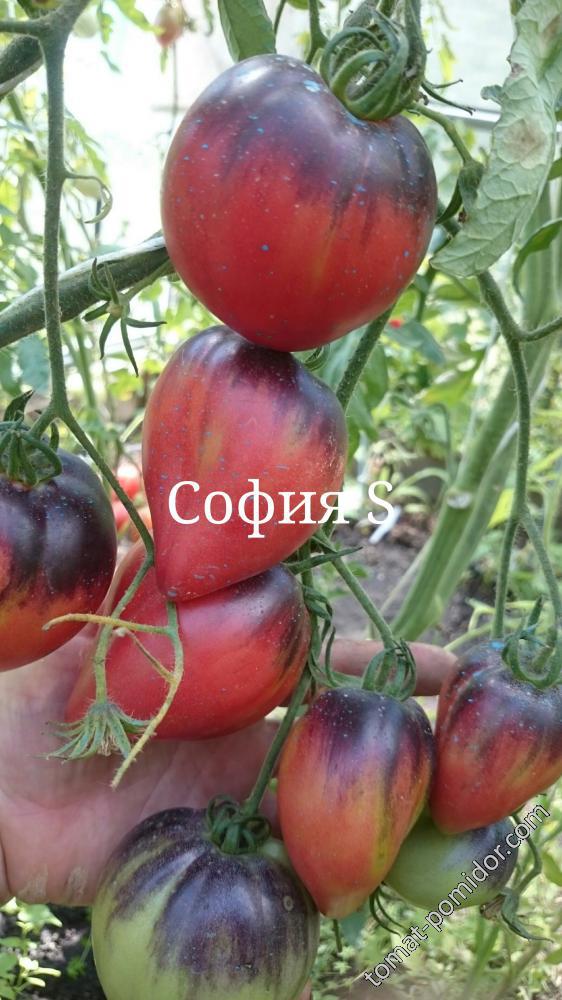
It’s officially a favorite! I planted it and just admired it all summer long! Insane yield from both the Blue antho heart and the Pink line!
The Blue heart (BHS seeds) weighed 200-300 g (7-10.5 oz), and the Pink heart (MBF) averaged 200 g. The fruits are incredibly uniform, firm pink hearts that actually hold up well in storage, a rare trait for pink varieties! I had seeds from 3 sources: Bunny Hop, Germany, and a French collector. The fruit varied slightly: the US ones were large, glossy oxhearts, while the French ones were a bit more matte and smaller, but the flavor was out of this world, and they ripened earlier.
Across all sources, the plants ripened fruit all the way up the vine in the greenhouse, right to the top; we picked the last ones in September. Very meaty, incredibly sweet, just an absolute joy to grow. A MUST GROW! I also put backups out in the garden, and they performed flawlessly. It’s not prone to disease, and the outdoor yield didn’t disappoint despite the awful summer weather.
Edited December 13, 2017 by Danko
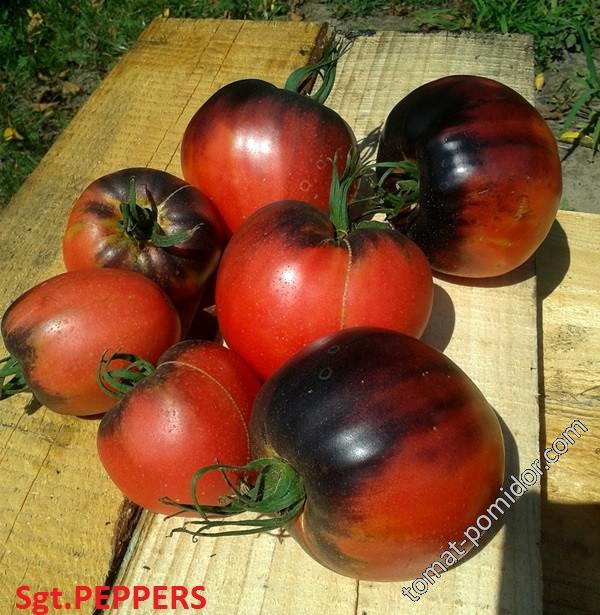
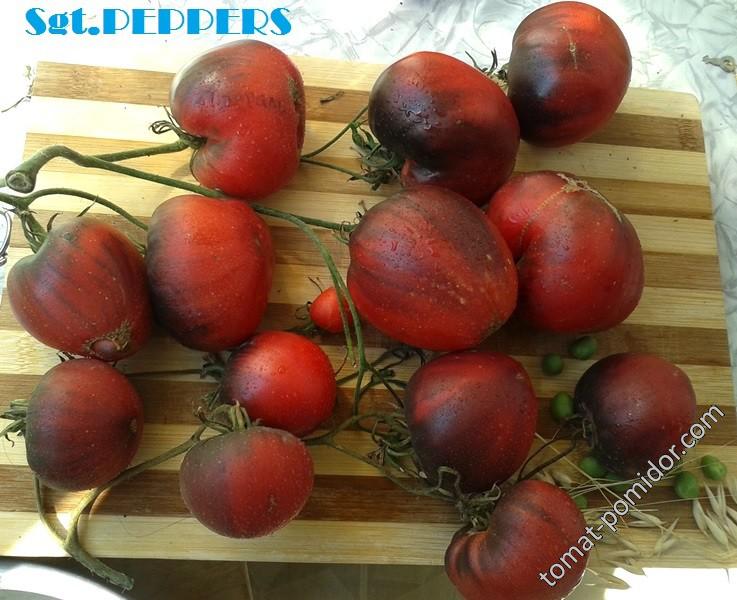
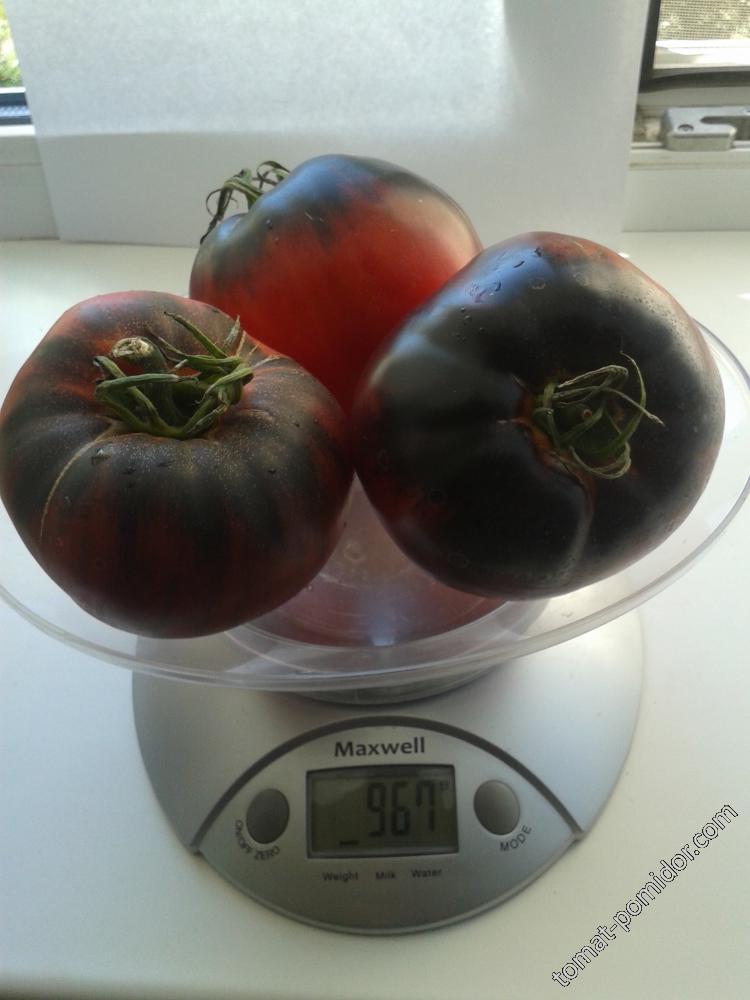
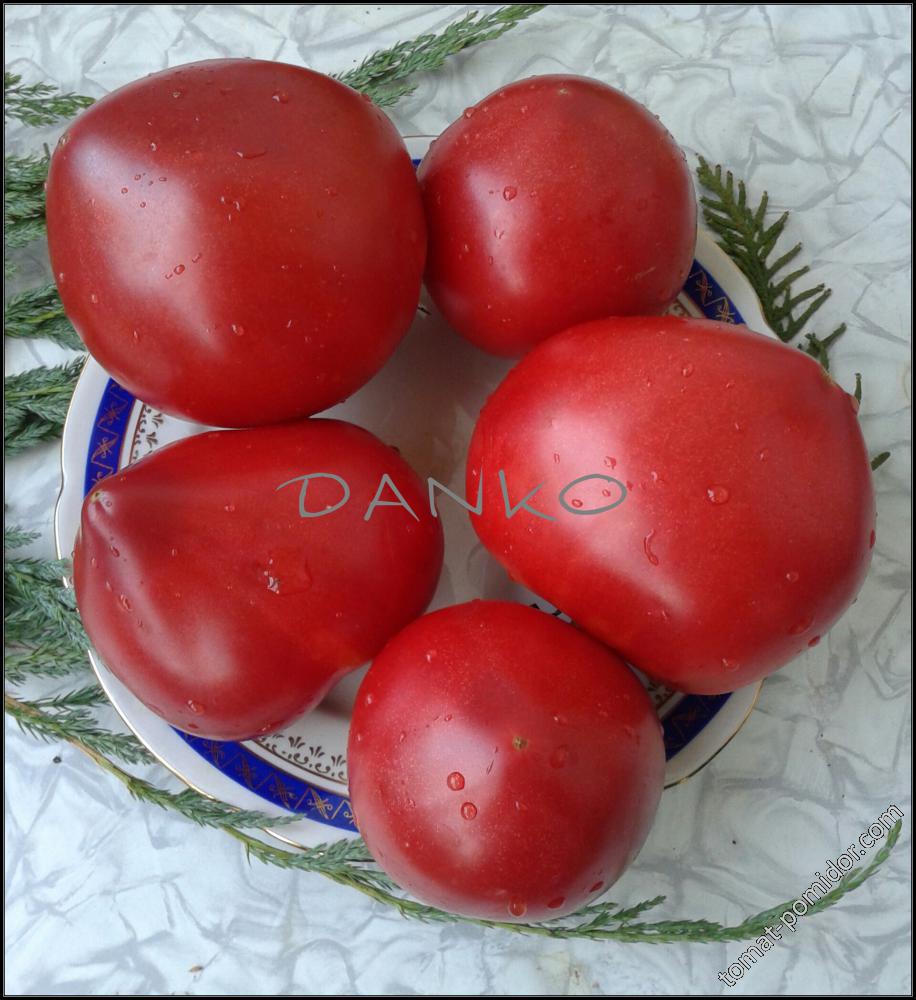
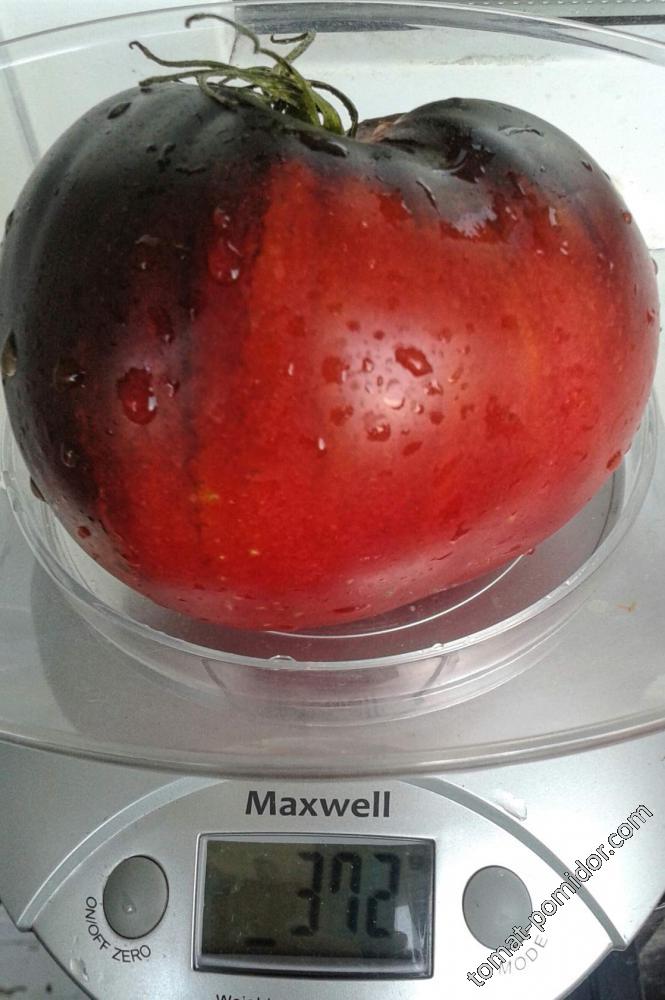
I grew this one from two different sources. Beautiful variety with great yield potential (though I got blossom drop on the lower clusters because of the cold snap).
The flavor was all over the place for me-sometimes overly acidic (like Alisa experienced), sometimes nice and sweet, and other times it tasted exactly like a bland supermarket tomato. So yeah, the flavor is definitely subjective/an acquired taste)
Top photo – Alice’s Dream, bottom – Sgt. Pepper’s
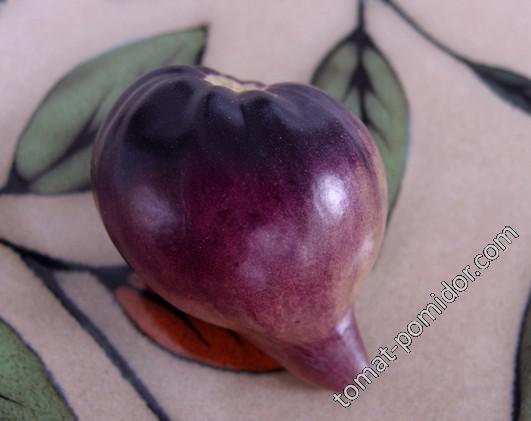


Lenusik, where did you plant it? I’ve noticed the “blues” (antho varieties) generally do way better in the greenhouse.
Quote from Tatunya:
Lenusik, where did you grow it? A good place for the “blue” ones is in the greenhouse, that’s what I’ve noticed.
Tanya, 2 plants were outdoors, 2 in the greenhouse. The blue shoulders and fruit shape were completely identical across all of them. Same goes for the taste.
My Sergeant is growing outdoors, and the vines stick out like a sore thumb–not even because of the fruit color, but because they’re so skinny. I keep walking past and laughing; I totally get why it’s a “Sergeant” and not a “General” or “Major.” It has zero suckers and looks exactly like a scrawny young recruit 😉. I can spot it from across the yard without even checking my garden map.
Mine must have taken the saying “every soldier wants to be a general” to heart. Or at the very least, he’s gunning for Lieutenant. Two of my plants are growing quite vigorously. Just looking at them makes me happy.
Sorry for going off-topic, but Gargamel and Pascal – now those guys are scrawny little runts and super short so far.
Quote from Nadezhda 69:
Sergeant is growing outdoors, the bushes look different from all the rest… I understand why they called it Sergeant… just like a skinny young sergeant 😉
Exactly! Mine is exactly the same)) Only 1 out of 2 survived 😔 and it’s sooo spindly 😫 I’m honestly worried the surrounding plants are going to swallow it up; it’s the only one like that in the bed. I just noticed the leaves on the lower half of the plant are wilting. Maybe it’s thirsty, but the others look perfectly fine. The first cluster is blooming, and I barely found a sucker to pinch off. I’m honestly embarrassed to post a picture 😳
Today I spotted antho coloring on a tiny little fruit set on one of my Sergeants! And the ovary is clearly heart-shaped already.
I am thrilled.
My Sergeants are easily the ugliest plants in the greenhouse. The leaves are curling up like little boats, skinny and blueish. But they are setting fruit like crazy. One clearly has heavy antho, while the other is staying pretty green for now. Surprisingly, they’re the tallest vines in the house, even though they looked so pathetic as seedlings I didn’t think they’d make it.
Mine actually terminated in a blossom cluster. 😲 I was so upset because I had just pinched off the main sucker right below it before I noticed 😫. Later on, I spotted a tiny, thread-like sucker tucked between the cluster and the leaf. I forgot about it, checked back a week later, and 😲, I didn’t even recognize it! It completely took over as the main leader! A total miracle… 😲
Mine is loaded with blossoms but flat-out refuses to set fruit…. 😢 Out of 5 flower clusters, only one tiny tomato has set… We’ll see how it goes. The vine is just as frail as everyone else says. Tons of flowers, no fruit; shame there isn’t a middle-finger emoji 😄
Yeah, I’m barely seeing any fruit set either.. Or maybe they’re just hiding under those long sepals. Time will tell.
I have two Sergeants planted side by side from different seed sources. The vines are thin, the leaves are droopy – I thought they were thirsty at first, but then I realized it’s just the variety’s weeping habit. The third cluster is blooming, and I can already see blue shoulders on the bottom clusters. I just walk around admiring them; they really are handsome plants.
I totally forgot to check the bottom clusters… I need to bend down and look. 😑 Not happening soon, though.. Maybe this weekend.
Here’s my biggest Sergeant. He clearly wants a promotion to General 😄
Here’s what mine looks like so far.

For me, Sergeant has the absolute worst fruit set.
Out of 2 plants outdoors in different beds (seeds from 2 sources), only 1 tomato has set. Meanwhile, practically every other variety out of my 100+ is setting fruit like crazy; the Amethyst Jewel right next to it is loaded.
The vines look healthy, they aren’t suffering from nitrogen toxicity (all leaves, no fruit), and they’re blooming heavily, they just won’t set fruit.
Hit them with a foliar spray of succinic acid. They’ll set fruit in a flash!
I have Sergeant from 2 sources: one is wispy (but not fragile) and dark; the other is thicker and greener. Both are in the greenhouse. The purple one set its entire first and second cluster; the fruits are already the size of a quarter and showing purple sides. It throws multiflora clusters, and the plant habit is super airy and easy to manage – practically no suckers.
My Sergeant is pretty spindly too. It actually managed to fork twice on its own, so now I’m running it with 4 leaders. Heavy bloomer and sets fruit easily. The antho coloring is super obvious. Kicking myself for not taking photos this weekend. Next time.
I actually really like the plant structure – very thin, but definitely not half-dead! Only one out of three seeds popped, so I’m babying it! At first, the fruit set completely green, and the purple is only just now starting to bleed in! 👏

90% of mine are leaning more towards a flat-heart shape, all of them have heavy striping, and three of them turned completely dark purple.
Quote from Arya40:
My Sergeant. Photo 29.06.
Gorgeous! 👍
The camera coloring is terrible, but you can basically see the antho on the shoulders.

Here’s mine.

I hit them with succinic acid twice, spaced a week apart, and they actually managed to set fruit in 38°C (100°F) heat. Big thanks to Lyudmila for the tip.
My Sergeants at the moment.
I can’t wait to taste them.
A little cluster.

My first one ripened; the rest are still on the small side.

Had to harvest the first ones; I think they were stunting the growth of the others on the vine.


Growing it for the second year. This year it is absolutely loaded with fruit!! Awesome!!

The plants look so gnarly and ugly that at first I was almost afraid to touch them. But you can’t argue with that yield.
Picked one today – the first one to ripen, and it cracked. Out of all my varieties this year, it’s the biggest so far: weighed in at 330 grams (11.6 oz)! The flesh is tender and pleasant. But I’m kind of biased because I tried Black Heart with a Beak from Borisovna early in the season, and compared to that, nothing else measures up.
Edited July 22, 2018 by Vedma
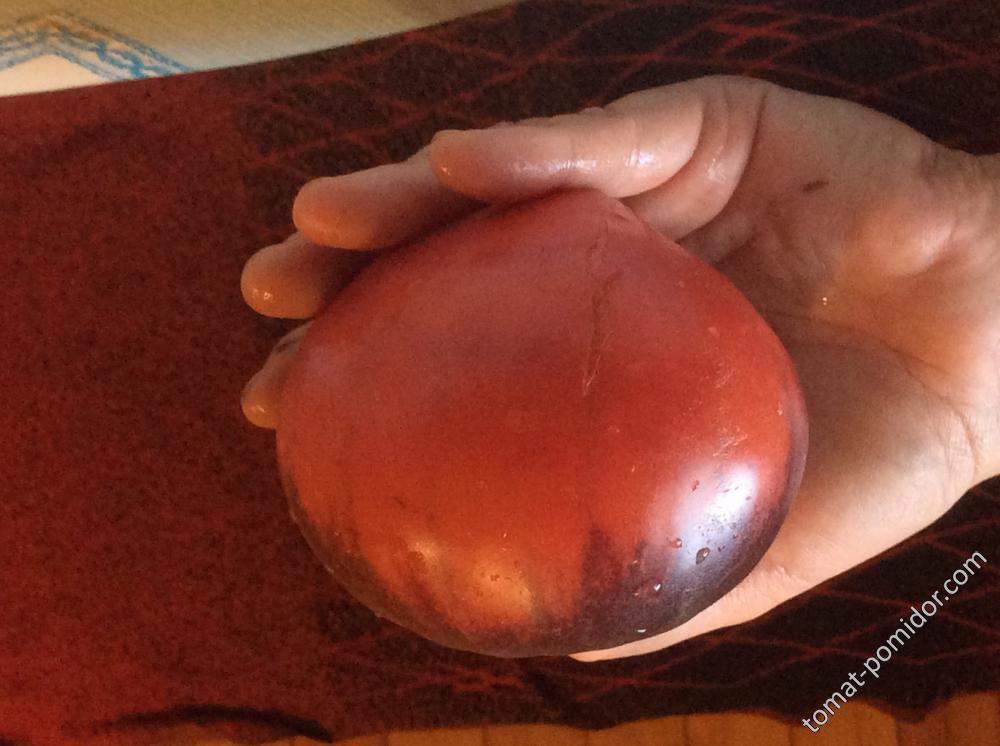
Highly productive and seriously gorgeous.


Our Sergeants finally came in! We’ve started snacking on them little by little.
Sooooo deliciooouus! 😊
And it easily produced enough to keep our family happy.
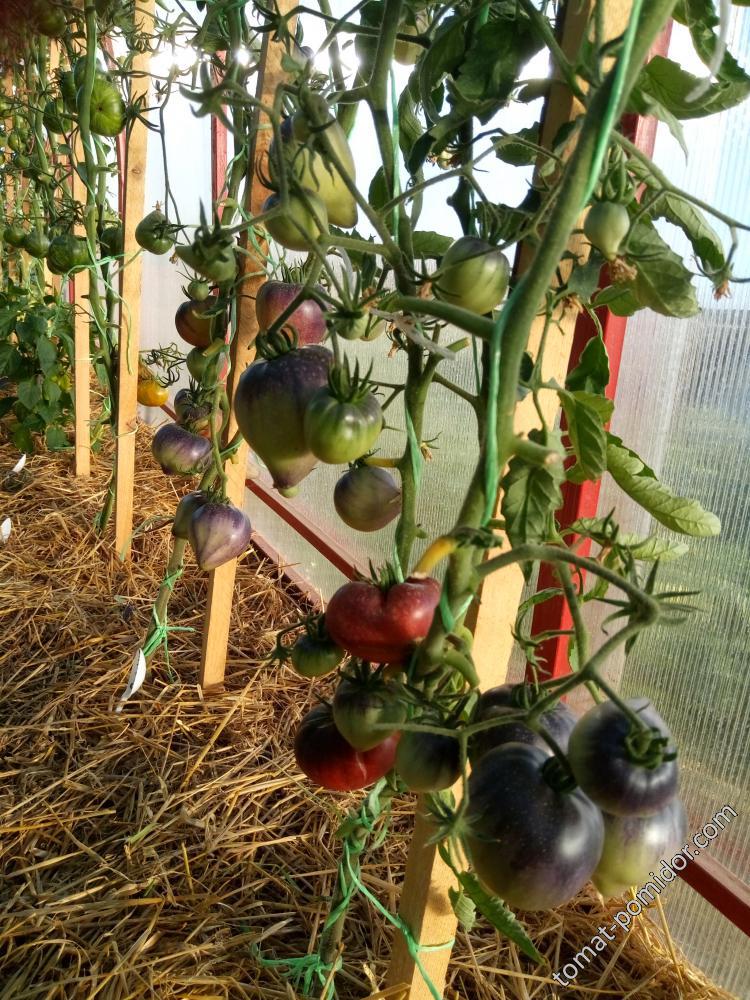
So which one is tastier and has a better yield; Sergeant or Amethyst Jewel? 📝
For me, Sergeant is definitely earlier and pumps out more fruit. Amethyst is later and has a firmer texture.
Super tasty, but the plant is incredibly frail. Did everyone’s turn out like this, or did I mess something up? 😲

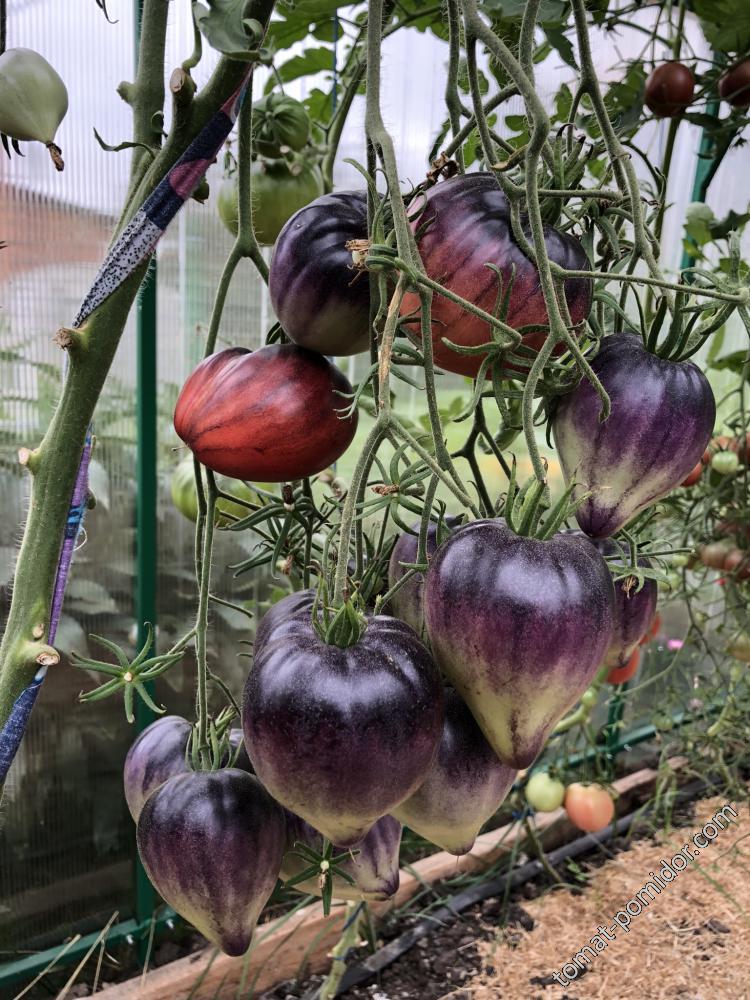
It was great early in the season back in July (it was my earliest ripener, actually), but now in August, it’s absolutely phenomenal…
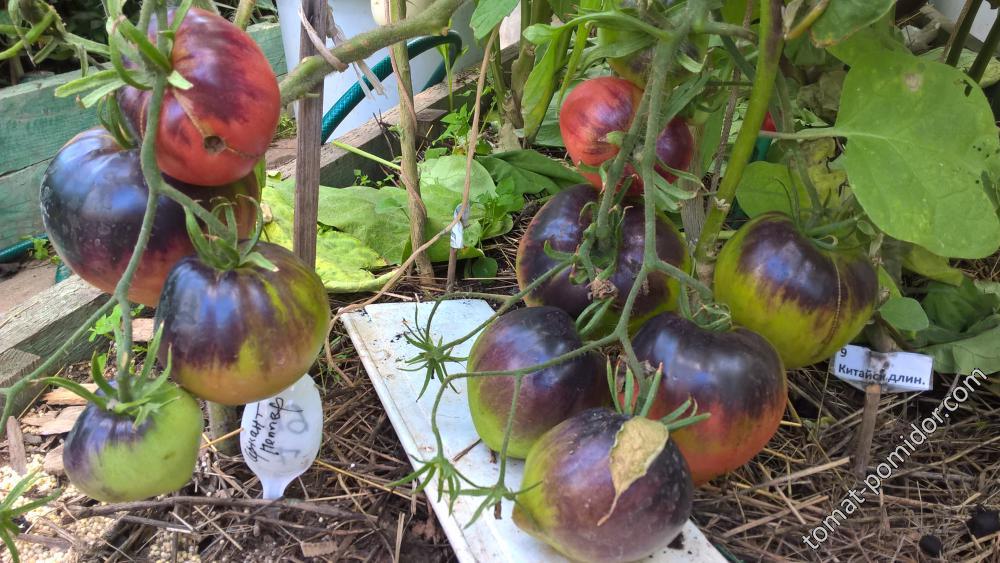
The vine is super thin, I agree, but the tomatoes are unbelievably delicioooous. 😋

It’s the sweet favorite in our household right now. We’ve been snacking on them for four weeks straight. We just cut into our first Amethyst Jewel. Both varieties are outstanding.
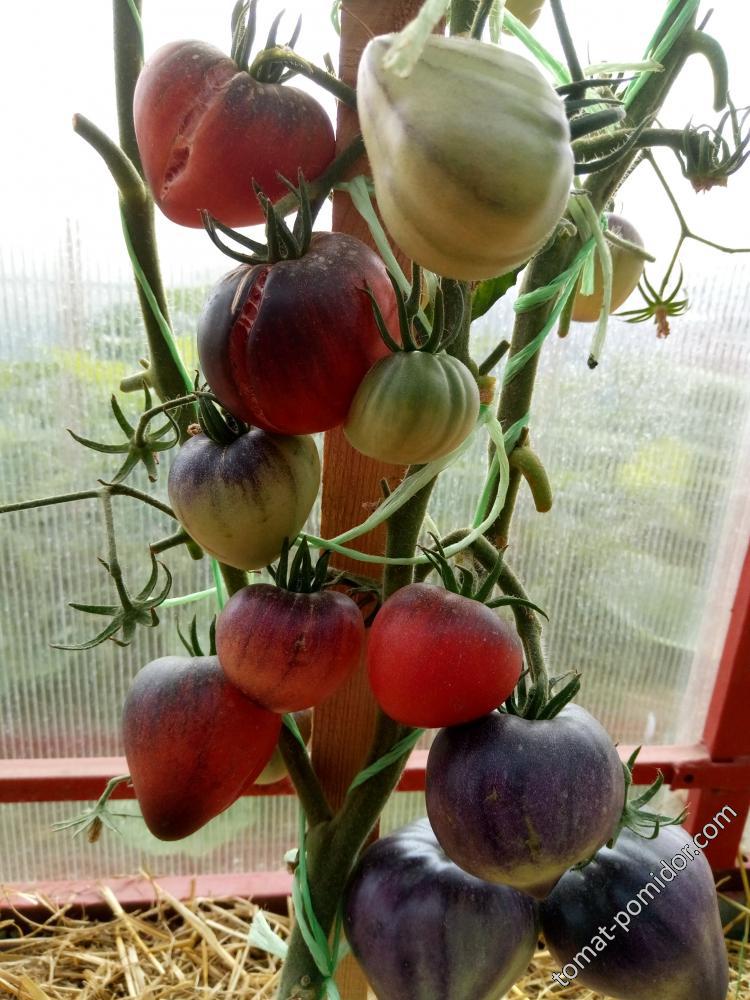

Biggest letdown of the year for me. Bland, flavorless tomatoes. Everyone raves about Amethyst Jewel and other antho varieties, but nobody wants to eat these. So they’re just rotting on the vine, taking up prime real estate in the garden.
And I wanted this variety so badly, too!! Seeds came from Lena Koval.
Quote from IrinaVinn:
The biggest disappointment of this year. Bland, tasteless tomatoes. Everyone eats and praises Amethyst Jewel and other anthocyanin tomatoes, but nobody wants these…
Some “blues” (antho varieties) have a weird quirk: the longer you leave them on the vine, the better they taste. Others need to sit on the kitchen counter for a few days to really unlock their flavor profile. Give that a shot. Also, it might just need a heavier dose of potassium than your other plants, or you might need to back off on the watering. Every variety acts differently depending on your local microclimate and care routine. Or maybe it just needs a few seasons to adapt to your specific garden?
Last year, it didn’t wow me with flavor either (I wanted sweet, but mine came out sour). I ended up burying it in mixed veggie salads))) But it was highly productive: perfect for canning in its own juice, good size, and fairly firm.
What’s the texture actually like? Is it super delicate, like Orange Russian, or does it have some bite to it? For my darks, I grow Ozark Sunset / Ozzy Blue; it’s quite firm with a well-rounded flavor (assuming it’s warm and sunny), which I prefer. I’m not a huge fan of mushy, “marmalade” flesh. 📝
Quote from Gala:
And what is its texture like? Is it very delicate, like Orange Russian, or firmer?
For me, the flesh was pretty standard for a pink oxheart. I wouldn’t call it mushy/marmalade, but compared to my Orange Russian 117, it was definitely more tender and less fibrous. My Orange Russian 117 usually turns out quite firm and a bit fibrous; whereas Canadian Heritage (“Canada”) grew much softer for me. Again, Sgt. Pepper is a somewhat unstable line, so I wouldn’t be surprised if the texture varies wildly depending on where you got your seeds.
Quote from Eva77:
(Photo quote)
What a beaut. Mine aren’t anywhere near that pointy.
Quote from Eva77:
(Photo quote)
Unreal! The little pointy noses AND the heavy antho coloring! I’m speechless! What a gorgeous cluster!
Comparing it directly with Amethyst Jewel: Sergeant throws bigger fruit and is a heavier producer overall. The heart-shaped fruit is stunning.
It also has less foliage, which I love, though Jewel isn’t overly bushy either. I prefer generative-type plants with wispy foliage and less green mass relative to the fruit. I get so excited when I find varieties like this. They’re just more efficient: they pull fewer nutrients from the soil, so you get the same yield with way less fertilizer and water.
Both varieties ripened at the exact same time for me this year.
Amethyst Jewel, even with me deep-watering only twice a month, still cracks a bit when ripening. Sergeant barely cracked at all.
Both ripen slowly, noticeably slower than my pinks and yellows. You really have to leave them on the vine longer to build up flavor.
If you cut into AJ and the flesh is a smoky-pink, it’s not ready. If the cut is a vibrant pink, then you hit the sweet spot. When fully ripe, it’s a fantastic tomato. It has this unique spicy finish, sweet with a really pleasant acid balance.
I sliced them side by side for a taste test. Sergeant is milder, and the flesh is softer and darker (almost burgundy). Jewel packs a punchy acidity and holds a firmer texture. I doubt Sergeant will hold up in storage as well as AJ does.
AJ actually ripens beautifully on the counter, maintains its flavor, and will keep indoors right up until the end of October.
A super productive, good-looking plant. Sweet. But if you stack it up against Pink Siberian Tiger, Vater Rhein, or Buffalo Heart, the flavor is definitely weaker and more washed out.
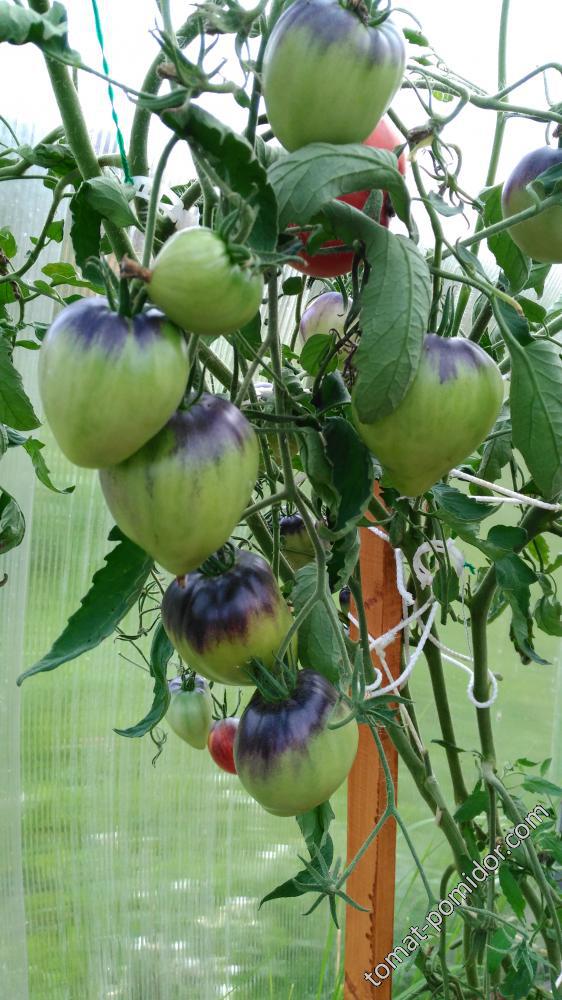
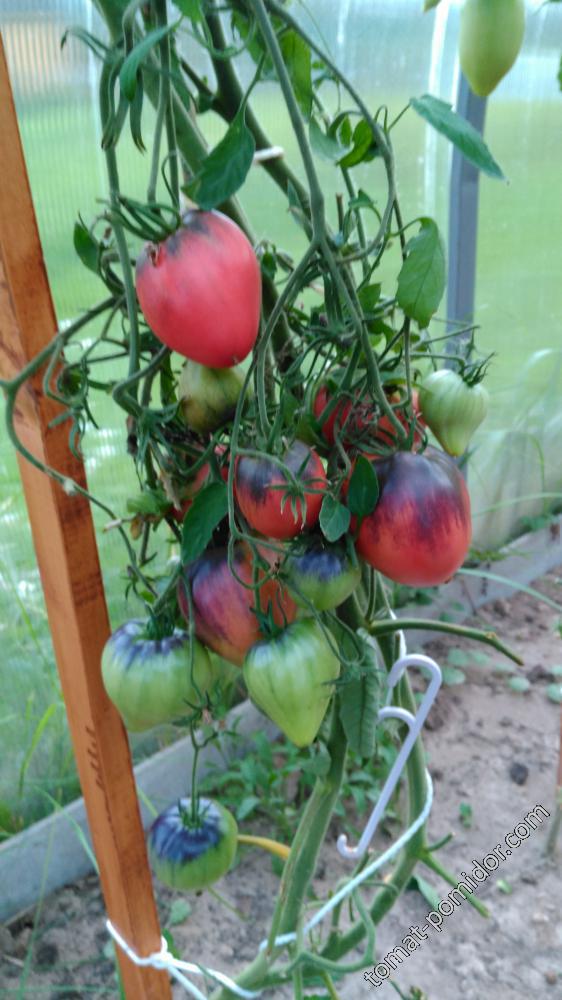
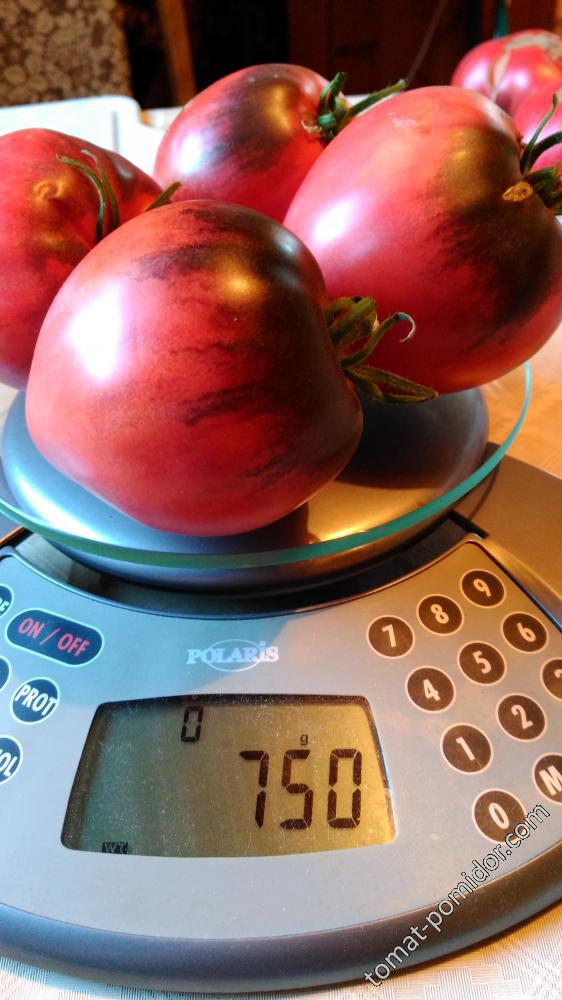
Great oxheart shape, gorgeous coloring (by September, some were almost pitch black), but honestly, the flavor leaves a lot to be desired. Completely bland….
Edited October 6, 2018 by Nadezhda 69
Grew it in the hoop house, pruned to 2 leaders. Tasty and sweet. An incredibly beautiful variety. The second photo is from mid-September. It didn’t put out crazy yields, but to be fair, I started the seeds super late, at the very end of March.
Grew these outdoors in full sun, pruned to 2 leaders. The seedlings got a bit leggy indoors, so I planted them deep, which meant the bottom clusters ended up practically resting on the dirt. I had to slide little blocks of wood under them. When fully ripe, the flavor is well-balanced and sweet; outdoor yield is about average. Amethyst Jewel, grown in the exact same bed, beats it on flavor, yield, and length of harvest. I’ll keep it in my seed stash; next year I’ll try it in the greenhouse to see if it performs better.
Edited October 15, 2018 by Igor Pechurin
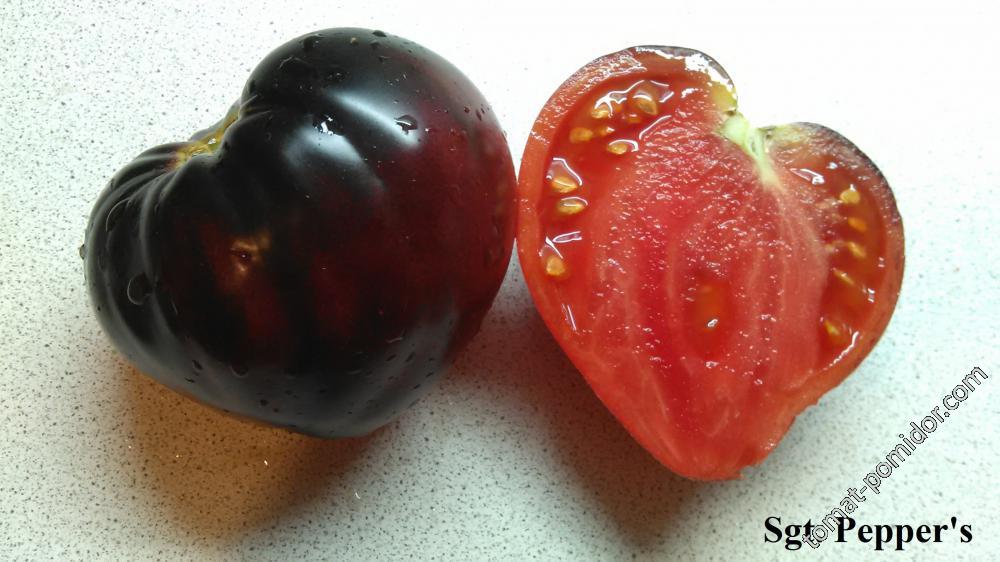
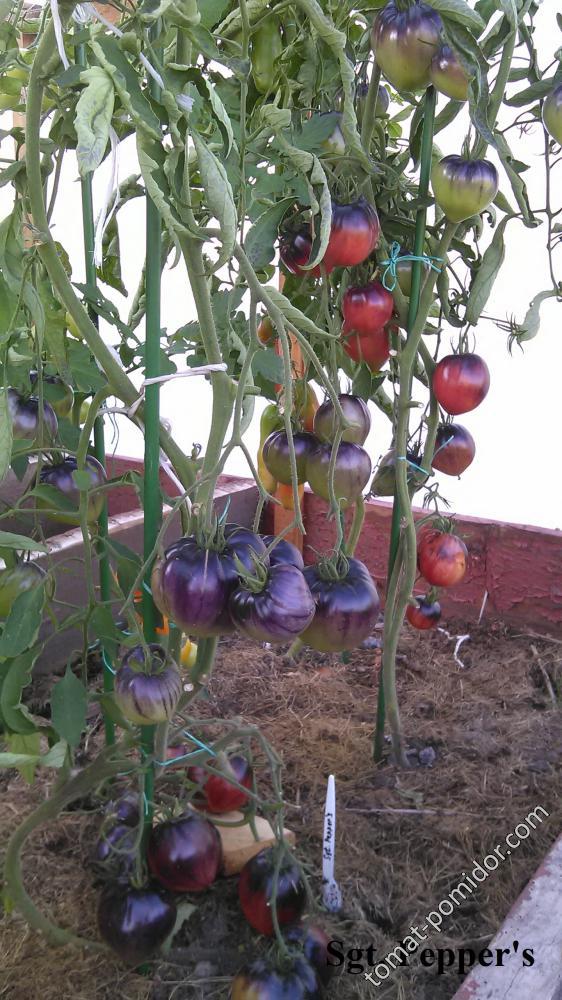
Great tasting tomato! Grew it in the greenhouse. Good yields. Can’t drop a photo right now since I’m on mobile. Highly recommend! Definitely planning to grow it again.
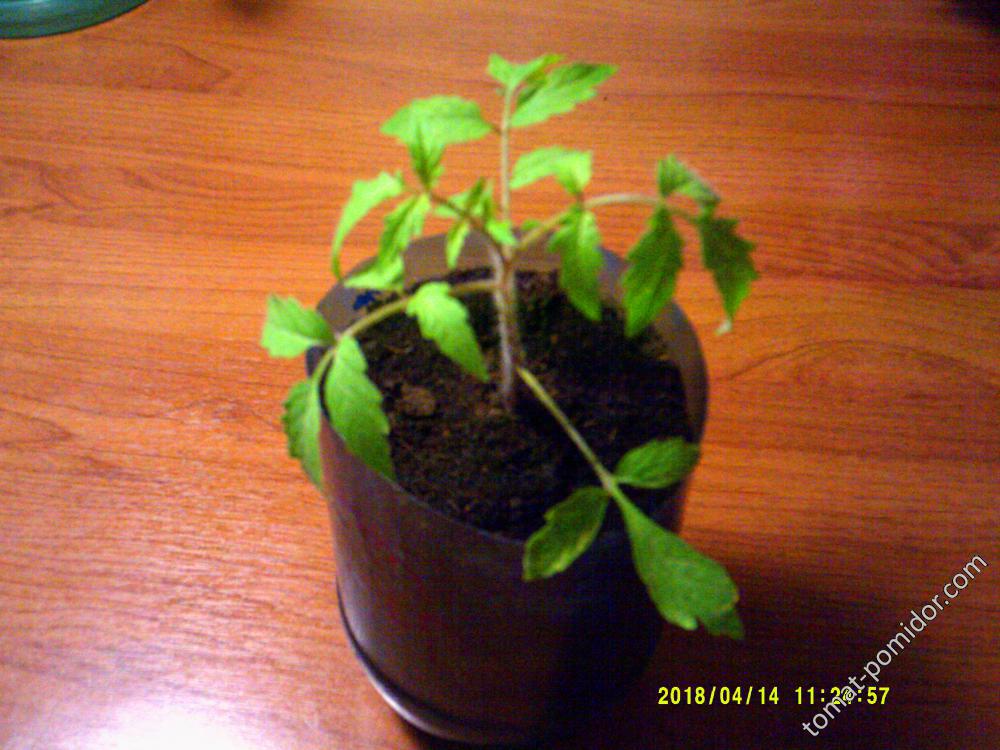
I only managed to snag one tiny seed of Sergeant this season. I guarded it with my life 😉 And the little warrior sprouted with a “helmet” (seed coat stuck on the leaves)! 😄
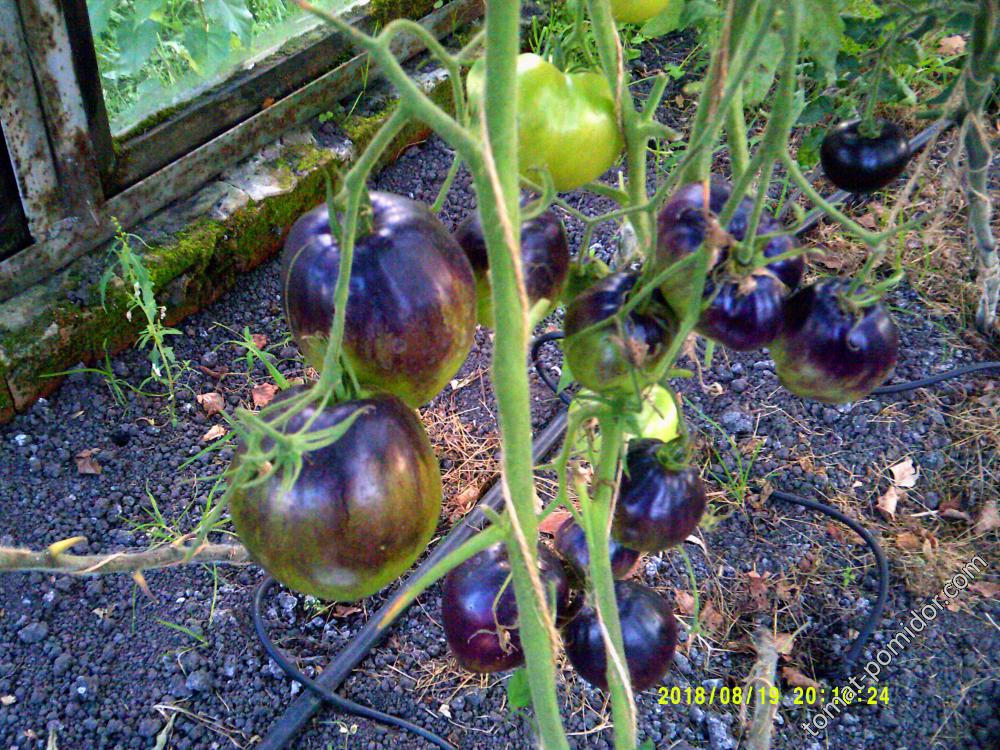
It looked pathetic as a seedling. I planted it in an old glass greenhouse on the shady side. It powered through a long cold snap followed by a brutal heatwave. End result: decent yield, great taste, and the tomato itself is a total stunner! Definitely a keeper, awesome tomato! 👍
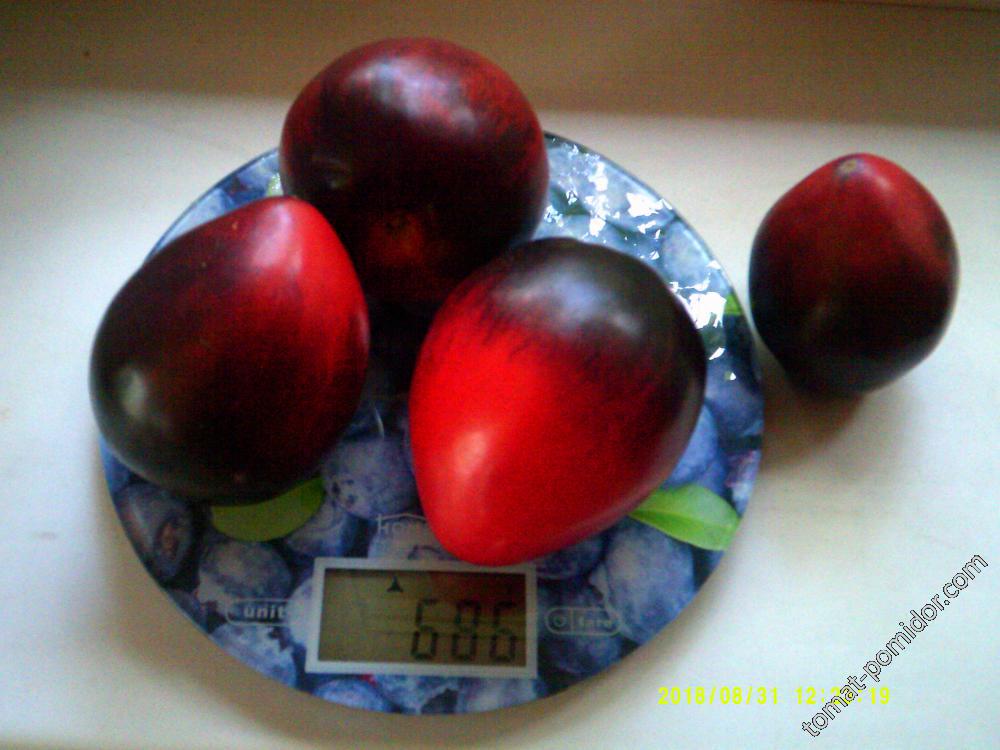
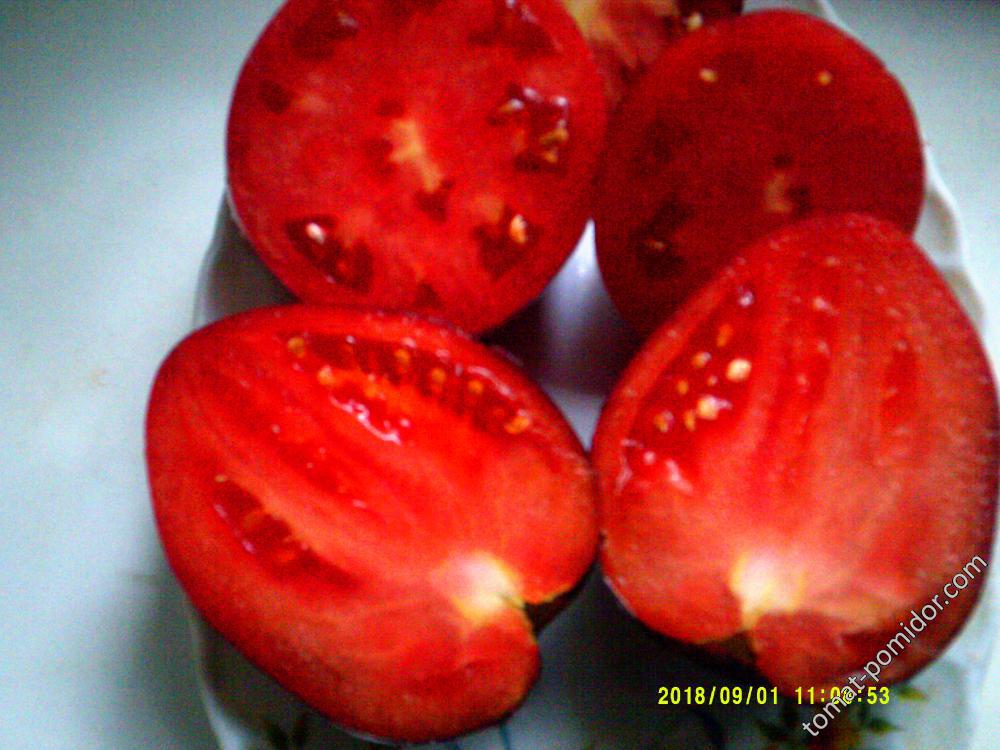
Quote from Nadezhda 69:
…but the taste, in my opinion, leaves much to be desired. Bland….
I have to disagree, it’s a great tasting tomato. Growing conditions probably play a huge role. It’s earned a permanent spot in my garden rotation 💖
So many glowing reviews. 😳 😳 I honestly wasn’t a fan. I won’t judge the yield – the plant was in a bad spot – but I didn’t like the flavor at all. 🤷 It’s flat, leaning toward sour, with zero sweetness. I’d say it tastes more like a commercial supermarket tomato. 😳 😳
Don’t come at me. Everyone’s tastebuds are different.
Quote from trofi:
I didn’t like the taste at all.
No need to argue with me. And no need to disagree either.
But it has an awesome name, right? You’re right about the flavor though… it’s lacking, especially compared to Amethyst Jewel, which is pretty similar visually.
Gorgeous variety. Tall (hit 2 meters in the greenhouse), mid-season harvest. In my garden, it threw medium-sized fruit, very tasty and sweet, with sugary, dense flesh.
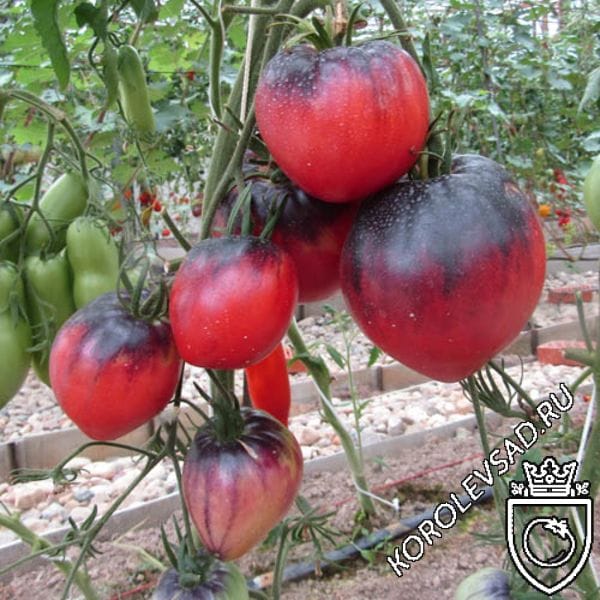
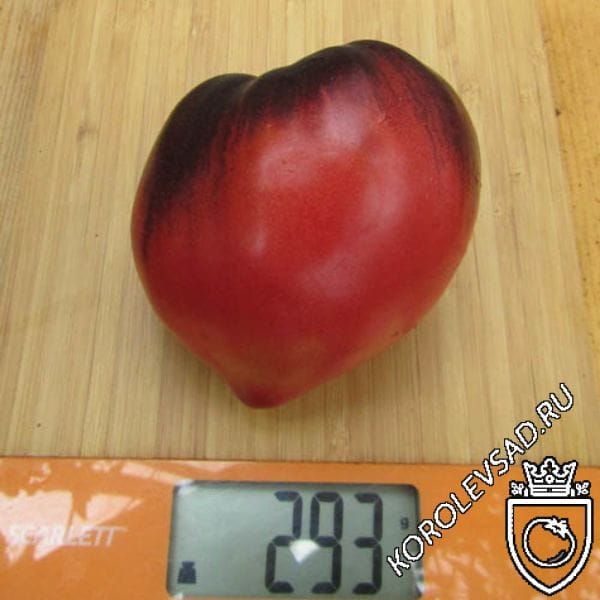
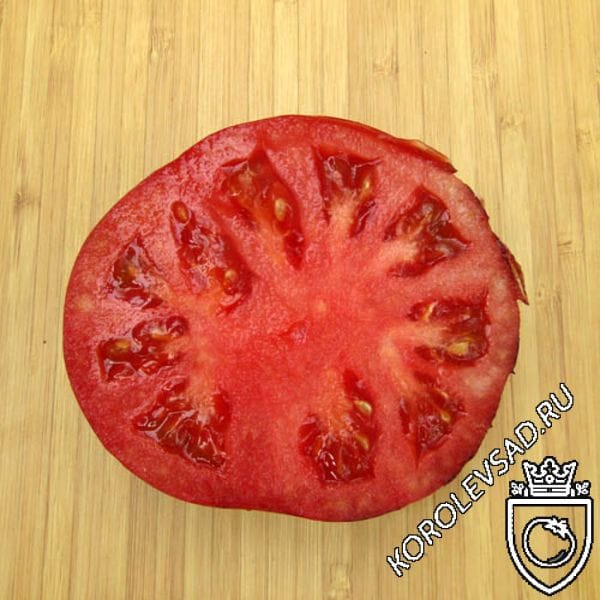
I’ve been dying to grow this one since last year !!! Antho AND a heart. The spindly plant habit didn’t bother me at all; I actually like that style. Plus, it’s resilient. I had two plants in the greenhouse on the southwest side. Interestingly, they threw totally different fruit and ripened at different times. The genetic line is definitely unstable. The flavor was the same though–leaning sweet, not bland, with a nice tang, depending on ripeness. Our summer was incredible, almost like being in Crimea, so almost all my varieties pumped out sweet fruit. 😋 Solid yielder 👍
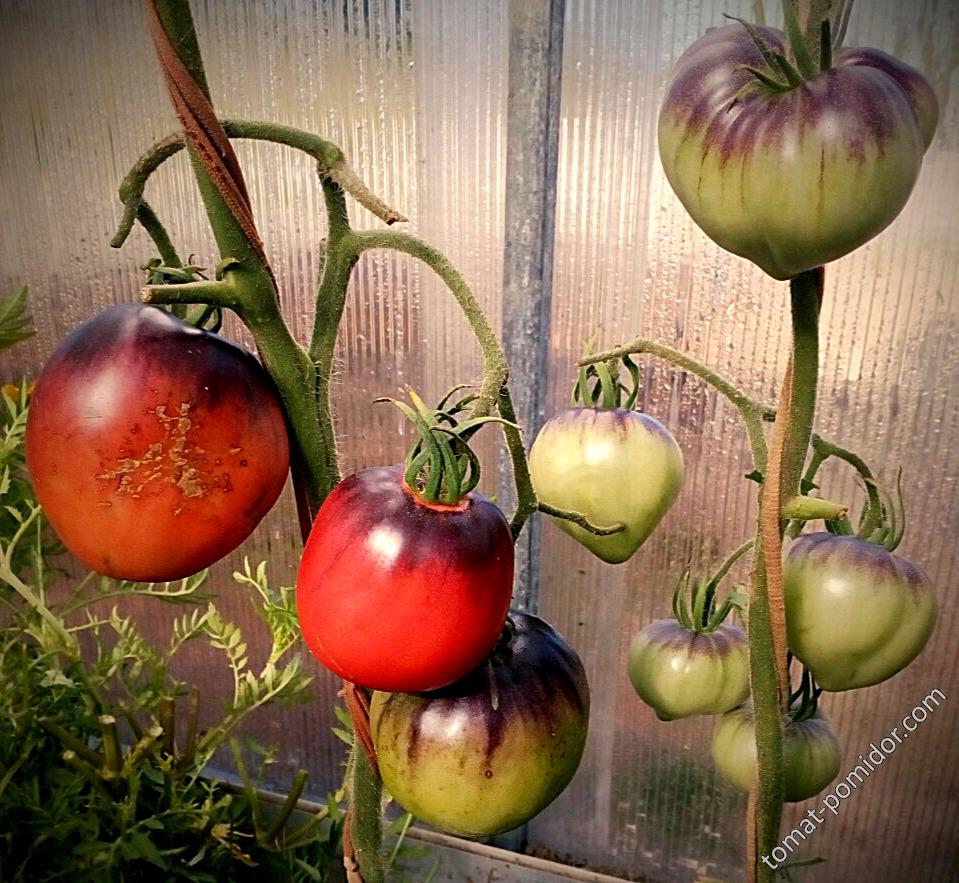
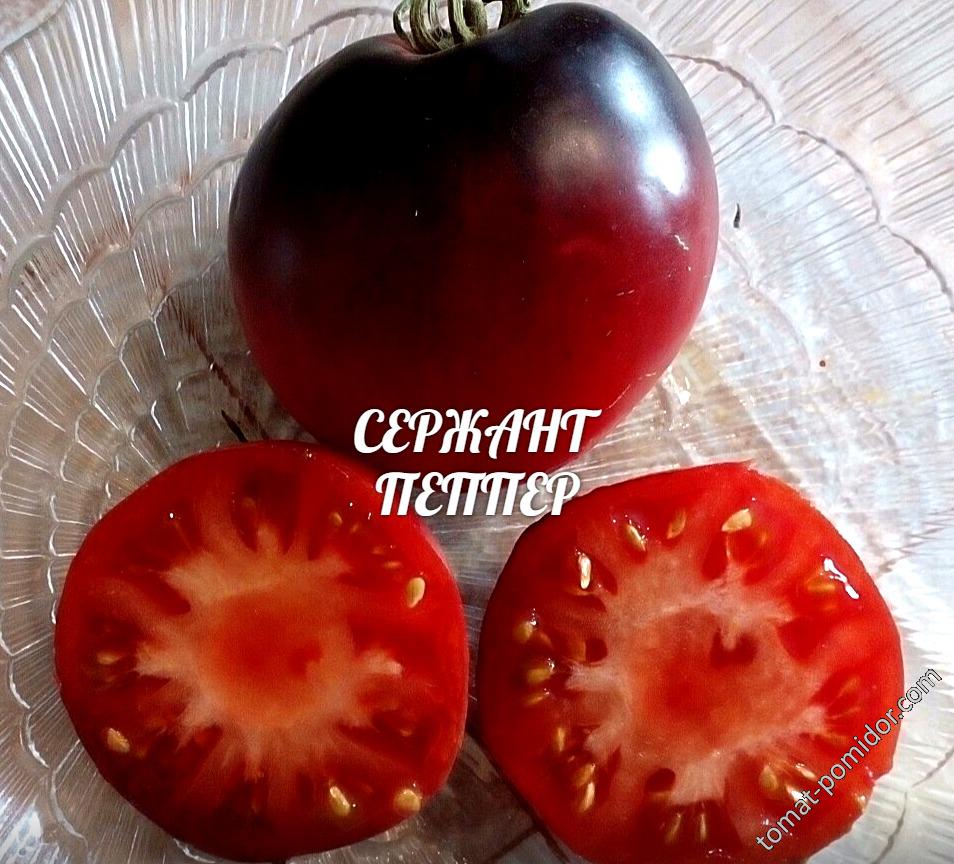
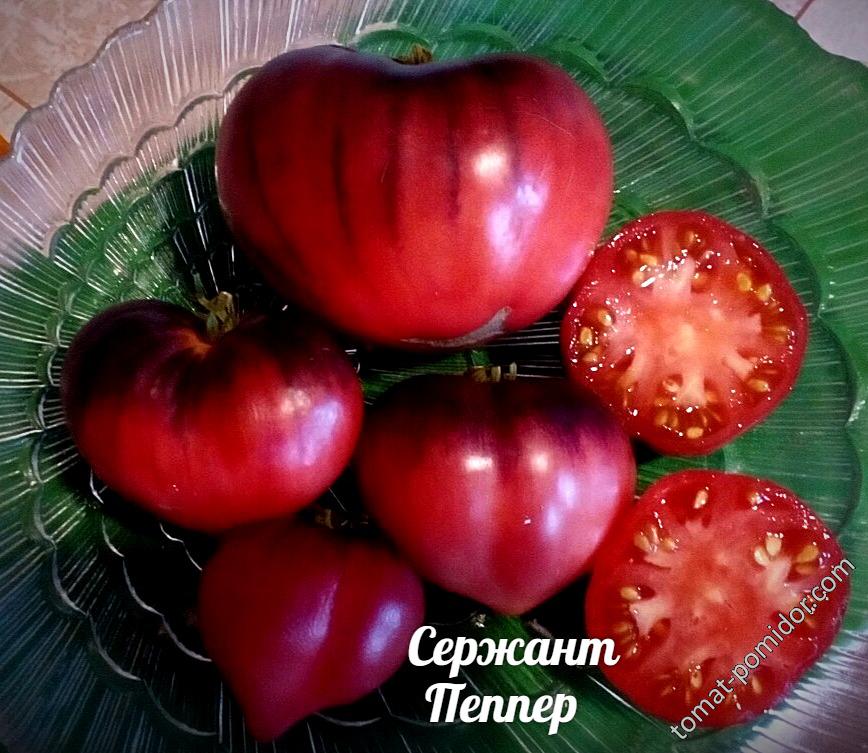
Seems like half the forum grew this variety this season. Hats off to the breeder who created this 🎩 😊
That beautiful shape mixed with the dark purple shoulders makes it look like a piece of art, not just a tomato. It’s stunning – no arguing that. The other traits matched what everyone else experienced. The plant is pretty “frail” both as a seedling and out in the greenhouse. Not an early variety; the fruiting and ripening windows are long. By September, we were pulling them to ripen indoors. Flavor was perfectly fine, probably because they were in full sun. Yield is lower than classic oxhearts, but better than other antho varieties. Overall, good impressions, and I’ll definitely grow it again, even if just for the looks.
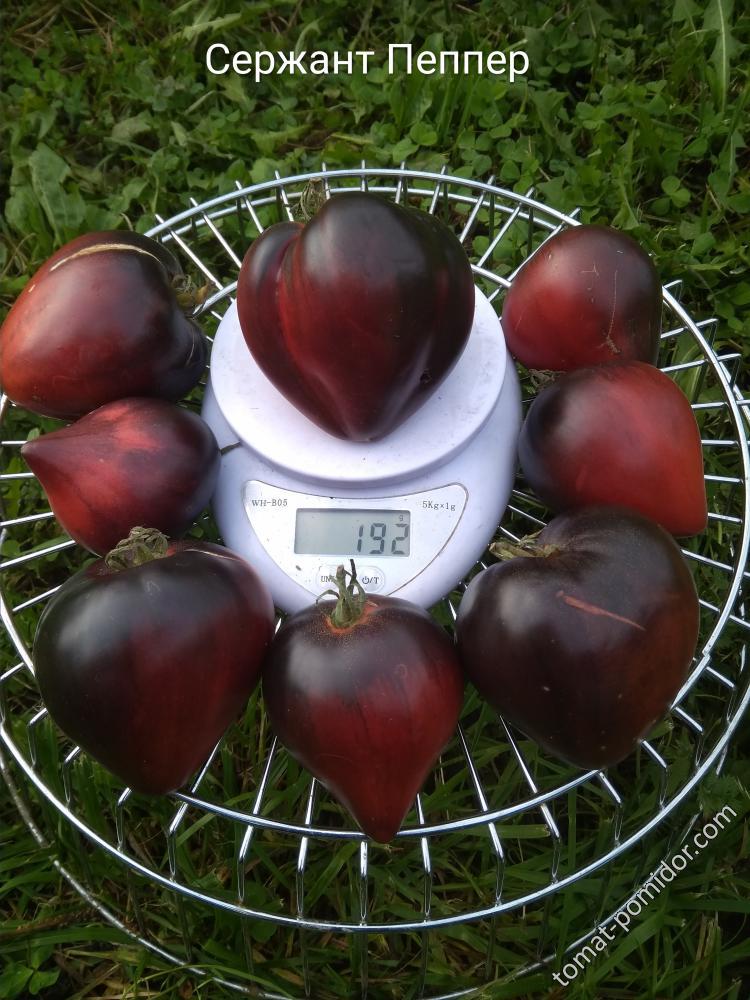
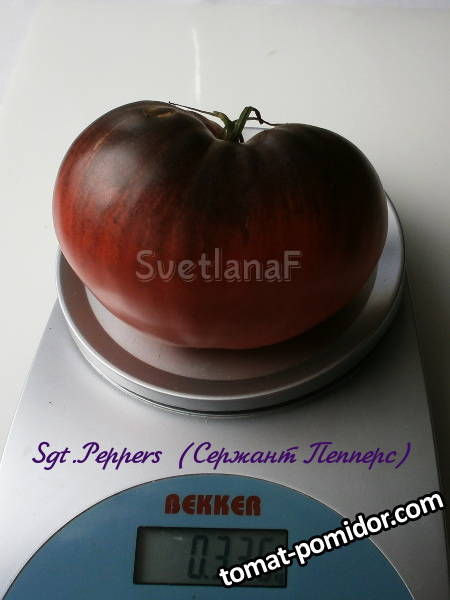

I loved everything about it: flavor, yield, and obviously the insane looks. I had plants in the greenhouse and outdoors in raised beds. The raised bed plants crushed it-way higher yields and bigger fruit, and they kept pumping out tomatoes right up until mid-October; it was the last plant we pulled.
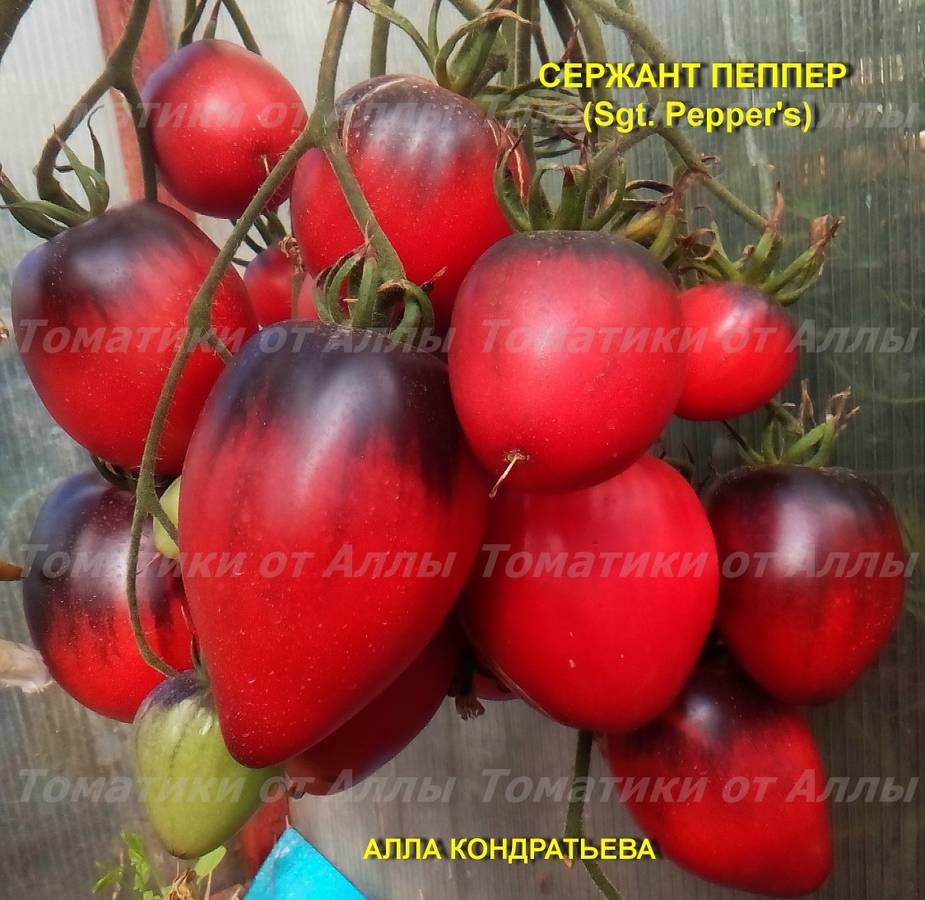
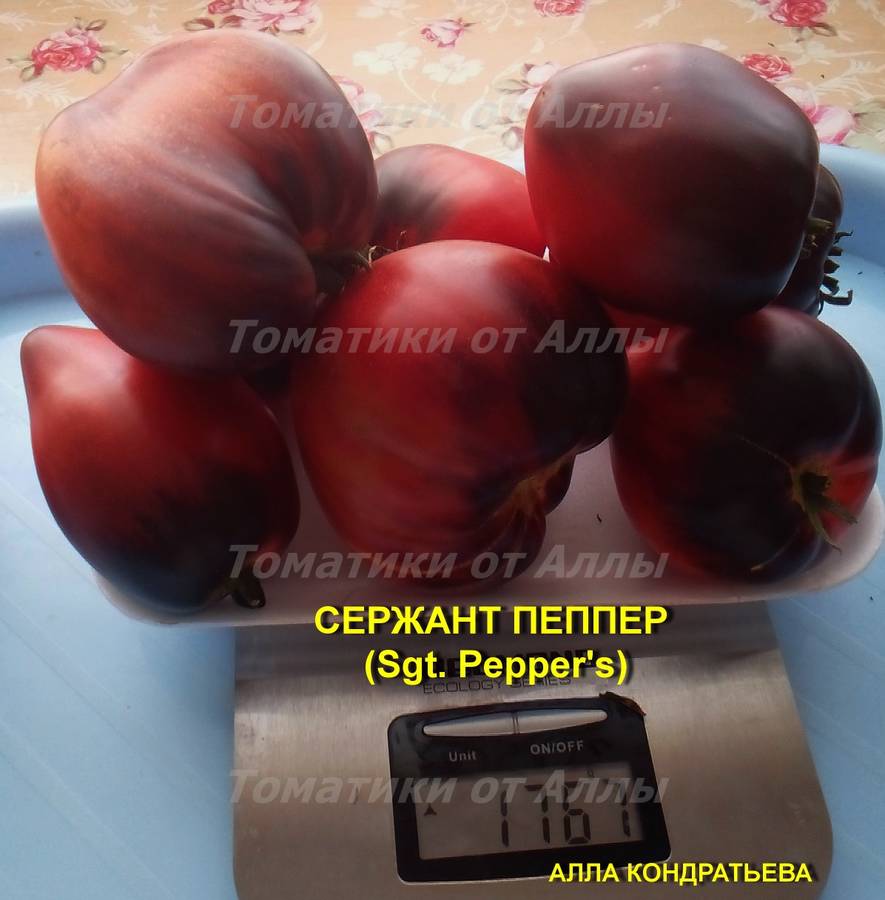
Sadly, mine came out flavorless too. Gorgeous, high yield, but zero taste, even though it got the best spot in the garden. I hunted for these seeds forever, finally ordered them, and was totally let down. Honestly though, after reading through these reviews, I’ll probably still give it another shot next year – maybe it just needs to acclimate, and it’s just too pretty not to grow.
Productive, beautiful, tasty.
Edited December 15, 2018 by Inn@
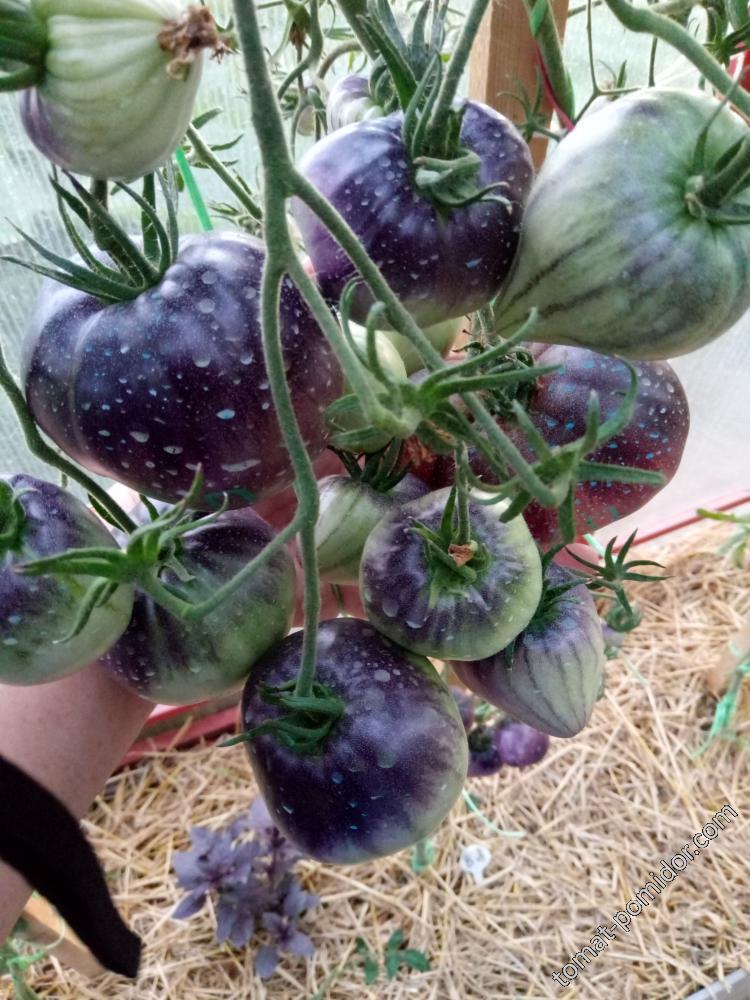
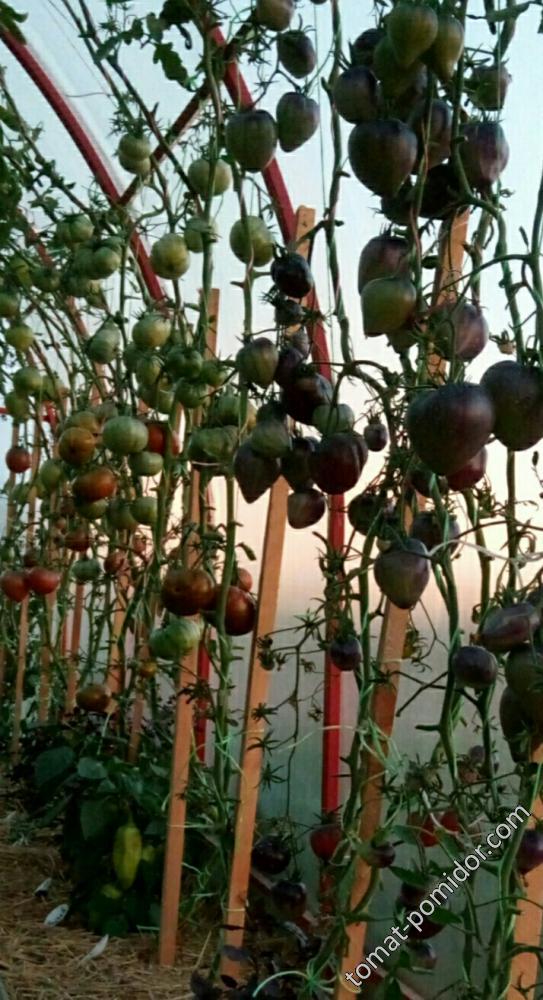
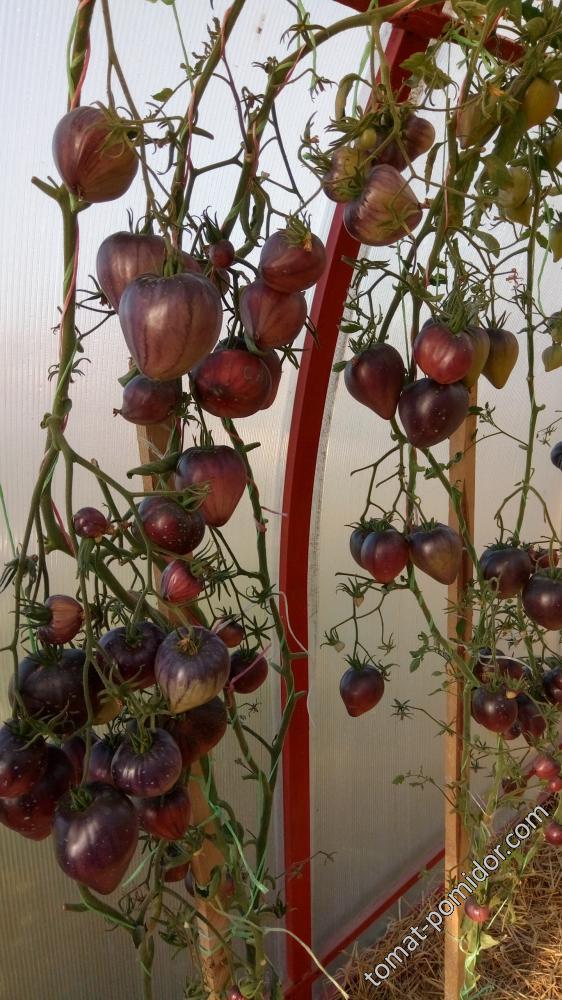
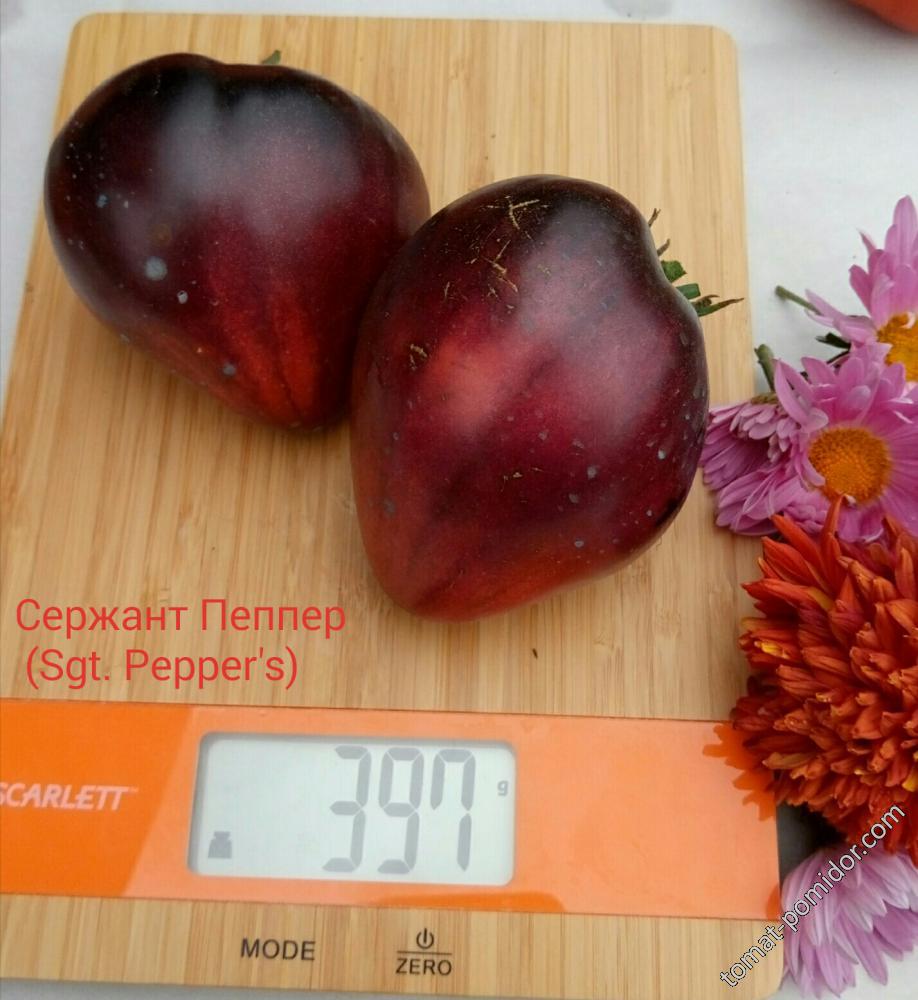
Agreed! High-yielding, tasty, and what a stunner!
Inna, thanks for the seedlings!
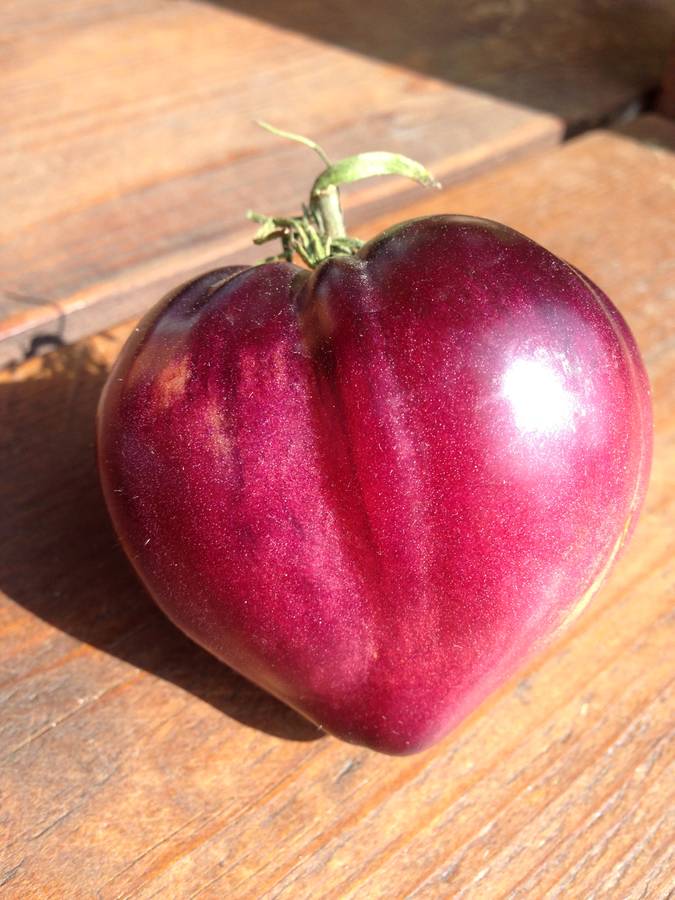
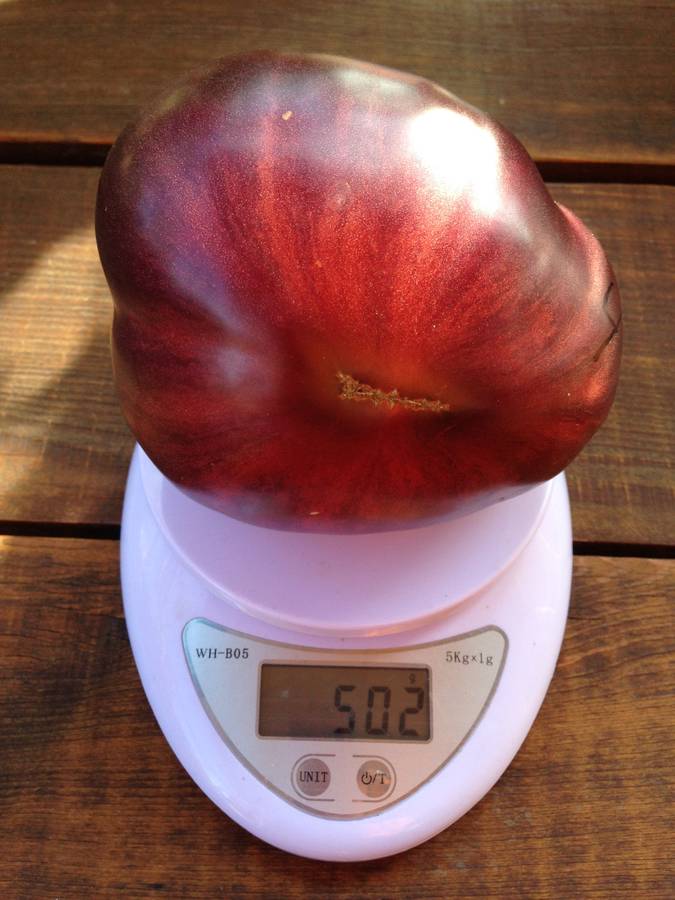
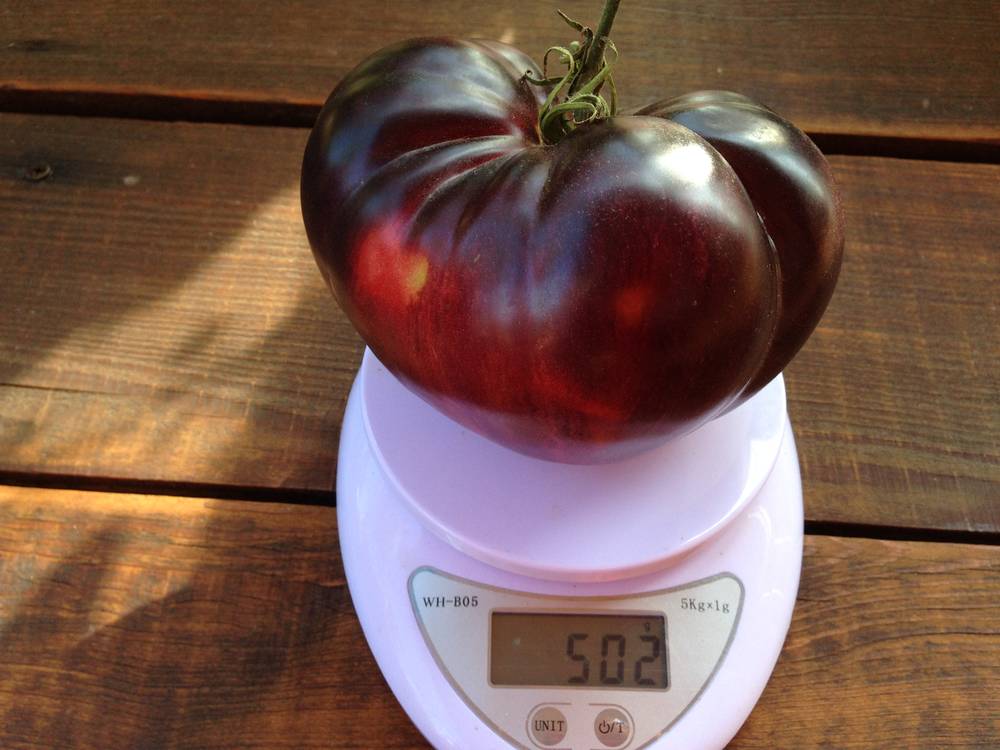
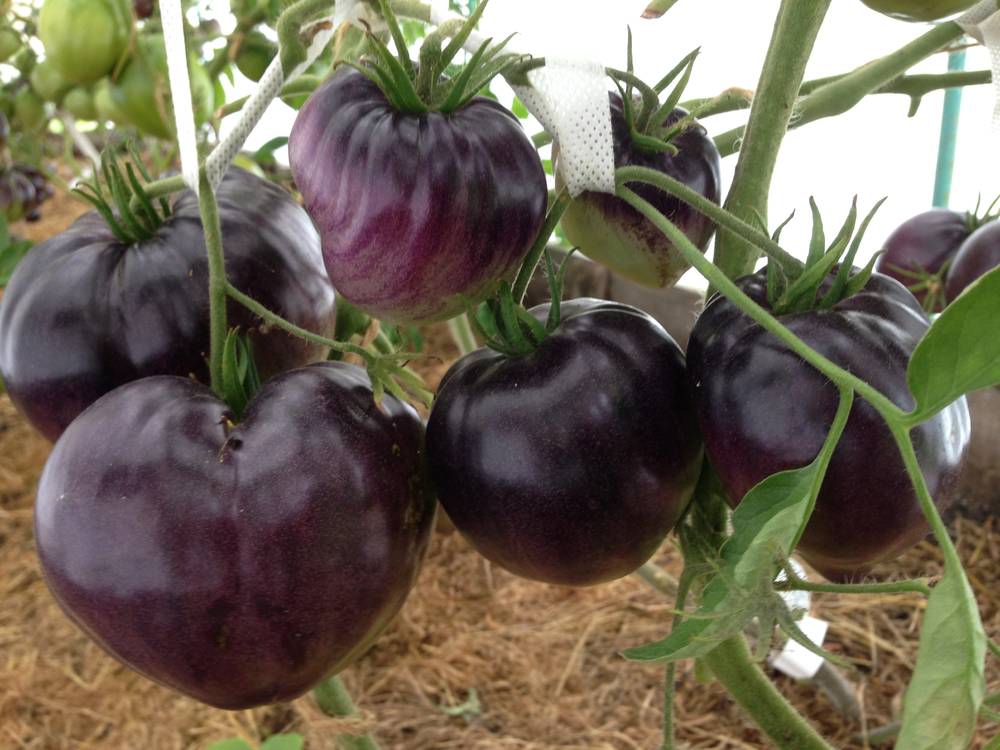
Here are the little Sergeants I picked at the very end of summer/early fall. The big tomatoes hung out near the top of the vine and there were tons of them. The lower clusters only threw small fruit. Beautiful, tasty, definitely repeating!
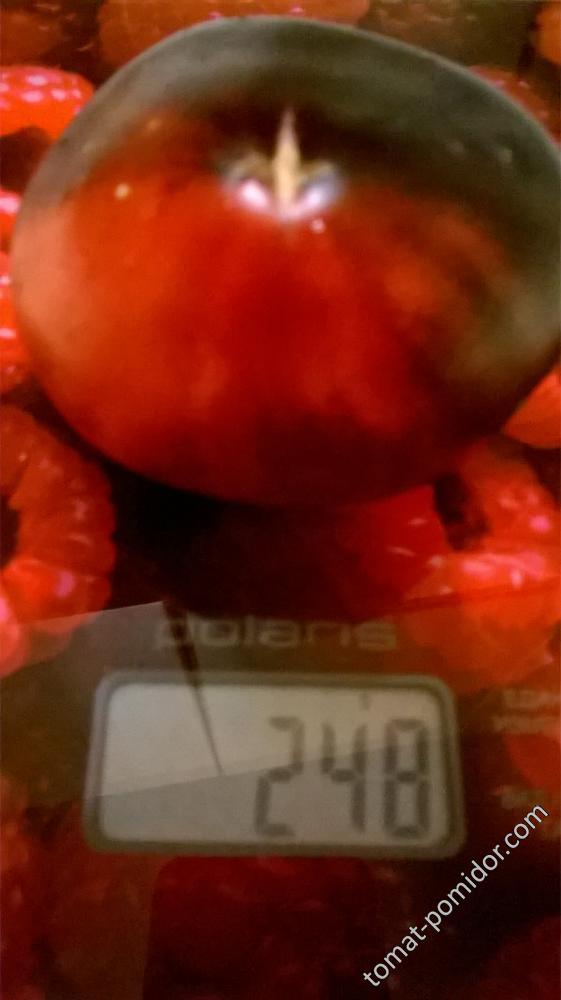
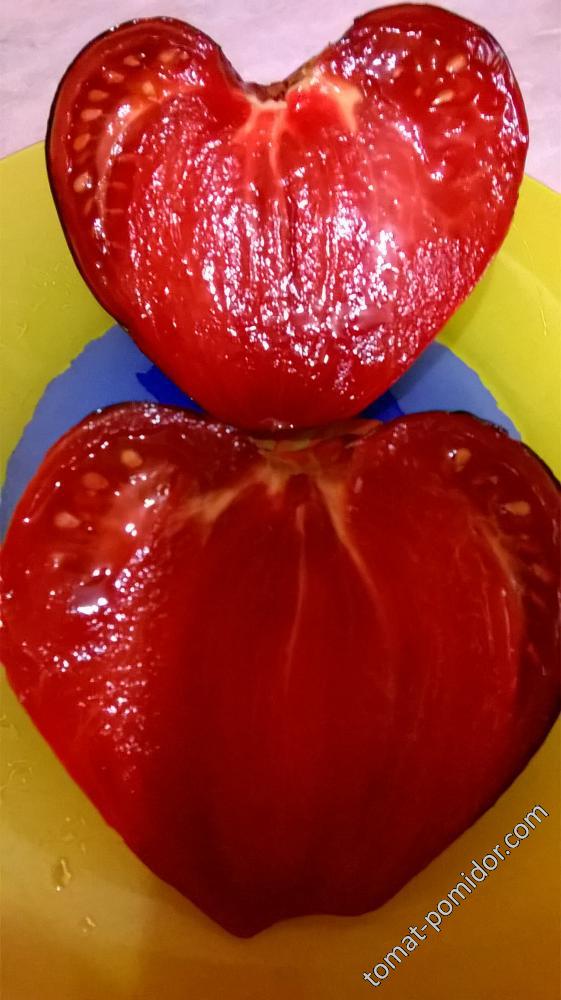
Gorgeous, highly productive, did great both in the hoop house and outside. Flavor is solid, I liked it.
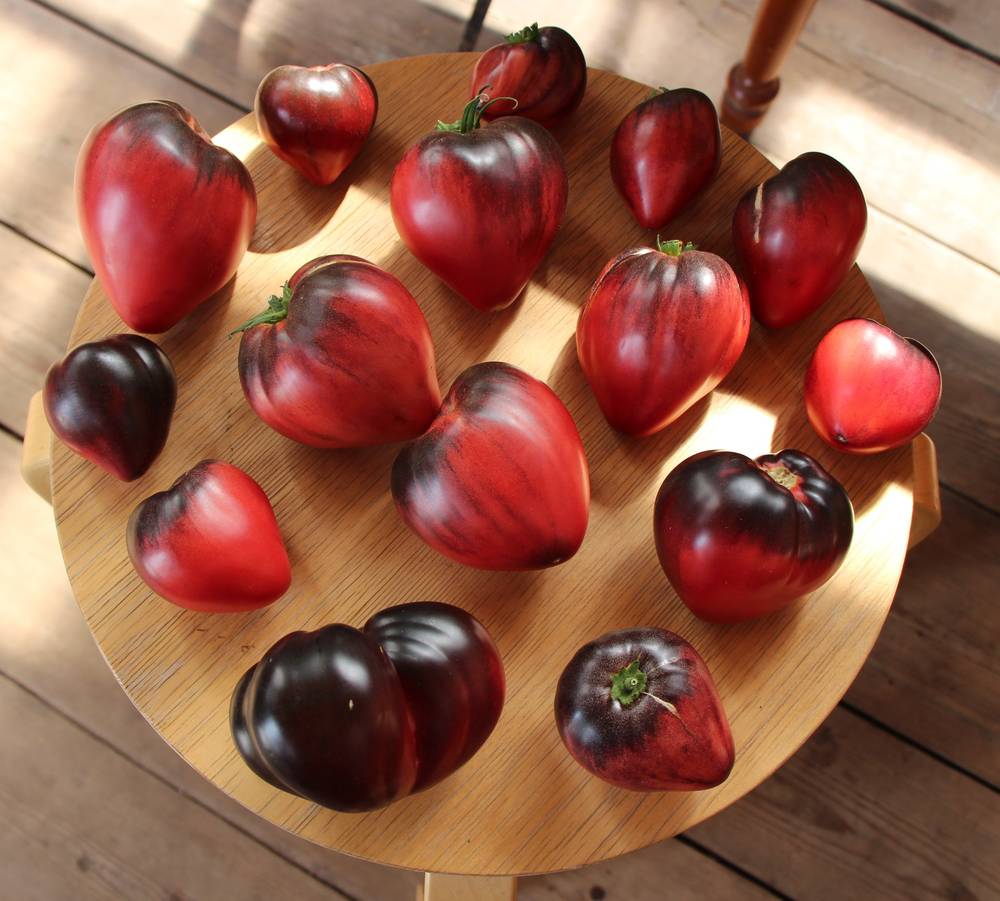
An amazing variety, the crown jewel of the greenhouse! Heavy producer, beautiful, and tasty! Long harvest window and holds up well in storage.
Out of 5 plants, two grew without any antho (blue shoulders), I used seeds from two different sources (Sofia27 and Olesya), but I actually really loved the flavor. I’m a big fan of firm but juicy oxhearts with a noticeable sweet kick.
Edited December 21, 2018 by Svetikk
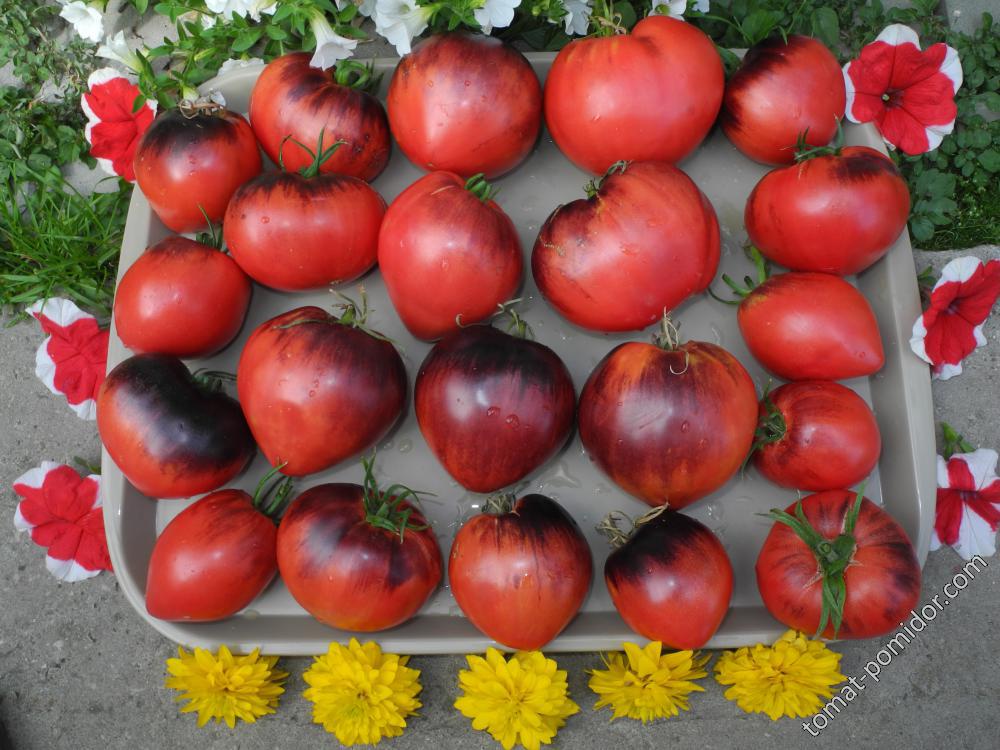
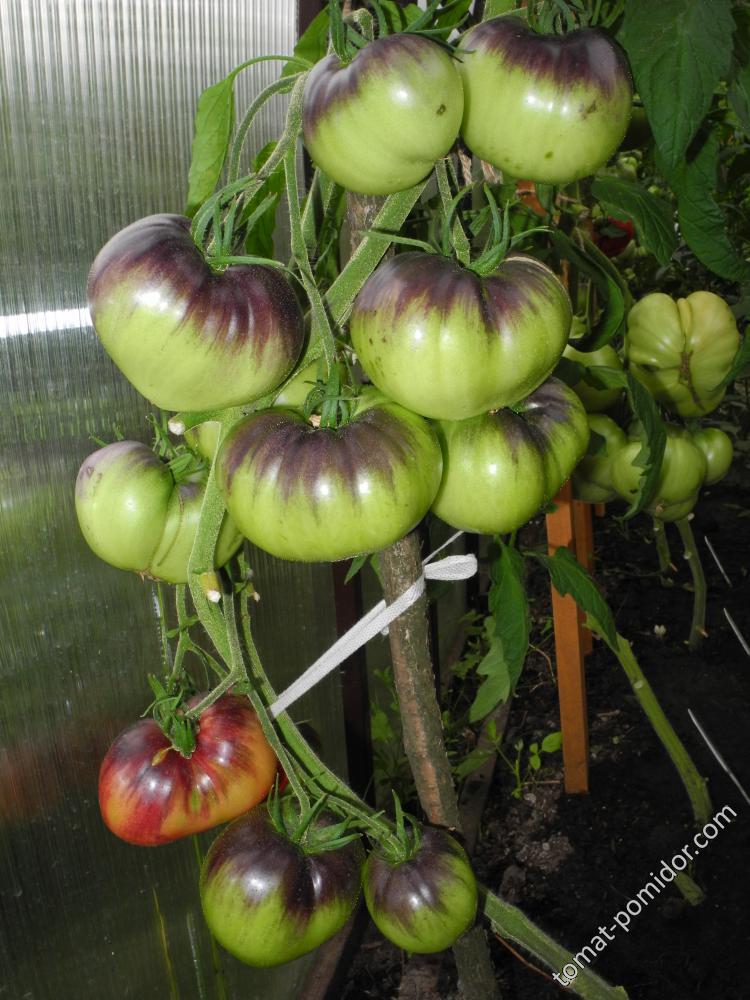
My Sergeant seeds came from Tomatanya.
Beautiful, absolutely! But the taste and yield just didn’t blow me away…
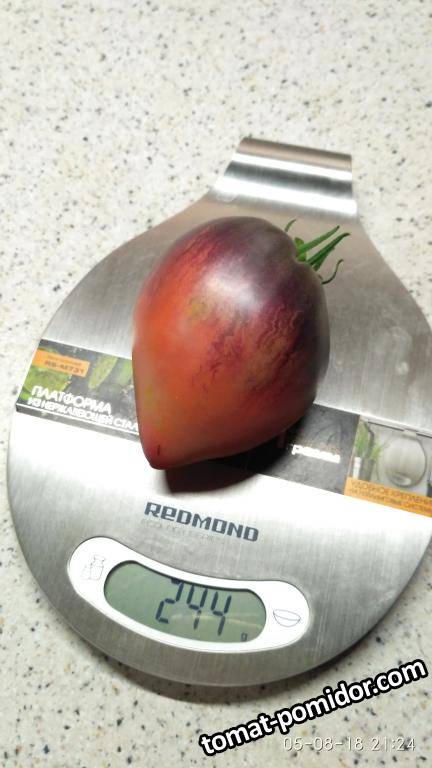
Quote from Svetikk:
Out of 5 bushes, two turned out without anthocyanin… but I really liked the taste…
My blue one was a looker, but this one is gorgeous too! Hats off 👍
And I WANT to grow it so bad 😋 But I’ll have to wait till next year. No room left at the inn this season! Quick question: will the seeds grow true to type, or will they segregate? Sveta, let us know! Are you growing it again?
Quote from Tatyana Kemerovo:
And I WANT it passionately 😋 But now only in a year… will there be segregation from its seeds? Svetochka, will you tell us? Are you going to repeat it?
I honestly loved the pink Sergeant just as much as the blue-shouldered one – the fruit was tasty, heavy-yielding, beautiful, and pumped out tomatoes for a long time. But I won’t be repeating it this season; I just don’t have the space with so many new varieties to test.
That’s the ultimate gardener’s dilemma! That’s fine, someone else will definitely grow this beauty out and report back to us!
Trick question: does a pink Sgt. Pepper officially exist? I couldn’t find any info on it. Who’s the breeder?
Lida, I read on a foreign forum about 3 years ago that during the early F-generations, a breeder had this line segregate into antho and non-antho fruit. Because the variety was already heavily hyped, the breeder basically started selling seeds from the segregated lines to cash in. It stuck in my memory because at the time I was appalled that people would sell unstable segregations just to make a quick buck.
Quote from ElenaN:
Lida, I read about 3 years ago on some foreign website that in the early stages of F stabilization, this Sergeant split into fruits with anthocyanin and without…
Lena, unstable lines are part of the game. It takes a breeder up to ten years to fully stabilize a variety.
Quote from ElenaN:
…this breeder, apparently to get additional income, began to sell seeds from the segregated lines.
There’s absolutely nothing wrong with offering both lines. Nobody lied; everyone knew the variety was new and prone to segregating. The detailed, year-by-year history of this line was posted online forever, so it was easy to see exactly what generation you were buying. It just hit the commercial market and seed swaps a bit early. By the time it went on sale, it was common knowledge that pink and antho lines existed, and both had already found their fans in the community.
These days, tons of people trade unstable lines. A lot of folks even buy crossed seeds labeled “grow your own variety” (basically F2, F3, F4-F5 stuff). Marianna’s Seeds used to stock a lot of those. I bought experimental lines through Marianna from guys like Blane and Gates all the time.
Personally, the pink version was way more productive for me and much more resistant to humidity-related diseases.
Sgt. Pepper’s just didn’t work out for me. The seedlings didn’t seem too fragile, but once in the greenhouse, they turned completely weak and spindly. Heavy feeding didn’t help at all; the plant split into 4 leaders and flat-out refused to throw any suckers. It pushed out massive, sprawling flower clusters and set a ton of fruit, but the tomatoes barely sized up. A few hit 100g, and the rest stayed cherry/cocktail size. I have no idea what I did wrong. On the flip side, they were all incredibly sweet and tasty, from the first tomato to the last.
Edited September 6, 2019 by Irina Fedorova
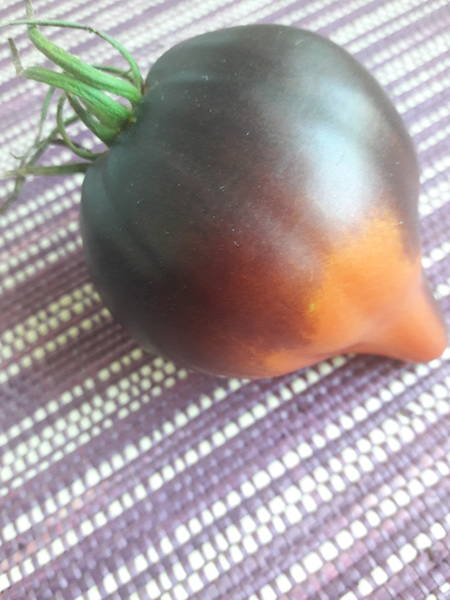
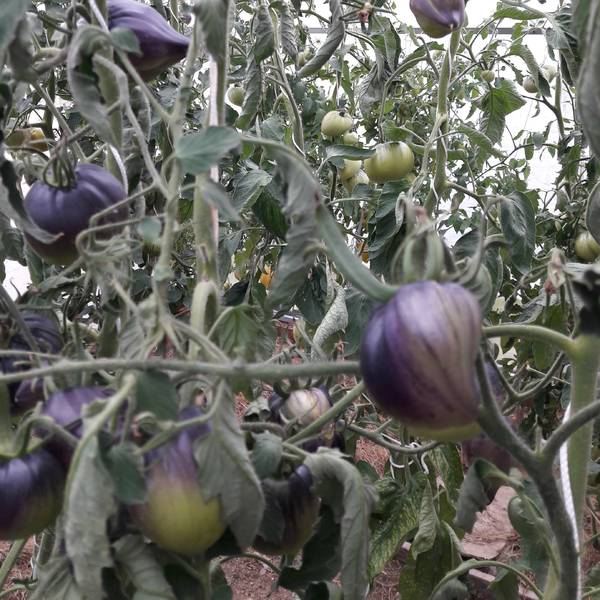
I grew this one this season too. Loved the flavor and the yield. It looks incredible sliced with that deep, juicy raspberry flesh. Started ripening in early July and is still pumping out fruit now. The plant ended up branching into four leaders. Out of all the antho tomatoes I’ve tried, this is definitely earning a permanent spot in my garden.
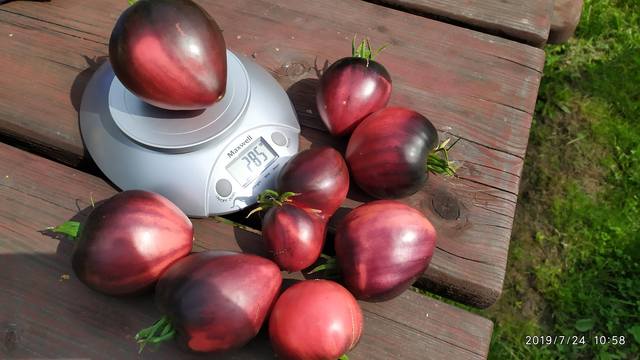
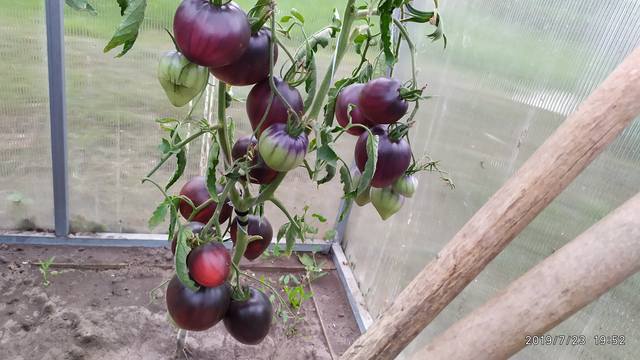
Still my favorite for the 2nd season running.


Grew Sergeant for the first time this year. Wispy vine, decent yield. I actually really liked the flavor, though it was my first time trying an antho variety. And obviously, it’s a total stunner both on the outside and when sliced.
Originally used seeds from TomaTanya, but this year I grew from my own saved seed. Tasty and gorgeous, but it still runs a bit late for my liking (
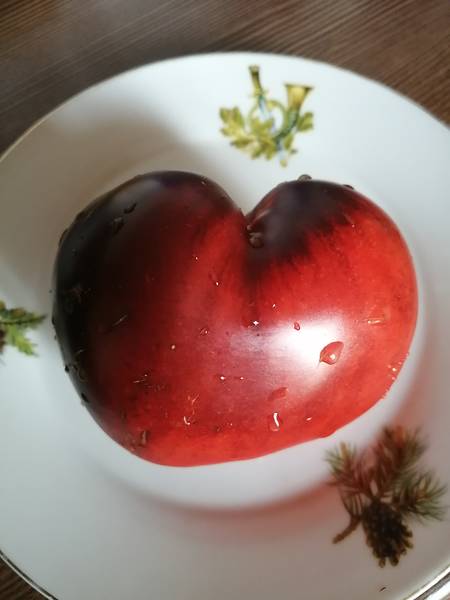
Can’t seem to upload the cross-section photo (
Got it)
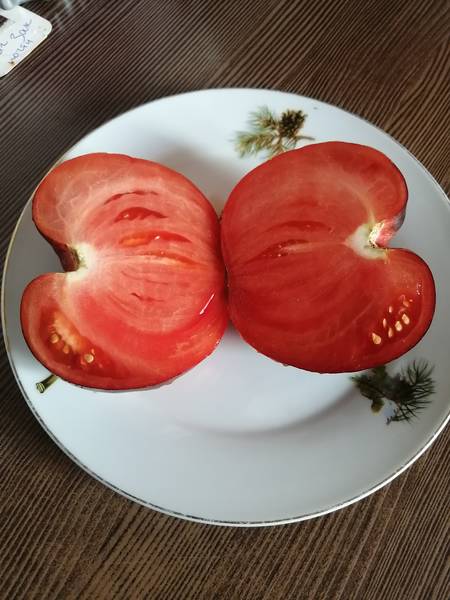
This variety definitely made an impression. It did take quite a while to build up sugars, though – about three weeks. Probably due to our unusually cold and rainy summer. I’ll definitely be planting it again next year.
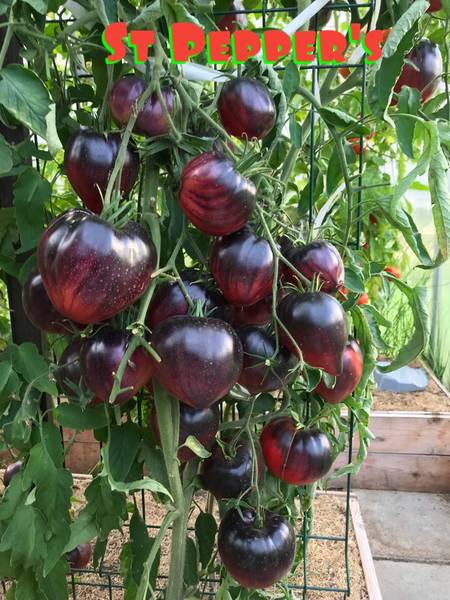
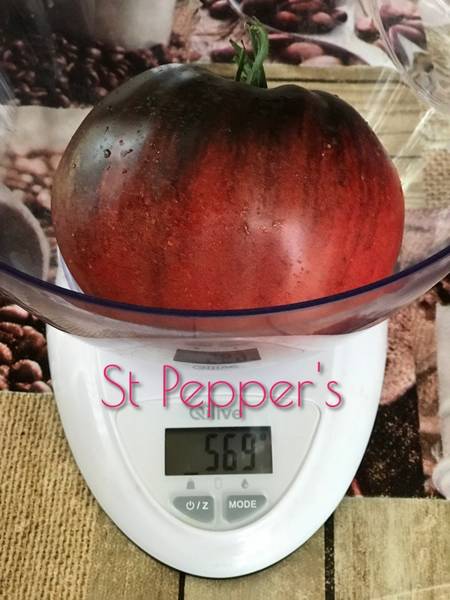
Sergeant was bad luck for me))) I accidentally snapped the main leader off right above the 2nd cluster, and there wasn’t enough time left in the season for it to push a new leader. So I can’t really comment on growth and yield. The vine is super fragile, though; it’s normally pretty hard to accidentally decapitate a healthy tomato plant with your bare hands…
In my outdoor beds this year, basically all the antho tomatoes wilted badly during the heatwave, and Sergeant was no exception. I don’t know the exact cause, whether it’s some root disease (but I researched a bunch of wilts and the symptoms didn’t match), or just a weird reaction to the extreme heat and dry winds (heavy watering didn’t help, shade cloth barely made a difference). Once temps dropped back to +22°C (71°F), everything bounced back perfectly.
Beautiful! Man, it is so beautiful! The fruit set, the ripening colors, and sliced up in a salad. Beautiful, beautiful, beautiful!!!
The flavor was a 50/50 split for me. Amethyst Jewel seemed a bit sweeter, but still nothing mind-blowing. My mom, however, said these were the best tomatoes I’ve ever given her. The secret to our different opinions: I’m obsessed with black and green varieties that are sweet, spicy, and punchy, whereas she’s a die-hard fan of classic pink oxhearts.
Edited October 6, 2019 by Liaro
A stunning variety. I grow it every single year.
Sergeant actually does pretty well in containers too.
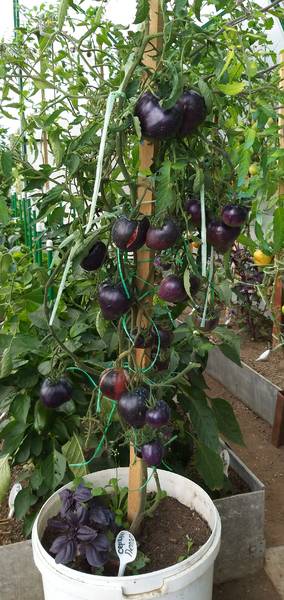
Quote from Valeriy1968:
…very beautiful tomato shape combined with a dark purple color creates the impression not just of a food product, but rather a masterpiece of breeding art. It’s beautiful – there’s no denying it. Other parameters – about the same as everyone else who grew it. The bush is quite “frail” both as a seedling and in the greenhouse.
Hands down the highest yielding and most beautiful variety in my garden this season. Seeds from @Olesya (it’s a small world, thank you!). Responded great to fertilizer and full sun, mid-season ripening (Siberian Tiger, growing right next to it, beat it to the first ripe tomato by 10 days). Very resilient, pumped out fruit on 3 leaders all the way to the top of the greenhouse, and ripened up perfectly indoors.
Also, thanks to whoever gave the tip to let them sit on the counter for a while after picking – -the flavor definitely improves.
Edited November 21, 2019 by Mama Antona


Oh, guys! I’ve been dreaming of growing this…. Hooray! Thanks to the ladies on the forum, I finally got to grow it. Gorgeooous….
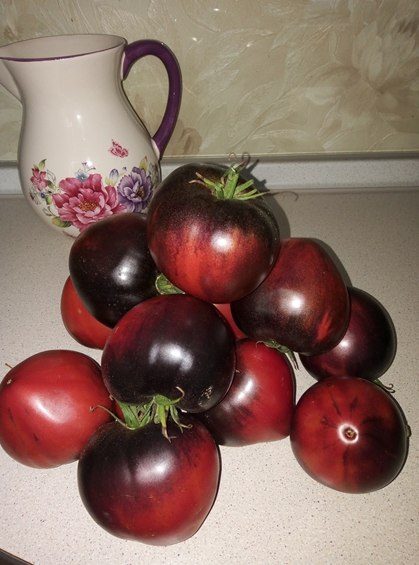
I grew Sergeant for the first time this year. The plant habit is definitely frail, but the yield was top-tier. As for the taste, it was hands down the tastiest… piece of grass I’ve ever eaten. Absolutely zero flavor. I’ve seen a few people here mention theirs turned out the same way, but since the majority give it an “excellent” rating, I still saved seeds. I’ll give it another try, so the jury is still out.
The vines are super thin; I constantly felt the urge to hit them with fertilizer. The tomatoes are stunning, but the flavor really didn’t do anything for me. Granted, everyone I gave them away to couldn’t stop praising them.
Edited January 17, 2020 by Khrizantema57
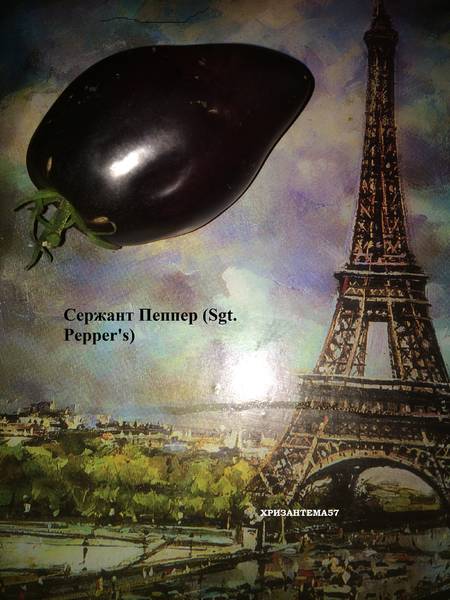
Grew Sergeants for the second year in a row, and they turned out just as gorgeous as in 2018. Even though the vines are spindly, it’s just so pretty, elegant even. Planning to grow it again this year. I’m also going to plant Sgt. Pepper’s Bronze right next to it.
Edited January 17, 2020 by Olga Sh
Grew it for the first time in 2019. Seeds from Ilya Korolev. I loved the tomato. The plant has a weeping habit and isn’t aggressive (doesn’t take up much real estate). But the yield totally blew away my expectations. The tomatoes are delicious and juicy. The skin is thin, but tough. Big fan. Can’t figure out how to post a photo.
Growing this variety for the first time. I think I might have mixed up two labels when sowing… Pretty sure the one in the photo is Sergeant. Ladies, who’s good at IDing varieties from photos? Is this definitely SP?
Looks very similar. Just wait till it starts to ripen; you’ll know for sure when the shoulders turn blue.
I’ll show off my Pepper too, really liked it 😋
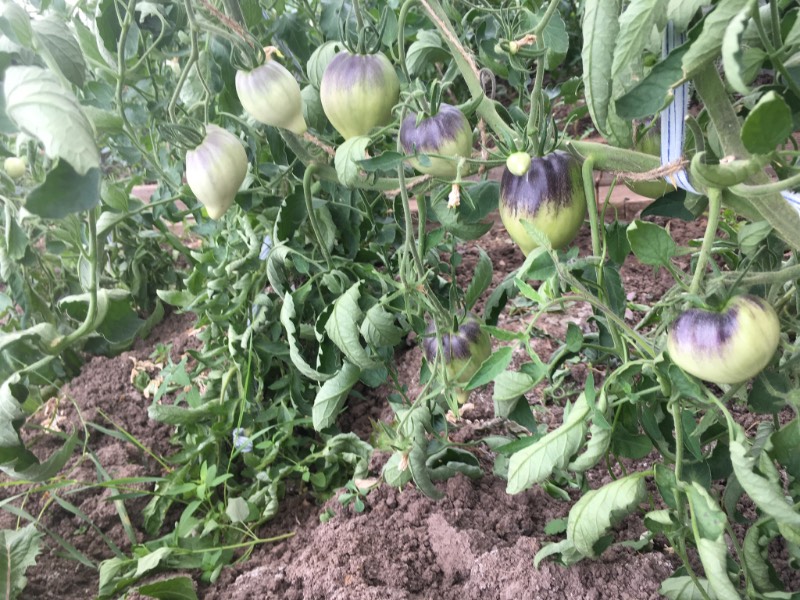
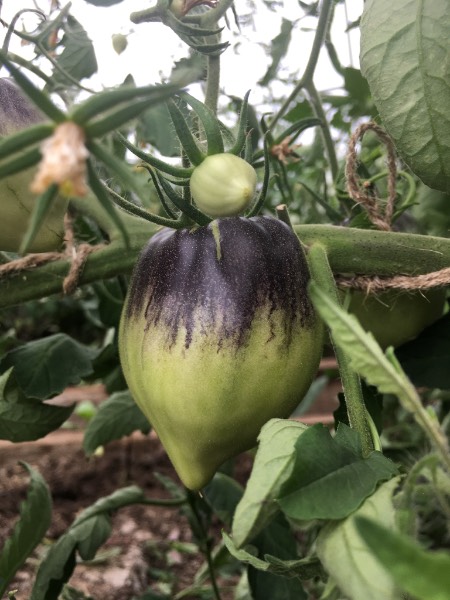
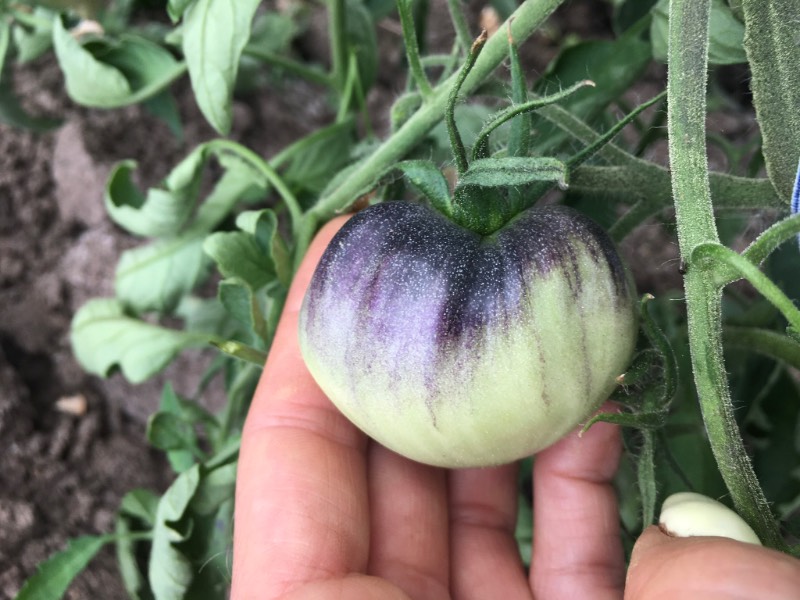
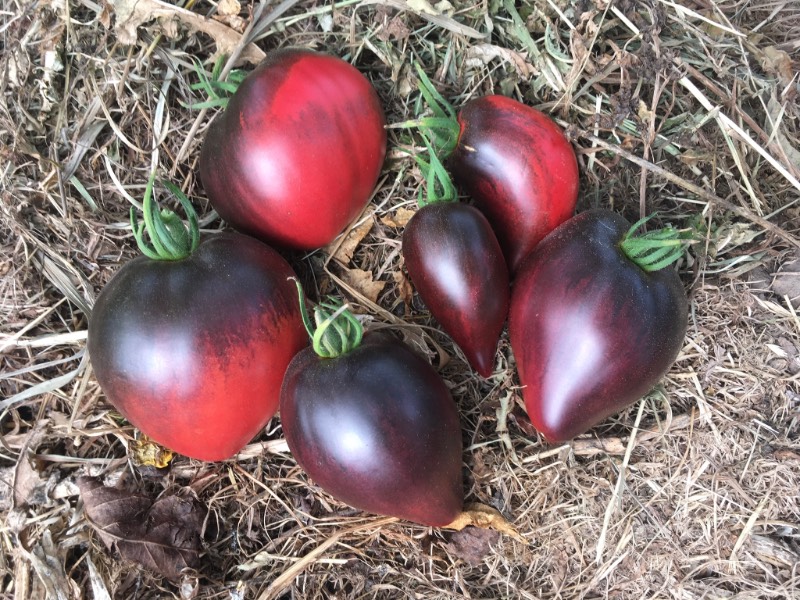
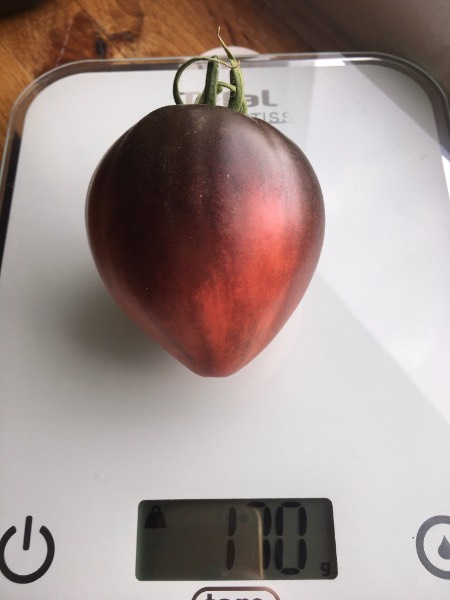
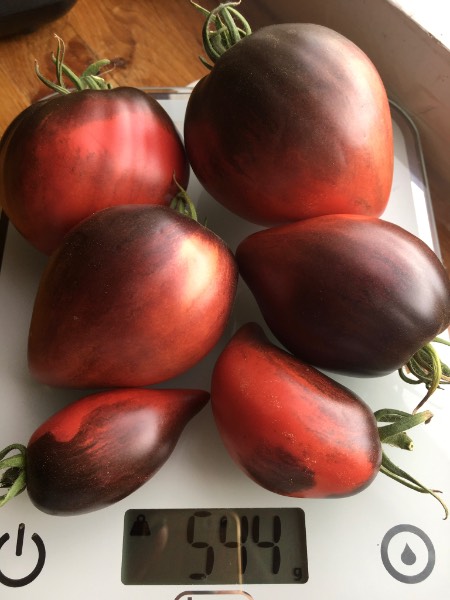
Hey everyone! I saw some seed vendors online offering “Sgt. Pepper’s Bronze.” Can anyone tell me if this is actually a real thing?
I grew Sergeant this year along with its clone, Black Magic (from Siberian Garden). Both varieties are identical in plant habit, fruit shape/size, and flavor. The only difference was the yield -Sergeant was definitely more productive.
I planted two Sgt. Pepper vines and pruned both to 2 leaders. You could easily run them with 4, but I planted two to a hole (two plants per planting hole). It performed as a solid mid-season variety for me. Fruit set was good. But the flavor didn’t blow me away at all; it turned out either sour-bland or just completely flat. Magic was growing right next to it and tasted exactly the same. I definitely won’t be growing it next year. I’m going to try Kas 21 instead, and maybe after that, I’ll give SP one more shot just to be sure. For me, flavor beats looks every time, and there are just too many other varieties I want to try! Aside from that, Sergeant is definitely a heavy-yielding, good-looking plant.
Edited October 31, 2022 by Yuliya Antsifrova
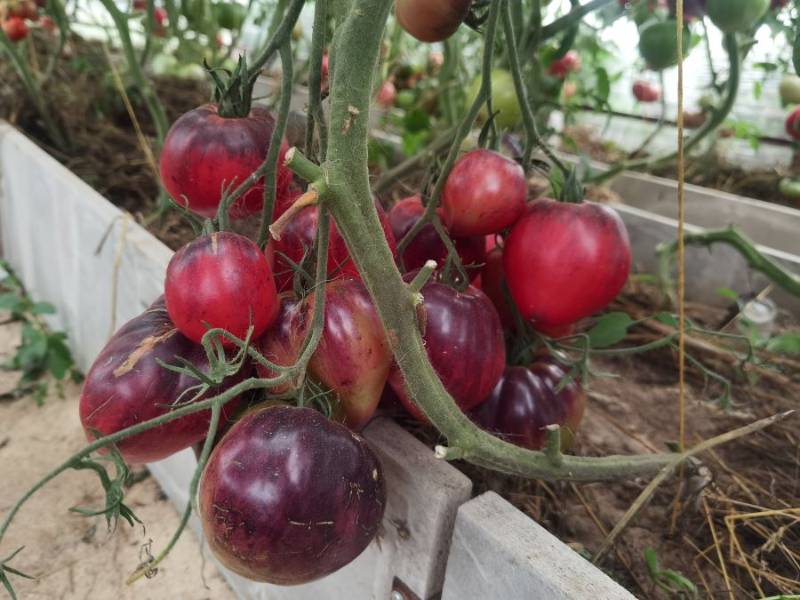
Quote from Yuliya Antsifrova:
But the taste didn’t impress, it turned out bland-sour or just bland.
Same exact experience here. If you’re going to grow it, do it strictly for the looks.
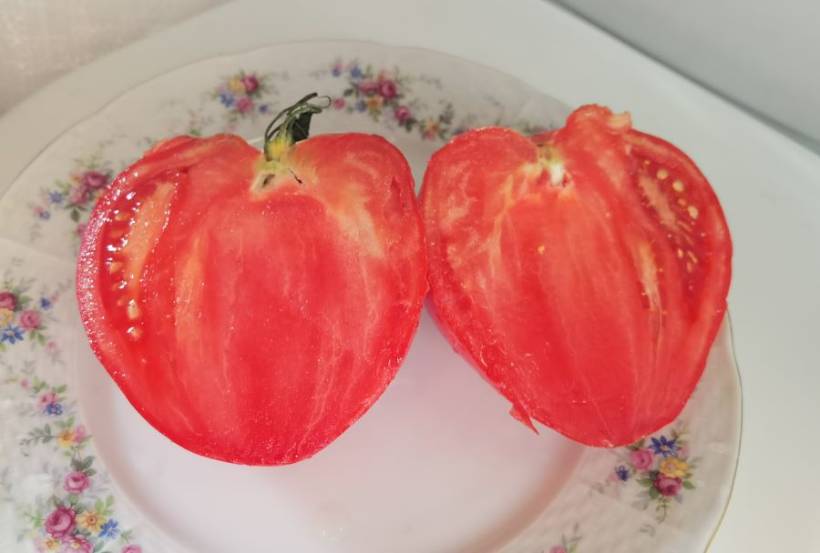
Meanwhile, I’ve been growing Sgt. Pepper’s for three years now, and I absolutely love it. The photo shows a tomato I saved for seed; the antho coloring had almost completely faded by the time I processed the seeds.
Edited November 26, 2022 by NatalyaG
Typo
Quote from Yuliya Antsifrova:
But the taste didn’t impress, it turned out bland-sour or just bland.
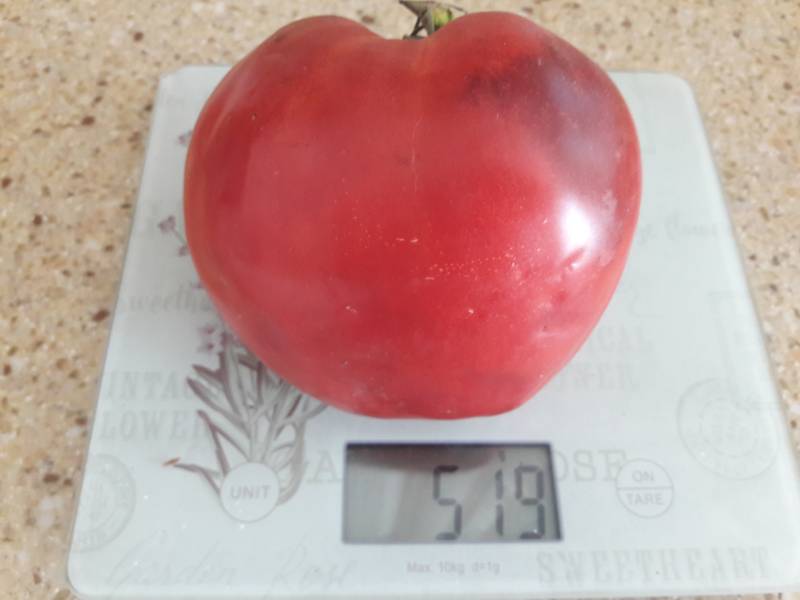
For me, it only showed its true colors in year three. The first year I used traded seeds. Years two and three were from my own saved seed. It finally unlocked its true flavor, perfectly balanced! It’s now earned a permanent spot in my garden!
Quote from Marat:
For me it showed its true self in the third year… Finally it revealed its taste – balanced! Now it’s a permanent resident!
Ugh, I hate finicky varieties. I prefer immediate results, either it’s good from day one, or it’s out))
I grew Sergeant from Sveta @777’s seeds. It was beautiful, but the flavor was super average.
I shared the same seeds with Olya @olyamit, and hers turned out delicious–she actually begged me to give it a second chance.
I grew mine in sandy soil. I could try it in clay, but honestly, there are just too many other varieties to test out.
I’ve been growing it for 2 or 3 years now. To my taste buds, it’s just mildly sweet/bland. I prefer a bold, rich tomato flavor, so taste-wise it’s just “meh” for me. BUT this year they all ripened at once right when I was making sauce, and wow-it makes an incredibly gorgeous dark-raspberry sauce. You can’t take your eyes off it, you just want to eat the whole jar with a spoon! Given how heavy it yields, it’s absolutely perfect for pastes and sauces. I don’t know what it is, but standard red-orange sauces just don’t look as appetizing to me anymore.
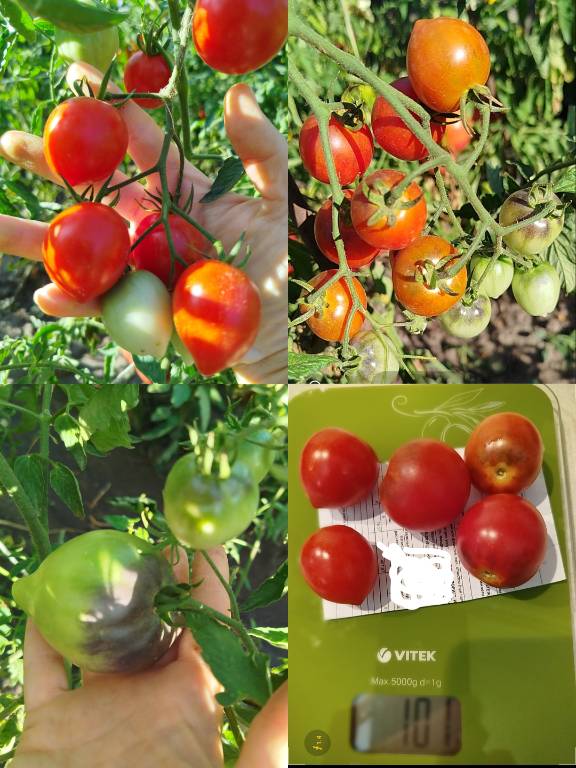
This tomato is acting so weird this year. The bottom fruit is huge, but the top ones are small and look completely different. I’m getting round red ones alongside pointy ones with dark antho shading.
Quote from Marusha:
This tomato is so strange this year. The bottom fruit is large, the top ones are small and different. Round red ones and pointy ones with dark shading.
Here are the different shapes it’s throwing. I haven’t dealt with segregating lines before. Could it be segregating?
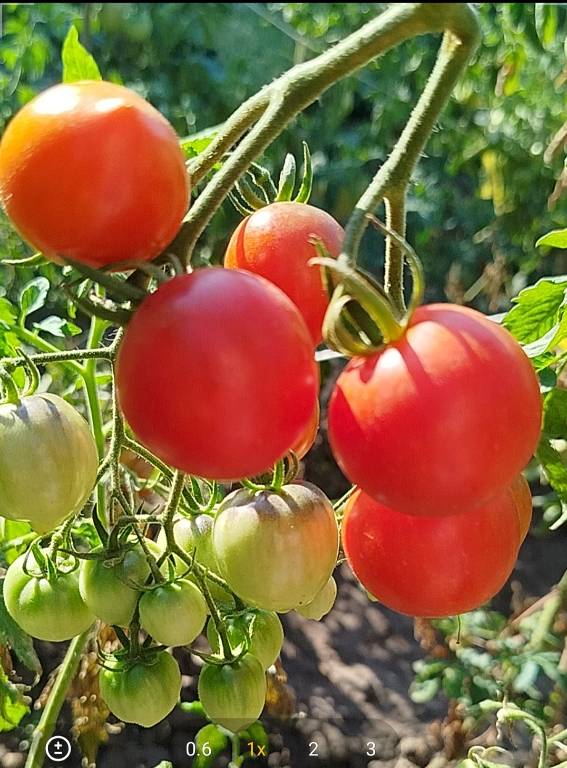
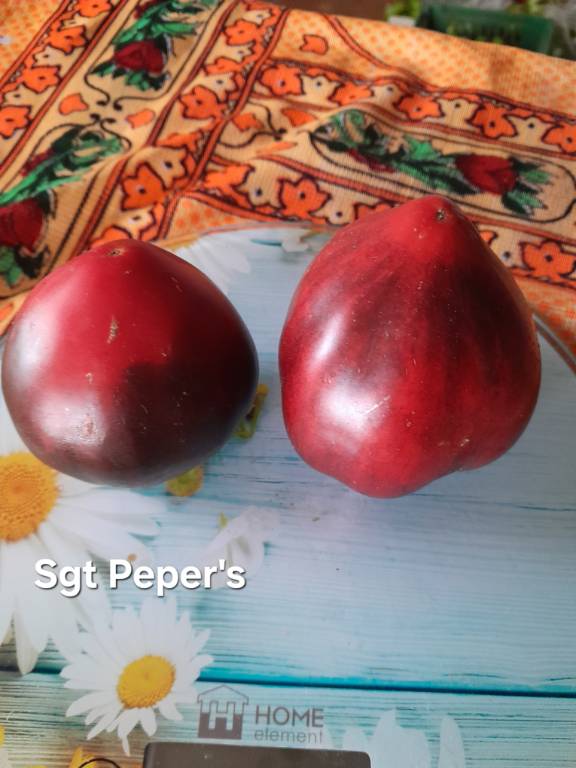
Now that the hype train has died down and seeds are being sold on every corner, I’ll throw in my two cents. It was a total dud for me. If you’re a hands-off gardener (neglectful maintenance), the yield is at the bottom of the pack. The flavor is definitely an acquired taste. GWR (Green When Ripe) exotics really hit the spot for me; I’ve tried about 7 varieties of those so far. But Sgt. Pepper, hard pass. Just tasted like bland mush. Grow a couple of plants just to test it out yourself, especially since seeds are super easy to find now.
Quote from skrupul:
Since the wave of admiration has subsided… It didn’t do it for me. Because in terms of yield with neglected maintenance of the plants, it’s an outsider…
I actually find it super tasty. The yield isn’t mind-blowing, but it reliably puts out about 3 kg (6.6 lbs) per plant outdoors. Still, it’s delicious, sweet, and firm. I live down south in the Krasnodar region. It’s been a permanent staple in my garden for 5 years now. I grow at least one plant every single year.
Quote from Irina193:
I actually find it super tasty. The yield isn’t mind-blowing, but it reliably puts out about 3 kg (6.6 lbs) per plant outdoors…
It’s tasty and productive for me up here in the Kaluga region too. It’s actually my husband’s favorite tomato. A bit bland for my personal taste, but he loves it. I plant a couple of vines in the greenhouse every year.
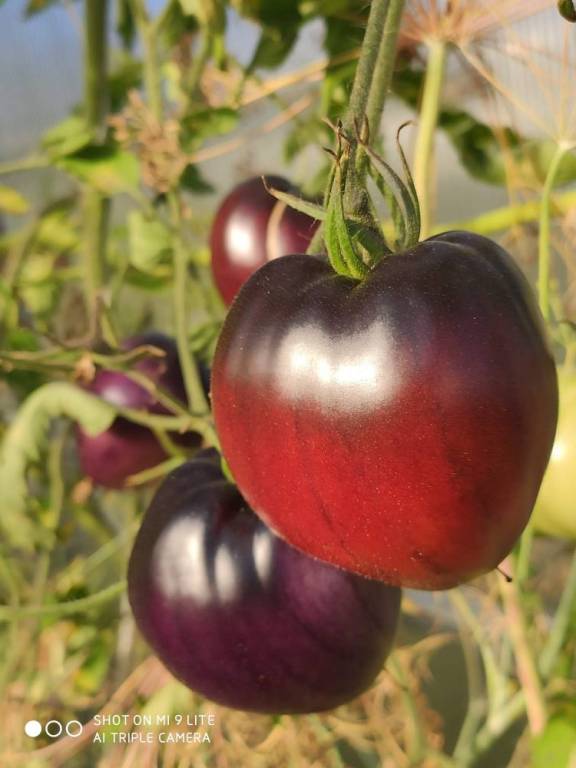
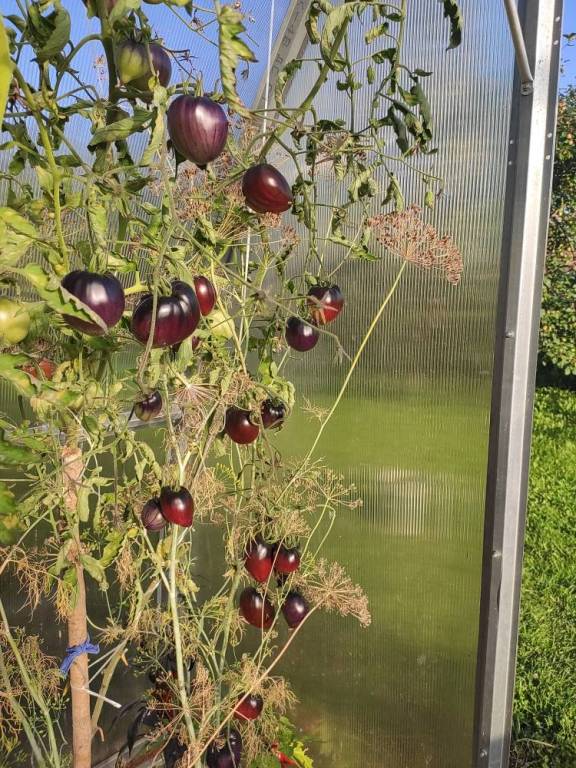
I suspect this variety is highly sensitive to sun exposure. It probably performs best in regions where outdoor tomatoes thrive. This summer, my Malachite Box (Malakhitovaya Shkatulka) growing right next to it yielded twice as much and was hands down tastier. But to be fair, last summer here in the Leningrad region was pretty awful.
Edited January 27 by Drosera