Quick Summary of Tsifomandra
- 🌍 The Naming Mystery: In the West, Cyphomandra refers to the Tamarillo (a tropical tree that produces fruit). However, in Russia and Ukraine, seed companies adopted the name “Tsifomandra” for regular tomato varieties to market them as incredibly vigorous, tree-like plants with massive yields.
- 🧬 Strain Differences: This forum thread highlights that there are at least two distinct tomato varieties circulating under this name:
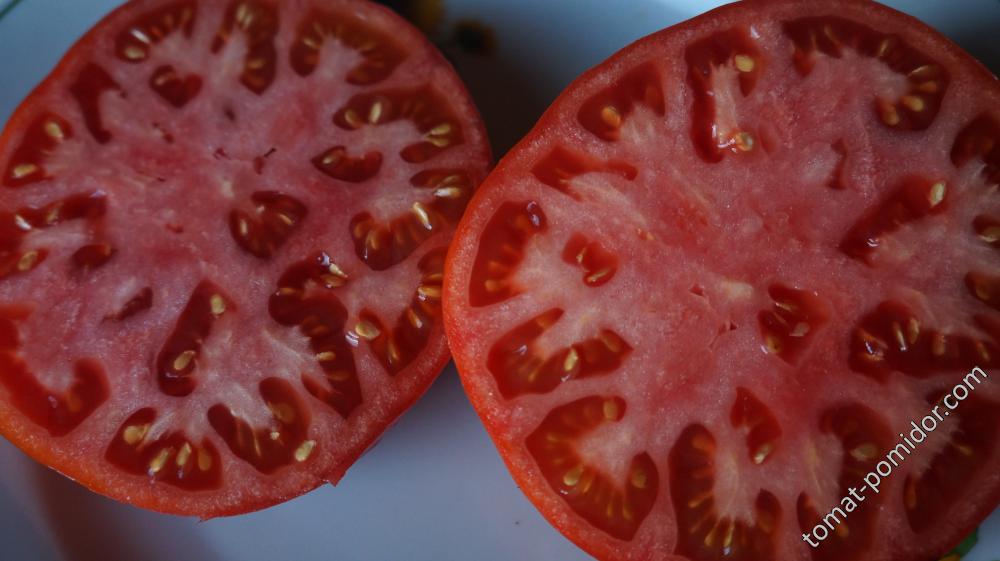
- The Siberian Garden Strain: Produces large, pink, heart-shaped (oxheart) tomatoes with a very sweet, fruity flavor. Interestingly, it starts as a stocky, rugose “tree-type” (dwarf) seedling, but later grows into a tall indeterminate plant in the garden.
- The GL-Seeds / Ukrainian Heirloom Strain: Produces large, round, red beefsteaks (350–400g / 12–14 oz). These are very firm, uniform, and have classic tomato flavor. Lower fruits are used for slicing, while upper fruits are perfect for canning.
- 🌿 Plant Habit: Both strains are indeterminate (tall) and extremely vigorous, requiring strong support.
- 👅 Flavor: The pink oxheart version is celebrated for its sweet, fruity profile with almost no seeds, while the red version is a classic, meaty, “old-fashioned” multi-purpose tomato.
Tsifomandra
The seeds were from Galochka (Esme).
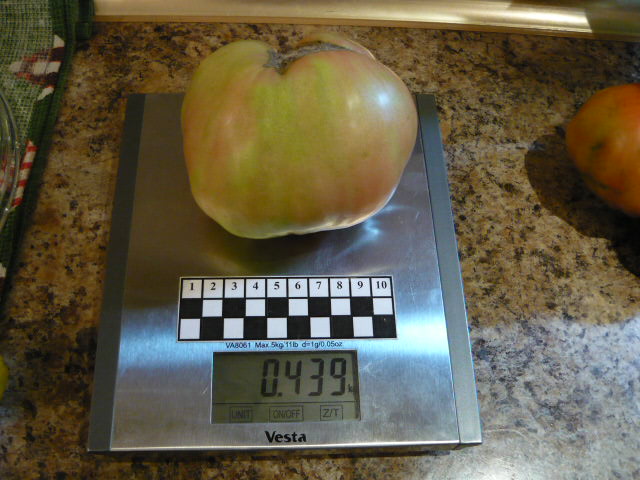
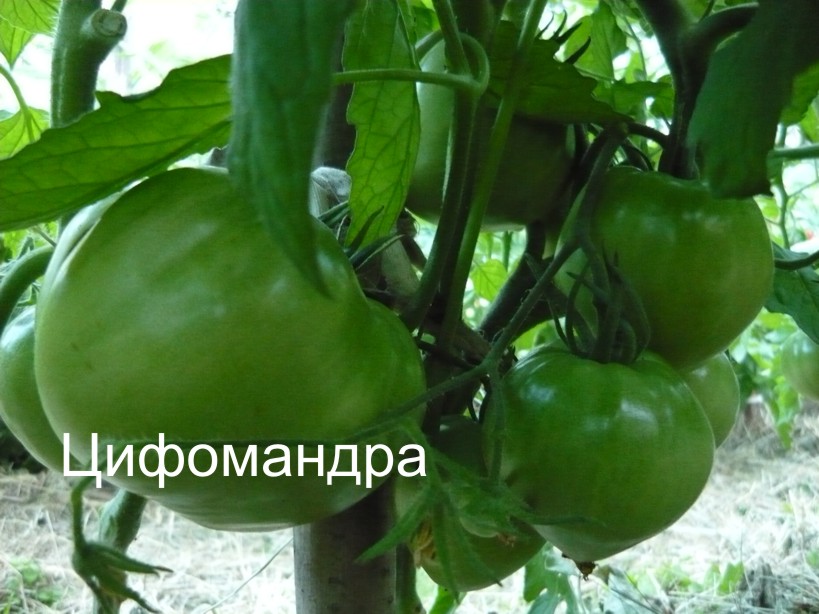
I grew it in open ground. I would say it acted like a semi-determinate, it was about 100 cm (3.3 ft) tall for me. The bush was rather wispy, so I planted 2 plants in 1 hole. Pruned each to 1 stem. The yield was sufficient, but the branches weren’t breaking under the weight. Maturity is mid-early. The fruits are large, heart-shaped, and pink, but there were reviews on the forum saying it’s supposed to be red ❓. Out of all the oxhearts, I liked the taste of this variety the most; it seemed to me that it specifically had a fruity undertone.
Olyushka, you are a genius, 👍👍👍 I wish everyone did it like this.
Lidochka, many people are taking notes 📝. And you yourself have contributed a lot to the catalog (by the way, you inspired me with your own example 😉)!
I know of at least three Tsifomandras. The one above is grown from Siberian Garden (SibSad) seeds.
There are also seeds from Ukraine (from GL-seeds), from a St. Petersburg collector named Suvorov, and an “Amateur Tsifomandra” that I grew this past season.
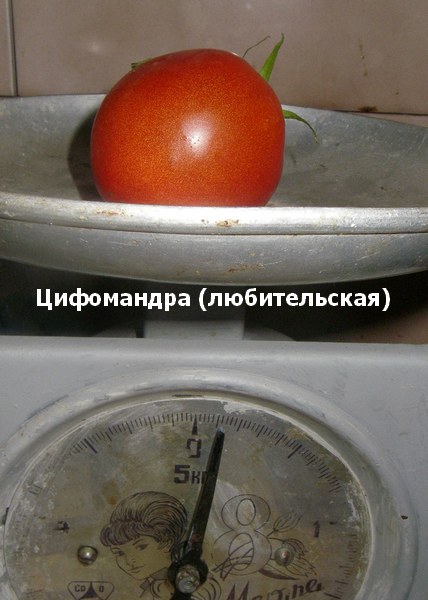
Amateur Tsifomandra:
My friend Irina Pavlovna ordered the seeds of this Tsifomandra many years ago from a hobbyist grower, and then shared them with me. I grew this Tsifomandra a couple of times, then didn’t get around to it for a while, though I had my saved seeds in reserve. The plant has a tree-type/rugose habit (shtamb), but it is an indeterminate (quite an interesting combination!). The bushes are beautiful, quite robust (but not spreading in width). My husband really liked the plants themselves. Mid-season, closer to mid-late. The fruits turned out somewhat small, though the bottom ones were a bit larger (we accidentally ate them). I remember when I grew it before, they were bigger. Normal, classic tomato taste, quite juicy fruits.
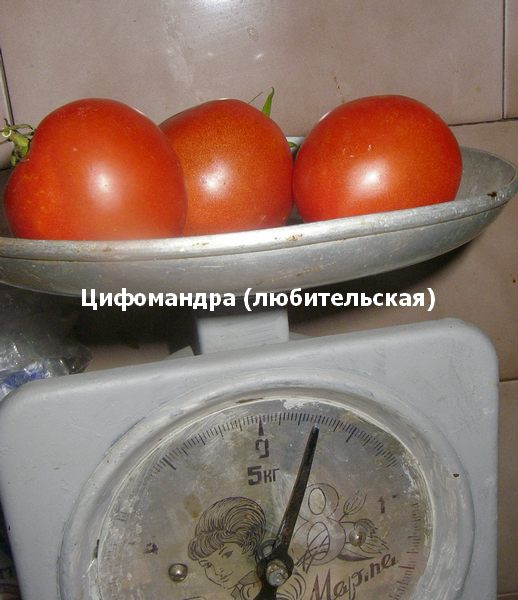
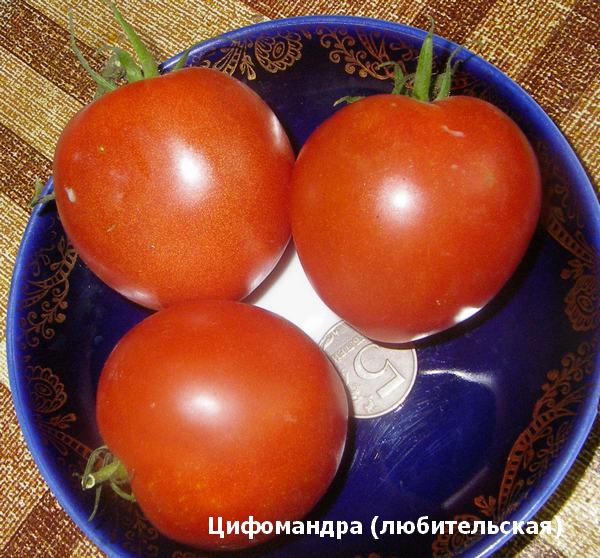
I was sent Tsifomandra seeds from Donetsk last year. I grew the seedlings and gave them away to a good home. This year I’ll sow the seeds again.
I just read the description… and recently, in my spare time, I was looking through my old notebooks. In one notebook that is about 28-30 years old, I stumbled upon a clipping from the magazine “Rabotnitsa” (Working Woman). Tamara Sumskaya from Voroshilovgrad wrote:
“This rare perennial plant is still not widely distributed here. Its fruits are plum-shaped, light orange in color. The taste is pleasant, sweet and sour. Cyphomandra is heat-loving, so it is planted in large pots, which are brought indoors for the winter. Grown from seed, it bears fruit in its third year, and from a rooted cutting – in the second.
…In open ground, an adult tree yields up to a thousand fruits a year, and indoors – up to 20 kg (44 lbs)… It can provide a family with fresh tomatoes all year round.”
Sveta, there is an actual botanical plant called Cyphomandra (Tamarillo). That is what Sumskaya was writing about. But the tomato we are discussing is just a tomato variety that was given the name “Tsifomandra”.
Tsifomandra 👍 it brought me joy again this year!! Productive, tasty.
Esme wrote:
I know of at least three Tsifomandras… There are also seeds from Ukraine (from GL-seeds)…
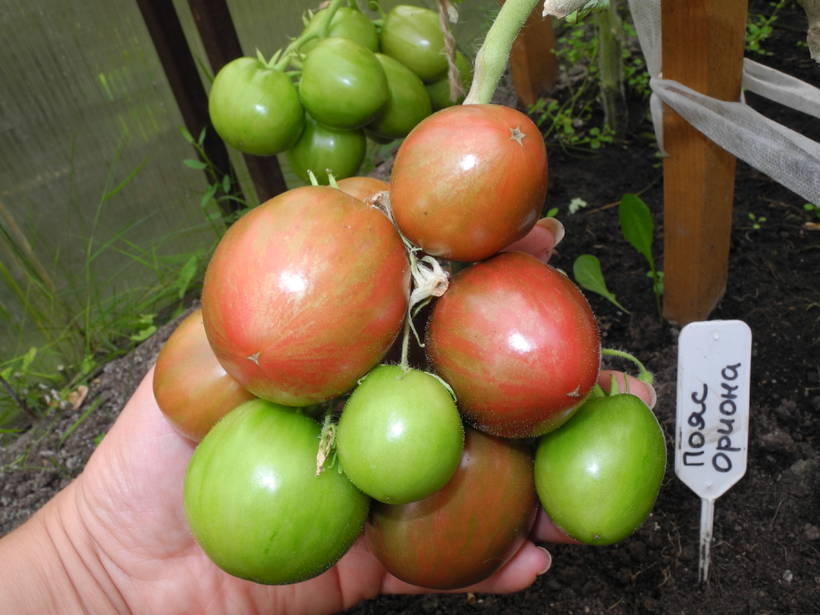
This season in the greenhouse, I grew the Tsifomandra tomato from saved seeds sent to me by Elena from the Bryansk region. She originally saved them from tomatoes grown from GL-seeds.
Description on the seed packet:
Mid-season variety, characterized by a concentrated harvest. Fruiting begins 105-110 days after germination. The plant is vigorous, stem is strong, up to 2 m (6.5 ft) tall. The fruits are even, round, smooth, bright red, weighing 350-400 g (12-14 oz), of high taste qualities. 5-8 fruits form in an inflorescence… Harvested fruits store well without losing taste. Ripe fruits can stay on the plant for a long time without falling or cracking.
It’s a good, productive, classic juicy red tomato 👍 The taste is pleasant, good for both fresh salads and processing. The fruits on the upper trusses are a bit smaller, perfect to fit into a canning jar.
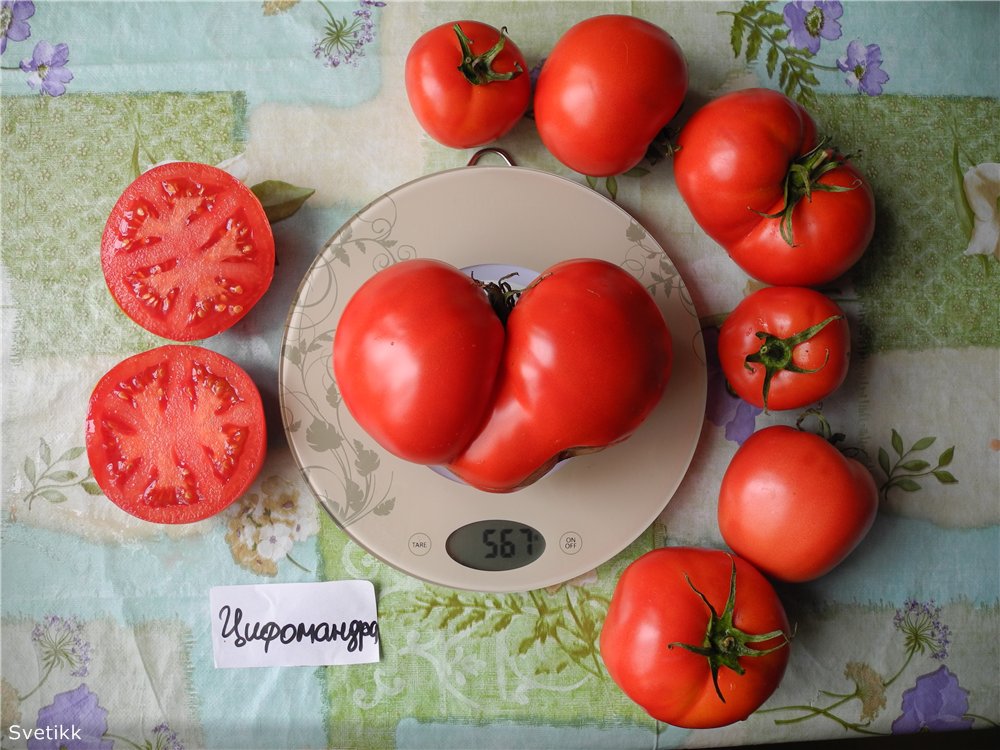
Sveta 👍
Girls, I bought a huge pink heart-shaped tomato for seeds from a grandma on the street. She said it was Tsifomandra. But on the internet, it says Tsifomandra is a tree tomato! I went back to her the next day – thinking maybe she mixed something up, but she swore up and down, beating her chest, that she even kept the original seed packet and that is the name. Does that mean she might not be lying?.. Do pink, heart-shaped Tsifomandras that weigh 600 grams (21 oz) actually exist?…
Is this variety easy to grow? And which one is best suited for Central Russia? Since I don’t have a greenhouse.
Maiya, the grandma might have had a lucky off-type (crossed seed) in her packet.
Maiya, such a Tsifomandra does exist – from Siberian Garden (SibSad). I grew it and even shared seeds with some of our folks here.
Galina, did you like that Tsifomandra? I want to try it next year.
Maiya, we can be informal on the forum! Both my friends and I really liked the Siberian Garden Tsifomandra.
Thank you, Galya, that means I will definitely be planting it this year!
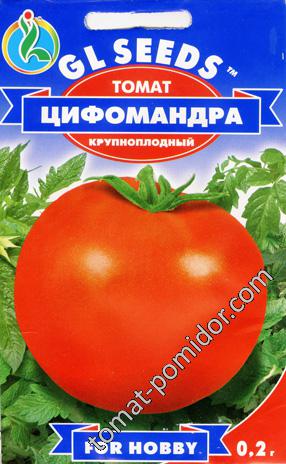
Here is the Tsifomandra I had. A mid-season variety. Vigorous bush. Fruits are red and tasty.
Lena, we were just discussing that there are several varieties with this name (Tsifomandra). Where is yours from?
Galyush! Lena’s Tsifomandra came from this source:
Esme wrote:
The plant has a tree-type/rugose habit (shtamb), but it is an indeterminate (quite an interesting combination!)
Galochka, how should I understand this – tree-type (dwarf habit) but indeterminate? Aren’t those mutually exclusive terms?
Sasha, in the seedling stage it looks exactly like a tree-type (shtamb) dwarf – stocky, with thick/rugose leaves, it doesn’t get leggy at all. But once planted in the garden, it just keeps growing and growing, it doesn’t terminate its growth. Something like that.
Lenochka, thank you, yes, we already mentioned that one here.
I had the one from GL-seeds. A vigorous bush. Yield was average, keeping in mind that it was planted in poor soil, so it barely grew before being transplanted into the ground, but it caught up later. By appearance, it looks like a commercial hybrid—the tomatoes are very firm, almost identical to each other. The taste is average.
I got mine from the forum and it was VERY productive. Yes, the bush is vigorous, didn’t get sick – just a handsome plant. Greenhouse grown. Planted out around April 20th. The fruits are firm and beautiful. The taste was a bit bland. I’m keeping it on my list though.
My Tsifomandra was from tobacco66. Shape-wise it wasn’t round, but closer to heart-shaped. As for taste, my grandson [12 years old] liked it the most out of twenty other red varieties. It set fruit on almost every blossom. I didn’t save my own seeds, but I ordered from the same source and already received them. Will be planting it again.
So far, it’s the leader in terms of weight, and the taste is excellent despite the weather. There are practically no seeds inside.
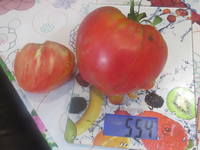
I remember this from when I was just a girl. My friend’s mom grew tomatoes year after year, and *only* this variety. Many neighbors wanted to get seeds because the tomatoes were huge. I gather that back then, people weren’t too keen on sharing seeds. We grew up and started gardening ourselves. One day my friend brought me some of their surplus seedlings. I saved the seeds and started growing the seedlings myself. Later I asked her why they grew these tomatoes for so long, assuming the original name was probably lost. She replied that it is Tsifomandra, and that her maternal grandmother used to grow these exact tomatoes. This variety satisfies their needs 100%. The lower ones go into salads (they are really huge), and the upper ones go into canning. I know they are trying other varieties now, as it’s interesting to try exotics, but they still plant Tsifomandra every single year.
.jpg.309e17db342c2cd840455ca12aafb78e.jpg)