📌 Quick Summary (TL;DR): Kumato
- 🌍 Origin: A patented commercial F1 hybrid developed by Syngenta, originating from wild Galapagos tomato genetics. Many home growers experiment by saving seeds from grocery store Kumatos to grow out and dehybridize in their own gardens.
- 🌿 Plant Habit: Indeterminate (tall), usually with dark green, sometimes wispy foliage. Highly praised for being incredibly sturdy, having a massive root system, and pushing very few rogue suckers. Renowned for its bulletproof disease resistance (especially against Leaf Mold).
- 🍅 Fruit Characteristics: Comes in standard sizes 3.5-5.3 oz (100-150 g) and cherry/plum variations. Deep brownish-black with green shoulders. Exceptionally thick skin designed for commercial transport and extreme shelf life.
- 👅 Flavor: Highly dependent on ripening. If picked early, it tastes like a bland winter grocery store tomato. If left to ripen fully on the vine, it develops a surprisingly sweet, intense, fruity flavor. Excellent for pickling due to the tough skin.
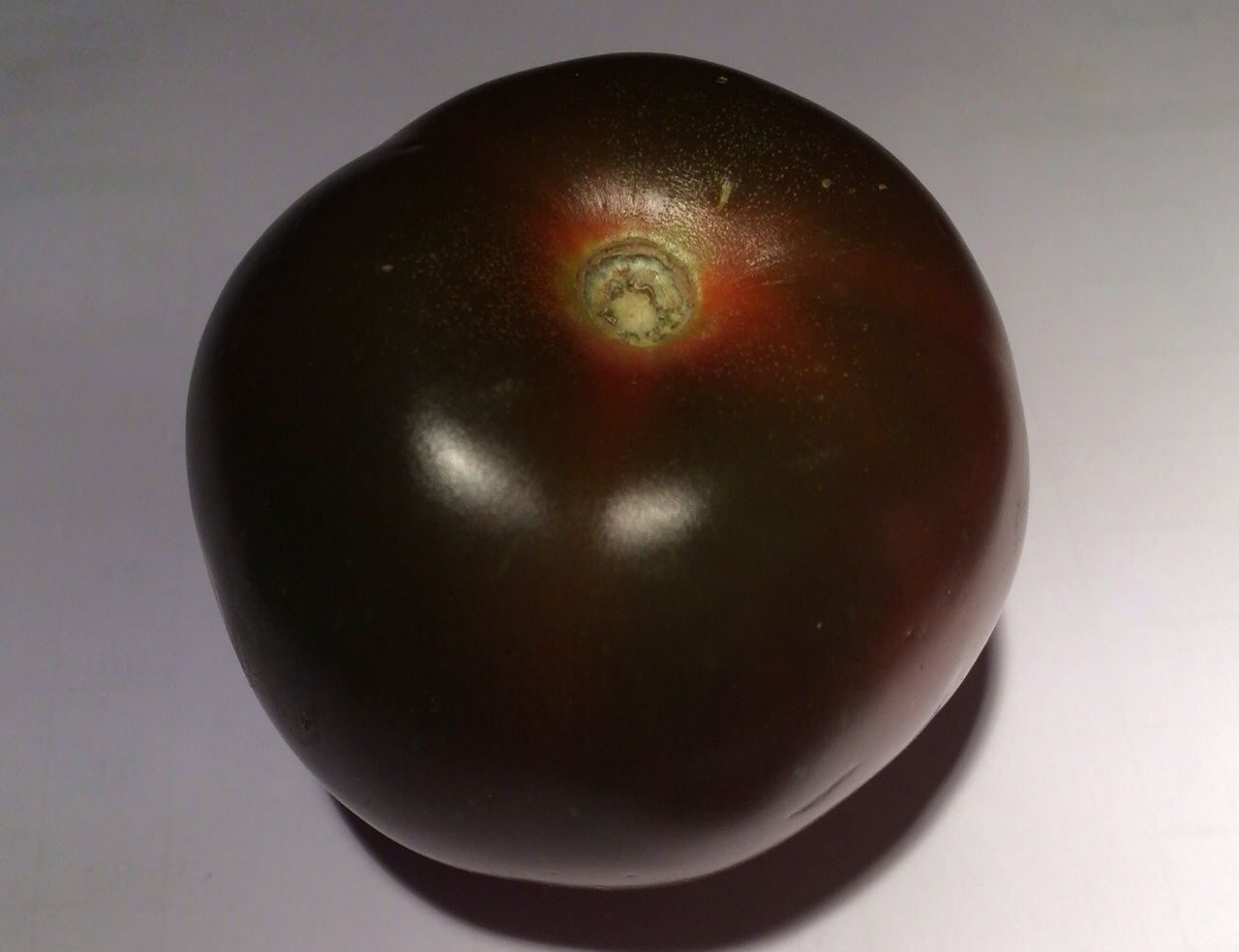
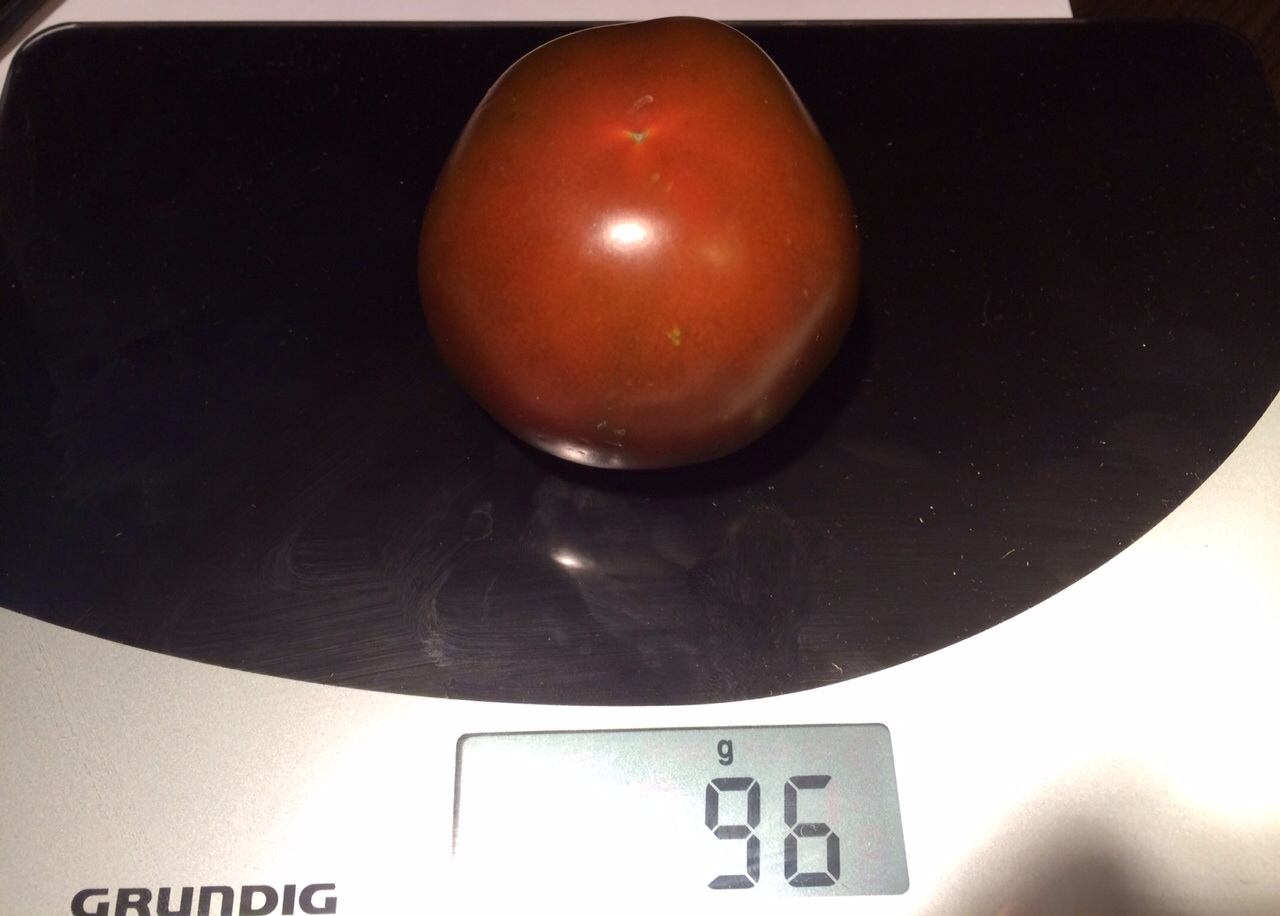
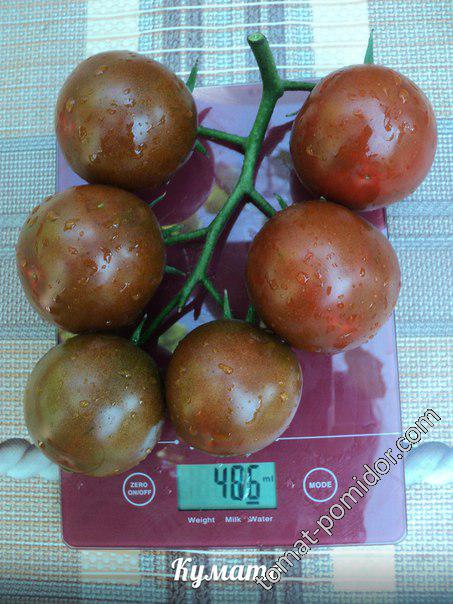
Today I saw Kumato for sale in the supermarket for the first time, about 4 bucks a kilo. I bought two tomatoes. I saved the seeds from them and gave them a taste test. There is practically no flavor, but at the same time, it doesn’t have that nasty plastic taste. The tomato is dense, very thick-walled, weighing 3.4 oz (96 g). Apparently, it has a massive shelf life. I’d like to know how it is generally used in the kitchen?
From reading the old forum, I understand it is indeterminate. How many tomatoes grow per truss? Here is my Kumato photoshoot:
Lena, they already discussed Kumato over here. I scraped out some seeds from a store tomato this year too 🙂 https://www.tomat-pomidor.com/newforum/index.php/topic,118.0.html
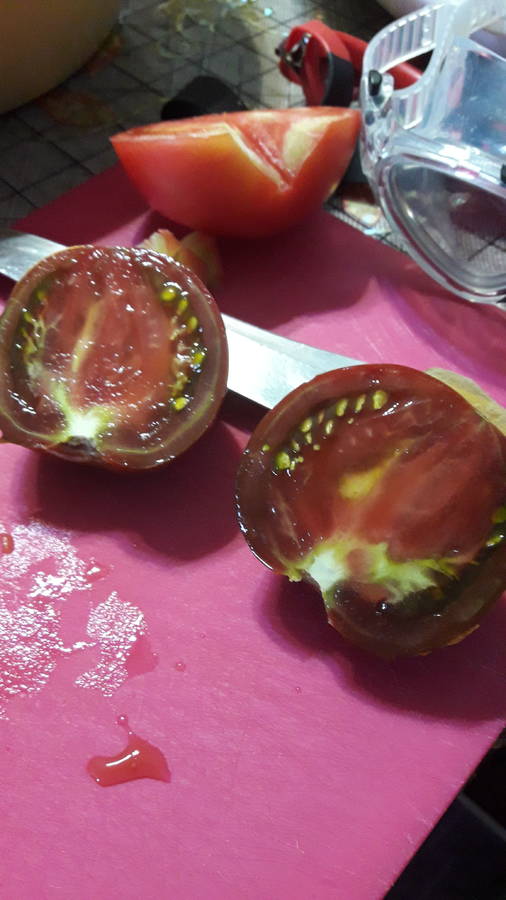
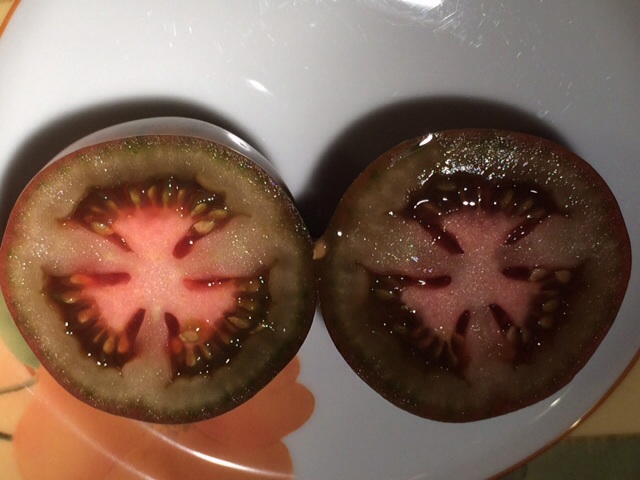
Here it is sliced open.
My Kumato in the greenhouse is about 4.5 feet (140 cm) tall. It is not a bushy plant, it has a very slim, wispy build. Trusses have 5-7 fruits, about the size of ping-pong balls, maybe a little bigger. They store incredibly well, easily lasting 1.5 months. Today I actually tossed some off the balcony because I forgot about them. They didn’t rot, they just got soft as if they had frozen. Not edible anymore, but they were probably over 2.5 months old at that point. So it’s definitely better to eat them earlier.
Mine hasn’t been a heavy yielder so far, but I kept it to let it acclimatize because I really liked the taste, it has a pleasant and rich aroma. I planted it in the sunniest spot this time, and it has already put out more stems and more fruit. I didn’t pinch the suckers at all. I really liked them for pickling.
Lena, they already discussed Kumato over here.
I read all 8 pages of that thread.
Main conclusions:
It is a hybrid.
Late-season indeterminate.
Consistently produces 4 fruits per truss (sometimes 5-7), maxing out at 3.5 oz (100 g) each, meaning the overall yield is below average.
Great for canning and pickling because the skin is thick and doesn’t split. The taste holds up well in marinades too.
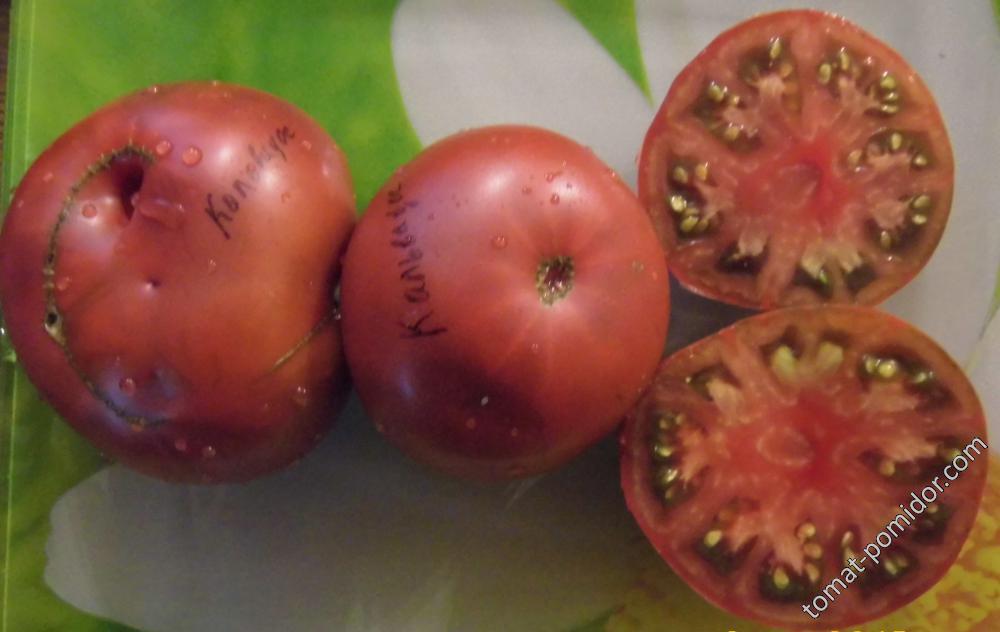
Also, it’s interesting that in Galina Esme’s photo, her sliced Kumato had four locules and slightly thinner walls, whereas mine has three locules and much thicker walls.
So what if it’s a hybrid? We don’t care, we will dehybridize it and turn it into a stable open-pollinated variety 👍
Here is what the internet says about Kumato:
Kumato is a recently popular vegetable crop, often called the “black tomato”. Botanically speaking, it is not entirely a standard tomato. Kumato is a relative of the wild plant Lycopersicon cheesmanii. The native home of the Kumato is the Galapagos Islands (the very same ones where Charles Darwin conducted his observations). Later, Belgian agronomists brought the crop to a commercial standard using traditional breeding without genetic modification, and it first appeared in supermarkets in Spain and Britain, and then across Europe. It is currently extremely popular in Australia.
And Wikipedia says that Kumato is a variety patented by Syngenta, and they do not allow it to be grown without a commercial license 😛
https://en.wikipedia.org/wiki/Kumato
Oh boy, those of you growing Kumato without Syngenta’s permission are going to get in big trouble 📝😆
😆😆😆 Vitaly, we just won’t admit to them that we are growing it! 🌸
I like Kumato. My Spanish strain produces fruits around 3.5-4.2 oz (100-120 g). Usually 5 per truss. They are absolutely disease-resistant and store incredibly well. Mid-early season, sweet fruity taste. Cell phone pics from 2014.
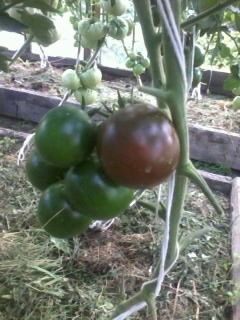
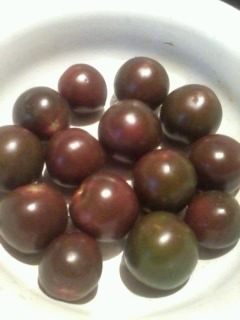
I have these Kumato cherries from Tanya (Tomatanechka). The taste is very good.
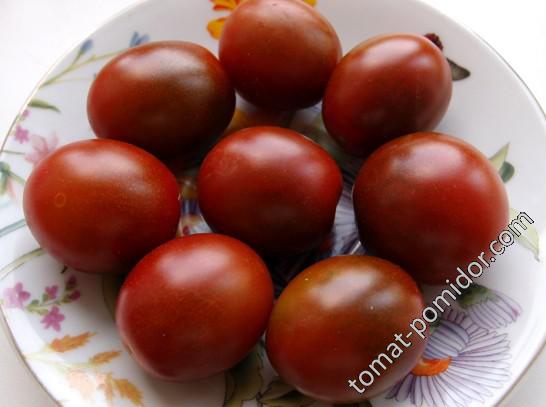
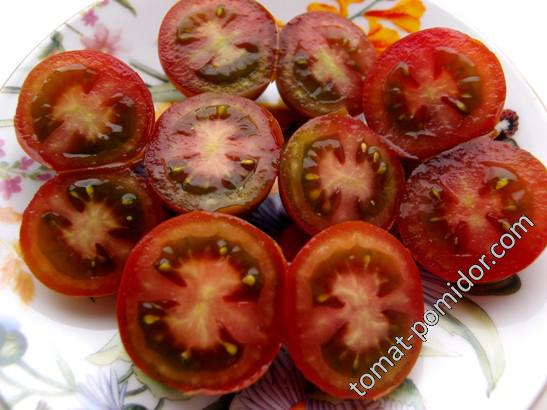
I have these Kumato cherries from Tanya, the taste is very good.
Awesome! Lenochka, are the trusses large?
Kumato are delicious right off the vine, but once they sit in storage for a while, the flavor fades. They are the only ones in my greenhouse that literally never get sick. I planted the Spanish ones for two years, and for 2015 I want to try the Moroccan strain, the fruits seemed a bit sweeter. We absolutely can’t go a season without them, we love them 😋 (but we don’t plant a ton, just two plants for pure enjoyment).
Awesome! Lenochka, are the trusses large?
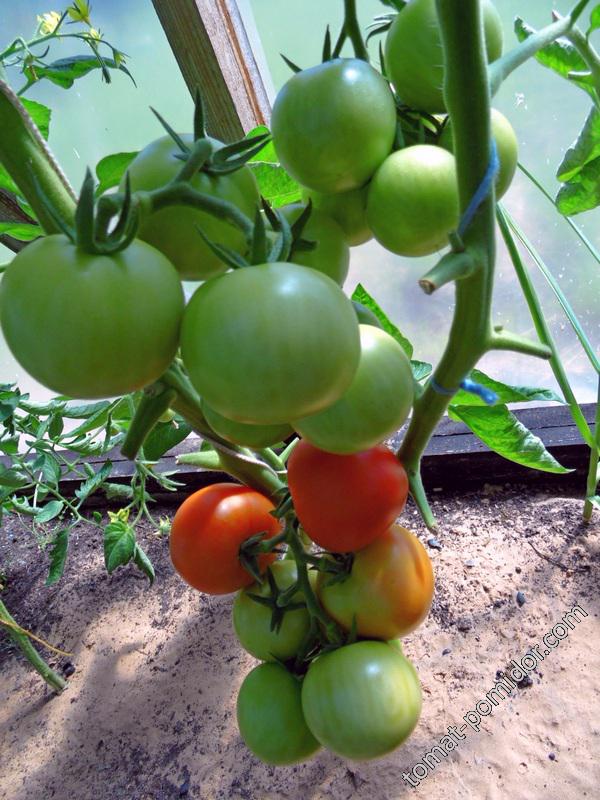
Tanyush! The trusses look like this, and the foliage is a very dark green color.
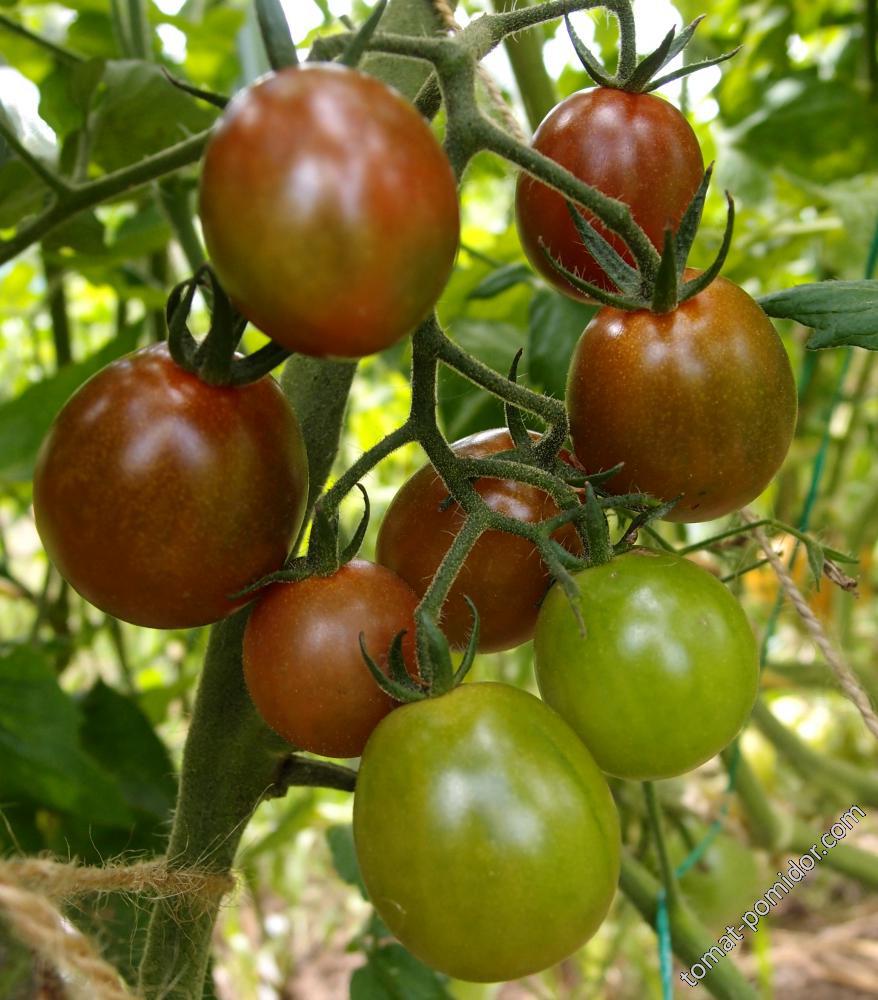
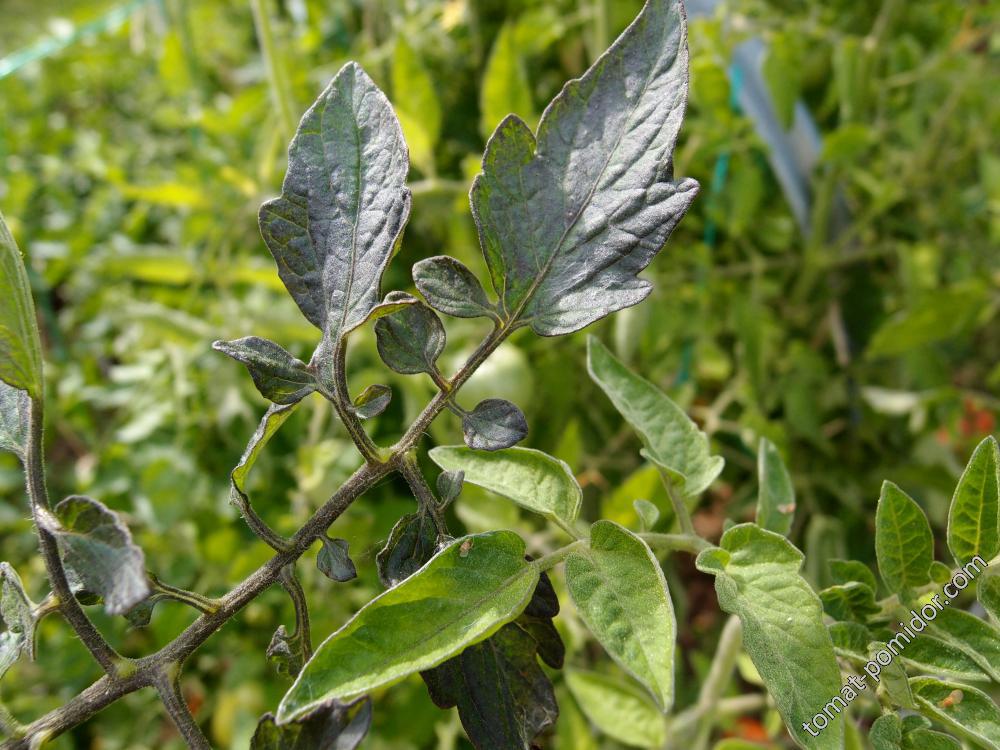
I’ll drop my report on Kumato too. Grew it last year.
My seeds came from the USA. The plant is very beautiful, slim, takes up very little space, and pushes out suckers very modestly.
I grew it to two stems, 5-6 tomatoes per truss. It set every single truss without skipping any blossoms. A very heavy yielder, a total overachiever in the garden.
I didn’t like the taste, the skin is thick, and the flavor is nothing special.
By all indications, it behaves exactly like a commercial F1 hybrid (yield, stability, and taste).
I didn’t save seeds and probably won’t plant it again.
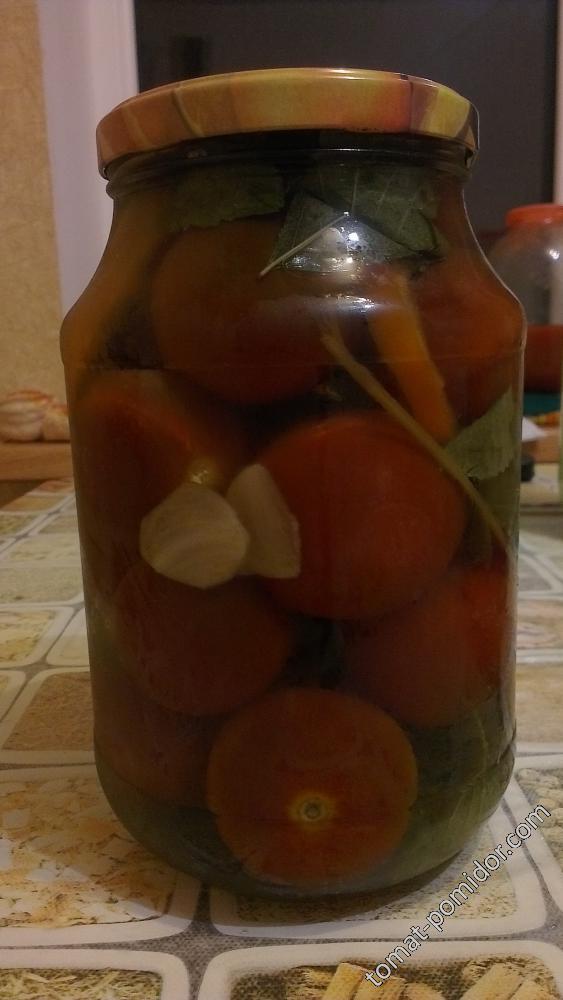
Our Kumato were on the late side. Very pretty, dense, thick skin. The plant got incredibly tall. Here they are in a canning jar. Haven’t tried tasting them yet 🙂
I planted Kumato cherries from two types of store-bought seeds: plain black plums and black plums with greenish stripes. They grew out as solid black fruits in two shapes – round and slightly elongated. If you pick them underripe, they taste like nothing, just standard winter grocery store tomatoes. But if you let them fully ripen on the vine, they are intensely sweet, very much so. Out of several cherry varieties I grew (Black Cherry, Zelenushka, Green Grape, Polden, Krasnaya Grozd, Gold Rush Currant), Kumato were by far the sweetest. At least a dozen people taste-tested them. Interesting fact: in the fall, there was an outbreak of Leaf Mold in the greenhouse. Mazhor had to be pruned bare, Oxheart was pruned bare, but the Kumato sitting right next to them didn’t care at all! Just a few isolated spots on random leaves! And the plants themselves are so sturdy, they stand like little soldiers. There were few suckers, and they didn’t shoot out aggressively like some varieties do. In short, an exemplary workhorse of a tomato 🙂
Edited January 30, 2015 by Nataly
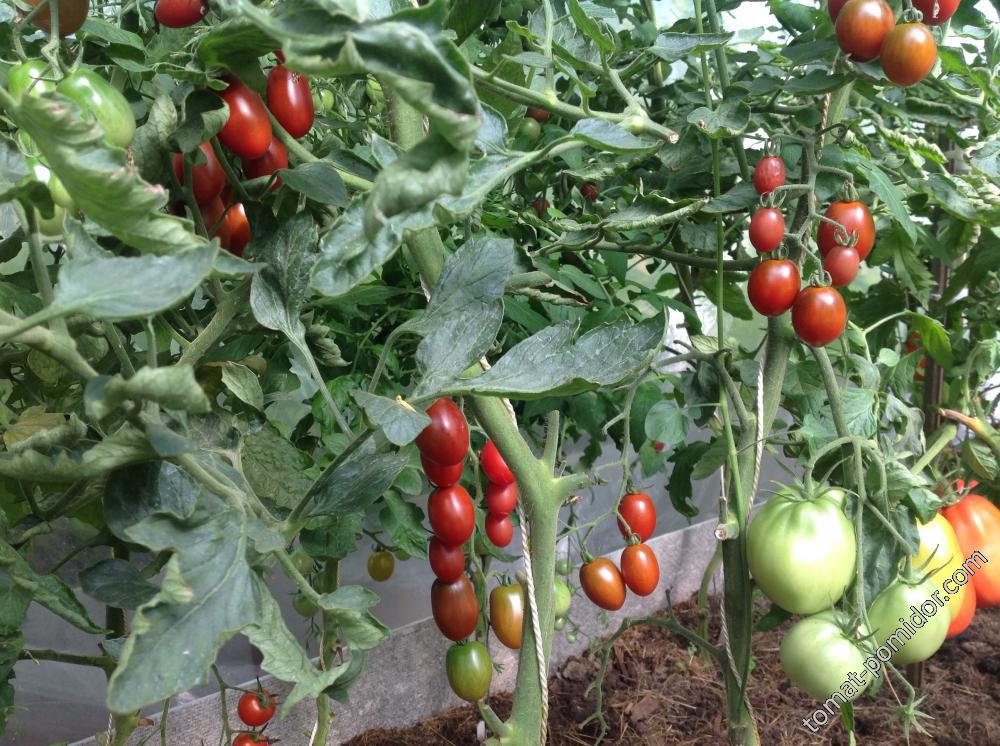
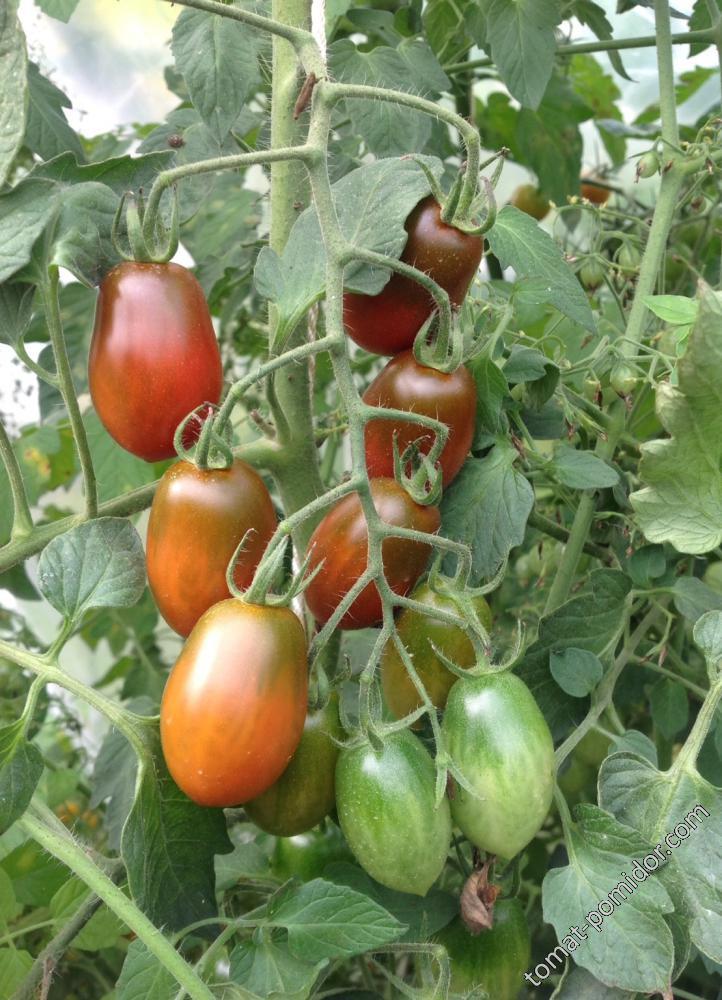
I’ll add my report to the pile. Last year I planted Kumato from store-bought fruit. Mine was indeterminate, with regular leaves, average foliage cover, mid-late season, but way sweeter than the ones in the store. That’s probably because I let them ripen fully on the vine. They ripened perfectly indoors off the vine too, and the shelf life is fantastic. The fruits were roughly 3.5 oz (100 g), slightly bigger than the store ones. The plant was totally disease-free, produced fruit right up until the frost, and most importantly, didn’t crack from the rain. It’s one of those “plant it and forget it” varieties, I didn’t even fertilize it once all season. I pruned it to two stems, but I think it could have easily handled four. Overall, way more pros than cons.
This year I planted large Kumato and cherry Kumato in the hoop house. Both were totally trouble-free to care for, didn’t get sick, didn’t throw wild suckers everywhere, and set fruit reliably and heavily. By mid-September, they weren’t even thinking about slowing down production. The cherries shot up over 6.5 feet (2 meters) and were the only plants left alive in the greenhouse, I had already yanked everything else out. I planted some outdoors in the dirt too, and they grew and fruited well there, but honestly, to get fully ripe fruits you need a greenhouse, plus the yield inside is much higher due to the sheer size of the plants. The taste of the large ones and the cherries is very different (I taste-tested both side-by-side for comparison). The large Kumatos are round, perfectly uniform, carbon copies of each other, the gold standard for supermarket tomatoes 🙂 Dense, don’t bruise or leak, transport and store flawlessly. The flavor is just standard tomato, slightly tart, with no obvious sweetness. The skin is tough, even a bit too thick. The Kumato cherries grow in beautiful double-row trusses of 8-9 tomatoes each. You can harvest the whole truss at once or pick them as they ripen. These are also pretty firm tomatoes with tough skin, but not quite as thick as the large ones. After heavy rains, a few of the ripe cherries cracked on the vine. The flavor is extremely good, you clearly taste a fruity sweetness. Any other sweet cherry variety tastes bland compared to a Kumato cherry. In the end, I won’t plant the large ones anymore, except maybe for canning, but I am definitely going to plant a lot more of the cherries. My family actually told me to exclusively plant Kumato cherries from now on, and lots of them 🙂
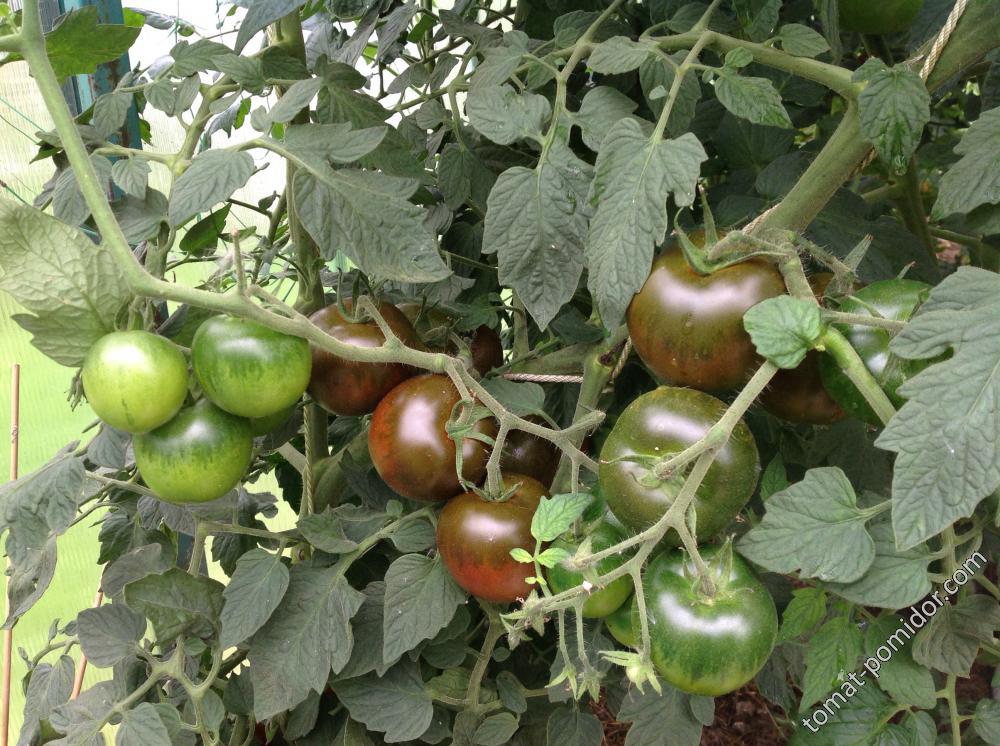
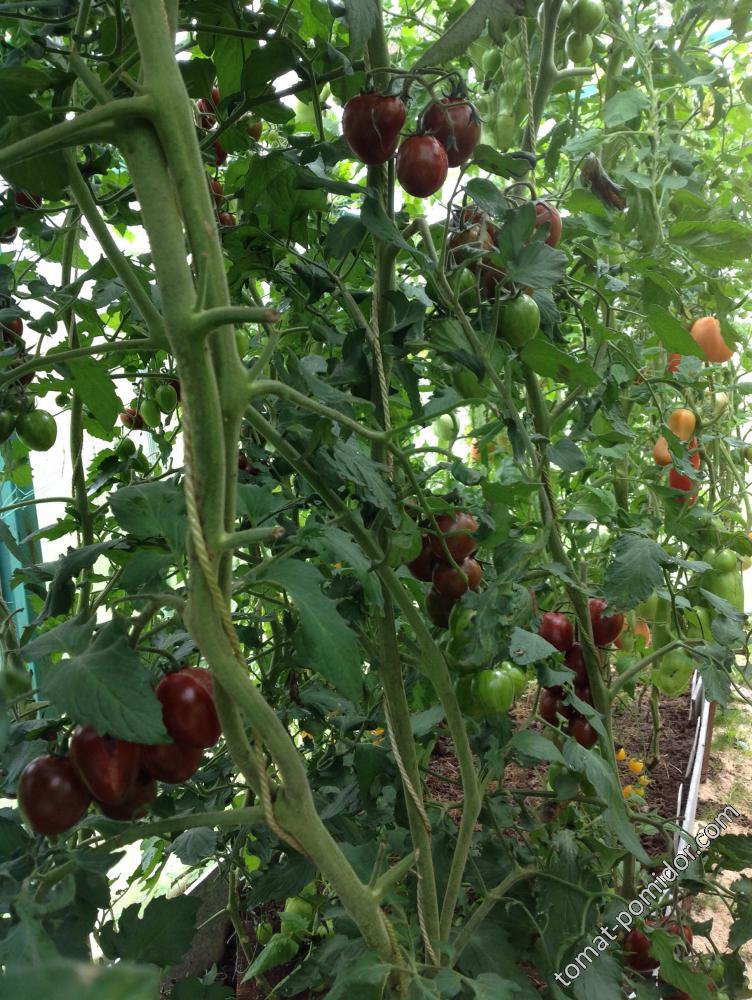
Seeds sent by vepa061. Here is the description I compiled from the forum and logged into my spreadsheet before sowing: Determinate, late season, round, medium-small (3.5 oz / 100 g), black colored fruit, good for pickling, sweet. Grew it both in the greenhouse and outdoors. I don’t have photos of them sliced open. I’m not entirely sure if I have the true Kumato, because it’s supposed to be very dark, almost black, with no stripes. But there is one review in this thread about a striped Kumato just like mine – those seeds were also saved from store-bought fruit. In the last photo, it is fully ripe. It was one of the very first to ripen (the outdoor ones were a bit later), meaning it acted like an early variety. Very tasty, sweet, with very thick meaty skin (and I mean the wall/flesh, not just the peel). Tall, but didn’t hit the roof. Outdoors (grown in a bucket) it reached about 3.3 feet (1 m). Consistently set full trusses. The fruits are perfectly uniform. It set fruit equally well in the greenhouse and outdoors. One very weird trait – neither the leaves nor the tomatoes themselves have any tomato smell whatsoever. They absolutely refused to ripen off the vine indoors for me. When I picked green ones, they just shriveled up while staying green.
I had Kumato from Redko (large, up to 4.2-5.3 oz / 120-150 g) and from Irochka (up to 3.2-3.5 oz / 90-100 g). I liked the second ones way more, the plants were absolutely loaded with fruit, and the tomatoes were perfectly uniform. Very disease-resistant, fruited for a long time right up until the frost. Quite tasty, the flavor is distinctly different from other tomatoes, but I can’t quite describe it. I will absolutely be growing them for a third time. Round, burgundy-brown color, slightly brownish near the stem. I loved them. Just be warned, the seedlings are always super frail and wispy looking.
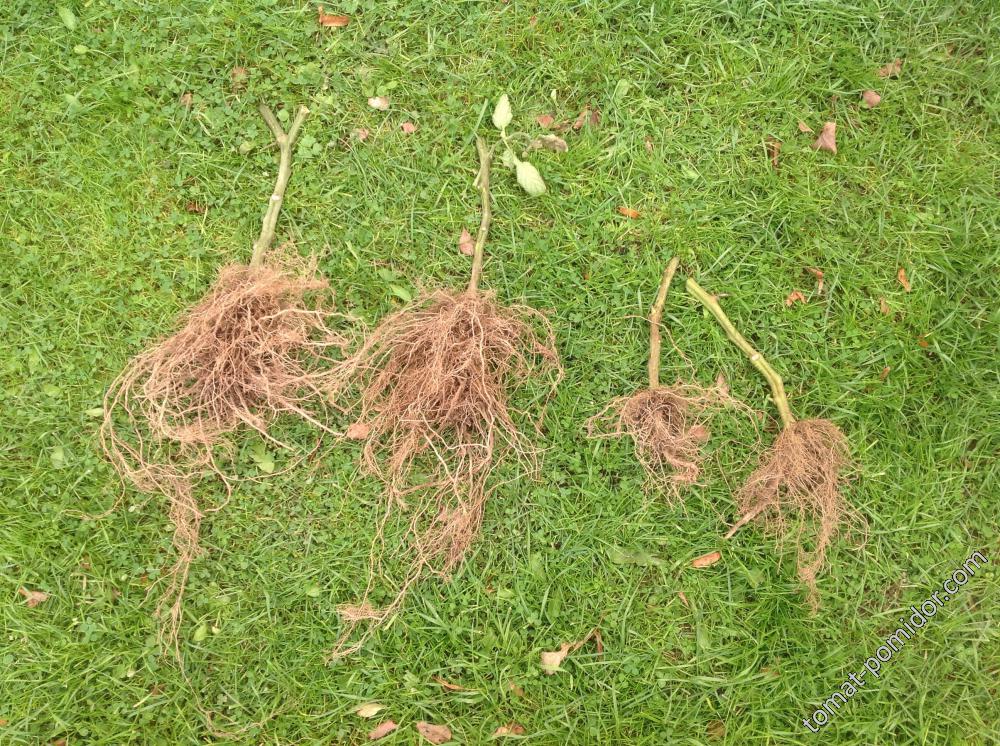
Yesterday I was clearing the last tomatoes out of the hoop house and pulling up the roots. I wanted to show you guys what the root system on a Kumato looks like (on the left). These were the only roots that I couldn’t pull up by hand, I literally had to dig them out with a pitchfork. I think this is a combination of two things. 1 – Kumato just naturally has a massive root system, and 2 – Kumato seedlings never stretch or get leggy indoors. The seedlings are always compact, neat, sturdy, with very stiff stems. Because of this, I plant them straight down vertically, even though I bury them deep. All my other tomato seedlings get leggy with long internodes, so I have to trench-plant them sideways. Of course, the trenched tomatoes end up with a two-tier root system, and some of it rips off when I pull them up. But still, the Kumato roots are undeniably much more powerful.
The tomatoes are tasty, sweet, dense, have a great shelf life, don’t crack, don’t get sick with anything, and set fruit perfectly in the heat without dropping blossoms. The plant is tall, and the leaves are a very dark green.
I ended up with Kumato cherries (seeds from Balashov). Sowed on Feb 3rd, moved to their permanent spot in the greenhouse on May 7th – they turned out to be the very first ones to start ripening (not counting Iyunskiy and Labrador). We couldn’t wait, picked the most ripe one, and it turned out to be totally unripe inside and tasted like absolutely nothing.
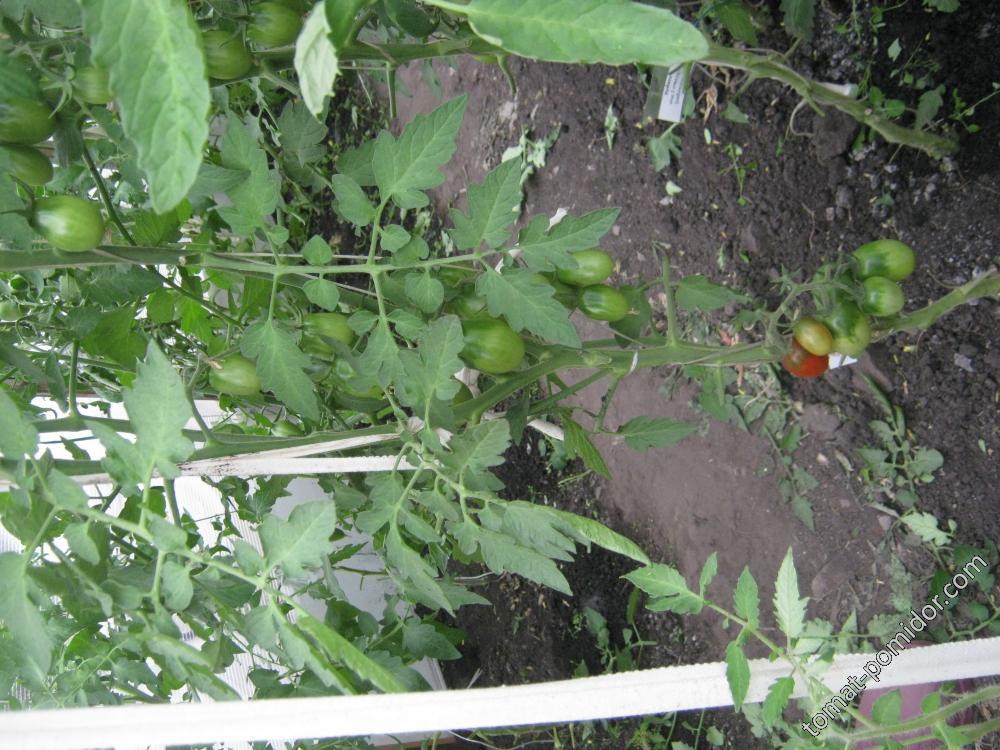
We couldn’t wait, picked the most ripe one, and it turned out to be totally unripe inside and tasted like absolutely nothing.
The “most ripe” one is just the one that turned color, right? Of course it tasted like nothing. The actual most ripe one will be the very first tomato that colored up on a truss that is now fully colored from top to bottom, and then it hangs there for another two weeks. That’s when it is truly ripe 🙂 My Kumatos, despite the heatwaves, occasional droughts in the greenhouse 😆, and partial shade, are setting trusses like textbook examples. Honestly, in terms of “exterior design,” Kumato beats everything else. Sturdy little soldiers, uniform, leaves aren’t floppy and messy, very neat 🙂
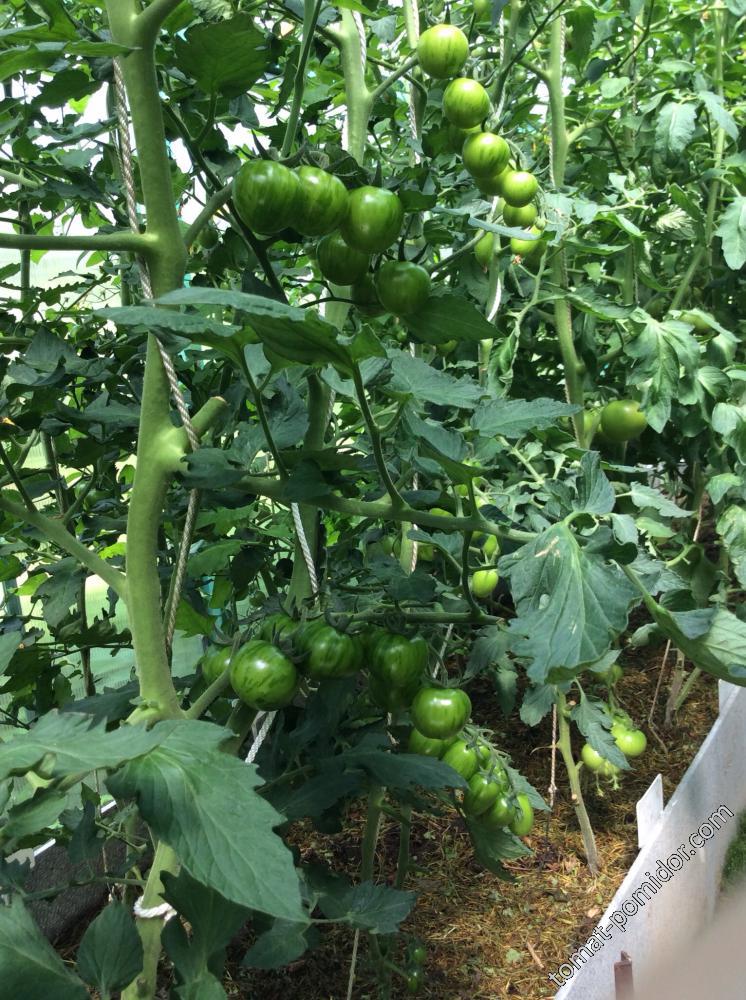
My Kumatos… are setting trusses like textbook examples. Honestly, in terms of “exterior design,” Kumato beats everything else.
Yours is loaded with little round fruits, mine is loaded with little plum shapes.
Yours is loaded with little round fruits, mine is loaded with little plum shapes.
Behind the round ones, there is a plant with elongated ones 😉 (you can see the truss at the bottom of the picture). All Kumatos are super sweet once they are fully ripe. But yeah, if you pick them the second they blush, they taste like nothing, that’s true…
Edited July 18, 2016 by Nataly
I planted three bushes of Kumato Striped Cherry Plums, and the fruits on all three segregated differently. Plant one gave me tiny icicles (0.17-0.24 oz / 5-7 g). Plant two (rounder) was an exact copy of the parent fruit in both shape and weight (0.42 oz / 12 g). Plant three gave me much larger plums with a little beak on the end (0.77 oz / 22 g). The color stayed true to the parent on all of them – blackish with green stripes. Beautiful, heavy yielders 👍 Next season I want to plant the rounder and larger ones.
Mine turned out late (seeds from Yura Kuzminykh). The plant is very sturdy, 4 feet (120 cm) tall, 👍 disease-free, and was a very strong seedling indoors. I pruned it to a single stem. I probably should have let it grow more stems. It only gave me 3 trusses with 3 fruits each. But man, they are so tasty 😋 Maybe if I grow it from my own saved seeds, the yield will improve.

I planted Kumato cherries again this season. Here they are on 08/22/18 in the hoop house. And this is a month later, 09/28/18, different ones in the bed, round and plum shaped. Incredibly sweet when ripe, they hang on the vine without dropping, just slowly shriveling up like raisins 🙂 We had already picked a bunch here. I leave them on the vine as long as physically possible, so they ripen to max sweetness and it solves the storage issue at the same time 😉 And here they are hitting the roof (it’s 9 feet / 2.70 m high at the ridge) and bending to grow along it, weaving under the support beams and basically staking themselves to the ceiling 😆 I mean, it basically grows like a grapevine!
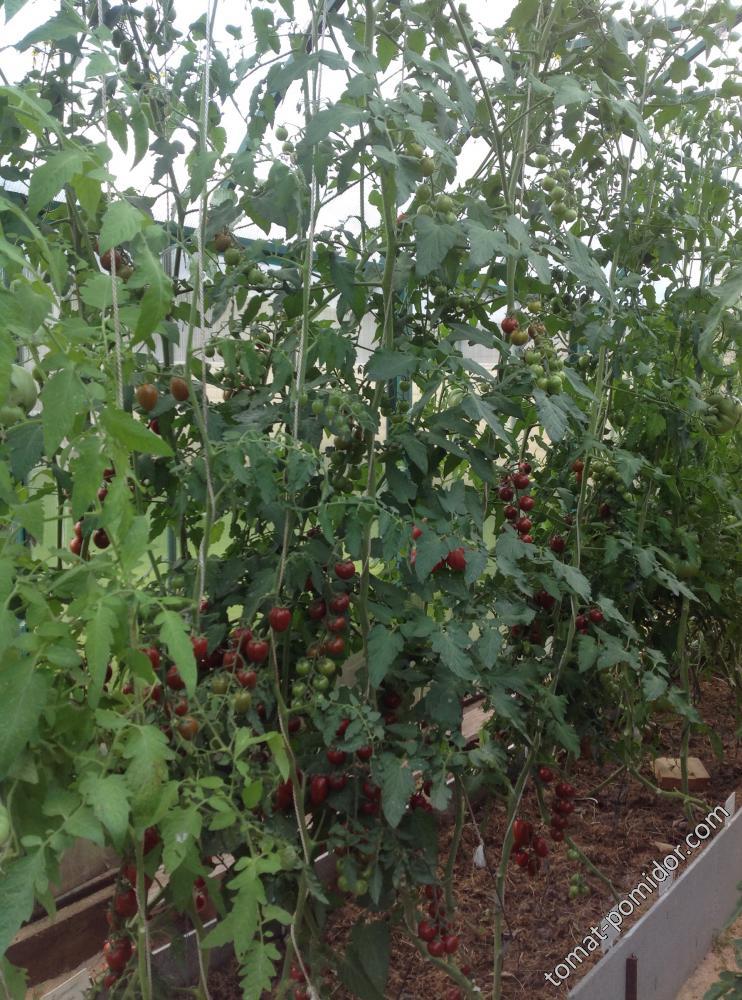
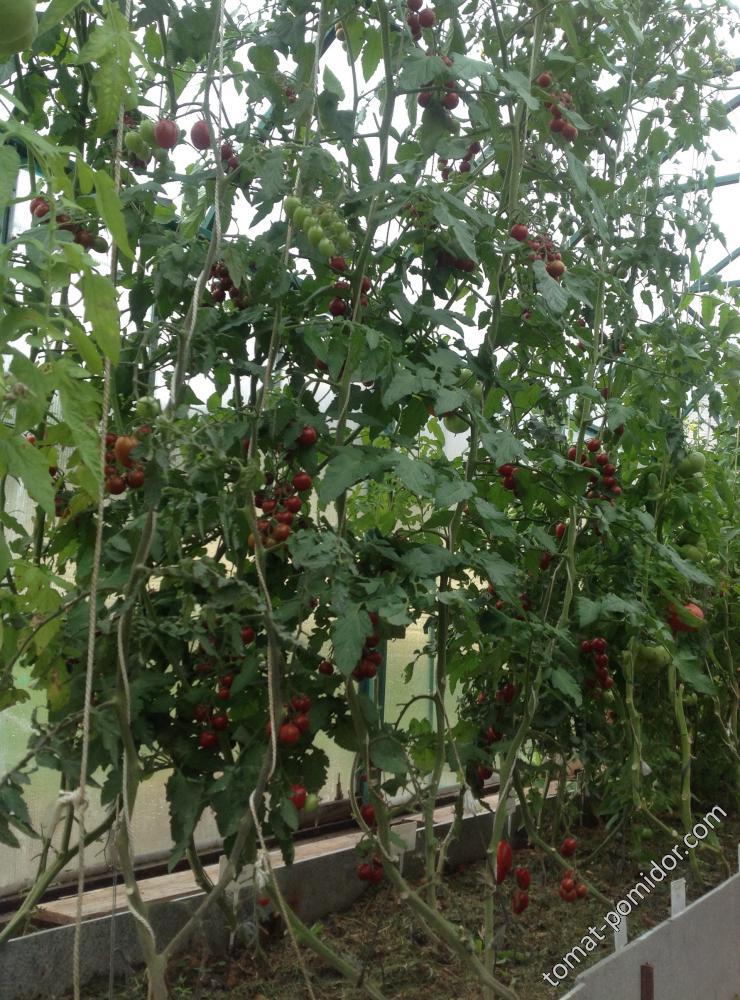
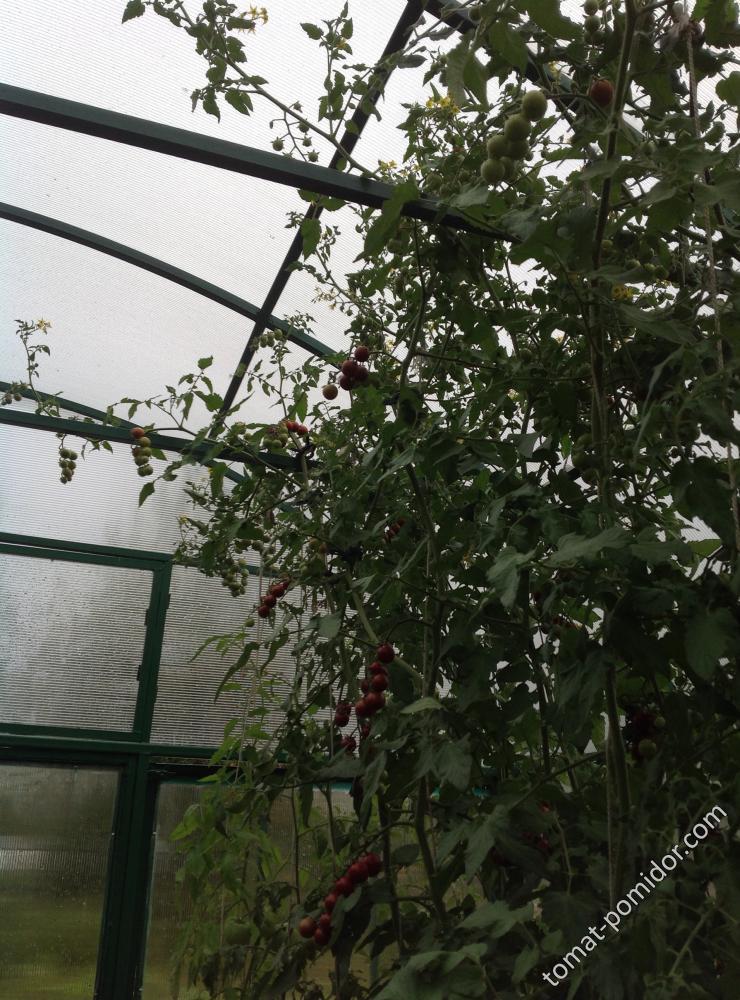
My Kumato from store-bought seeds was an exact carbon copy of the Chernika (Blueberry) tomato, but much later (Chernika was almost the earliest in my greenhouse). Because of that, I ended up choosing Chernika. Taste-wise they were both sweet but with very tough skins, so they mostly went into pickling jars.
Dehybridizing F1 Seeds: As discussed in the thread, Kumato is a patented commercial F1 hybrid. When forum users save seeds from grocery store Kumatos, they are taking an unstable F1 seed into the F2 generation. This is why users like NataNata report “segregation”—where one seed batch produces three completely different shapes (plums, rounds, and icicles) and sizes. By continually saving seeds from the best shapes year after year, growers “dehybridize” the commercial tomato into a stable, open-pollinated variety!
Cladosporium (Leaf Mold): Nataly mentions her Kumato was bulletproof while her other plants were stripped bare due to “Cladosporium”. This is the scientific name for Tomato Leaf Mold (Passalora fulva, formerly Cladosporium fulvum), a devastating fungal disease in humid greenhouses that causes fuzzy olive-green patches on the undersides of leaves.