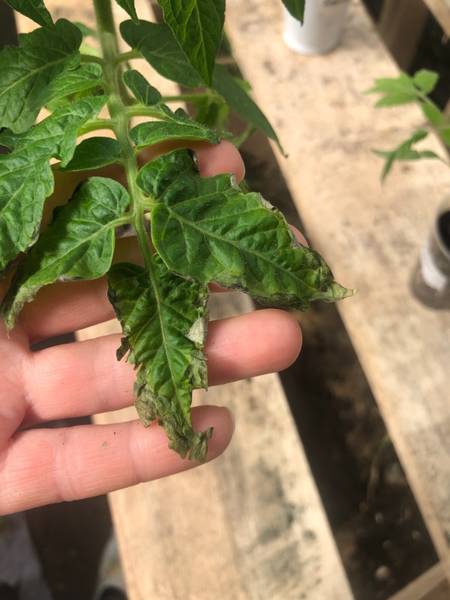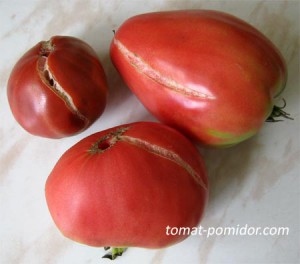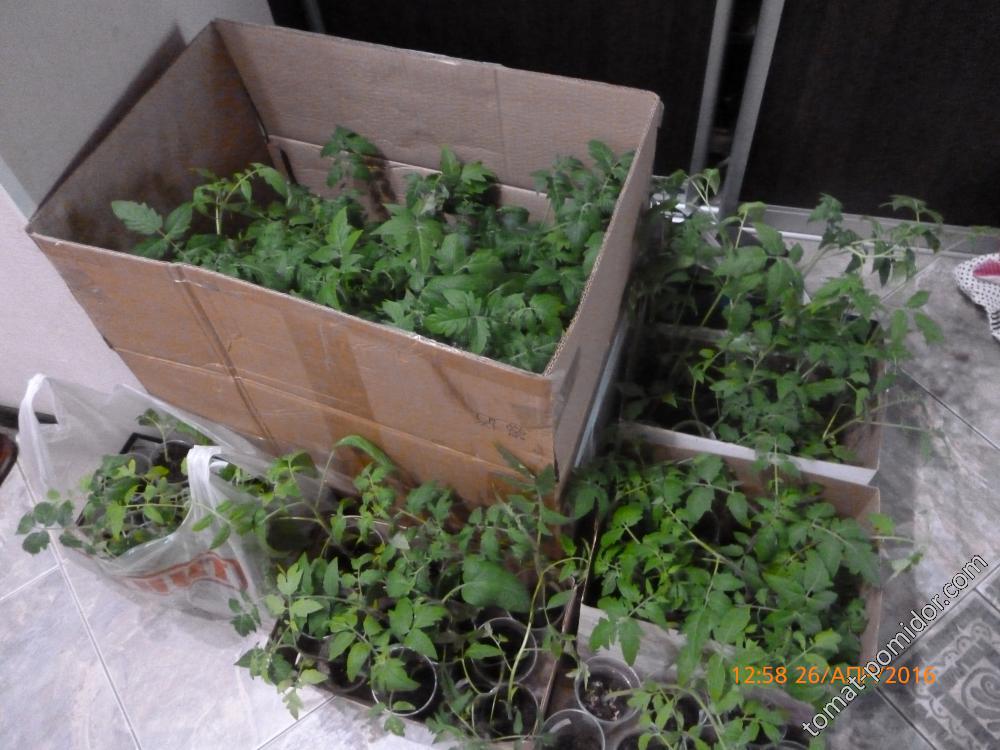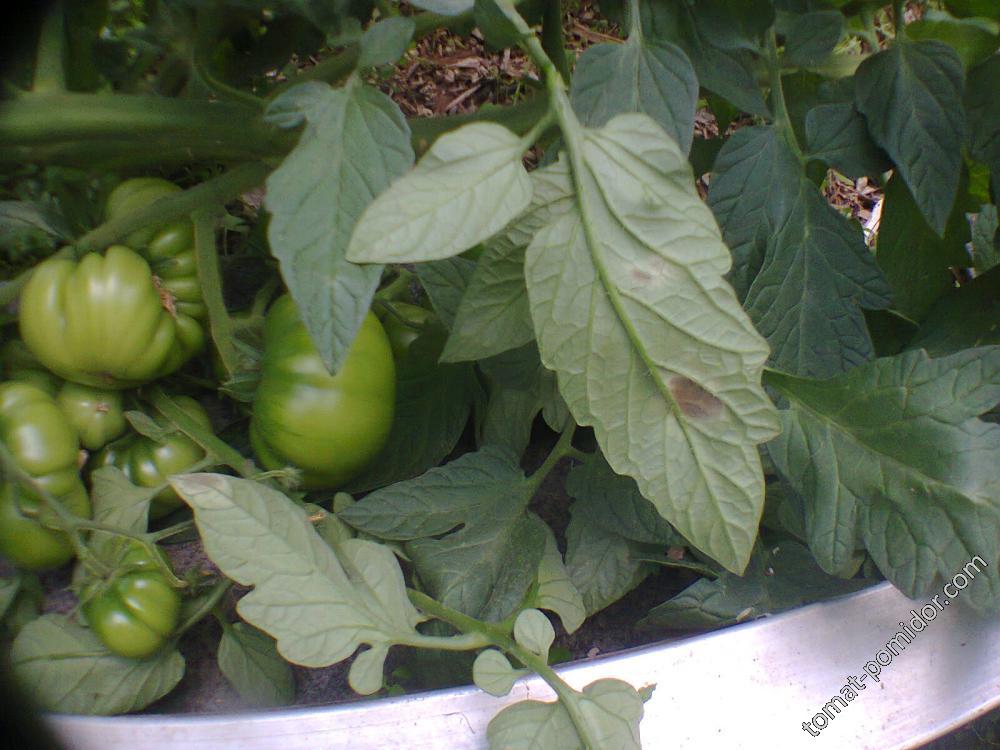
📌 Quick Summary (TL;DR): Fighting Tomato Leaf Mold
- 🌍 The Problem: Leaf Mold (Cladosporium fulvum / Passalora fulva) is a massive issue for greenhouse and hoophouse growers. In this thread, veteran growers discuss why some greenhouses get devastated while others stay clean.
- 🧪 Organic & Biological Controls: Several growers had great success using Trichoderma (a beneficial soil fungus) introduced early in the season to outcompete mold spores. Foliar sprays using milk/whey, ammonia, and medicinal iodine or “Zelenka” (a common European antiseptic) are also heavily discussed as preventative measures.
- ☢️ Chemical Fungicides: For severe outbreaks, growers discuss commercial systemic fungicides like Luna Experience, Infinito, and Strobi. However, safety, PPE (Personal Protective Equipment), and strict adherence to PHI (Pre-Harvest Intervals) are hotly debated.
- 🌬️ Greenhouse Management: There is a major debate on ventilation. Does leaving doors open 24/7 prevent the disease through airflow, or does it invite spores in on the night wind?
- 🧬 Genetics & Feeding: F1 and F2 hybrids (like Rugantino) show strong genetic resistance. Furthermore, growers discuss how proper NPK (Nitrogen-Phosphorus-Potassium) and Magnesium balance during fruit swell helps keep the plant’s apical meristems (growing tips) strong enough to fight off the fungus.
Photo author: Aleksander
Throughout this thread, Russian and Eastern European growers mention specific local treatments. Here is how they translate to products available in your local garden center:
- Luna Experience, Infinito, Strobi: These are commercial-grade fungicides by Bayer and BASF. While available in the US, they are often restricted to agricultural use. The closest home-garden equivalents for treating Leaf Mold are products containing Chlorothalonil (e.g., Daconil), Mancozeb, or Liquid Copper Fungicide.
- Colloidal Sulfur: Look for Wettable Sulfur or Fungicidal Sulfur dust (e.g., Bonide).
- Pharmacy Iodine & “Zelenka”: Eastern European growers frequently use diluted household first-aid antiseptics (Tincture of Iodine and Brilliant Green dye) as cheap, copper-free antifungal sprays.
- Potassium Permanganate: Used as a soil sterilizing drench. In the US, a mild Hydrogen Peroxide soil drench is a more common, safer alternative.
Valtwelve wrote:
Two people weren’t too lazy to wash their greenhouses, and they have no Leaf Mold… Maybe I should wash mine too? You need serious willpower for that!!!
Last year I washed mine with a pressure washer and sprayed it with bleach, but the Leaf Mold stayed exactly as it was. This year I’m not even going to bother washing it.
I have severe Cladosporium (Leaf Mold) this year. At first, it spread slowly, and then bam, all at once. I asked my neighbor, and she said she didn’t have it. Our conditions are identical, we do everything exactly the same. The only difference is that she doesn’t bring her seedlings into the greenhouse early in the spring because she lives in the city, so she plants later since there is no one there to open/close the greenhouse doors.
And another friend has a brand new greenhouse, first year. All the seeds are mine. She doesn’t even know that you are supposed to keep a greenhouse ventilated; they button it up tight every evening. Everything is still green, full of tomatoes, and absolutely no Leaf Mold. WHY?
Aleksan9ra wrote:
Everything is still green, full of tomatoes, and absolutely no Leaf Mold. WHY?
Lyuda, maybe your soil is heavily infected? The fungus lives in the soil anyway. Maybe you need to disinfect the earth? I think Misha wrote once that you should drench the soil with Bordeaux mixture against diseases. I don’t get Leaf Mold because I move my greenhouses to a new spot every year, so I can only theorize about it.
Russi wrote:
Last year I washed mine with a pressure washer and sprayed it with bleach, but the Leaf Mold stayed exactly as it was. This year I’m not even going to bother washing it.
Maybe I should also do absolutely nothing?! I used a sulfur fumigation smoke bomb (to sterilize the greenhouse), but the Leaf Mold still appeared at the end of the season. Different varieties were affected to different degrees, but the harvest didn’t suffer.
Aleksan9ra wrote:
I have severe Cladosporium (Leaf Mold) this year. At first, it spread slowly, and then bam, all at once.
Good evening, Lyudmila. I was only able to neutralize Leaf Mold using Trichoderma, which I buried in the greenhouse soil at the beginning of the season. For decades before that, despite keeping the greenhouse doors open all season long, the Leaf Mold was incredibly severe. Trichoderma saved me, but you need a lot of it. I cultured it myself on pearl barley back in 2018. It’s been quiet since then, although I did spray a milk foliar cocktail every week.
Shelkovnica wrote:
…It’s been quiet since then, although I did spray a milk foliar cocktail every week.
Could you provide more details about the cocktail, PLEASE.
Shelkovnica wrote:
Trichoderma saved me… It’s been quiet since then, although I did spray a milk foliar cocktail every week.
Well there you go! Everything was so clear—Trichoderma! And suddenly… a milk cocktail. Now nothing is clear: who is the real savior here, the Trichoderma or the cocktail?
Aleksan9ra wrote:
And another friend has a brand new greenhouse, first year… they shut it tight every evening. Everything is still green, full of tomatoes, and absolutely no Leaf Mold. WHY?
Well, if the greenhouse is new, I think there simply shouldn’t be any Leaf Mold spores there yet. That much makes sense. I didn’t have it my first year either…
Lyuda, maybe it’s precisely because the greenhouse is new and it’s its first year!
Valtwelve wrote:
…who is the real savior here, the Trichoderma or the cocktail?
The savior is Trichoderma. ) The milk cocktail was just for disease prevention. But you have to use it once a week, otherwise there won’t be much benefit.
Lyubash@ wrote:
Could you provide more details about the cocktail, PLEASE.
Spray the plants once a week. You can spray everything ) Tomatoes, cucumbers, roses, zucchini, grapes, etc.
- 1 liter (about 1 quart) of 1% Kefir OR milk whey
- 2 tablespoons of household Ammonia (to neutralize the acid in the kefir/whey)
- 2 teaspoons of Zelenka (Brilliant Green – a common Eastern European topical antiseptic that acts as a mild, copper-free fungicide)
- Fill with water up to a 10-liter (2.5 gallon) bucket.
I sprayed the bushes with a pump sprayer. My sister thinks that takes too long ) She mixes the solution in a bucket, takes a traditional birch/besom broom, dips it, and splashes all the plants very quickly )
This mix works very well against downy mildew on cucumbers too, but… it MUST be done once a week all season long.
Good evening. My greenhouse is new. First year. The doors and vents are always open. Leaf mold appeared at the beginning of August.
Meggi wrote:
My greenhouse is new. First year. The doors and vents are always open. Leaf mold appeared at the beginning of August.
It appeared precisely because they were open… And Lyudmila’s friend closes everything at night. I used to close mine in the beginning too.
It seems Cladosporium “settles in” at night when it’s more humid in the greenhouse and the spores are blown in by the wind.
I wonder, do the people who never get Leaf Mold close their greenhouses at night? Probably everyone does it differently.
Good morning everyone and have a great day! The weekend and yesterday were just wonderful. Thank you all so much for your advice and input.
My old greenhouse is over 10 years old, and for the first few years, I didn’t have any Leaf Mold; I didn’t even know what it was. The most interesting thing is that before polycarbonate, we had poly film hoophouses, which we rigorously buttoned up tight at night so there wasn’t a single crack. It was believed that this was how we saved tomatoes from Late Blight (Phytophthora). And we practically never got Late Blight, let alone Leaf Mold.
Next spring, I decided to reduce all my plantings to avoid excess. I figured one greenhouse is enough, and I’ll plant everything in it: tomatoes, peppers, eggplants, cucumbers, and melons. A little bit of everything. In defiance of Leaf Mold, I will create non-ideal conditions for the tomatoes. Let’s see what happens. This year, in the mixed plantings of my second greenhouse, the early tomatoes still don’t have Leaf Mold?
My greenhouse is open all season long—the leaves on the tomatoes are clean and green. But out in the open ground, my Blush tomatoes were the first to catch Leaf Mold, and then it spread to everything else… There were varieties that were more or less resistant, but the overall picture wasn’t joyful.
I explain it to myself like this (maybe I’m wrong): apparently, the wind blows spores into micro-abrasions on the tomato leaves outdoors. In the greenhouse, the tomatoes don’t suffer wind damage, so they have enough immunity to resist the disease.
I have 2 greenhouses. One is old, made from glass window frames with a polycarbonate roof. The second is full polycarbonate. The Leaf Mold was tormenting me.
We decided to move the polycarbonate greenhouse to a new spot. I carefully painted all the metal framing twice, put on brand new polycarbonate, and placed it where strawberries had grown for many years. I hoped I wouldn’t see Leaf Mold for at least three years.
Alas! By the end of July, it struck. I hadn’t closed the doors all summer. The second, older greenhouse is only slightly affected; I only saw the first spots on the leaves at the end of August. The bushes are still in decent condition. What are we supposed to do about this?!
Lyuda, maybe you are right about mixed plantings. I removed most tomatoes from the greenhouses, leaving only hot peppers, and alongside them, the tomato varieties Crimean Rose and Black Prince. I feel so sorry pulling up the tomatoes. They are so good, green, blooming, with a huge tomato hanging right under the ceiling. The tomatoes are healthy because they have more air and space among the peppers.
I have a cover made of reinforced plastic film. Not only the doors are open, but the sides are rolled up too. This year I have no Leaf Mold so far, though I used to get it. But Blossom End Rot tortured me instead.
Good morning! I also want to chime in about Leaf Mold. In my greenhouse, the tomatoes got sick like everyone else’s. At first, I picked off the leaves with spots, but then it started progressing, and eventually, I just gave up fighting it.
BUT! Three tomatoes growing in the exact same greenhouse, right in the middle of the infected ones, are clean and green to this day! These are F2 Snegopad, F2 Rugantino, and Belgian Beauty (though this one is just starting to get spots). The F1 hybrids were just as healthy, and the F2 seeds I saved completely replicated the F1 resistance. I came to the conclusion that there are tomatoes that can resist Leaf Mold, and it is built into them genetically.
Leaf Mold appears very early in my greenhouse. This year I managed to hold it back by treating with Luna Experience (commercial fungicide). Drenching the soil with Bordeaux liquid in the fall didn’t help, even changing the soil didn’t help.
I keep the greenhouse open. When it’s cold and damp, it’s better to close it at night, but you absolutely must ventilate it during the day. If you don’t live at your garden plot full-time, creating these conditions is very difficult. A friend of mine has no sick tomatoes in her greenhouse. She drenches the soil with potassium permanganate (Condy’s crystals) in the fall and does no other treatments. Vents open all summer, buys the cheapest basic seeds from the store.
Some hybrids are resistant to Leaf Mold. I haven’t come across heirloom/open-pollinated varieties with this trait. This year I grew a hybrid that is standing completely green to the bitter end. Everything around it is sick, and it’s fresh as a cucumber.
I saw an agronomist on YouTube giving good advice on Leaf Mold. One method—which I’m doing now—is 10 drops of medicinal iodine per 1 liter (1 quart) of water plus milk (I used to do 7-8 drops, wasn’t very effective). The second method is using wettable/colloidal sulfur to actually cure the Leaf Mold. I’ll have to try that…
Also, folk remedies are less effective, but harmless. If you use them regularly from planting, you won’t have to worry about brown spot or Late Blight:
-
- Once a week, water the plants adding potassium permanganate to the water (until it turns a light pink color) or use a wood ash tea (10.5 oz / 300 g of ash boiled in 2 quarts / 2 L of water, then strained into 2.5 gallons / 10 L of water).
- At the first sign of disease, drench the soil with: 2.5 gallons (10 L) of water, 40 drops of iodine, and 1 oz (30 g) of potassium chloride. It’s important to soak the soil about 4 inches (10 cm) deep.
- Spray plants 3 times with a 7-day interval using: 1.3 gallons (5 L) of warm water, 15 drops of iodine, and 1 pint (500 ml) of fresh warm milk. Make sure to spray the undersides of the leaves.
Valery, I’ve tried iodine with milk, and hanging open iodine bottles. But I keep reading about treating with Luna, and they say it really helps.
Iodine doesn’t help. Luna is good. I used it once and they stood strong and got sick very late. The tomatoes outside were covered in Leaf Mold, but they were absolute workhorses. I barely managed to rip them out of the ground.
Read up on Luna Experience, I also have zero Leaf Mold this year. During the summer, I treated alternately with it, Infinito, and Strobi. The last treatment was at the end of July.
Sveta, in what sequence did you spray? I only used Luna, and apparently, that wasn’t enough.
Early July – Strobi, mid-July – Luna, late July – Infinito (I covered the ripening early tomatoes with newspaper to protect them from the spray).
Thanks, I read up on it… I only found recommendations for outdoor field tomatoes. It’s an EPA Toxicity Class II (Warning) for humans, which is probably why they are afraid to recommend it for enclosed greenhouses. It looks like you absolutely cannot spray it without full PPE (Personal Protective Equipment), otherwise you’ll be the one staying in the greenhouse instead of the Leaf Mold! 😅 And the concentration for greenhouses should probably be much weaker.
It’s best used as a preventative, before Leaf Mold appears on the leaves—you can start in June. I bought Luna specifically for Leaf Mold and rot, and I don’t regret it. The cherry and icicle varieties in the greenhouse are perfectly healthy, all the apical meristems (growing tops) have green leaves.
We respect the PHI (Pre-Harvest Interval) waiting periods. It’s funny to me when people brag about never using mineral fertilizers, but then dump tons of raw manure on their beds—which isn’t good either. Everything needs to be in moderation.
When I saw a video about growing Trichoderma at home, I decided to try it immediately. My target wasn’t even Leaf Mold; Fusarium wilt had been taking out several of my tomato bushes a year. I wanted to neutralize the Fusarium since both it and Cladosporium live in the soil.
I buried the Trichoderma at the beginning of the season… and was shocked by the total absence of my perennial, severe Leaf Mold! It made sense to me—one fungus (Trichoderma) outcompeted the other two. It didn’t eradicate them completely, but reduced their population to levels that couldn’t trigger disease.
I can’t guess, but I wonder how long a chemical like Luna holds up? After all, it works topically on the plants. But the fungi live in the soil.
Here is another interesting observation: on tomato bushes sick with Leaf Mold, the new, young suckers and the top growth are clean and green. Why is that, considering it’s on the exact same plant!?
Lyudasik wrote:
…the new, young suckers and the top growth are clean and green. Why is that…?
I’ve thought about this too… And about the fact that young plants don’t get Leaf Mold. The tops and young suckers always receive the most nutrition—the growing tip is the dominant center of the tomato. Young plants (without tomatoes yet) don’t need massive amounts of nutrients.
But when varieties start setting fruit, they weaken. If there is a deficiency, the plant moves Magnesium, Potassium, and Nitrogen from the lower leaves up to the growing points or fruits. And so it goes, higher and higher. And Leaf Mold crawls from the bottom up along these weakened leaves.
This means we need to feed them correctly and heavily, and prune the trusses (leave fewer fruits on the lower clusters). And we should stop growing varieties that weaken easily and catch Leaf Mold first.
This year I finally realized that tomatoes bearing fruit need 2 to 4 times MORE feeding as the fruits swell.
If we talk about balanced nutrition, we need to look at recommendations from serious agricultural companies. I use guidelines from the Dutch company Rijk Zwaan. For the fruiting stage, they recommend an NPK-Mg ratio of 1 : 0.32 : (1.6-1.8) : 0.31.
During fruit swell, a good fertilizer is Valagro Master 3:11:38 + 4% Mg. In my opinion, in the final stage of vegetation during fruit swell, Nitrogen should be kept very low.
The final stage is fruit ripening. You can use that low-nitrogen formula if you have a potassium deficiency. But during fruit swell/growth, Nitrogen is still required. Rijk Zwaan recommends a Nitrogen-to-Potassium ratio of 1 : 1.6-1.8. Meaning if Nitrogen is 100%, Potassium should be 160-180%. With that Master formula, Potassium is 1050% relative to Nitrogen!
Let’s clarify: Commercial greenhouses mix their own nutrients from simple salts (Calcium Nitrate, Magnesium Sulfate, Monopotassium Phosphate). You won’t find a premixed bag that perfectly fits tomatoes at all stages because soils and varieties differ drastically. Most “Tomato Fertilizers” in stores are just marketing.
This year, I grew my seedlings at lower temperatures (cold treatment) to get a larger number of flowers per truss. Now I have no complaints about fruit set. But… Leaf Mold…
This is the Malinovka variety.
How could a bush loaded like this NOT catch Cladosporium? How on earth do you feed it enough to keep its immunity up? In the same league as Malinovka are old, heavy-yielding varieties like Bull’s Heart, German Red Strawberry, Mazarini, and Malakhitovaya Shkatulka (Malachite Box).
Bushes like these should really only be planted outdoors in open ground, IMHO.
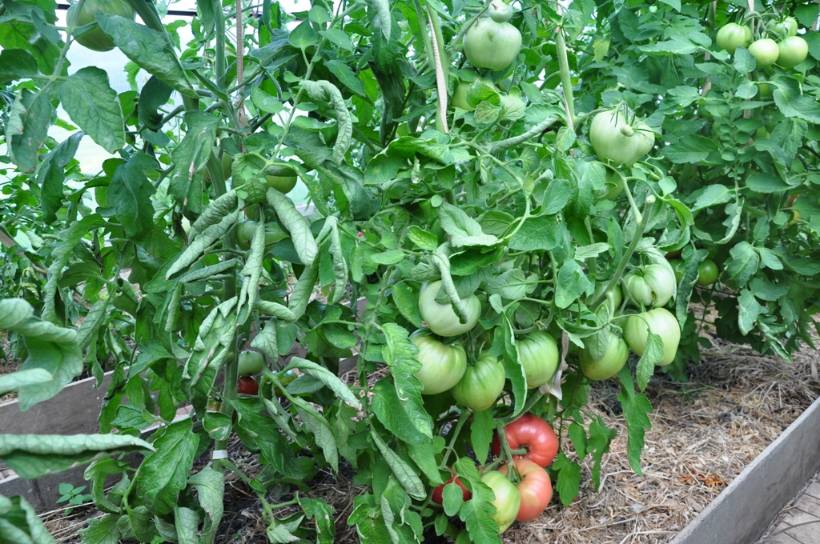
I’ve been growing Malakhitovaya Shkatulka (Malachite Box) in the greenhouse for five years. Pruned it to one stem, pruned it to three. It has never once caught Leaf Mold. I cull/pull any sick, spotted varieties immediately. I mostly grow northern, stress-tolerant varieties.
Next year I’m planning to plant very few, just 20 bushes. I’ll grow one of each variety for diversity in shape and color. From this year, I will definitely repeat Bolgarskoe Chudo (Bulgarian Wonder) (huge, pink, tasty, and disease-resistant), Cuore di Albenga, Linnaeus Heart (for yield and the best taste among dark tomatoes), Pineapple Heart, Summer Sun, and Yellow Lake Bret. Plus hybrids like Pozano and Sarra. Add in old reliables like Orange Strawberry and Black Icicle, and the list is basically done!