📌 Quick Summary: Preventing Late Blight on Outdoor Tomatoes
- 🛡️ Prevention is Key: If your outdoor tomatoes turn black and mushy in the summer, that is Late Blight. Once it hits, it’s usually too late. You must plan ahead to keep the foliage dry.
- ☔ The Rain Roof Method: You can successfully grow delicate greenhouse varieties outdoors by building a simple plastic “roof” over the raised bed to block the rain. Leave all four sides completely open for fresh airflow.
- ✂️ Topping Tall Plants: If your indeterminate heirlooms start outgrowing their outdoor hoops or roof, just pinch off the top growing tip to stop vertical growth and focus energy on ripening fruit.
- 🧪 Preventative Spraying: If you don’t want to build a roof, you absolutely must adopt a prophylactic fungicide spray routine starting in early/mid-summer before the blight appears.
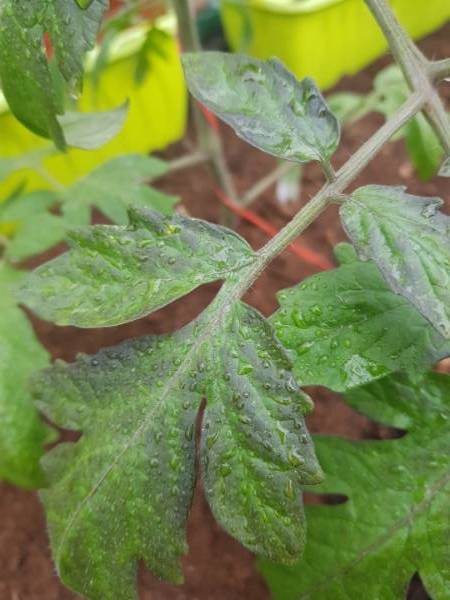
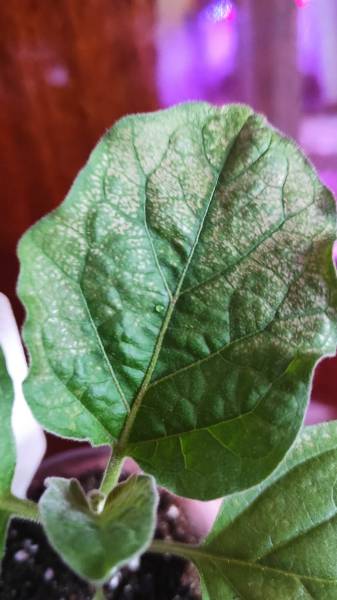
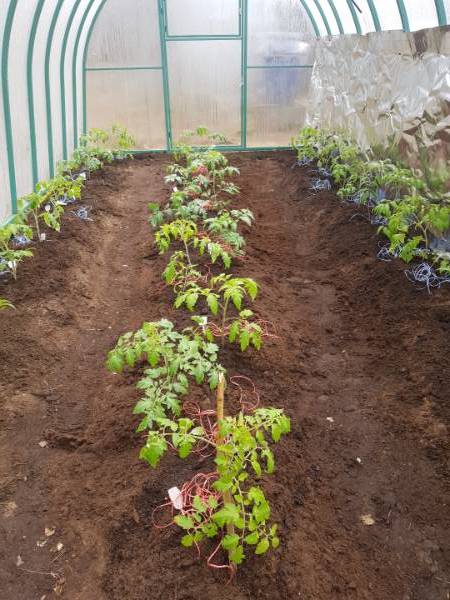
Photo author: swetlanna.
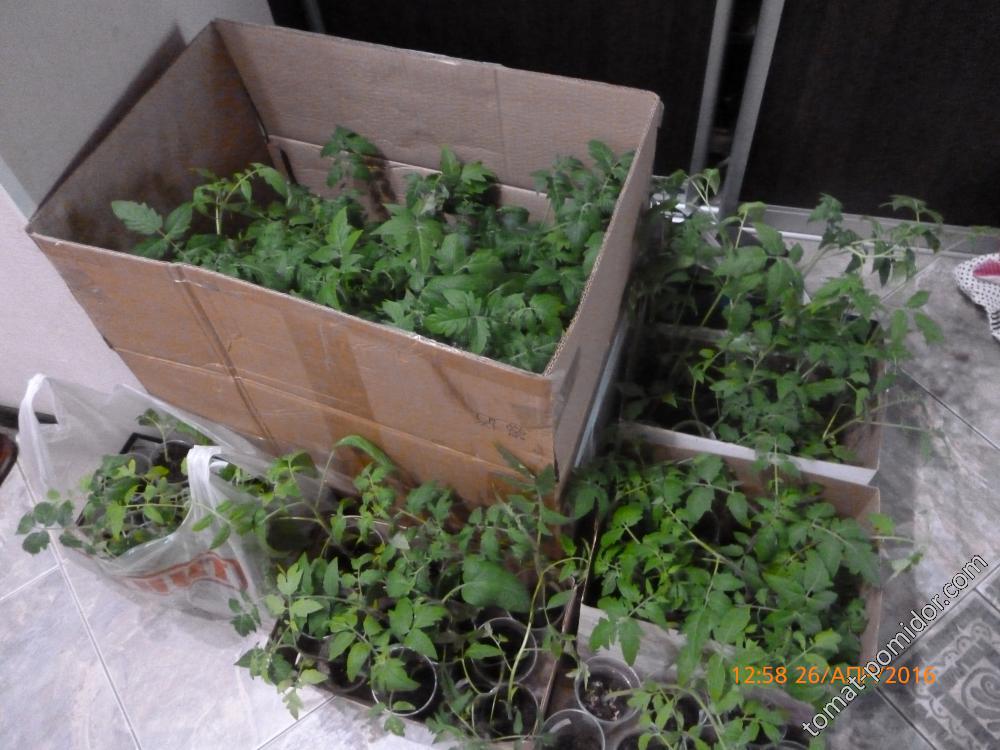
Good morning, Ludmila, I need your advice!My seedlings got a little leggy indoors, so I had to rush and plant them out into the greenhouse under row covers. But I still have a lot of extra seedlings left in the house. I kept them just in case I need to replace any that die in the greenhouse.
If they all survive, I’ll have to give the extras away, but honestly, people are so ungrateful. They often complain later, saying “that variety was garbage.” It’s so frustrating! My seeds are from top breeders and forum exchanges. They aren’t garbage, they are the absolute best! But these people don’t know the difference between a rare ‘Sgt. Pepper’s‘ or a ‘Batianya‘. To them, a tomato is just a tomato.
So my question is: Can I just plant these extra tall greenhouse heirlooms outside in the garden, and if so, how? Last year I planted some outside, but they all just turned black and died. Is there a trick to protecting them outdoors so that doesn’t happen again? I have some really nice raised beds with great soil ready to go.
swetlanna (Svetlana) wrote:
Last year I planted some outside, but they all just turned black and died. Is there a trick to protecting them outdoors?
Sveta, you can definitely plant them outside, but it’s too early right now.
If your tomatoes turned black last year, it means they got hit with Late Blight (Phytophthora). You basically have two options to prevent it this year:
1. You have to build a plastic roof over them so the foliage stays completely dry when it rains.
2. Or, starting around June 20th, you have to treat them a few times with a specialized preventative anti-fungal spray*.
Ludmila, so you mean I should put up hoops and stretch plastic film just over the top, but leave the sides and bottom open so they get fresh air, right?Won’t they cook under the plastic? Also, these are tall indeterminate varieties. Do I just pinch off the tops when they reach the roof?
And what if I just use spunbond (frost blanket) instead? Or do they absolutely need a waterproof plastic roof? I know it’s too early to plant them out right now, I’m just hoping we get lucky and have a dry summer.
Honestly, my tomatoes actually grow better outdoors than in the greenhouse. The greenhouse is always full of diseases, especially soil-borne wilts—they drove me crazy! But outside, you can rotate them to fresh soil every year. I don’t keep them out there until the severe frosts hit, but outdoor-grown tomatoes just taste better. Of course, I spray them for Late Blight just like I do in the greenhouse. My ‘Rugantino’ beefsteak growing outdoors was absolutely gorgeous, while my second ‘Rugantino’ inside the greenhouse caught the blight!
swetlanna (Svetlana) wrote:
…I’m just hoping we get lucky and have a dry summer.
Even if it’s a wet summer, tomatoes grow perfectly fine outdoors! Maybe mine just aren’t as delicate. As for the height, yes, just top them (pinch off the growing tip) since they are outside, and make sure you do your blight spray routine.
Galiy (Galina) wrote:
…and make sure you do your blight spray routine.
Galya, exactly my point! If you do a preventative spray for Late Blight, there is nothing to worry about. Sometimes just one good application is enough. But if you refuse to spray, you absolutely must build the plastic roof. Lots of growers do it that way.
Ludmila, Galya, thank you ladies! 💖 Everything makes sense now, I’ve got a clear picture. By the way, what exactly do you use to spray for Late Blight? Knock on wood, I haven’t had it in my greenhouse yet and hope I never do, but I definitely had it outside.
First of all, every heirloom grower feels Svetlana’s pain regarding giving away rare seedlings! 😂Second, let’s talk about the “Black Death” (Late Blight). The pathogen Phytophthora infestans needs wet foliage to spread. The “Tomato Rain Roof” mentioned by Ludmila is an incredibly popular method in wet US climates like the Pacific Northwest (PNW) and the Northeast. Growers build a simple wooden or PVC frame over their raised beds, cover the top only with greenhouse plastic, and leave all four sides wide open for airflow. It works miracles! Spunbond (frost blanket) will not work for this, as it allows rain to soak right through to the leaves.*Preventative Fungicides for Late Blight: If you don’t build a roof, you must spray. Once Late Blight turns your plants black, it is almost always too late—treatment must be preventative! In the US, the most common and effective organic preventative is Liquid Copper Fungicide. For conventional (chemical) prevention, growers use products containing Chlorothalonil (like Daconil) or Mancozeb (like Bonide Mancozeb Flowable). Always start spraying in early summer before the humid, rainy weather arrives!