📌 Quick Summary: Watering Onions in the Heat
- 🧅 Green Means Grow: As long as your onion tops (leaves) are standing tall, green, and actively growing, they need water. If you let them dry out in a heatwave, the bulbs will stop swelling.
- 🛑 When to Stop Watering: You should only completely stop watering onions when the tops naturally begin to bend and fall over. At this stage, the plant is curing the bulb for storage.
- 💧 Morning Watering Rule: To prevent fungal diseases, always water onions early in the morning so the soil surface can dry out by evening.
Ladies, Ludmila, I need some advice. Should I be watering my transplanted onions right now?
They look really healthy at the moment, with no signs of disease. But we are in the middle of a severe heatwave, and the ground is drying out fast. I want to water them, but I’m terrified of triggering downy mildew (peronospora) – it seems to attack my onions every single year.
Svetlana-Kr wrote:
Should I be watering my transplanted onions right now? …I want to water them, but I’m terrified of triggering downy mildew…
Sveta, if the foliage is still young and green, you absolutely must continue watering and feeding them.
To avoid catching downy mildew, you need to follow a few rules: **only water them in the morning**, keep the bed perfectly weeded (for airflow), and pull off any yellowing lower leaves if there are any.
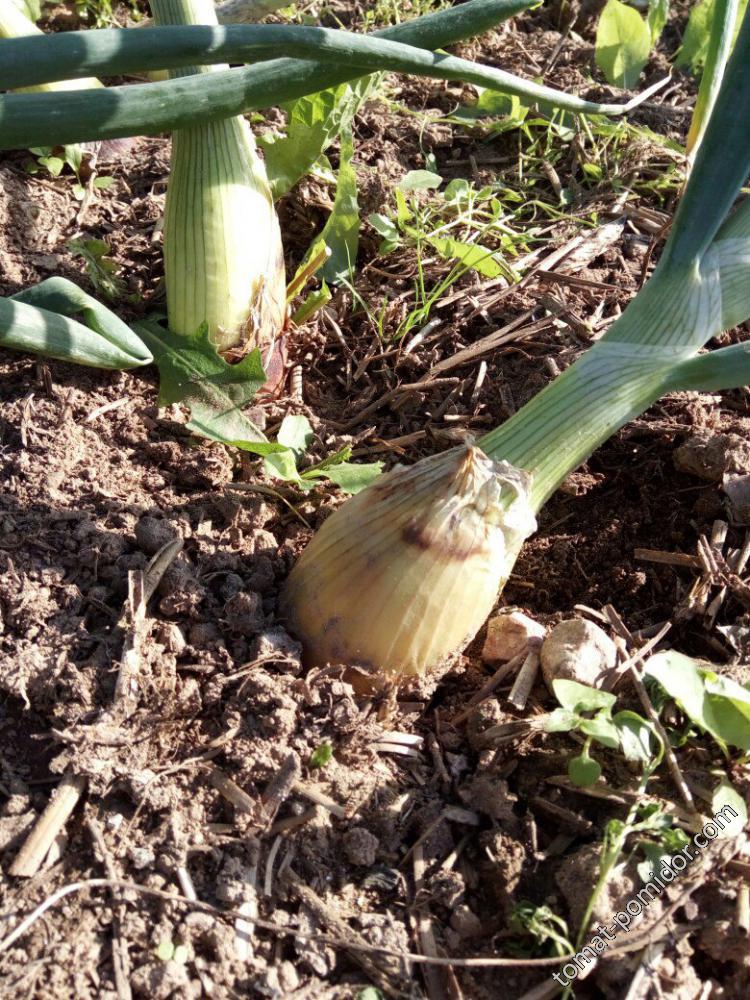
To give you an example from my own garden right now: I have two beds of onions grown from sets. The tops on those have already started to fall over, the bulbs are maturing and swelling up, so I have completely stopped watering them.
But right next to them is a bed of onions I grew from seed transplants. They are standing tall, looking cheerful, and actually got even greener. I water those every single morning, just a little bit–about 5 to 8 gallons (20-30 liters) spread across a 20-foot (6-meter) bed. I have loamy soil, which holds moisture well, so that small daily amount is plenty.
As for the downy mildew: it usually starts when there are massive temperature swings (blazing hot days followed by cold nights) which create heavy morning dew. Right now, the forecast shows very warm nights ahead, so this current weather pattern will actually keep the mildew away!
👨🔬 Editor’s Botanical Note: The Downy Mildew Triangle
Svetlana’s fear of watering onions because of downy mildew (Peronospora destructor) is very common, but it stems from a misunderstanding of how the disease works.
For a fungal pathogen like downy mildew to explode, it needs the “Disease Triangle”: a host plant, spores, and the right environmental conditions. Downy mildew spores do not wake up simply because the soil is wet. They require cool temperatures (below 75°F / 24°C) combined with high humidity or standing water (dew) on the leaves themselves.
As Ludmila accurately points out, the worst trigger for this disease is a hot summer day followed by a cold night, which causes heavy condensation (dew) to form on the onion tops. A steady heatwave with warm nights actually suppresses the fungus! By watering the roots early in the morning, you ensure the tops remain dry going into the night, allowing you to safely hydrate the swelling bulbs without inviting disease.