📌 Quick Summary: Stop Your Daikon from Bolting
- 🛑 The Bolting Problem: If your daikon radish is sending up flower stalks (bolting) instead of growing a thick root, you are planting it at the wrong time. Spring/early summer planting triggers seed production due to long daylight hours.
- 📅 The Golden Window: The secret to giant daikon is planting it in late July or early August. As the days get shorter going into fall, the plant focuses entirely on root growth.
- ♻️ Perfect Crop Rotation: Daikon is the ultimate succession crop. As soon as you pull your hardneck garlic, onions, or early potatoes in July, pop daikon seeds right into that empty bed!
- 🐛 Bug Preferences: Interestingly, pests often prefer colored radishes (like Misato Red) over white varieties (like Mino Summer Cross).
Luda, have your pumpkins set any fruit yet? I’ve been struggling for 3 years and can’t get it right. I have an Australian Butter and a Butternut, and neither has set fruit yet. The butternut is just now getting ready to flower. I bought a blossom-set spray today, maybe I should spray them? The Australian Butter already has 3 or 4 long vines, should I pinch them all off? I really want to master growing pumpkins!
Also, regarding radishes – I used to grow daikon without any issues, but for the last three years, it just bolts (goes to seed) or the roots never mature. Any advice?
Yangun wrote:
…for the last three years, it just bolts (goes to seed) or the roots never mature.
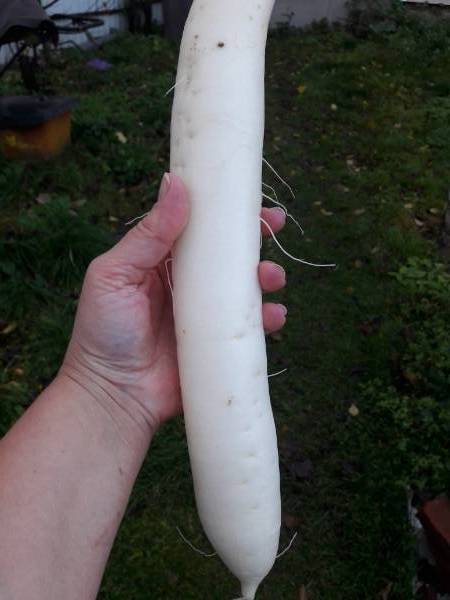
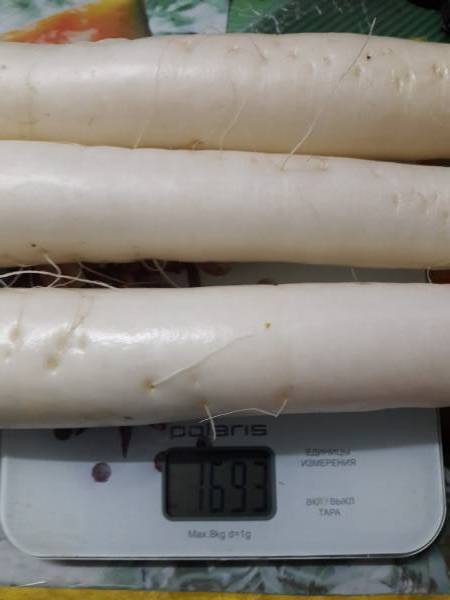
I plant my daikon at the end of July. It has never bolted on me. Here is the one I grew last year–honestly, it’s almost excessively huge in my opinion…
Good day to everyone! 😊
Natko wrote:
Here is the one I grew last year…
Natasha, what a beauty, pure magic! What variety is that?
Natko wrote:
I plant my daikon at the end of July.
Natasha, wonderful daikon. Do you plant it at the *very* end of July, or just sometime in the third week? I was just thinking today that I need to plant some daikon. I plan to pull my garlic at the end of July and pop the daikon right into that empty spot.
Aleksan9ra wrote:
What variety is that?
Good afternoon!
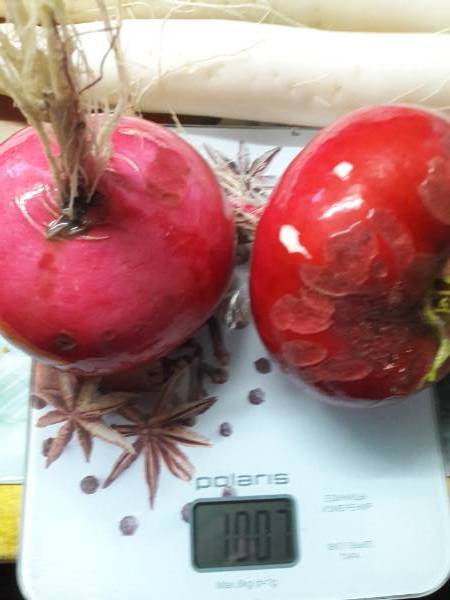
Luda, the white one is Mino Summer Cross.
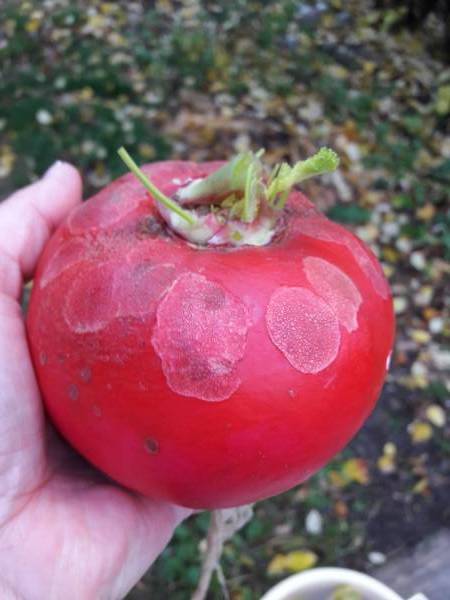
And here is the Misato Red I showed before. Though, it’s a bit closer in texture to a traditional radish. Believe it or not, it’s still sitting perfectly in my fridge!
Olvika70 wrote:
Do you plant it at the very end of July, or just sometime in the third week?
I plant in the very last days of July, or sometimes even early August (my memory isn’t what it used to be!). But yes, I plant it as a succession crop right after harvesting the garlic, onions, or early potatoes.
Oh, and those spots on the red one – that’s where bugs were chewing on it, and it scarred over. They only went after the red one; they completely ignored the white one, even though half of it sits in the dirt and the other 8 to 12 inches (20-30 cm) grows straight up above the ground!
Natko wrote:
…even though half of it sits in the dirt and the other 8 to 12 inches (20-30 cm) grows straight up above the ground!
Natasha! Thank you! That is incredibly helpful and very tempting, I might have to try it!
👨🔬 Editor’s Botanical Note: Day-Length and Succession Planting
Why did Yangun’s daikon suddenly start bolting for three years straight? It all comes down to Photoperiodism (how plants react to day length).
Daikon radishes are traditionally an Asian fall crop. If you plant them in May or June, the long summer days and increasing heat send a panic signal to the plant: “Winter isn’t coming, but the brutal heat is—reproduce quickly!” The plant aborts root development and immediately shoots up a flower stalk (bolting).
As Olga and Natalia correctly discussed, planting daikon in late July or August is the horticultural sweet spot. The days are getting shorter, and the weather is slowly cooling down. This signals the plant to store energy for winter by growing a massive taproot.
The Garlic Connection: Daikon is considered one of the best “Follow-Up” crops. Overwintering garlic is usually harvested in mid-to-late July. Instead of leaving that garden bed empty until winter, immediately sow daikon seeds. The daikon’s deep taproot will break up the soil, pulling nutrients up from deep underground, essentially tilling the bed for you before the snow flies!