Quick Summary of Palka (Stick)
- 🌍 Origin: A highly unusual and rare genetic mutation. Often circulated under the translated name Stick or the original Russian Palka. Grown primarily for its ornamental and novelty value.
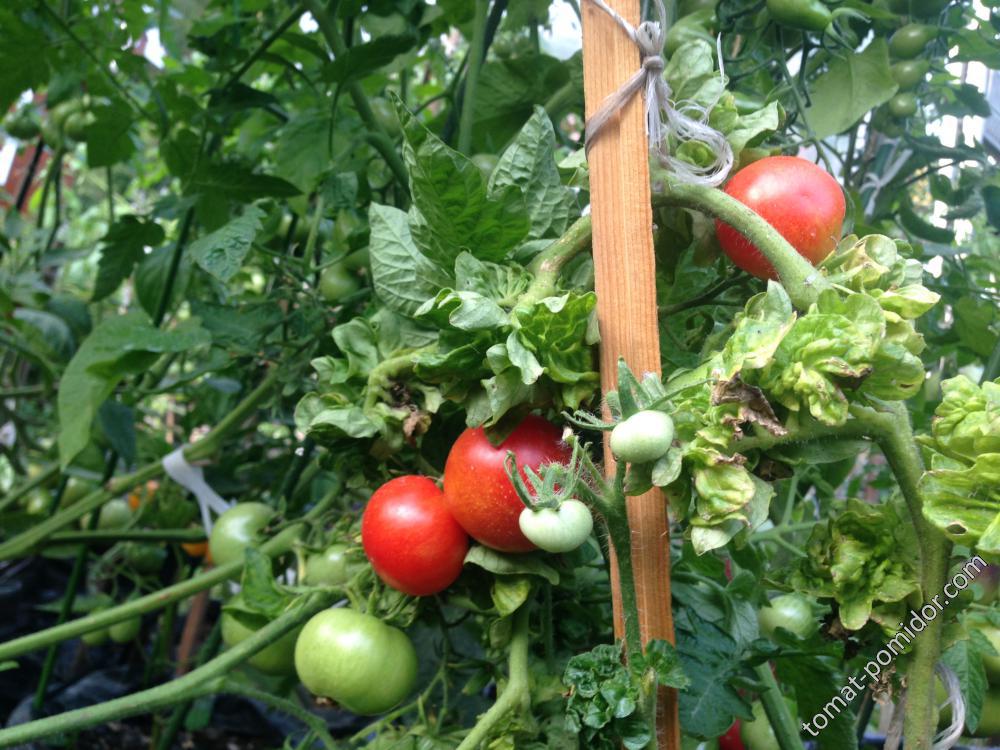
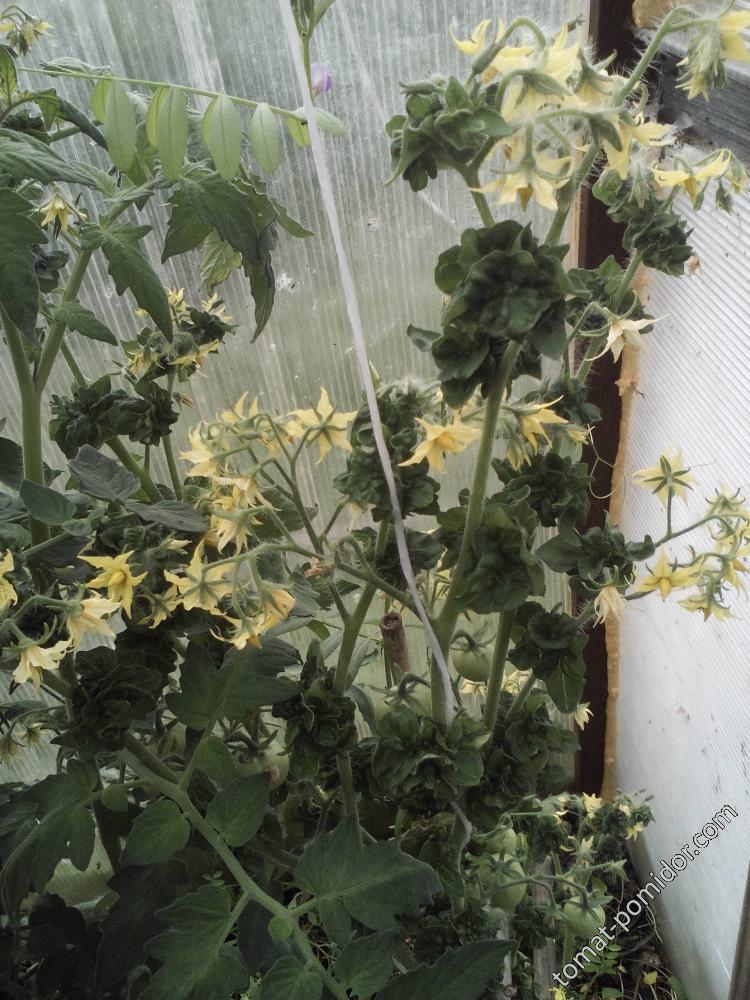
- 🌿 Plant Habit: The plant grows literally like a stick! It features tightly curled, crinkled leaves that look like little pom-poms clustered directly on the main stem. It produces almost no lateral branches, meaning you can plant them extremely close together. Height ranges from 70cm up to 1.5m (2.3–5 ft). Warning: The thick clusters of curled leaves reduce airflow, making the plant susceptible to sheltering pests (ants, spiders) and fungal diseases.
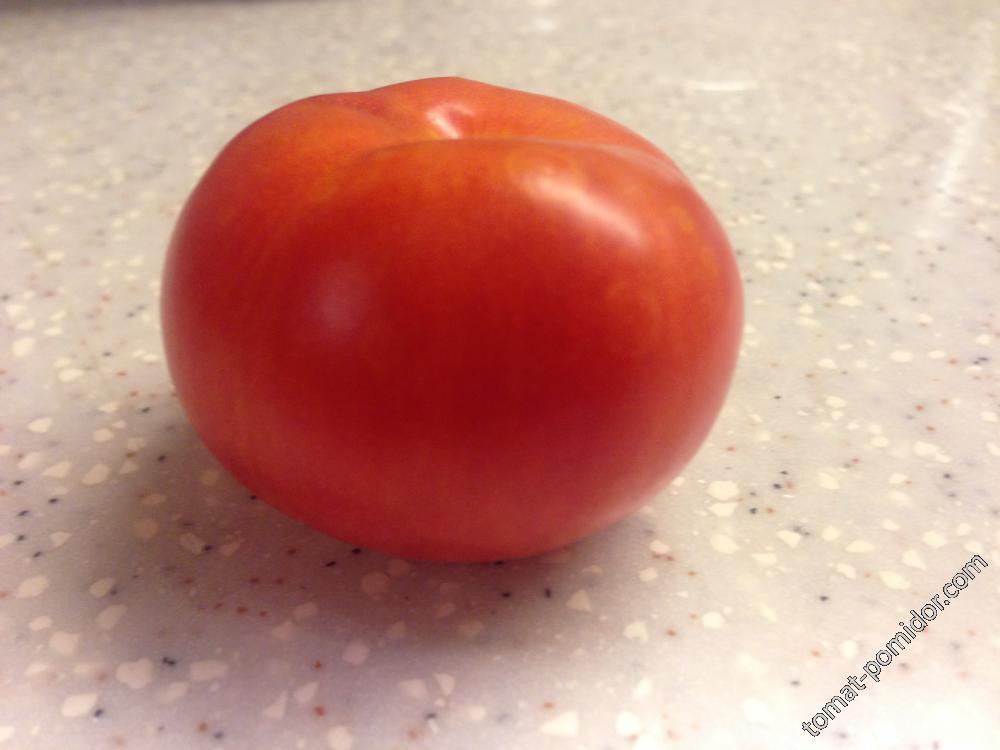
- 🍅 Fruit Characteristics: Small, perfectly round red cocktail tomatoes weighing 50–70g (1.7–2.5 oz). Interestingly, the red skin often features tiny, faint golden/orange speckles or a very subtle net-like pattern.
- 👅 Flavor: Surprisingly good for a novelty variety! It has a classic, punchy “old-fashioned” tomato flavor with a zesty, tangy acidic kick and very juicy, thick walls.
- 🪴 Growing Tip: Despite the thick main stem, it becomes top-heavy when loaded with fruit. You must stake it (“tie the Stick to a stick”) to prevent it from snapping or falling over. It is an excellent choice for container growing.
I searched the catalog but couldn’t find Palka (Stick). It’s an interesting variety worthy of attention not just for its beauty and weirdness, but also for a fairly high yield.
During the flowering period, the bush looked like a blooming stick. For some reason, it took a long time to set fruit; new trusses would bloom, while the ones that already flowered were very slow to form fruit (but maybe the weather was to blame). Then the bush caught up on lost time and started looking like a Christmas tree decorated with ornaments.
The fruits are not large, 50-70g (1.7-2.5 oz), but there are a lot of them.
This is what it looked like during flowering. And this is how it looks on September 5th. The main harvest has already been picked.
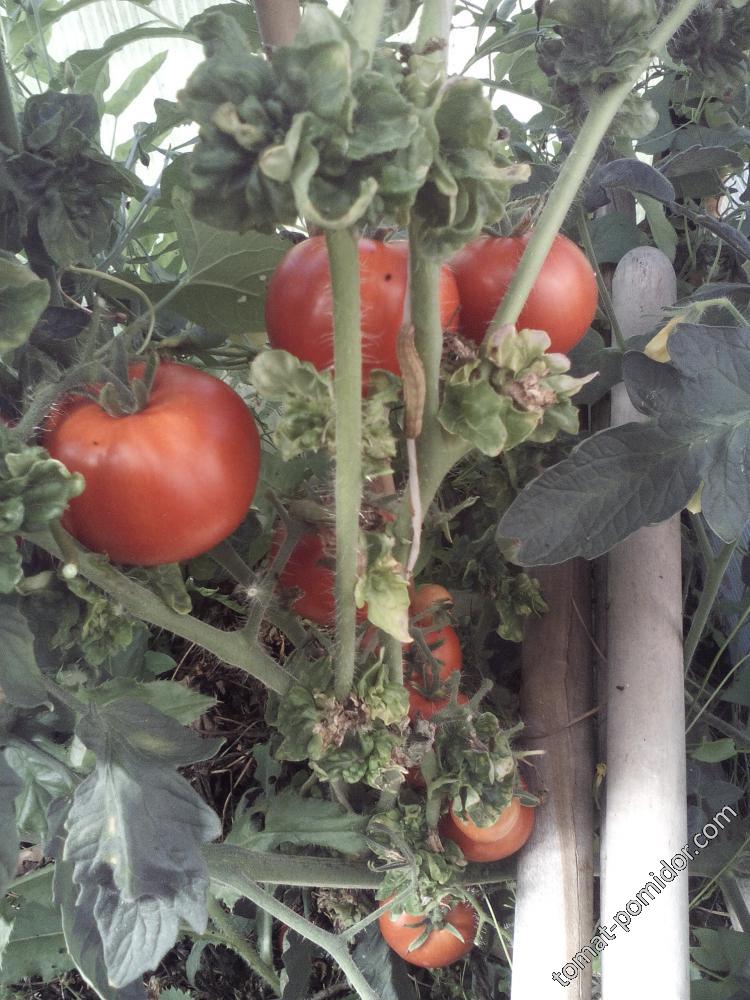
This variety lived in a pot against the wall of our house. “The Stick was tied to a stick.” We didn’t prune any suckers. It didn’t become a long stick, it grew to about 70 cm (2.3 ft) tall. It didn’t drop any blossoms, the tomatoes were of different weights, and it was absolutely undemanding.
The taste is above average (in our opinion). I went to pick some tomatoes one day, picked a couple of red globes off the Stick, looked closely, and wait—they aren’t completely solid red. They are painted! Either a network of vessels shows through the skin, or the skin itself has a pattern. Bingo! Seeds were from the Urals, from Verochka.
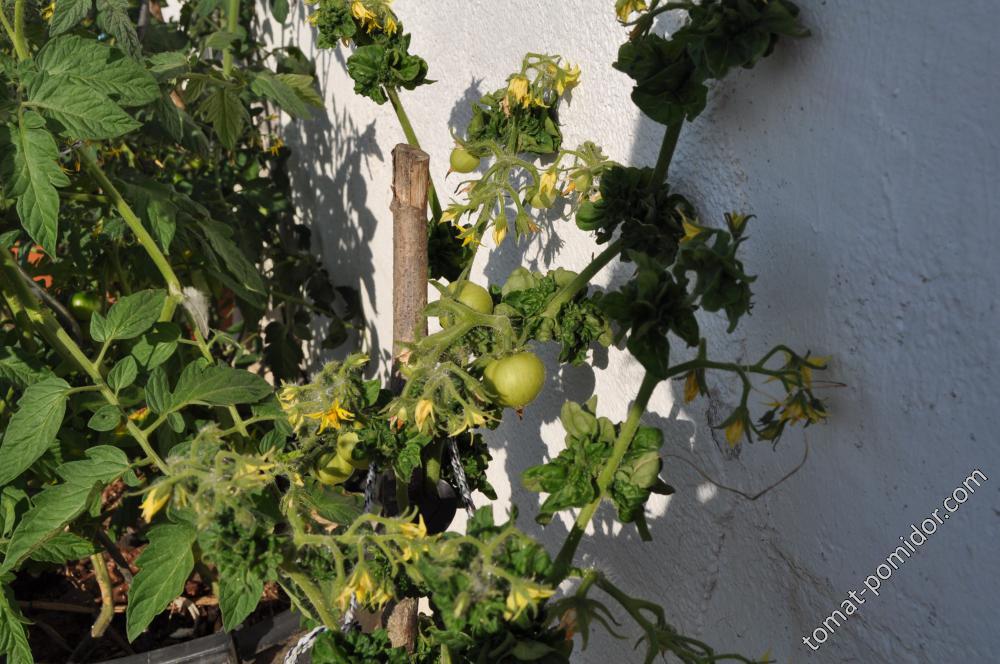
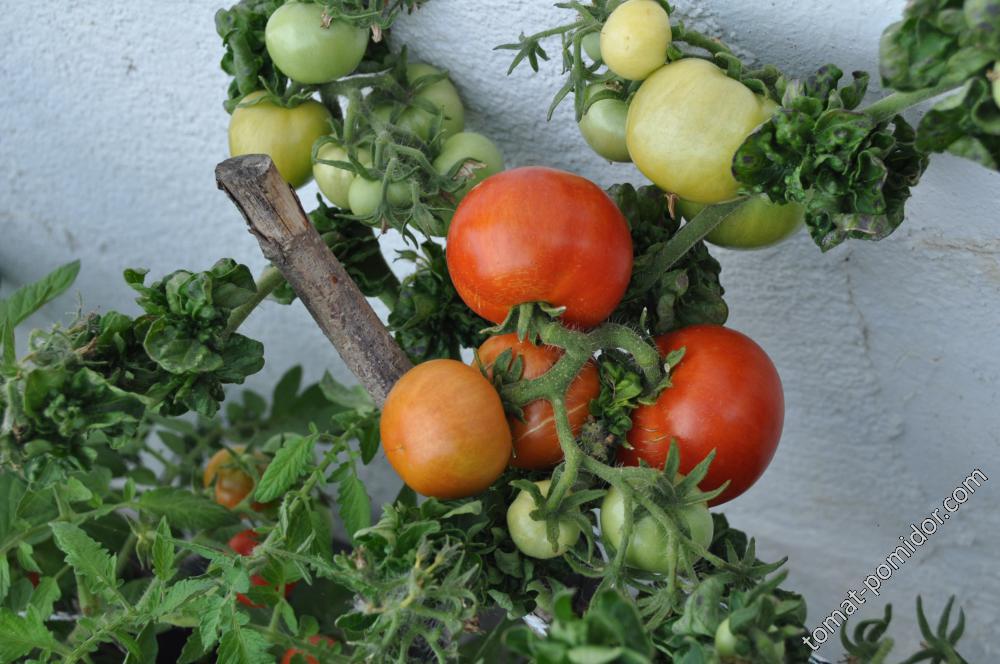
In the greenhouse, it grew over a meter (3.3 ft) tall. Just a bit shorter than me. I’m 164 cm (5’4″).
Last summer I planted this variety just to show my kids the diversity of tomatoes. I planted it along with the early varieties, but Palka is clearly not an early variety.
For me, it became very leggy as a seedling, so I had to give the Stick a stick 😄. It grew outdoors in open ground, and its height was about 70cm (2.3 ft). The taste of the fruits is just regular, tomato-y. But I really liked the orange speckles/inclusions on the fruits.
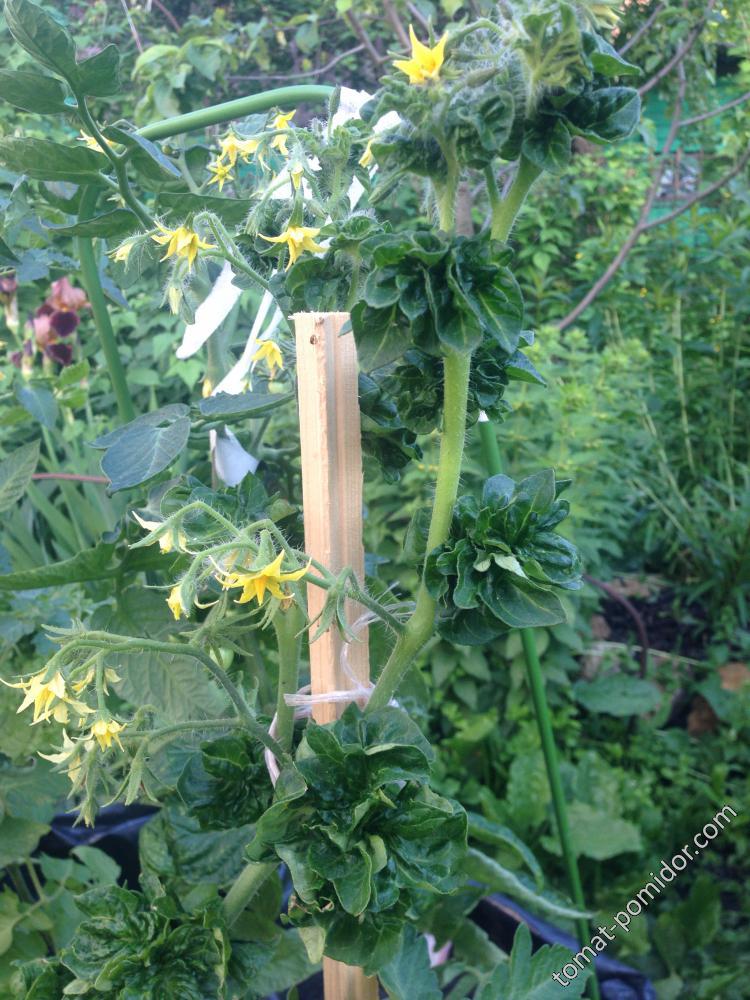
My Palka grew in the greenhouse. It reached up to a meter (3.3 ft) in height. I tied the stem with string (otherwise it would have fallen over). The fruits were small, with a pleasant taste (a bit tangy).
We grew Palka (Stick) from Gusev’s seeds. Height about 80-100 cm (2.6-3.3 ft). I didn’t prune any suckers, and you can plant them very close to each other because it doesn’t branch out horizontally.
You have to tie it up in time. It had more than three stems, and if you aren’t paying attention, it will fall over under the weight of the fruits (even though they are not large). I tried tying the stems together in a “bouquet” so to speak :)) but no, it didn’t like that; the stems interfere with each other’s development. In terms of ripening, it was mid-early.
The fruits are round, with no hard core at the stem, weight about 50g (1.7 oz). We really loved the taste—the walls are thick, there is juice inside, it has a very pronounced tomato flavor, zesty, with an acidic kick. It’s the kind of old-fashioned flavor our family loves and misses so much. When you bite into it, it somewhat reminds you of a semi-ripe gooseberry. Don’t think it’s purely sour—absolutely not, the tanginess is there, but there is sweetness too.
It has one major quirk: very beautiful curly leaves, gathered in little rosettes/pom-poms near the stem. It looks attractive. BUT there is a downside to this: the leaves are tightly curled, so they get very poor airflow, and as a result, all sorts of nasties like to settle inside—from ants and little spiders to the most unpleasant thing of all: terrible fungal diseases. The leaves get hit by fungus first.
I plant the Palka variety every year. I value it for its compactness. You can always find a place to squeeze it in somewhere.