Growing Lilies: Planting, Care, and Transplanting
By Pomidoroved
I love lilies! I mean, I love a lot of things, but I love lilies in a different way than I love, say, cabbage. Probably because they are prettier. Although, a good head of cabbage can be pretty too… But lilies are definitely easier. 😉
I’m going to tell you a little bit about how to grow them, and just a little bit about how you shouldn’t grow them.
To grow lilies in your garden, you will need:
- A garden plot – 1 piece.
- Lily bulbs – to taste. The most trouble-free ones are Asiatic hybrids. That’s actually what this article is mostly about…
- Sand and peat moss – about a bucket per bulb.
Planting Lilies 🌱
Let’s start with how NOT to plant lilies. You absolutely should not plant them in heavy clay or dense loam, especially if you have a high water table or if water sits there in the spring. In these conditions, your bulbs are almost guaranteed to rot. (Although some lily professors claim that the American lily doesn’t mind a flood).
Lilies grow exceptionally well in sandy-peat soil, but the peat shouldn’t be highly acidic. If you know (or suspect 🧐) that your soil is very acidic—add wood ash! Wood ash is exactly what you need; it de-acidifies the soil while enriching it with potassium, phosphorus, and a bunch of trace minerals. The lilies will appreciate it. (Just don’t overdo it—lilies don’t like overly alkaline soil either).
⚠️ ATTENTION!
Note the part about wood ash—this applies to Asiatic lilies. You absolutely MUST NOT put wood ash under Oriental lilies. You can usually find out exactly what kind of lily is currently sitting in the packet you just bought by carefully examining the label. They sometimes write it there. Granted, it’s better to read the labels before buying, but hindsight is 20/20 for all of us. 😅
If you have solid clay soil, but you desperately need lilies anyway, you’ll have to put in some elbow grease. Prepare a mix of sand and peat, or just good rich topsoil. In this case, it is best to plant the bulbs in raised beds, elevated about 15-20 cm (6-8 inches) above the ground. These flowers don’t require massive volume; a single bulb grows beautifully in just 5 liters (1.3 gallons) of soil. So, by building a cute little border and dumping a few buckets of sandy soil in it, you can successfully grow a whole heap of lilies.
If you have clay soil, do not just dig a hole, fill it with sand, and plant the lily in it! Water will simply slide off the surrounding clay, collect in the sandy hole like a bathtub, and once again, your bulbs will freeze, suffocate, and rot. 🚫💧
Alright, soil sorted…
Location: Sun vs. Shade ☀️⛅
Lilies do love light. In the sun, they grow much faster, bloom earlier, and bloom more profusely than in partial shade. Even the color of the flower becomes richer in the sun. But consequently, they also finish blooming and fade much faster in full sun.
It follows that in the shade, although they bloom less profusely, they last much longer. However, you definitely shouldn’t plant them in deep, full shade—slugs will eat them there, and they will wither away from diseases.
The absolute best spot: light dappled shade at high noon, with full sun in the morning and late afternoon. Then the flowers will be large, vibrant, and won’t fade as quickly as they would sitting in the blazing sun all day.
When to Plant Lilies? 🗓️
You can plant them anytime, except when you can’t plant anything (i.e., winter and late fall).
- You can plant lilies in the spring, when garden centers are cheerfully selling half-dried Dutch bulbs.
- You can plant lilies in the summer, when a cheerful local seller at the farmer’s market happily sells you a pot with a lily already in full bloom.
- You can plant them in the fall, if you have something to plant. Because by then, the cheerful local seller has packed up, the garden centers have sold off their Dutch packets at clearance prices, and thrown the rest in the dumpster. Mostly, in the fall, you plant what your gardening friends give you when they divide their overgrown clumps, or when your own lilies have multiplied and need dividing.
You should plant them at a depth of 10-15 cm (4-6 inches), but you can go deeper, up to 40 cm (16 inches). Note: You only need to plant them deep if you want them to produce a lot of new baby bulbs, or if for some reason you want the lily to bloom later in the season. Usually, 15 cm is perfectly fine.
Gardening books say that every 3-4 years, lilies should be dug up, divided, and transplanted. In reality, just look at what has grown in your yard. When you see that the lilies are growing way too thickly crowded together—that’s when you transplant and divide them. Act according to the situation. ✂️
It is highly recommended to mulch your lilies in the flowerbed. This prevents the soil from drying out and protects the flowers from fungal diseases and weeds.
Lilies After Blooming 🥀
After they finish blooming, under no circumstances should you cut down the stems and leaves! For some reason, a significant portion of flower lovers don’t know this. I mean, you probably know it, but most of the people I know don’t.
Those leaves will continue working right up until autumn, storing energy and nutrients in the bulb for next year’s bloom. However, you should snip off the green seed pods immediately after the petals drop, so the leaves don’t waste precious energy feeding seeds you don’t need.
Well, that’s about it—I shared what I could! I’d love to see photos of your lilies on our forum or hear your thoughts in the comments. 🌺
Grower Comments & Experiences:
Wow! I just got interested in how to PROPERLY plant lilies, and boom! Such a magical article on my favorite site!
This summer, my neighbor offloaded about a dozen lilies with buds on them onto me. I just “stuck” them in the dirt and left them. And recently I was buying tulips and got talked into buying 2 white lily bulbs. I planted them 10 cm deep on Nov 3, 2012. I really want them to grow up pretty. If they do, I’ll definitely post photos!
A lot depends on the type of lilies—there are no problems with Asiatics, but with Orientals, everything is different. Though, if you know a couple of “secrets,” they will grow and survive the winter freezes just fine, even the famous Stargazer, for example. 👍
Thanks for the detailed info. This year I’ll try to divide my lily bushes; I was just too afraid to touch such beauty before.
Awesome article: brief, with humor, and contains only what’s valuable. And literally just a few words about Oriental lilies cleared up my questions about growing them. I am a beginner gardener, and last year I planted lilies in a wind-protected, but incredibly sunny spot. And indeed, the lilies faded very quickly. Thanks for the article. If I have anything interesting to show, I will definitely share!
You explained everything so simply and clearly, thank you! I also made that exact mistake—I cut down the green stems, and the next year they got thinner and the flowers got smaller. Thanks for the advice, all the best to you!
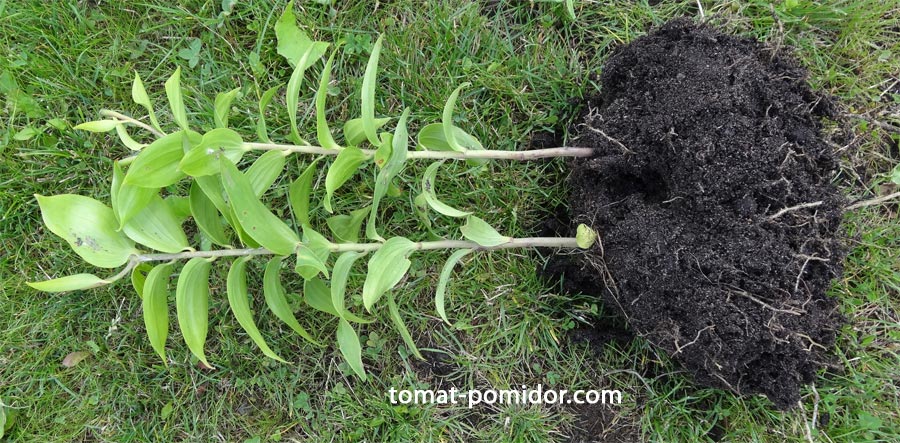
Hello! I am waiting for the season to check on my experiment. It started out positively when I accidentally snapped a lily off at the root in June and just stuck the broken stem into the soil. It took root and actually bloomed with three flowers!
So, I went further and did exactly what Pomidoroved advised NOT to do: I took some lilies that had finished blooming, cut their stems in half, and planted the stems like cuttings. I wrote about it in my garden journal. I am waiting for spring to see what came of it. At least until autumn, they looked perky. I didn’t disturb them in the fall to check what was happening underground—maybe they are just standing there like flowers in a vase of water, thanks to the rain and watering. I specifically planted them in a spot where lilies had never grown before. We’ll see what happens. Maybe nothing. I’ll report back. 🧐
ytanya said:
I am waiting for the season to check on my experiment…
@ytanya, the season has started, I’m curious, what were the results? 👀
Nadezhda, hello! Out of all the stems planted this way in the spot where lilies hadn’t grown before, two lilies emerged! Not a lot, but it is a positive result. Now I am waiting for them to bloom so I can know exactly which varieties rooted. 🌺
ytanya said:
Out of all the stems planted this way… two lilies emerged!
Tatiana, your experiment is missing some context. There are 9 groups of lilies (even more now). When talking about what you did, it is absolutely crucial to mention which group of lily you did this with.
Planting half a stem and having a couple of bulbs grow from it—that can ONLY happen with the Asiatic group, because they naturally form “bulbils” (tiny bulbs) in their leaf axils. A stem broken at the root and planted can also produce for other groups, because several baby bulbs form in the zone of the stem roots (just above the main bulb), but anything higher up the stem won’t produce anything.
And you can do all this without involving the stems at all—just pick off and plant the baby bulbils from the leaf axils of Asiatic lilies. Furthermore, all lilies very easily form new bulbs from the individual scales of the main bulb.
Lily growers, today I bought some lilies (2 LO hybrids and 2 Orientals). Should I put them in pots and out on the balcony? Or in the fridge for now?
In the fridge. ❄️
Thank you, I feel much better about my lilies now! I adore them! 🌸