📑 Table of Contents
Growers’ Notes and Photos
Drosera said:
Actually, King Pineapple translates better to “Royal Pineapple”.
Sveta, it’s already listed in tons of seed catalogs under that exact literal name. 🤷♀️
Svetikk said:
Sveta, it’s already listed in tons of seed catalogs under that exact literal name. 🤷♀️
I agree with Svetlana that grammatically “Royal Pineapple” makes more sense. Sorry for butting in!
Tiffany said:
Sorry for butting in!
Yulia, it’s an open forum catalog, why apologize? 🤷♀️ And nobody questioned the clunky translation anyway.
Drosera said:
And nobody questioned the clunky translation anyway.
Sveta, I changed the thread title. Please don’t delete our messages, so people understand where its second name came from since it’s already gone public.
Svetikk said:
Sveta, I changed the thread title.
I moved it to the letter K (Latin alphabet).
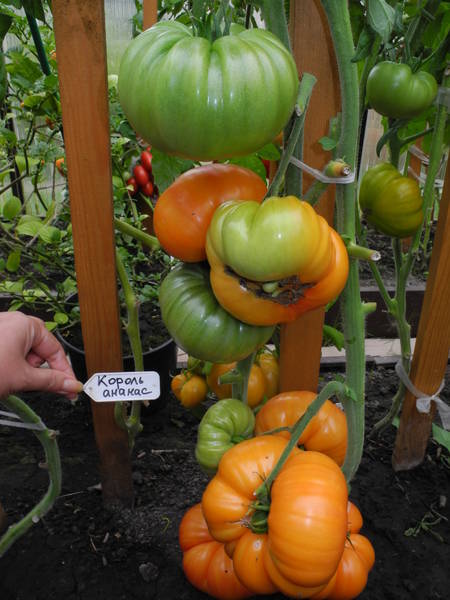
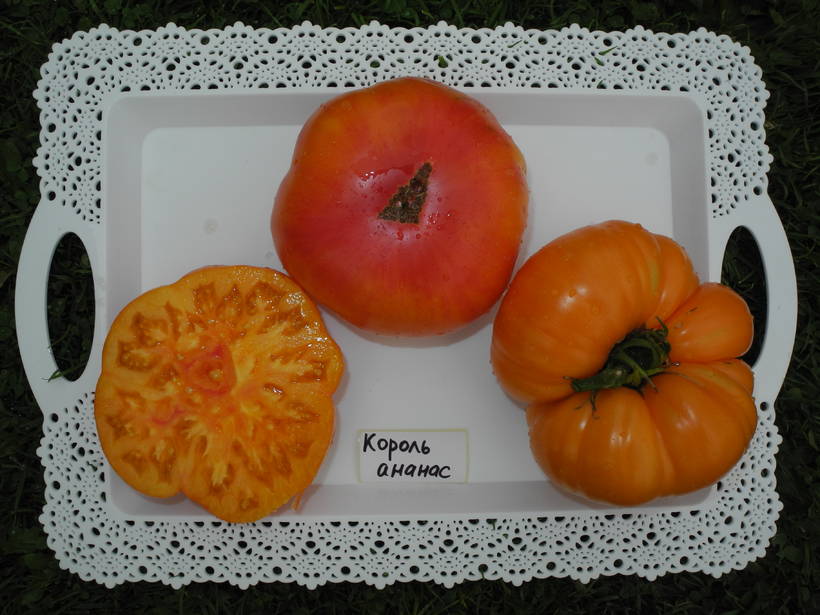
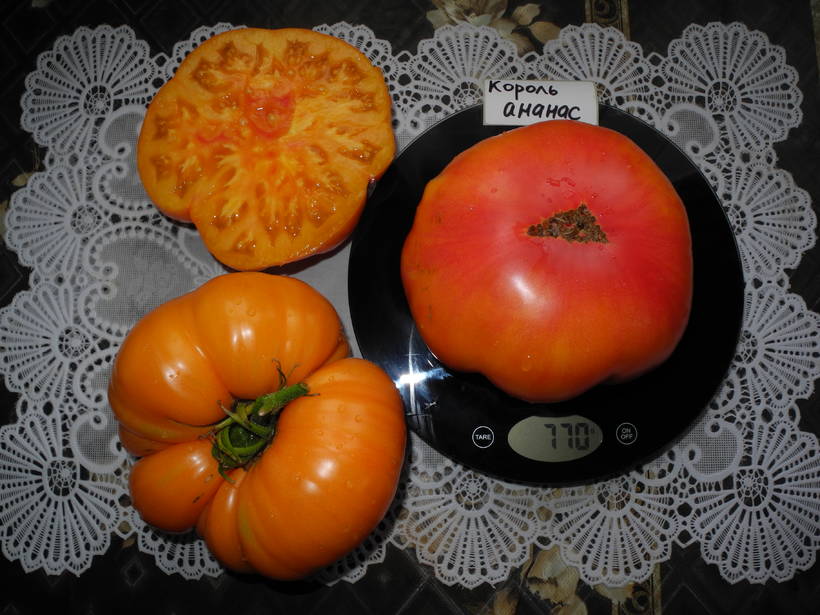
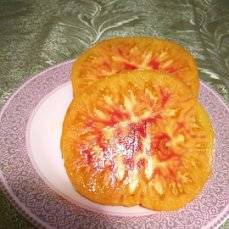
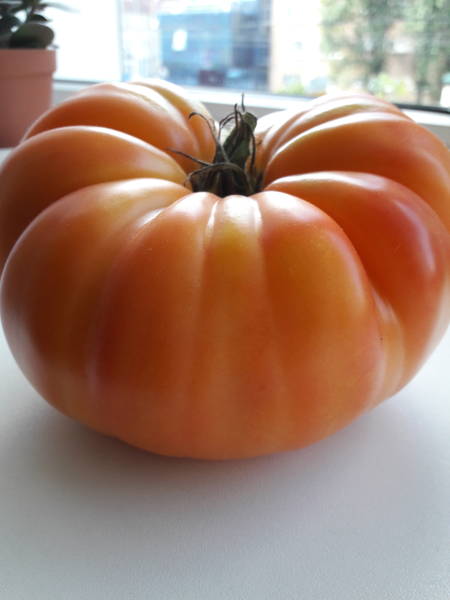
I grew this two years in a row from Angelina’s seeds. In 2018, I had it both in the greenhouse and out in the dirt. The greenhouse plant was less flavorful, cracked when overwatered, and the fruit was smaller. But the outdoor vine pumped out phenomenal tomatoes in taste, looks, and size. It’s truly a sweet tomato, more like a dessert than a veggie. When you eat it, you realize tomatoes really are berries, just massive 14-23 oz (400-650 g) ones!This variety is genetically large-fruited, just look at the size of the blossoms and the truss structure. It’s not just a truss, it looks like an eagle’s claw. Those thick, sturdy stems don’t snap even under the weight of huge slicers. In 2018, my outdoor plant was basically sprawling on the ground; it didn’t set a ton of fruit, but the quality was top-notch. It was the only bicolor that actually tasted good in the greenhouse, too.
In 2019, I planted just one vine from saved seed outdoors. Yield was definitely higher, but the flavor… Maybe it was just a bad year for bicolors, or the spot just didn’t suit King Pineapple, but I didn’t even save seeds from it. It was somehow woody this year, with hard shoulders and a grassy aftertaste. If that had been my first time trying it, it would have been permanently crossed off my grow list.
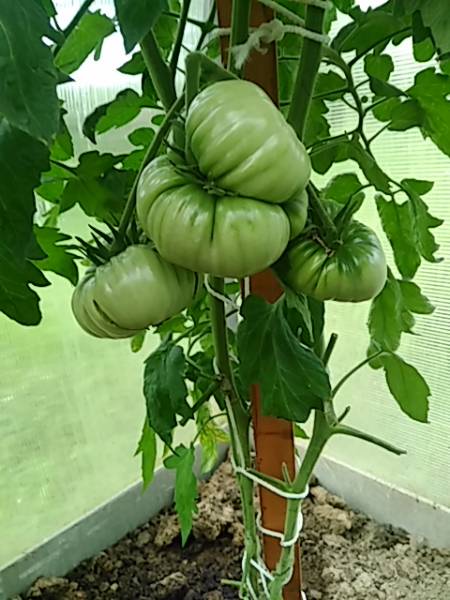
The plant habit is just gorgeous! Easily the most beautiful of all my varieties. Strong, slender, very uniform foliage. It doesn’t look like it got too much nitrogen, but just bursting with health.However, a big BUT: it is incredibly lazy and acts like a total narcissist (maybe I praised the seedlings too much). It’s flowering reluctantly and just refuses to set fruit 🤦♀️. Maybe it’s just a late-season variety? Sown on April 4th (I ordered late, thanks for the seeds, Svetikk!). The other varieties from that same seed-starting batch, even the ones pushing too much nitrogen, are already fruiting heavily.
Oksana Evgenievna said:
It was the only bicolor that actually tasted good in the greenhouse, too.
That’s exactly why I have high hopes for this variety. I’m not really counting on a massive yield this year, but I’m dreaming of at least getting a taste test, saving some seeds, and figuring out how to tame it for the future.
T@tk@ said:
Maybe it’s just a late-season variety?
It’s mid-late. In a good climate with the right feeding schedule, it can adapt and behave almost like a mid-season. For me in 2018, the outdoor plants started ripening around August 8-10, but I started my seeds way earlier than April 4th.
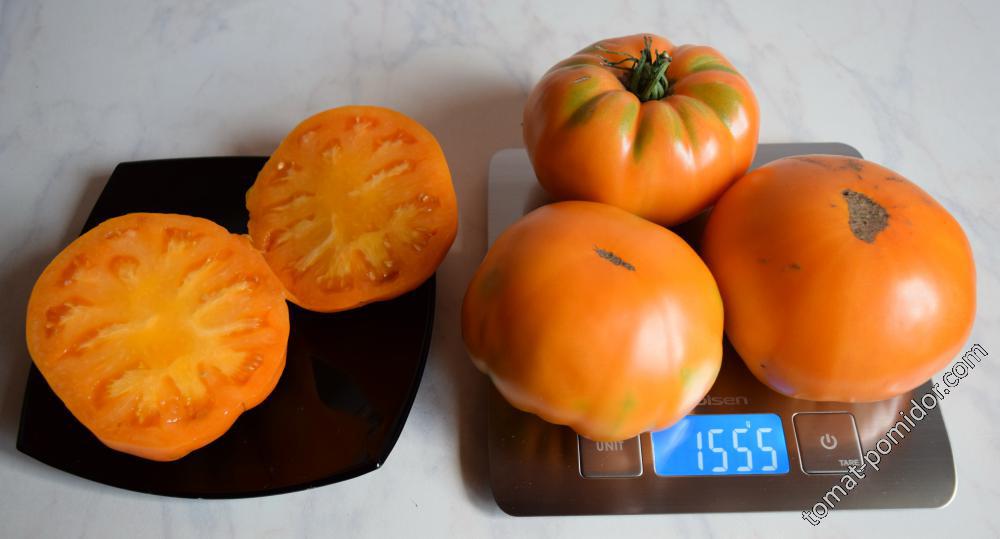
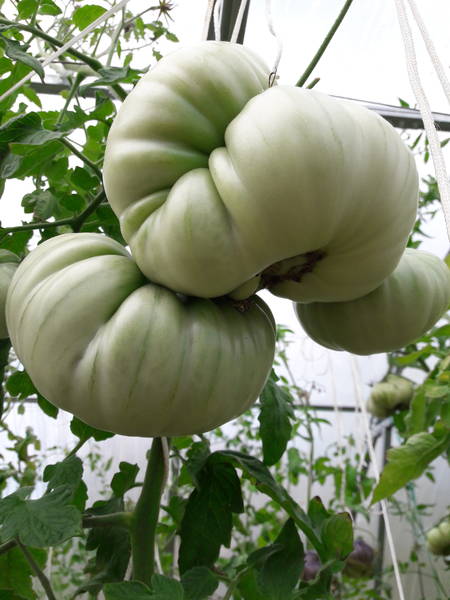
I grew 8 vines in my polycarbonate greenhouse in the middle rows. It started setting fruit late and didn’t set much, only about 5-8 tomatoes per plant. But on the bright side, they were mostly massive slicers! My biggest one was just 2 oz (55 g) shy of hitting 2.2 lbs (1 kg).The flavor of the first ones was basically nonexistent, completely bland. By mid-August, they started getting sweet, though probably not to their full potential for this variety. I’ll definitely be giving it another run.
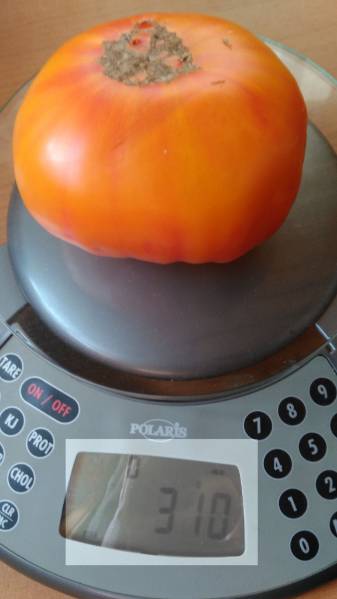
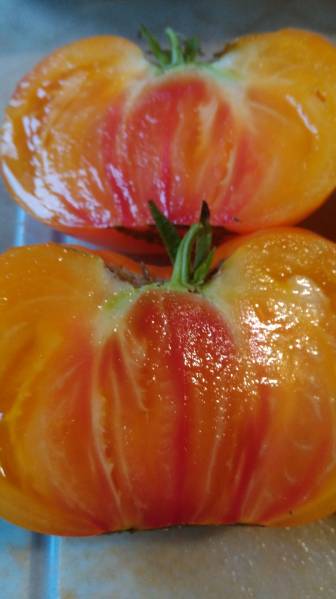
Drosera said:
Actually, King Pineapple translates to Royal Pineapple.
Sorry for dwelling on the little things! 🙄 But originally it was more accurate as “King Pineapple”. “Royal” would be “Royal Pineapple”.
This is my absolute favorite variety, I grow it every single year!!! Such a workhorse, sets fruit all the way up to the greenhouse roof. The flavor is super fruity, absolutely zero acidity!!!!
Strong, vigorous vines and massive yields of gorgeous, bright bicolors weighing up to 3.3 lbs (1.5 kg) or more! They have a wonderfully sweet flavor with a fruity aroma and aftertaste.This is a family heirloom from Dale Thurber’s collection. Dale’s description: Nelson Moore from Indianapolis, IN, bought the seeds in 1990 from a 93-year-old gardener who said the variety had been in his family since his great-grandfather. It’s a regular-leaf indet with epic yields of beautiful bicolors in the 1-2 lb range, boasting a superb sweet flavor.
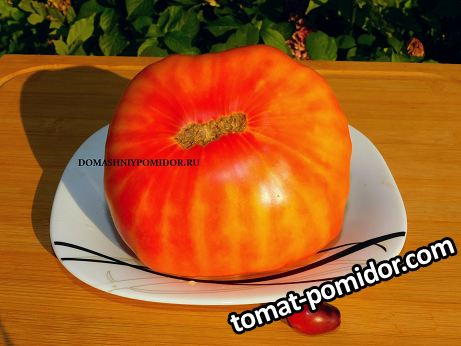
Full Summary: Plant, Yield, Taste and Storage
- 🌿 Plant: A highly vigorous, regular-leaf indeterminate with a slender, uniform, and healthy habit. It’s known for having incredibly thick, sturdy trusses (described as looking like an “eagle’s claw”) that won’t snap under the weight of massive fruit.
- 📈 Yield: Yields can vary widely. When it hits its stride, it’s a prolific producer, continuing to set fruit up to the greenhouse roof. However, several growers note it can be “lazy,” dropping early blossoms or refusing to set if conditions aren’t perfectly dialed in. Overall fruit count might be low (5-8 per vine), but the sheer weight of each tomato makes up for it.
- 👅 Taste: Universally praised as a dessert-level tomato when fully ripe. It boasts a rich, fruity, buttery flesh with zero acidity and distinct sweetness. However, early-season tomatoes or those grown in poor years/waterlogged soil may suffer from hard shoulders and a bland, grassy taste.
- 📦 Storage: Not built for long storage. Like most large heirloom bicolors, these are meant to be eaten fresh or sliced immediately.
- 🌎 Who Reviewed It: Extensively grown and reviewed by gardeners across USDA Zones 3 through 7 (Russia, Kazakhstan, and Spain). It performs excellently out in the dirt, though greenhouse performance is highly dependent on managing water and humidity to prevent cracking and blossom drop.