Growers’ Notes and Photos (USDA Zones 3-5 & 7 Experience)
A truly worthy variety with outstanding yields.
Last year it was among the absolute most delicious tomatoes in my garden: meaty, with a balanced flavor that leaned heavily sweet. This year the yield was identical, but the flavor turned out rather bland. A cold, gloomy July clearly did its dirty work.
Edited February 14, 2017 by Drosera
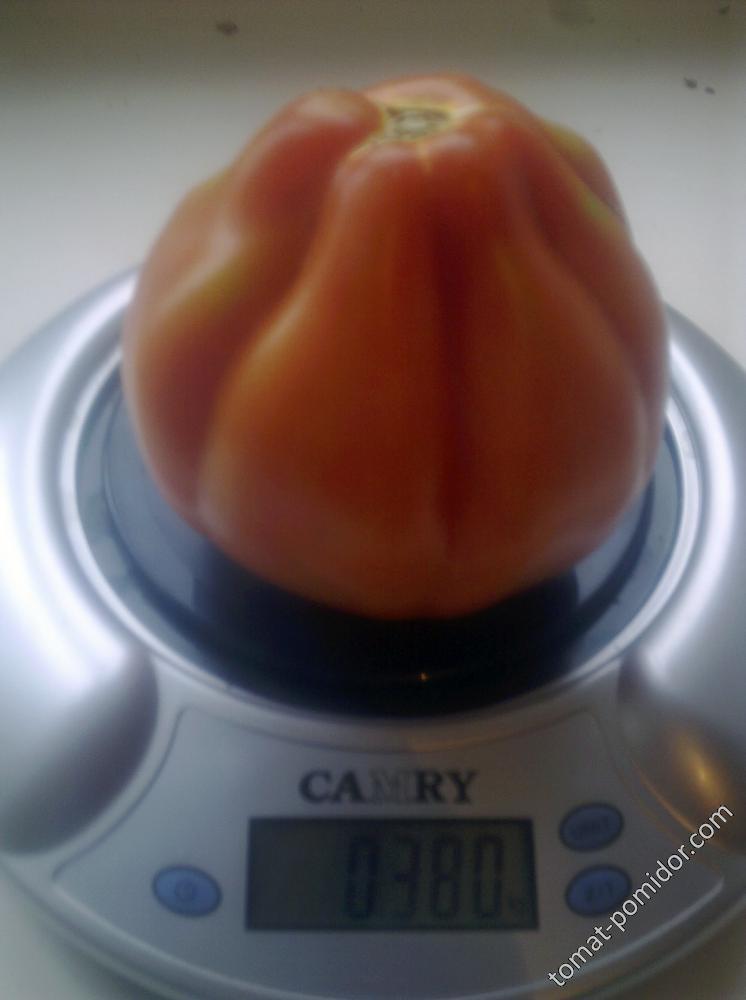
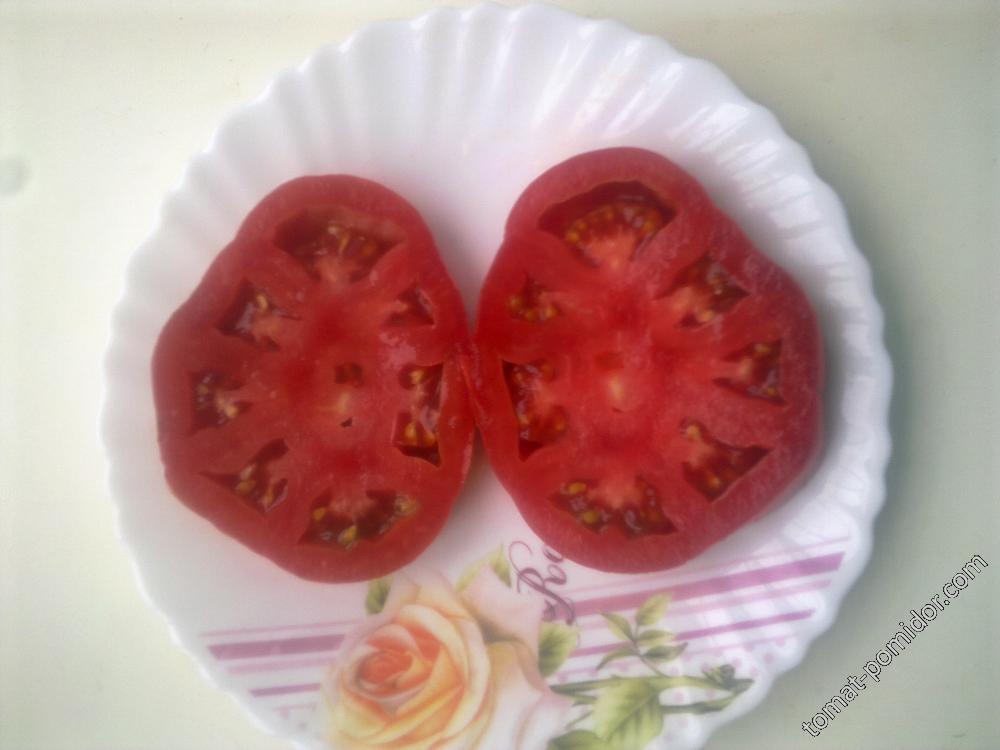
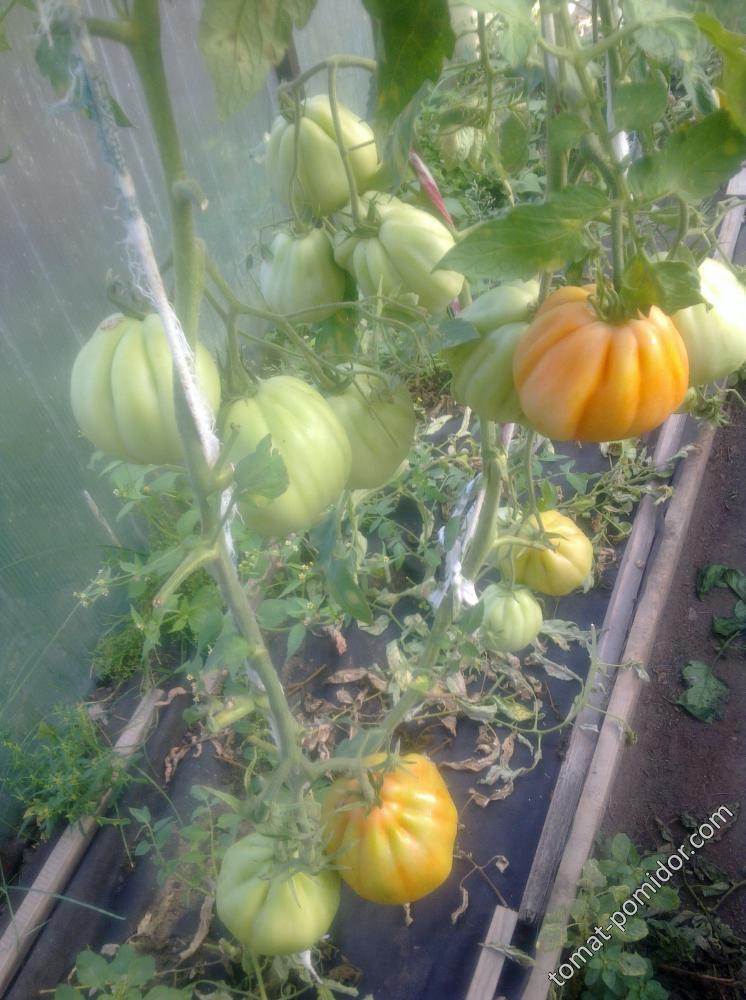
When did you sow your seeds indoors? And how many stems did you train it to?
Sowed indoors on March 5 using commercial packet seeds, and they took forever to germinate. Trained the vine to four main stems. I did not leave standard suckers; the main vine just forks naturally. Even with large fruit, the plant carries all four leaders without missing a beat.
Nadia, don’t you think this variety lost the word “pear” in translation and was originally named Pera D’Abruzzo (Pear of Abruzzo)? Or was the official commercial name just Abruzzo without any mention of a pear?
Also, when posting variety logs, it helps to mention whether it is determinate or indeterminate.
Alexander, my seeds were from Elcom, and the packet was simply labeled Abruzzo. Just recently I came across the name Pera D’Abruzzo in a German tomato atlas, so I wasn’t sure which naming convention to use.
It is an indeterminate vine, tops out right around 6 ft (1.8 m).
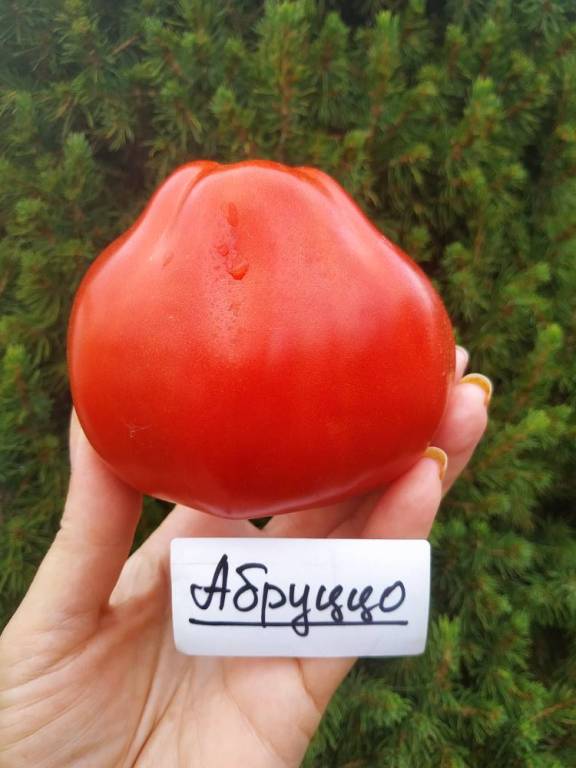
I grew this exact variety as well from Elcom seeds. The picture on the packet did not quite match the actual fruit, but the written description was spot on: early large slicer for greenhouses, climbing to 6.5 ft (2 m), glossy red, deeply ribbed, pear-shaped fruits averaging 10.5 oz (300 g), excellent for fresh salads, paste, and sauce.
I bought the seeds based on the vendor’s recommendation at their booth; she grew it herself, loved it, and warned me that the real fruits turn out much more pear-shaped than the photo on the envelope.
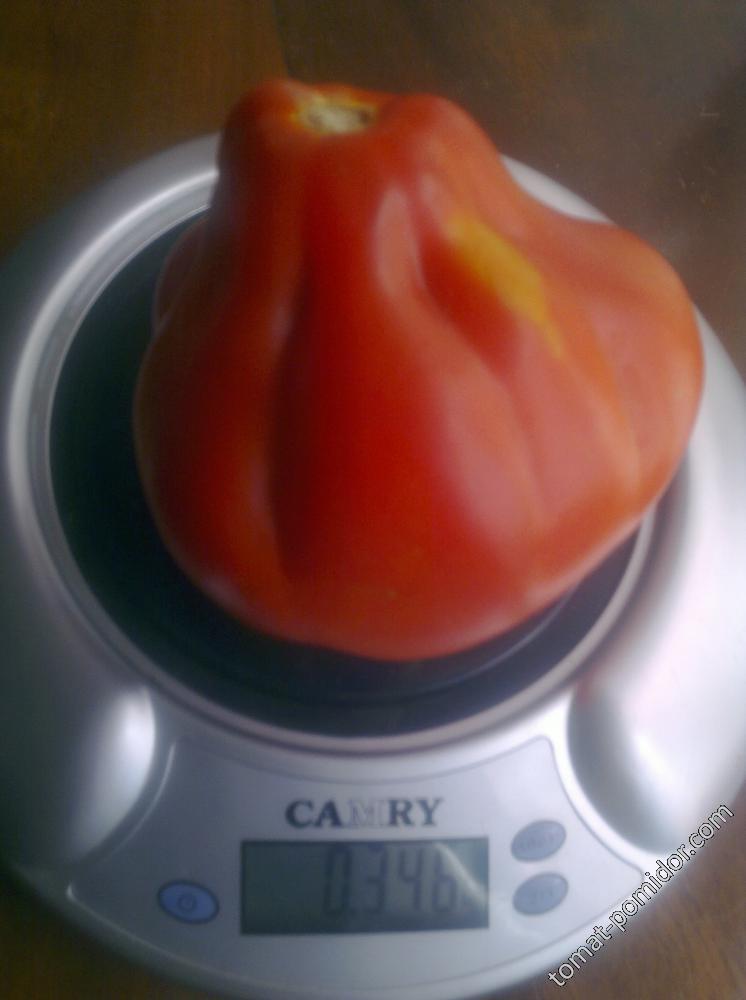
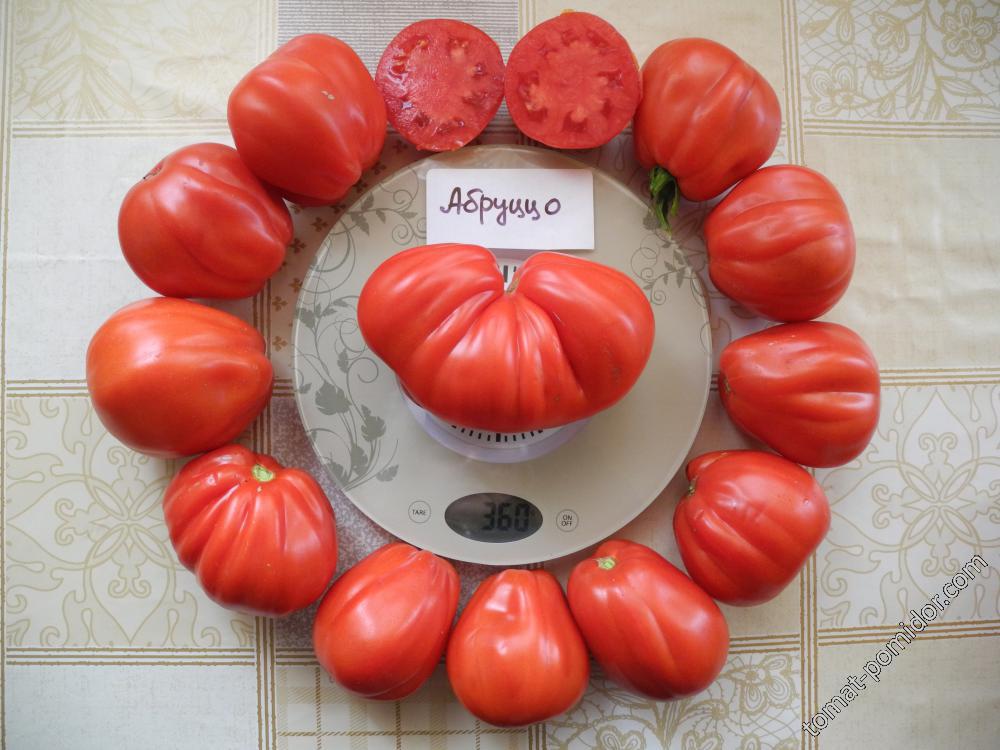
An absolute workhorse of a variety! Set fruit without missing a single truss, yielding 28 tomatoes on one vine. Fruit weight averaged 7 oz (200 g), with top fruits hitting 12.7 oz (360 g). Ran two vines, one in a hoop house and one in a polycarb greenhouse, both pruned to two stems.
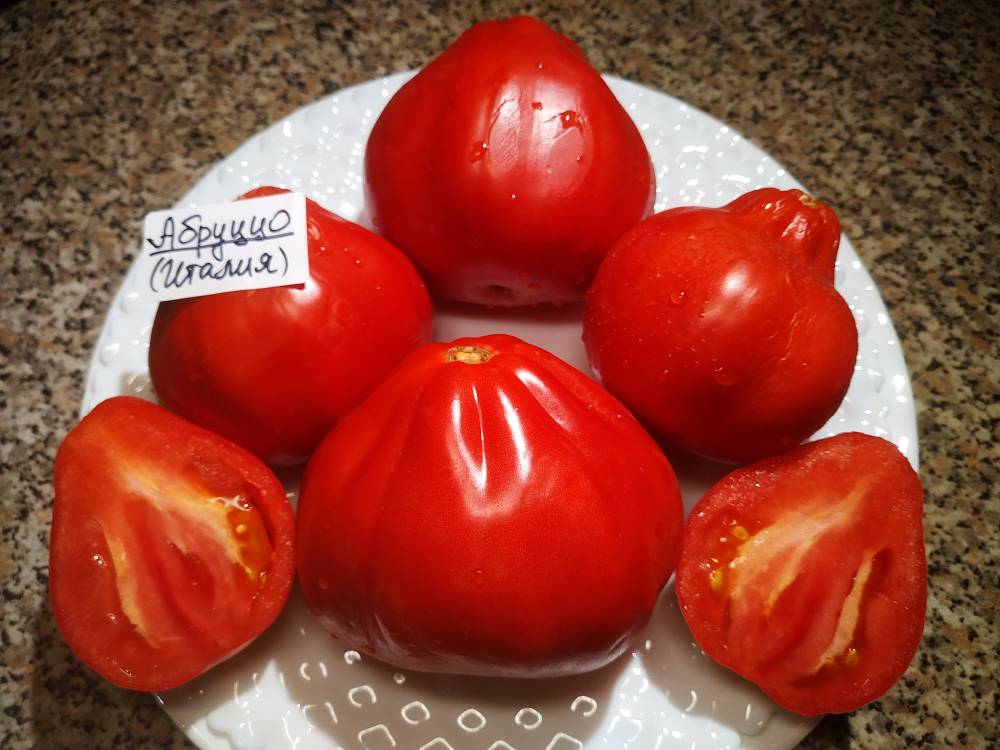
Classic rich tomato flavor, kept very well on the counter, and the interior is dense, fleshy, and practically hollow-free. Here it is side-by-side with my other pear-shaped varieties:
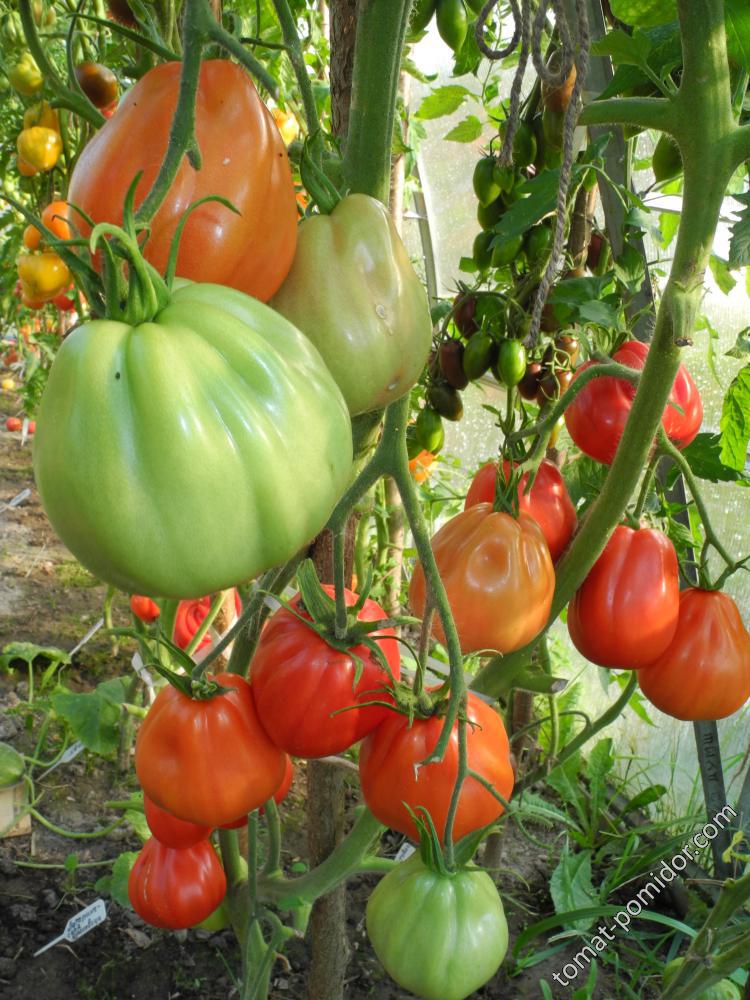
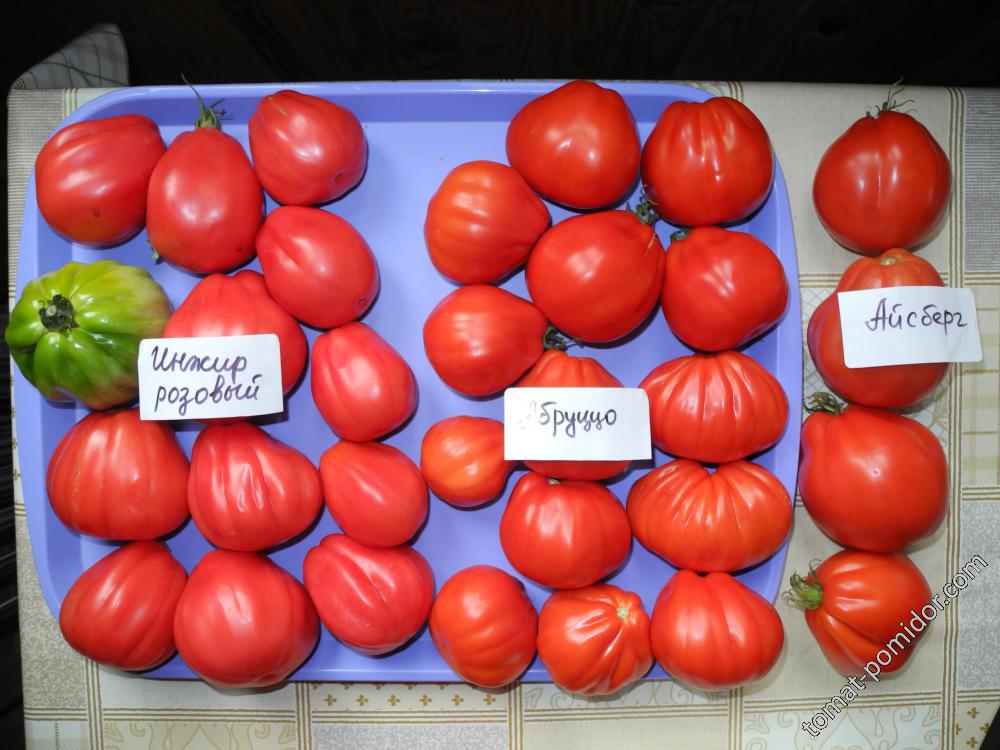
Really enjoyed this one. Meaty, flavorful fruits that work equally well for fresh eating or canning into sauce.
In cooler conditions, the ribbing becomes much more pronounced. When grown outdoors in the open garden, the tomatoes were noticeably more pleated.
At first I figured I had an off-type mix-up, but it really is Abruzzo.
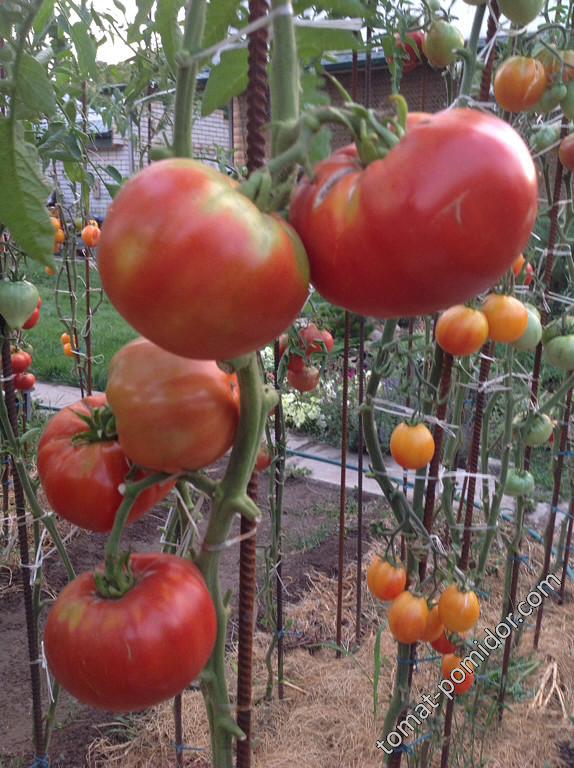
It dropped blossoms heavily during mid-summer heat, but the fruit that did set blew up like balloons! The biggest ones ended up pushing close to 2.2 lb (1 kg).
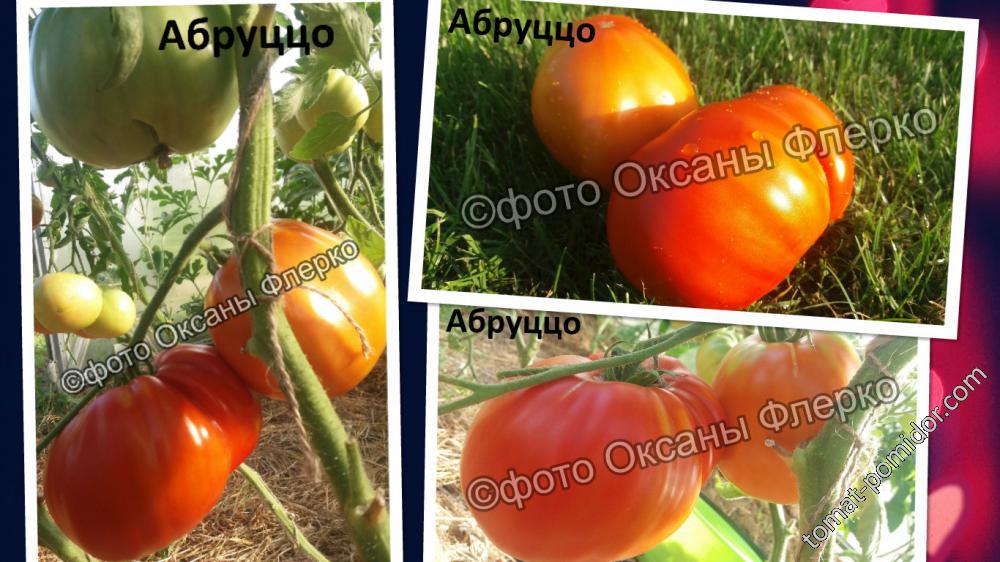
Very mixed feelings on this one. Mid-season maturity, tall vine, and set a ton of fruit. Real heavyweights too.
However, the taste completely fell flat for me: the fruit tops stayed yellow-green and under-ripe, while the core was white and dry. Almost the entire harvest had to be relegated to cooking and sauce. Maybe it was just our weird summer weather. Hard to decide whether to give it another shot, but the sheer yield is tempting.
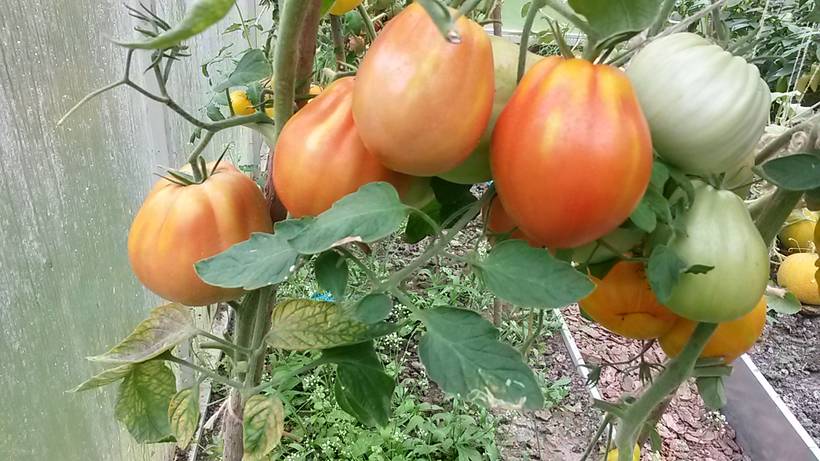
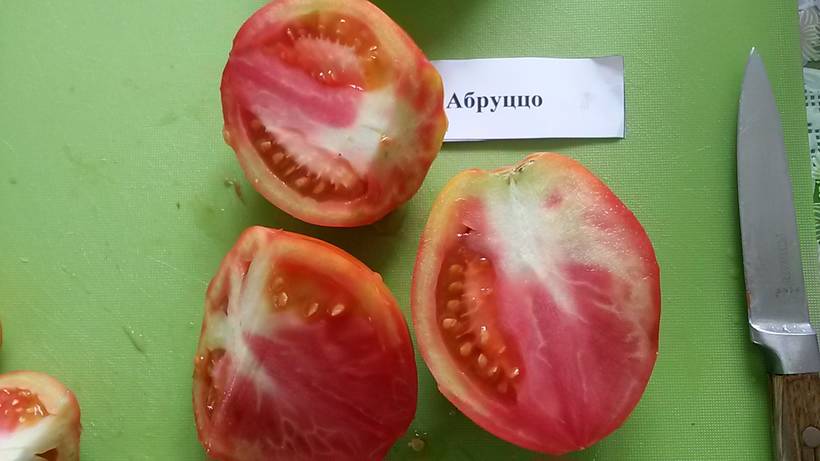
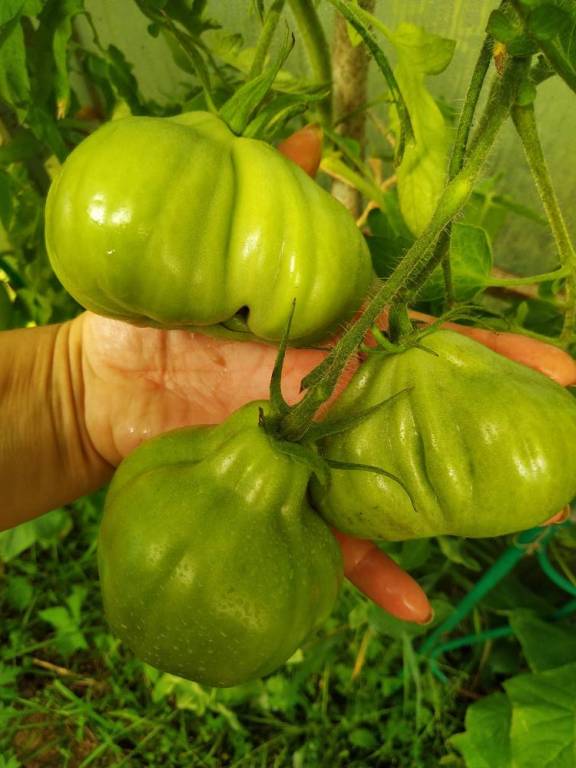
Follow-up on my harvest: just yesterday I picked another 11 tomatoes off that single vine in the unheated greenhouse at the mature-green stage, all weighing 7 to 10.5 oz (200-300 g). I have honestly never seen a yield like this before. If I had known it was a record contender, I would have tallied every single fruit from day one.
Svetikk said:
Ran two vines, each in two stems. Classic rich tomato flavor, kept very well on the counter, and the interior is dense, fleshy, and practically hollow-free.
Crazy productive, fuss-free variety from the Italian pear/pouch family. Set fruit reliably despite cold Siberian swings and poor greenhouse placement. Great all-around utility tomato.
Not just a simple pear, but deeply fluted and pleated. Before they started coloring up, I kept confusing them with Pink Fig (Rozovyi Inzhir). Not quite as heavy a cropper as Fig yet, but we will get it dialed in.
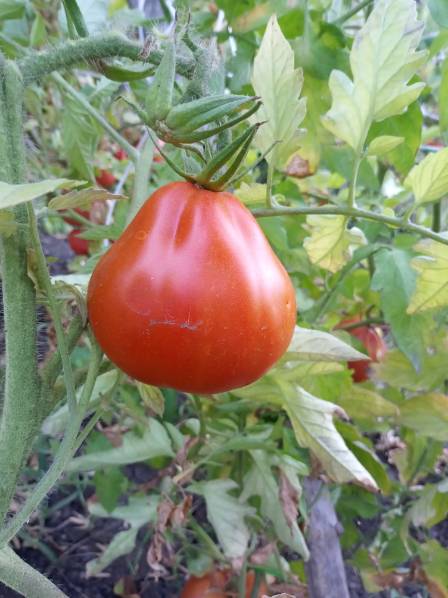
Delicious, sweet, with no hollow cavities inside. Skin is slightly on the firmer side. Great for fresh slicing and canning. Definitely keeping it on the grow list.
Pera D’Abruzzo (Abruzzo). Running it again from my own saved seed stock.
Grew in the greenhouse, leaned late-season for me this summer. Total looker, delicious, and holds its quality in storage. Yield was very solid.
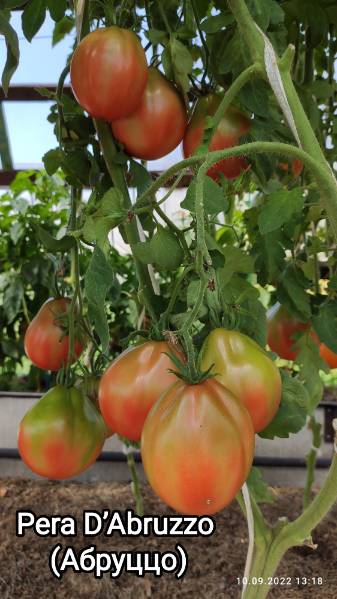
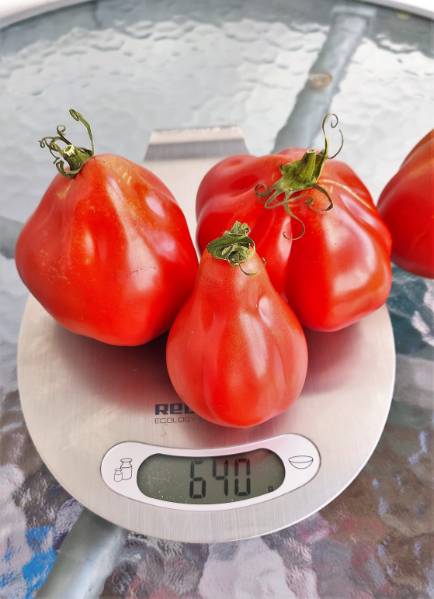
Abruzzo (Pera D’Abruzzo). Brought back this dependable beauty.
Summer was brutal here (cold and persistently soggy) even inside the greenhouses, but Abruzzo did not flinch, setting fruit straight to the ceiling. The last batch of green fruit picked right before hard late-September frosts ripened indoors and held in perfect shape through late October.
Full Summary: Plant Stature, Yield, Texture and Heat Demands
- 🌿 Growth Habit & Training: Vigorous indeterminate vine reaching 6 to 6.5 ft (1.8-2 m). Naturally branches into strong secondary leaders, comfortably supporting 2 to 4 stems laden with massive fruit trusses without loss of vigor.
- 📈 Yield Performance: Regarded as a record-tier producer. Setting fruit all the way up to the greenhouse ceiling, growers routinely record 25 to 30+ tomatoes per vine. Under heat stress, flowers may drop, causing remaining fruits to swell up to an astonishing 2.2 lb (1 kg).
- 👅 Fruit Anatomy & Taste: Distinctive pouch- or pear-shaped fruits with pronounced shoulder fluting and ribbing. Unlike hollow stuffing tomatoes, Pera D’Abruzzo features thick, meaty outer walls and solid carpels with minimal seed gel and no air pockets. Flavor is rich, sweet, and classic Italian tomato when provided adequate sunshine, but can turn bland or develop white cores during overcast, cold summers.
- 🥫 Storage & Processing: Exceptional multipurpose heirloom. Skin is firm enough to resist splitting while storing on the counter for over a month. Dense paste-like flesh makes it a premier sauce and puree variety.
- 🌎 Who Reviewed It: Grown across short-season continental regions spanning USDA Zones 3 through 7, including Western Siberia, Belarus, Moscow, and the Russian Caucasus.
Pera D’Abruzzo (often shortened to Abruzzo in Eastern European seed packets) is an authentic regional landrace from the Abruzzo region of central Italy, traditionally used for passata (crushed tomato puree). While related to other Italian pouch-shaped heirlooms like Canestrino di Lucca or Granny’s Throwing Tomato, true Pera D’Abruzzo is notable for its combination of deep fluting, bulbous bottom, and remarkably dense, solid flesh that lacks internal cavities. As noted by growers in zones like Moscow and Siberia, its flavor is highly sensitive to summer heat units: in hot sunny seasons it develops intense sugars, but in cool, waterlogged years it benefits from extra potassium to prevent yellow shoulders and pale internal cores.