📌 Editor’s Note: Growing Context & Varieties
- 🌍 Climate Context: The author of this article is gardening in Belarus, which is roughly equivalent to USDA Zone 4 or 5 (similar to the US Upper Midwest or New England). Fall-planting onions is a great strategy in cold climates to get an early jump on the season.
- 🧅 Onion Varieties: The article mentions several European overwintering varieties (like Radar, Shakespeare, and Senshyu). Good news—many of these are available in US seed catalogs! If you can’t find them, look for American fall-planted sets specifically labeled as “Overwintering” or cold-hardy short-day/day-neutral sets, depending on your latitude.

All throughout September, hardworking gardeners have been busy harvesting, preserving food for winter, and preparing garden beds for fall sowing. Finally, October is here—it’s time to plant our onions!
Where do we start?
You start with what you should have done before October—buying your planting material, which means onion sets, and prepping the bed.
Onion Varieties for Fall Planting
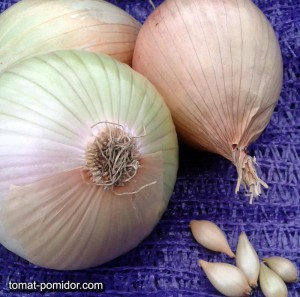
First, we choose our sets. This can be any variety or hybrid with the shape, color, and size you want, but—and this is crucial—it must be an overwintering variety intended for fall planting. These varieties have one undeniable advantage over the rest: when planted before winter, they won’t bolt (go to seed) in the spring, meaning they will form a proper, full-sized bulb. There are quite a few overwintering varieties and hybrids out there today:
- Agro Winter: An early, semi-pungent variety with white skins. Round bulbs, averaging 3-3.5 oz (80-100 g).
- Keep-Well F1: An early overwintering hybrid. Round, bronze-colored, large bulbs weighing up to 9 oz (250 g).
- Shakespeare: A classic overwintering variety with yellow-brown skins. Round bulbs up to 10.5 oz (300 g).
- Senshyu: A Japanese overwintering variety with oblate (flattened) yellow bulbs, reaching up to 9 oz (250 g).
- Radar: A mid-to-late overwintering variety. High yielder with flattened-round yellow bulbs weighing over 10.5 oz (300 g).
- Troy: An overwintering variety with smaller, flattened bulbs. Average weight is 3 oz (80-90 g), with skins ranging from yellow to light brown.
- Echo F1: An early-maturing overwintering hybrid. Light yellow, flattened-round bulbs averaging 5-5.5 oz (140-160 g).
You can also look for hybrids like Arctic, Sunshine, Tough Ball, Sonic, and others.
Preparation
So, we’ve chosen and bought our sets. What’s next? Nothing complicated—just spread your treasure out in a shallow cardboard box in a single layer and place it somewhere dry and warm (a windowsill works) to cure and dry out a bit. After a couple of weeks, we will sort through them, cull any suspicious, damaged, or sprouting bulbs, and leave the good ones in a warm spot until planting time.
Our next step is preparing the garden bed.
First, choose your bed. The best preceding crops for onions are those that were heavily amended with organic matter. This could be cucumbers, zucchini, pumpkins, tomatoes, cabbage, or potatoes. Onions are heavy feeders; you can’t expect to grow large bulbs without providing plenty of nutrients. So don’t be stingy with the compost or well-rotted manure for this valuable crop!
It’s great if you started thinking about bed prep in early September—that gives you time to sow a cover crop (green manure), like mustard. If it’s already October, just shallowly till or fork your bed and let it sit for 10-15 days so the soil can settle.
Planting Guidelines
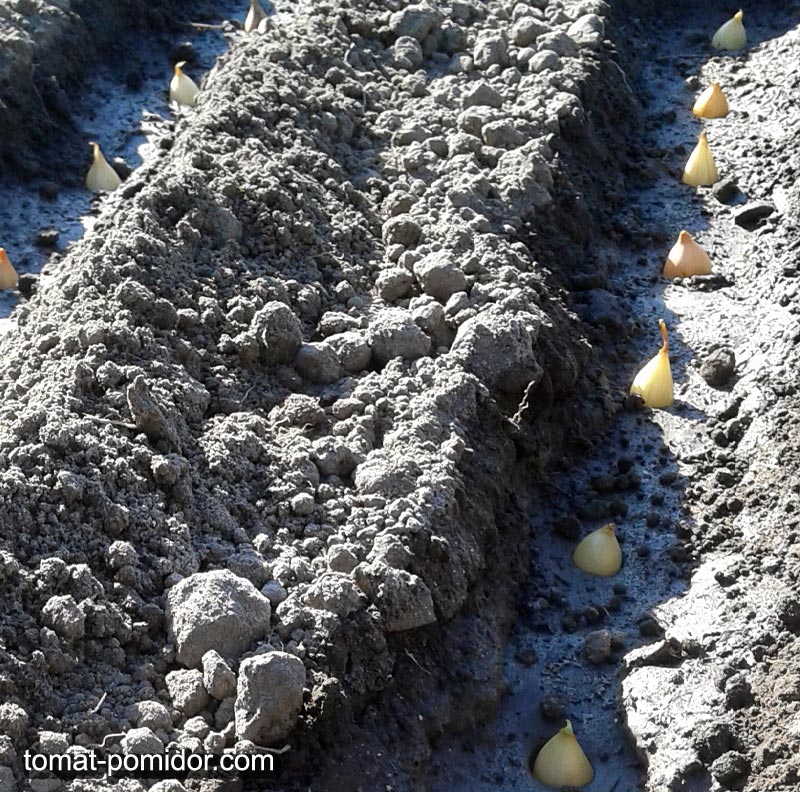
Around mid-October, you can start planting. Fall-planted onions should be set slightly deeper than we plant them in the spring. Using a hoe or whatever tool you prefer, make furrows about 3 inches (7-8 cm) deep and water them well (if you’re having a dry fall). You’ll need to decide on your own plant spacing based on your goals. The larger the bulb you want to grow, the more space (and nutrients) it needs.
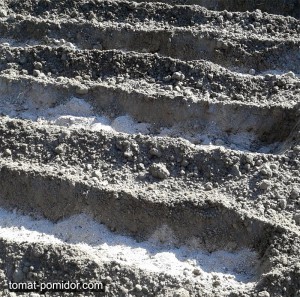
Smaller varieties can be spaced about 2-2.5 inches (5-6 cm) apart in the row, with 6 inches (15 cm) between rows. If you bought sets for large-bulbing onions and want to grow 10 oz (300 g) giants, space the sets at least 4-5 inches (10-12 cm) apart in the row, with 8-10 inches (20-25 cm) between rows.
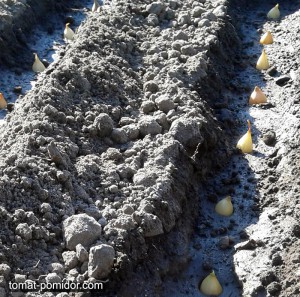
Once you’ve decided on spacing and placed your sets, you can dust the bulbs with wood ash (if you have it), and it is highly recommended to backfill the furrows with compost. If you don’t have compost, regular garden soil will do in a pinch.
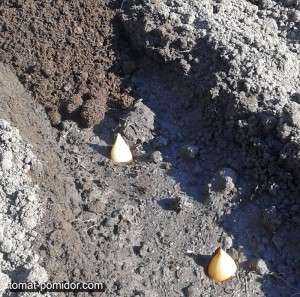
There you go—our future harvest is planted! You can breathe a sigh of relief. But don’t relax completely just yet. We wait until the temperatures consistently drop below freezing at night and stay near freezing during the day. As soon as the top layer of soil freezes, it’s time to mulch our beds. The best material for this is well-rotted manure or compost—it protects the crop from the cold and acts as a slow-release fertilizer. But you can also use straw, dry leaves, or hay. For the mulch to be effective against deep freezes, the layer should be 4-6 inches (10-15 cm) thick.
Now you can truly relax and wait for spring with a clear conscience. Wishing you a great harvest!
💬 Grower Comments & Discussion
Thanks for the advice = this is my first time planting them for fall. I figured I’d just stick them in the ground like I do in spring and that’s it… nobody told me otherwise…
What’s the point of planting in the fall? If you plant them in the spring, they still have plenty of time to grow. Is there really any benefit to this?
liuda67 said:
What’s the point of planting in the fall?… Is there really any benefit to this?
If your onion sets are all mixed sizes, you save the medium and large ones for spring planting. They will store well indoors until spring. But the tiniest little bulbs run the risk of completely drying out over winter indoors. So, you can plant those tiny ones in the fall, and they will be the very first to give you green onions (scallions) to eat in the spring.
Natalya_Prohladn. said:
[…] they will be the very first to give you green onions (scallions) to eat in the spring.
Calling them green onions early in the spring is a bit of a stretch 😊. You barely get any onion—just tiny little tails. Because you plant the tiniest sets, they only push up a blade or two early on. But later, they gather strength and grow into large main bulbs. And they will mature earlier than onions planted in the spring.
But you are totally right about the main point—spring onions will mature just fine, just a bit later. The real trick here is that those tiny sets (under 1/2 inch or 1-1.5cm in diameter) won’t survive the winter indoors—they’ll just dry out and turn into dry husks/trash. So fall planting saves them! It’s economical. I usually plant one bed in the fall, and two in the spring.
Once, I fall-planted incredibly tiny sets—maybe 1/4 inch (5-7 mm). Usually, people just sift those out and throw them away. To my surprise, by the following summer, every single one of them grew into a huge, full-sized onion!
We grow our main bulb crop in the spring, and we’ve actually switched to growing them from seeds/transplants. But all the tiny sets that didn’t size up the first year, I plant in the fall specifically for green scallions.
I prep a raised bed for early spring sowing of radishes, lettuce, and cabbage seedlings, and I plant the onions on one edge of that same bed. I mulch it. Since my goal is to just grow greens, I plant them very densely, like a solid carpet.
In the fall, I set up PVC hoops over the bed and get the poly film ready (with bricks or pipes to hold it down). In the spring, as soon as the snow melts off the bed (even if there is still snow along the fences), we throw the plastic film over the hoops and the process begins. The soil warms up quickly and the onions push up great greens. And the radishes and lettuce grow right alongside them.
Thank you so much for the answers. I’ll definitely keep that in mind!
I’ve never planted onions before winter, even though this isn’t the first time I’ve heard about it.
What if I don’t know what variety my onions are? Someone gave me onion seeds (true seed, black seed) and said it was a local variety. I sowed it, and it germinated great and grew into sets. What if I don’t dig those sets up, but just leave them in the bed over winter? People leave leeks in the ground, right?!
That won’t work! When you grow sets from true seeds, you sow them very thickly to get a lot of tiny bulbs in a small space. If they aren’t crowded, they grow into fairly decent-sized bulbs the first year. Even if it’s not a full-sized main crop onion, it will be too large to act as a proper “set” for next year, and it will almost certainly bolt (go to seed) next spring instead of bulbing up.
Secondly, your homegrown sets will be sitting practically on the surface of the soil and they will likely freeze to death. For winter planting, I use the tiniest sets—the ones that would definitely dry out indoors over winter—and I plant them deep enough so they aren’t visible on the surface. If you plant larger sets, you’ll just get a lot of flower stalks.
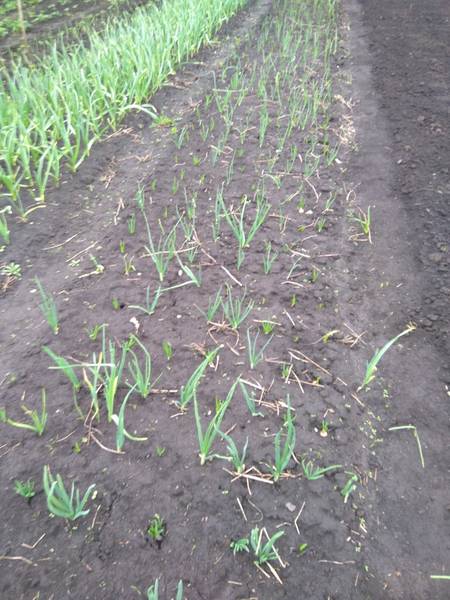
By the way, my overwintering onions had a poor emergence rate this year, a lot of bulbs died. You can see in the photo: the tall ones are the survivors from winter, and the ones just sprouting were planted this spring to fill the gaps. We had a lot of rain early in the season, so the spring-planted ones sprouted very fast.