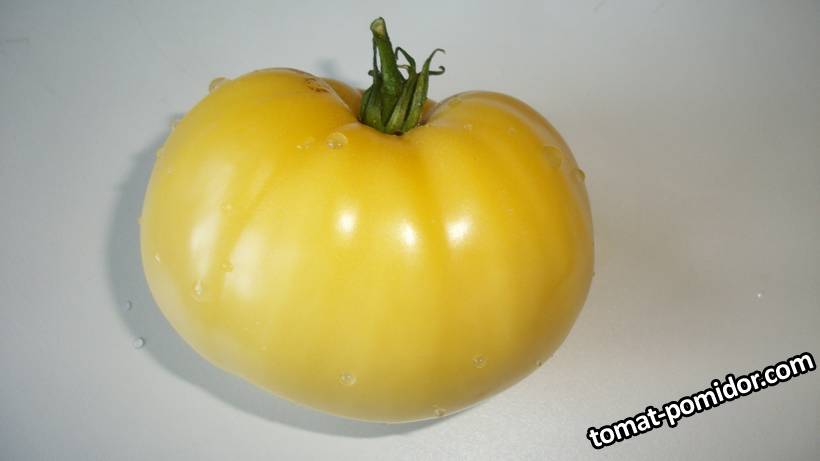
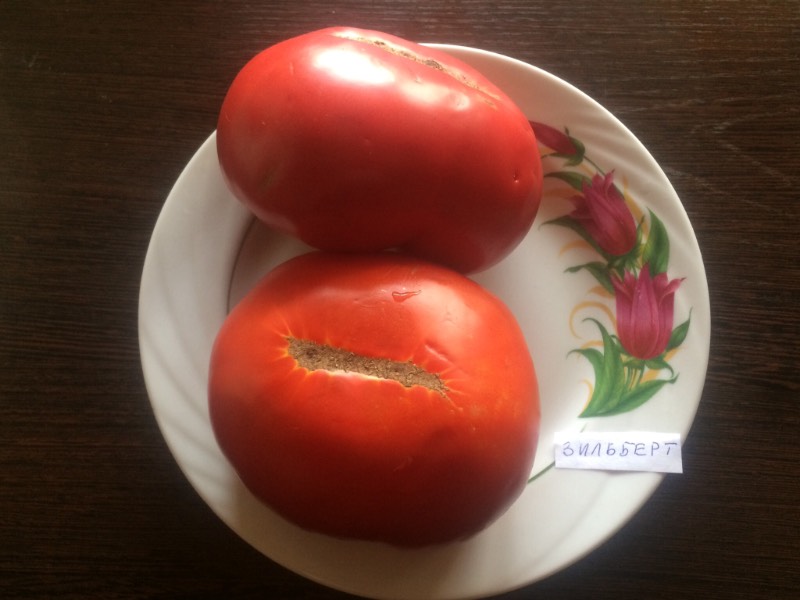
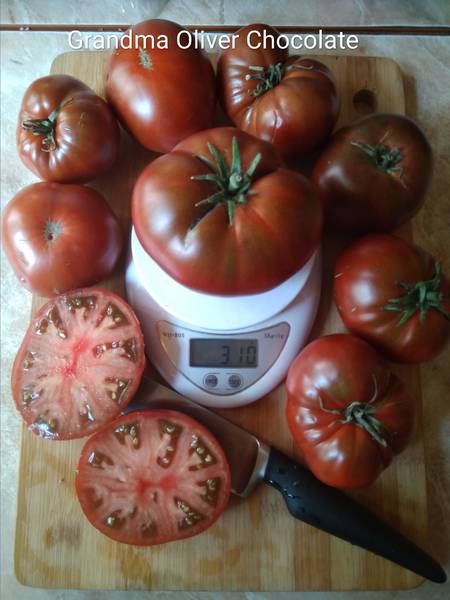
Growers’ Notes and Photos (Field and Greenhouse Trials)
Pork ChopEdited September 21, 2015 by Drosera
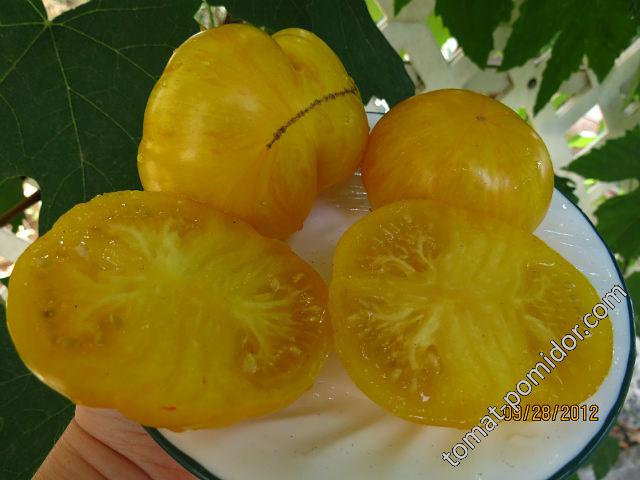
Seeds came from Valery Popenko. First time growing this variety. Ran it both inside the greenhouse and outdoors in open ground.For me, it matured right around mid-season with very solid yields. Loved the taste: sweet with a very pleasant, refreshing citrusy tang. Flavor stayed consistent throughout the entire season.
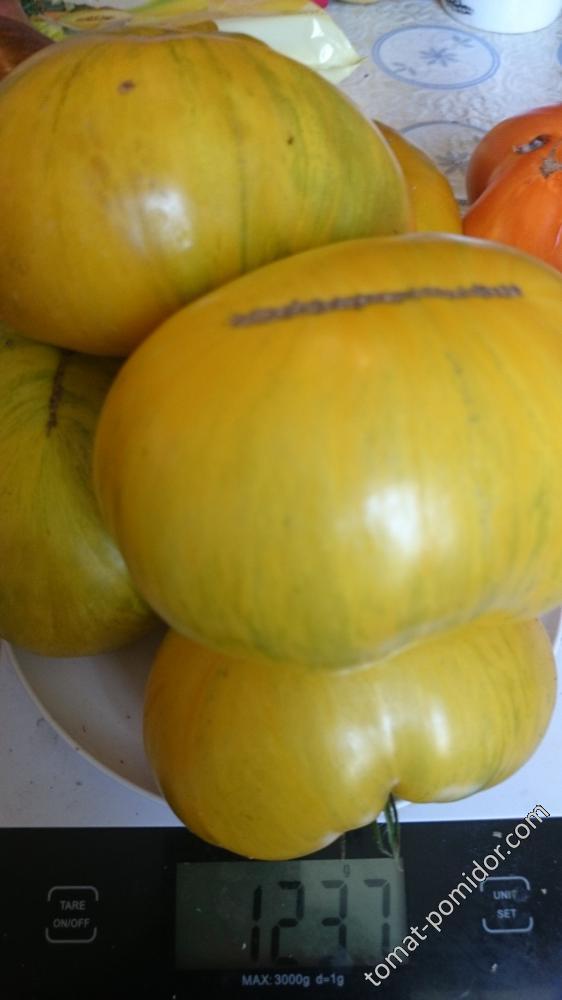
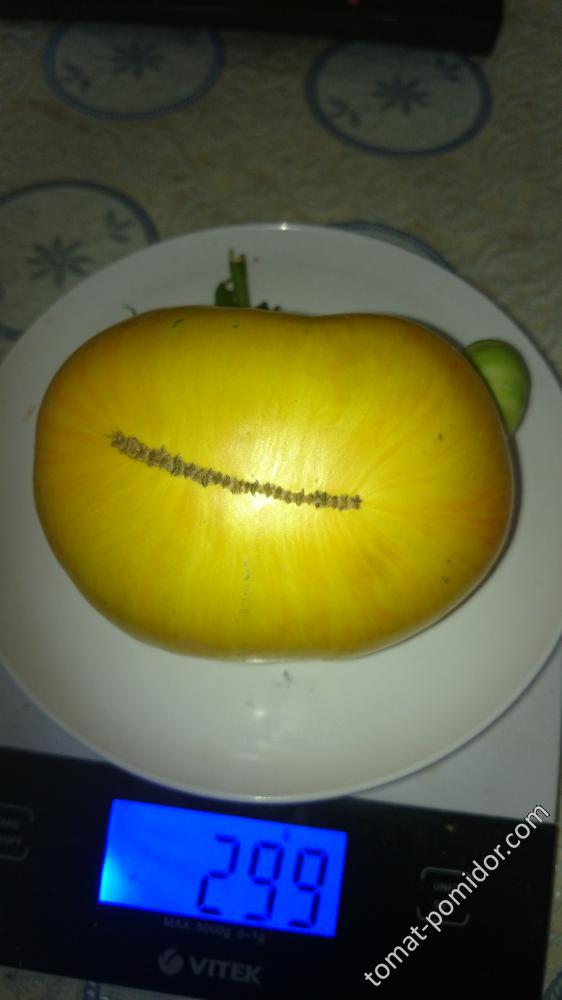
One of the most striking tomatoes in the greenhouse 👍The fruits start out lime-green with darker stripes, eventually ripening to rich yellow. In my garden, it leaned more toward late-season. Great producer with delicious, juicy fruits.
Harvest Timing, Ripeness Clues, and Sugar Development
irysska said:
Such a gorgeous slicer: tasty, nicely balanced flavor, though personally I found myself wishing for just a little more sweetness…
For me, it turned out plenty sweet, but only when it was dead-ripe on the vine: you could practically say it felt soft to a gentle touch.
Full Summary: Plant Habit, Color Stages, Ripeness, and Flavor
- 🌿 Plant Habit: Vigorous indeterminate vine. Adapts easily to both open ground and protected greenhouse beds, carrying heavy cluster loads on strong stems.
- 🍅 Fruit Appearance: Medium to large oblate beefsteaks (8-12 oz / 220-350 g), often showing gentle ribbing along the shoulders. Color shifts dramatically: starting lime-green with emerald stripes, slowly shifting into deep golden-yellow with shimmering green metallic streaks.
- 👅 Flavor Profile: Bright, sweet, and distinctly citrus-forward. Offers a vibrant, zippy tang that sets it apart from traditional mild, low-acid yellow tomatoes.
- ⏱️ Ripeness Key: A common grower trap is picking too early when fruits first show pale yellow skin. To experience maximum sweetness and balanced acidity, let the fruit develop a warm golden-amber hue and soften slightly to a gentle squeeze.
- 📈 Maturity & Yield: Mid-season to mid-late maturity. Continuous, steady producer with juicy, dense multi-chambered flesh.
- 🌎 Reviewers: Trialed in both outdoor open ground and plastic greenhouses across Eastern European growing regions.
Pork Chop was developed by Brad Gates of Wild Boar Farms (California), selected from a yellow striped mutation found in a patch of green varieties. Gates named it “Pork Chop” because of its hefty, meaty texture. A critical rule for growing yellow-and-green striped heirlooms (like Pork Chop or Green Copia): chlorophyll in the stripes masks the fruit’s true ripeness. If picked while still firm and pale yellow, the flavor can taste underripe and tart. Waiting until the background skin turns deep golden-orange and yields gently to fingertip pressure unlocks its legendary sweet citrus flavor.