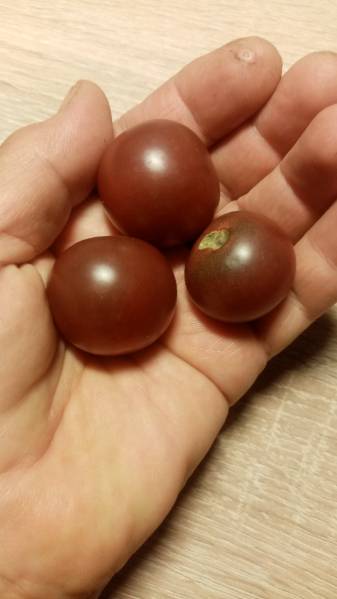
🍅 Quick take: Supersweet 100 F1 is a world-famous commercial hybrid red cherry bred originally by Petoseed, legendary for its aggressive indeterminate vines and massive multi-branched trusses of sweet, bite-sized fruit. However, European and Eastern European growers in this thread had unusually rough luck with their seed packets: complaints ranged from bland, tart flavor and fruit dropping off clusters before fully ripening, to rogue plants terminating early like determinates. Compared to beloved open-pollinated cherries like Ildi and Spokusa, these growers found it not worth the garden space. Full summary ↓
Growers’ Notes and Photos (USDA Zones 3-8 Experience)
Grew this hybrid from Austrian seed stock (Erfurter Samen, Vienna). The front packet hyped them up as extra-sweet and heavy yielders, with a whopping 75 seeds inside.
Well, it got completely outclassed in both yield and taste (ended up more on the sour side) by every other cherry growing right next to it under identical conditions: Ildi, Ampelny, and Yellow Vernissage. The clusters ran about 14 cherries each, but the truss never ripened evenly to red. The first fruits at the base would drop right off while the tips were still ripening up. You can see in my photos that the truss is half-empty because those first red ones already dropped.
Nobody in the family liked it, and keep in mind, we love cherries. Hauled it out with zero regrets. Did some digging on Google afterwards: commercial seed catalogs show massive trusses with up to 30 cherries ripening in lockstep, but strictly close-up glamor shots without showing the actual plant. Finally dug up two photos from backyard growers that matched mine: just an overgrown wall of green jungle foliage with tiny red flecks scattered here and there instead of proper full sprays.
The only reason I added this hybrid to our forum database is that I spotted it listed in another member’s catalog yesterday. It was sold without mentioning it is an F1 hybrid, labeled as Russian origin, with real photos showing gorgeous, picture-perfect clusters fully ripe on the vine. Pure envy. What a lucky grower. Makes you wonder where their seeds actually came from in the first place?
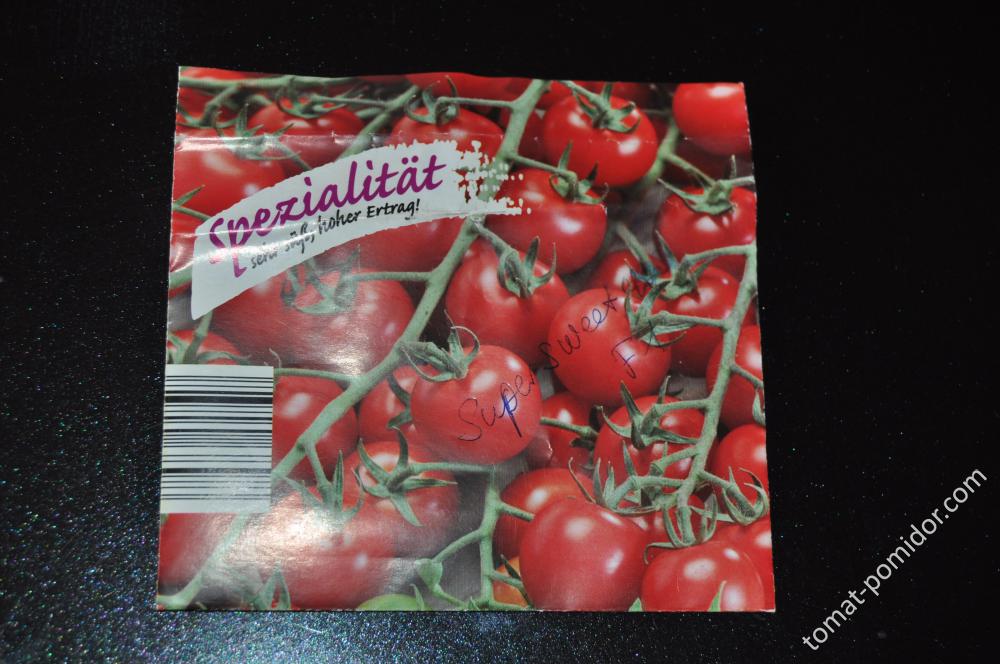
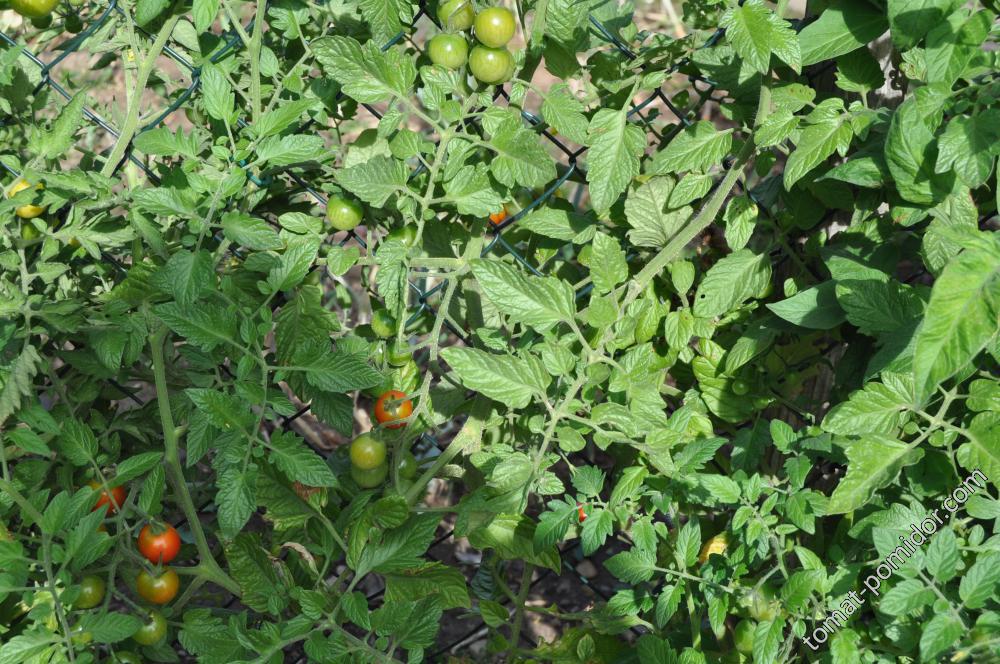
Well, it got completely outclassed in both yield and taste (ended up more on the sour side) by every other cherry growing right next to it under identical conditions: Ildi, Ampelny, and Yellow Vernissage. The clusters ran about 14 cherries each, but the truss never ripened evenly to red. The first fruits at the base would drop right off while the tips were still ripening up. You can see in my photos that the truss is half-empty because those first red ones already dropped.
Nobody in the family liked it, and keep in mind, we love cherries. Hauled it out with zero regrets. Did some digging on Google afterwards: commercial seed catalogs show massive trusses with up to 30 cherries ripening in lockstep, but strictly close-up glamor shots without showing the actual plant. Finally dug up two photos from backyard growers that matched mine: just an overgrown wall of green jungle foliage with tiny red flecks scattered here and there instead of proper full sprays.
The only reason I added this hybrid to our forum database is that I spotted it listed in another member’s catalog yesterday. It was sold without mentioning it is an F1 hybrid, labeled as Russian origin, with real photos showing gorgeous, picture-perfect clusters fully ripe on the vine. Pure envy. What a lucky grower. Makes you wonder where their seeds actually came from in the first place?
Grew it for the first time this year. Flavor is classic tomatoey, not bad at all, but definitely not worth wasting prime greenhouse space on. Spokusa is far tastier and way more productive.
Ran these back in 2018 in the greenhouse. For whatever reason, mine behaved completely like a determinate because the central vine topped itself out early. Not a total dealbreaker since it threw new growth from laterals, but most of those shoots were just a couple of leaves and an immediate flower truss.
The taste was completely ordinary, run-of-the-mill tomato flavor, definitely not that signature candy sweetness you expect from modern cherries. Clusters were heavy though. Because the plant stayed so compact, it looked smothered in shiny red marbles. Ripened right on the vine without any drama, no cracking, no fruit drop, and no rot. Bright red color.
That said, I won’t be giving it garden space again. I grow cherries specifically for intense sweetness, and Supersweet gets beat on flavor even by plenty of regular full-sized slicers.
Edited January 12, 2019 by Oksana Evgenyevna
Full Summary: Plant, Yield, Taste and Storage
- 🌿 Plant: Historically an aggressive indeterminate climbing vine known to easily top 8-10 ft (2.4-3 m). However, these reports show erratic vigor: one grower experienced heavy, overgrown vegetative foliage that hid sparse trusses, while another had the central leader self-terminate into a compact determinate habit with heavy cluster sets.
- 📈 Yield: Mixed results. While flower sets can be profuse, European commercial seed strains showed issues with premature fruit drop at the cluster stem before all fruit could ripen uniformly red.
- 👅 Taste: Universally disappointing across all three trials. Growers noted a sharp, acidic, or basic mild tomato flavor, far from the advertised sugar-bomb profile implied by the “Supersweet” moniker. Outperformed heavily by heirloom cherries like Ildi and Spokusa.
- 📦 Durability: Once ripe, fruit on compact vines held well without splitting or rotting, though fruit on loose trusses suffered stem detachment.
- 🌎 Who Reviewed It: Three experienced growers spanning Central Europe (Zone 8, tri-border region), Subarctic Northern Russia (Zone 3b, Arkhangelsk), and the continental steppes of Western Kazakhstan (Zone 4).
🍅 Grown Supersweet 100 F1? Did yours produce massive sweet trusses or turn out sour and rogue? Share your seed source, zone, and photos in the comments below!
👨🌾 Editor’s Note: Origin and North American Profile
Supersweet 100 F1 is a classic American hybrid bred by Petoseed (now Seminis/Bayer) and released in the early 1980s as an improved, disease-resistant successor to the legendary Sweet 100. In North American gardens, it is known as a rampant, vigorous indeterminate vine that routinely reaches 8 to 10 feet (2.5 to 3 m) and is prized for heavy sugar content. The mixed results reported here, ranging from tart flavor to a self-terminating vine habit, stand in stark contrast to its typical performance in US home gardens.
Supersweet 100 F1 is a classic American hybrid bred by Petoseed (now Seminis/Bayer) and released in the early 1980s as an improved, disease-resistant successor to the legendary Sweet 100. In North American gardens, it is known as a rampant, vigorous indeterminate vine that routinely reaches 8 to 10 feet (2.5 to 3 m) and is prized for heavy sugar content. The mixed results reported here, ranging from tart flavor to a self-terminating vine habit, stand in stark contrast to its typical performance in US home gardens.