How to Grow Bulb Onions from Seed in One Season (Direct Sowing Method) 🧅
My experience of growing large bulb onions from seed using the direct sowing method came to me completely by accident. When I first sowed onion seeds, it never even occurred to me to grow them indoors as transplants first. This was a long time ago, when I was just mastering the science of managing my own garden beds. Without reading any smart books, I was gaining precious personal experience—both successful and disastrous. 😂 However, with onions, everything turned out just wonderfully on the very first try!
My First Experience: Beginner’s Luck 🌱
Back then, I came across a packet of ‘Stuttgarter Riesen’ seeds in a store. I must note an important detail: I lived in a northern region with a short summer, not in the warm south.
I prepared the bed on virgin soil, meaning no cultivated crops had ever grown there before. I dug it up thoroughly, cleaned it of weeds until it shined, and added some compost. I sowed the seeds thickly in rows. The sprouts came up uniformly, and as the greens grew large enough to eat, I thinned them out for salads. 🥗
The onions developed quite briskly! I carefully tended the bed: loosened the soil, weeded, and watered. In the end, the bulbs grew right out of a magazine picture: large, healthy, and beautiful. There were a few small ones, of course, but overall, the harvest was glorious. It truly is beginner’s luck! 🎯
Today, of course, I grow storage onions from seed by all the rules and take a much more responsible approach. I prefer this method over planting commercial onion sets or dealing with transplants. Growing from transplants is just too tedious for me—handling those fragile onion “threads” is exhausting. So, let’s get straight to the rules I try to follow for direct sowing.
4 Rules for Direct Sowing Onions 📝
1. Choosing the Right Variety 🧅
The first thing to pay close attention to is the choice of variety, because not all onions will form a good bulb in a single season, especially in cooler, northern regions. Good choices for direct sowing include Stuttgarter Riesen, Odintsovets, Halcedon, and Early Pink.
Note: Pay attention to the storage life! Some varieties store very poorly—these are usually the tender, sweet salad onions (like Exhibition).
2. Garden Bed & Soil Prep 🛏️
It is best to prepare the bed in the autumn in a warm, sunny, and well-ventilated spot. The soil must be loose, light, and slightly alkaline. 🚫 Acidic soil is completely unacceptable! If your soil is acidic, you must neutralize it.
Crop Rotation: Do not plant onions after other onions or garlic for at least 3 years. However, squash, tomatoes, potatoes, and cabbage are excellent preceding crops. 🍅🥔
Dig the soil well, remove weeds, and add well-rotted compost and a little wood ash. Do not use fresh manure!
3. When and How to Sow ⏱️
Start sowing in early spring while the soil still holds plenty of winter moisture. You can pre-soak the seeds in water for 12–24 hours (though I rarely do this).
- Spacing: Sow in rows about 30 cm (12 inches) apart.
- Depth: Up to 2 cm (0.8 inches) deep.
- Density: Sow thickly in the row, dropping a seed every 1–2 cm.
It’s a great idea to mulch the sown rows with peat to prevent a hard soil crust from forming. If possible, cover the bed with an agricultural fleece (row cover) at first. Onions are not afraid of late spring frosts ❄️, but the cover speeds up germination. Expect sprouts in about 10 days.
4. Summer Care & Harvest ✂️
At first, you must care for the bed very gently: shallow loosening, careful weeding, and consistent watering. Onions need timely watering throughout the growing season, but stop watering completely one month before harvest! 🛑💧
Once the onions develop proper “feathers” (leaves) that can be eaten, carefully thin them out, leaving 8–10 cm (3–4 inches) between plants. Do not hill (mound soil) around the onions!
Begin harvesting when the leaves start to dry and fall over—do not wait until they are completely dry and brittle. Wishing you a great harvest! 😉
Community Comments & Tips 💬
This year I grew onions from seed for the very first time—varieties Exhibition, Pandero, and Red Baron. They turned out incredibly successful: huge and delicious! 😍 Now my only problem is figuring out where to store them. I’ve hung them all over my garage and still have three boxes left to shove somewhere. 😂
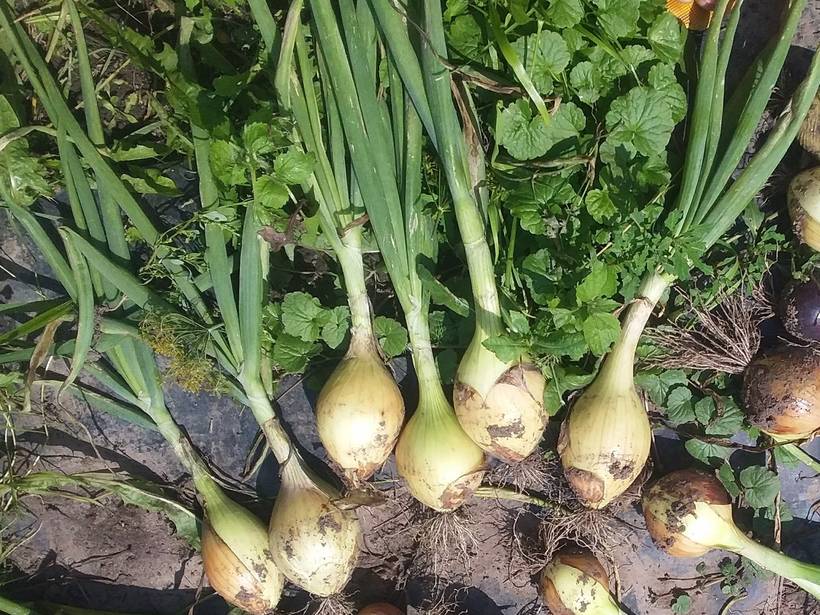
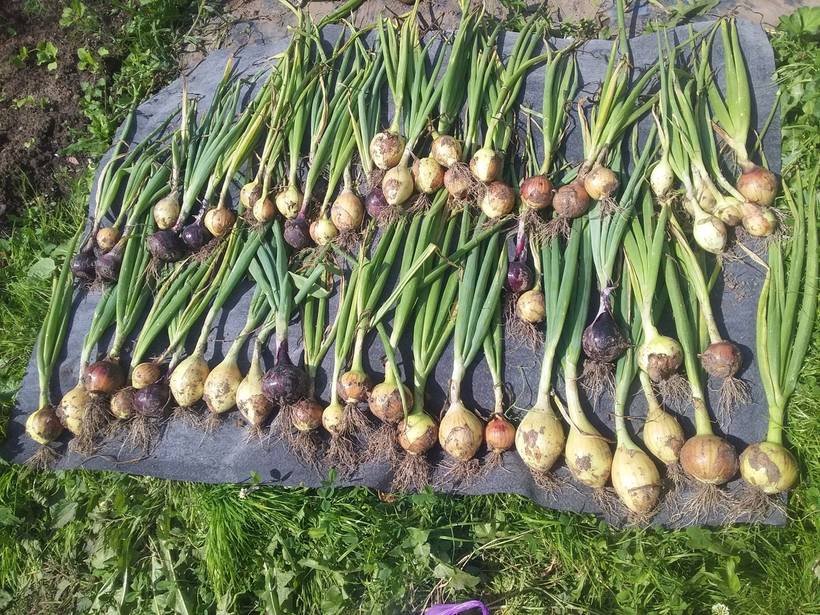
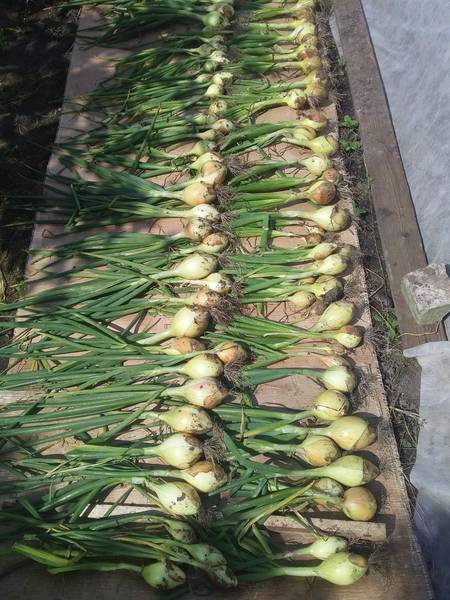
Great harvest! 👍 For the second year in a row, we are growing Exhibition and Candy via indoor transplants. By planting time, they aren’t fragile little threads anymore, but proper small plants. It’s no harder than planting sets.We sow them thickly in seed trays between Feb 15-25. They grow larger than onions from sets, very juicy and tasty. The only downside is that Exhibition doesn’t store long—maximum until late January. But considering commercial onion sets were being sold for crazy prices at our local market this year, growing from seed is a fantastic way out!
A quick tip on onion seed expiration dates: Onion seeds have the highest germination rate the very next year after harvest. A year later, viability drops by 50-70% 📉. By the third year, they might not sprout at all, or you’ll get single sprouts.Store-bought packets are a lottery. Even if the packet says they are good for another year, the actual germination can be terrible. It all depends on when the crop was actually harvested.
I’ve calmed down and found my rhythm. Every year, I sow seeds directly, making a zig-zag pattern over a 10 cm wide trench. I sprinkle them with peat and make sure it doesn’t dry out before germination (you can tell if it needs water by the color of the peat).I pick long-storing varieties like Stuttgarter Riesen and Sturon. All the tiny bulbs (under 1 cm) I replant in the autumn (overwintering sets). This method saves so much time and effort! ✨ I don’t mess with Exhibition anymore; I find it too labor-intensive with unpredictable results.
When we direct sow onion seeds into the bed, so many weeds come up. They sprout earlier than the onions and overtake them. Weeding those tiny hair-like seedlings is pure torture! 😫It is much easier for me to plant indoor-grown transplants. By the time they go outside, they are decent-sized plants. That said, one huge benefit of seeds over commercial onion sets is pests. Buying sets often brings diseases and Thrips into your garden! 🐛
Oksana71 wrote:
…Buying sets often brings diseases and Thrips into your garden.
I am so exhausted fighting Thrips! After drying the onions in the summer, everything seems fine. But in winter, every third onion has live thrips running around under the top scales, and the bulb ends up rotting. 😡
Tauf wrote:
…in winter, every third onion has live thrips running around under the top scales…
Cold storage helps! ❄️ Or rather, it prevents the thrips from eating and reproducing. We keep our onions in an unheated shed until the freezing weather hits. Then we move them to an enclosed porch. During deep freezes, we place the boxes tight against the heated wall of the house and cover/insulate them.